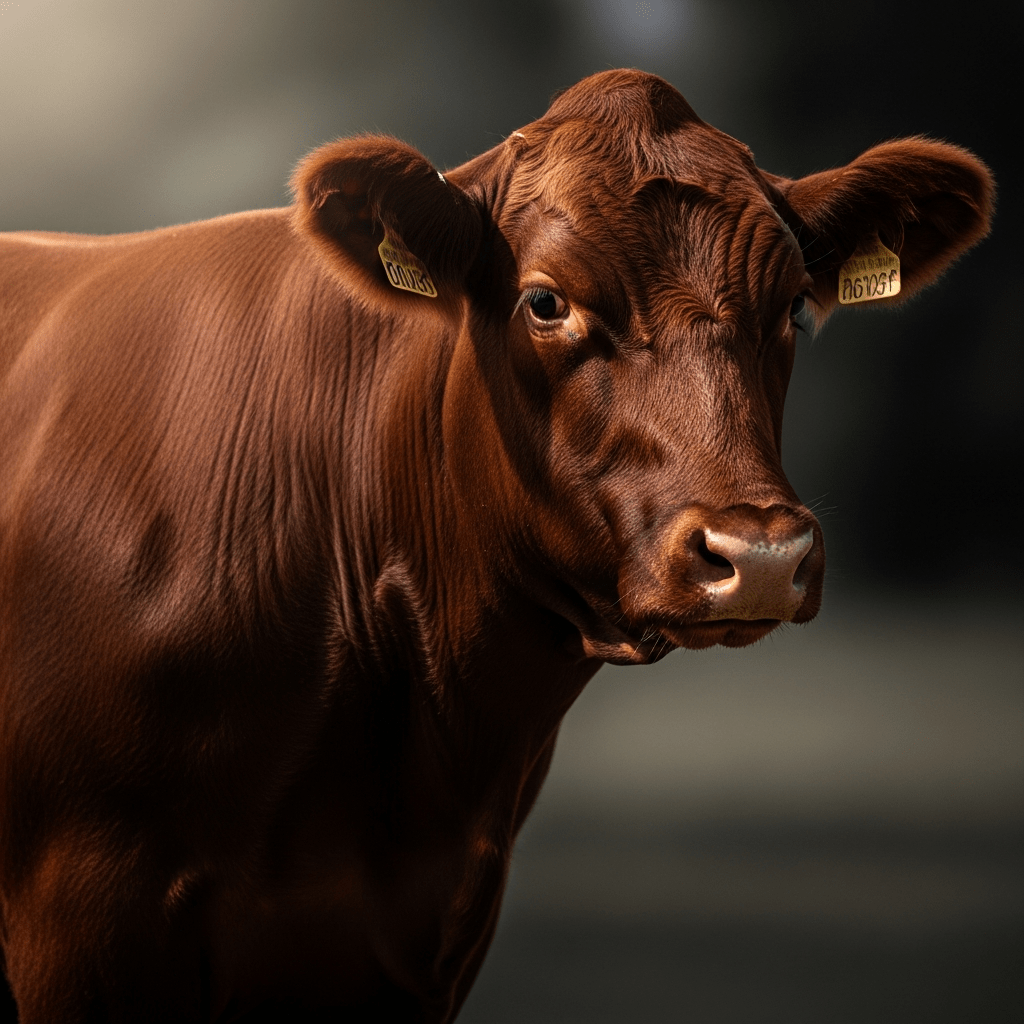
Red Angus
The Red Angus is a solid red, polled breed of domestic cattle prized worldwide for its high-quality beef production.
The Red Angus is a solid red, polled breed of domestic cattle prized worldwide for its high-quality beef production.
Originating in the United Kingdom during the 19th century, the Red Angus began as a red-colored variant of the Aberdeen Angus, itself descended from native Scottish cattle. It was formally recognized as a distinct breed in the United States in 1954 with the creation of the Red Angus Association of America, establishing a purebred lineage marked by its characteristic recessive red coat gene.
Red Angus cattle belong to the species Bos taurus and are classified as a domestic beef breed. They are a color variant of the Angus breed but maintain separate breed registries, particularly in the United States, distinguishing them from the black-coated Angus cattle.
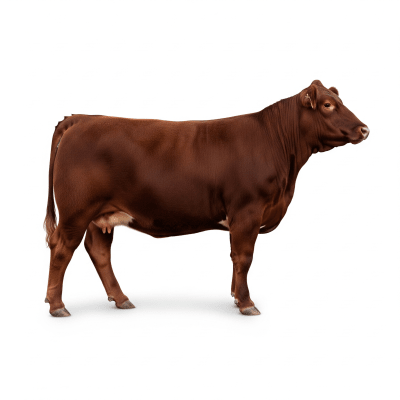
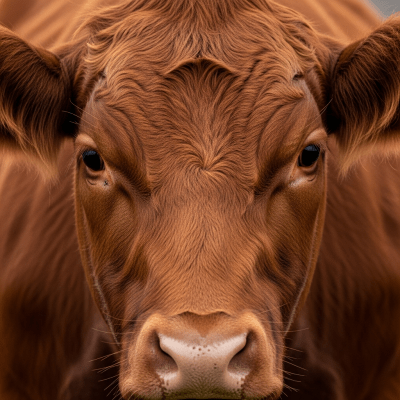
Red Angus cattle are medium to large-sized animals, uniformly covered in a solid red coat. They are naturally polled, meaning they are hornless, and mature individuals typically weigh between 550 and 1,000 kilograms. Their build is well-suited for beef production, combining muscularity with an appealing, consistent coat color.
Renowned for their docile temperament and maternal qualities, Red Angus cattle are primarily raised for beef. They exhibit rapid growth, efficient feed conversion, and ease of calving, making them highly valued in commercial beef operations and crossbreeding programs aimed at improving carcass quality and fertility.
Bring this kind into your world illustrated posters, mugs, and shirts.
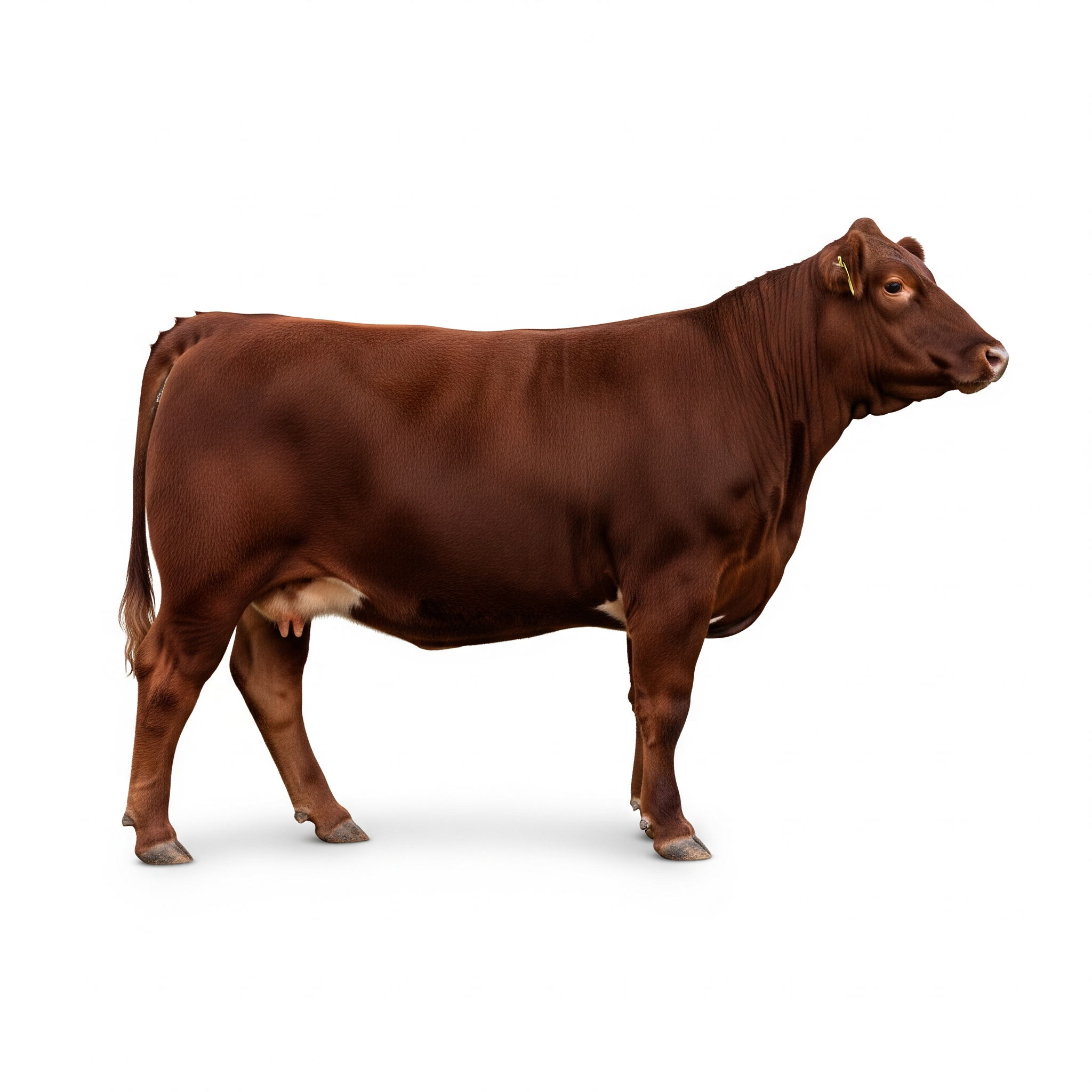
Archival print, museum-grade paper
Buy Poster
Stoneware mug, dishwasher safe
Buy Mug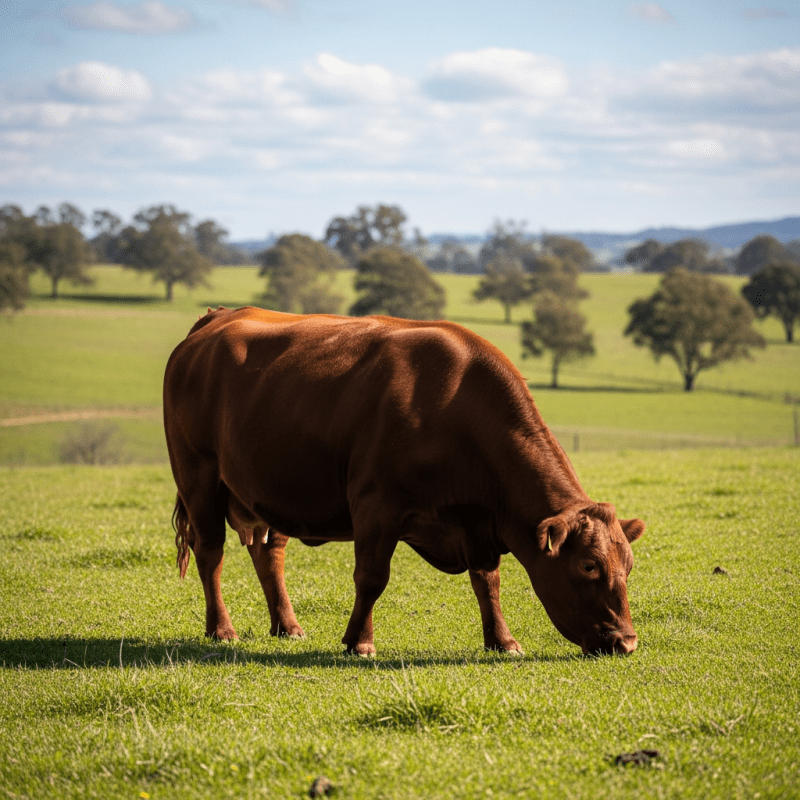
Soft cotton tee, unisex sizes
Buy ShirtWhile not prominently featured in art or mythology, Red Angus cattle hold cultural importance within agricultural communities, especially in the United States where their breed association promotes their identity and distinctiveness. Their reputation for quality beef has made them a symbol of premium American beef production.
The Red Angus is closely related to the black-coated Aberdeen Angus breed but is recognized independently by breed registries such as the Red Angus Association of America. Regional names include "Red Aberdeen Angus" in the UK and "Angus Rouge" in French-speaking areas. While some consider it a mere color variation, official registries maintain distinct standards and herdbooks.

Though not used for dairy, Red Angus cattle produce beef renowned for its tenderness, rich marbling, and flavorful profile. Their meat is highly sought after in both branded premium markets and commodity beef channels, with some producers emphasizing natural or grass-fed methods to enhance quality.
Red Angus cattle are adaptable to diverse climates and efficient in feed conversion, which can contribute to more sustainable beef production. However, like all beef cattle, their environmental impact depends on management practices, including grazing systems and feed sources, influencing their overall ecological footprint.
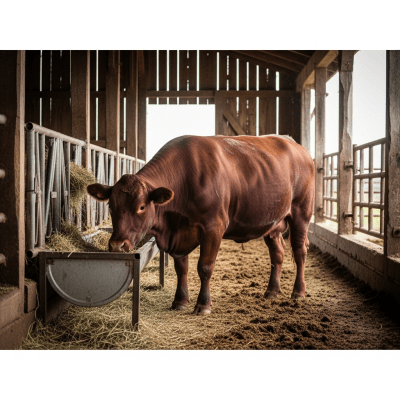
Best practices for raising Red Angus cattle include providing adequate nutrition to support their rapid growth and maternal performance, ensuring comfortable housing or pasture conditions, and monitoring herd health. Their docile nature facilitates handling, and their natural polled trait reduces the need for dehorning, simplifying management.