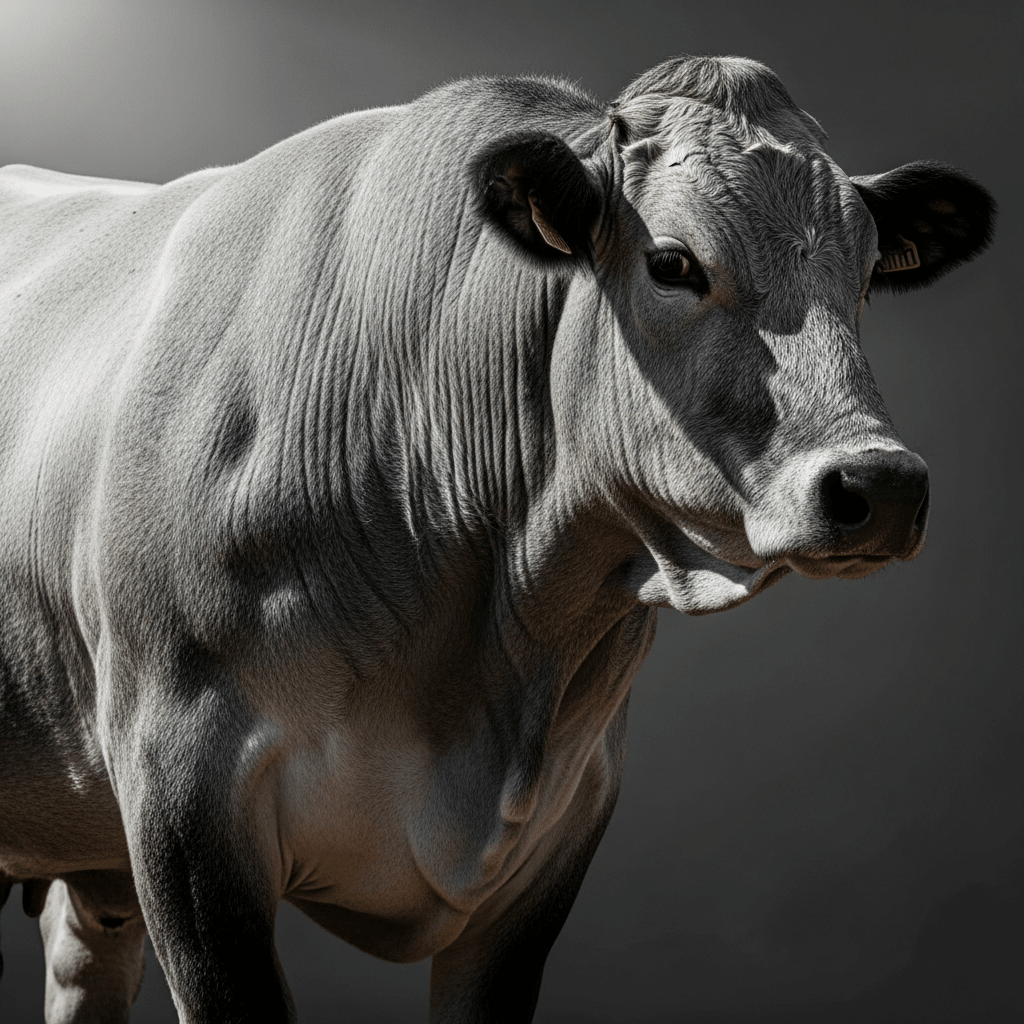
Piedmontese
The Piedmontese is an Italian cattle breed renowned for its distinctive double-muscling trait, producing exceptionally tender and lean beef prized in gourmet markets worldwide.
The Piedmontese is an Italian cattle breed renowned for its distinctive double-muscling trait, producing exceptionally tender and lean beef prized in gourmet markets worldwide.
Originating in the Piedmont region of northwest Italy, the Piedmontese breed was formally developed in the late 19th century. It descends primarily from taurine cattle with local crossbreeding among indigenous populations, and is preserved through the Italian national herdbook managed by the Associazione Nazionale Allevatori Bovini di Razza Piemontese.
Piedmontese cattle belong to the Bos taurus species, classified as a taurine domestic breed. They are recognized within the broader family of European beef cattle and maintained as a distinct breed under Italian national registry standards.
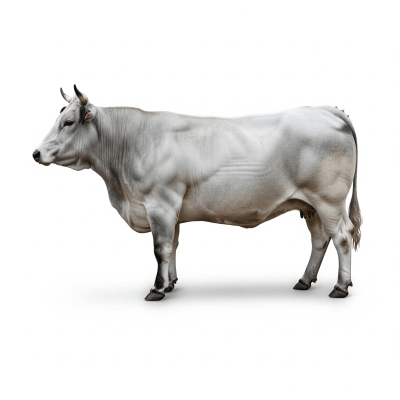
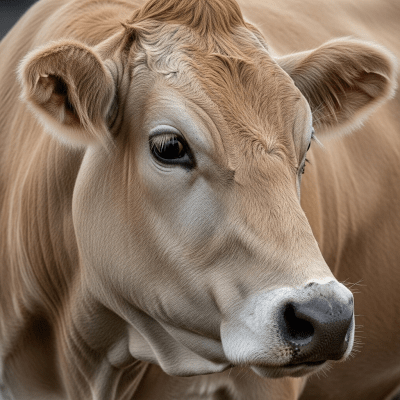
These cattle are medium to large in size, with adult weights ranging from 500 to 900 kilograms. They display a pale grey to white coat complemented by black skin pigmentation. Their most striking feature is pronounced muscle hypertrophy, especially in the hindquarters, caused by a natural myostatin gene mutation known as double muscling.
Primarily raised for beef production, Piedmontese cattle grow rapidly and convert feed efficiently. They are adaptable to both intensive and semi-intensive farming systems and are noted for their ease of calving, making them manageable in diverse husbandry environments.
Bring this kind into your world illustrated posters, mugs, and shirts.
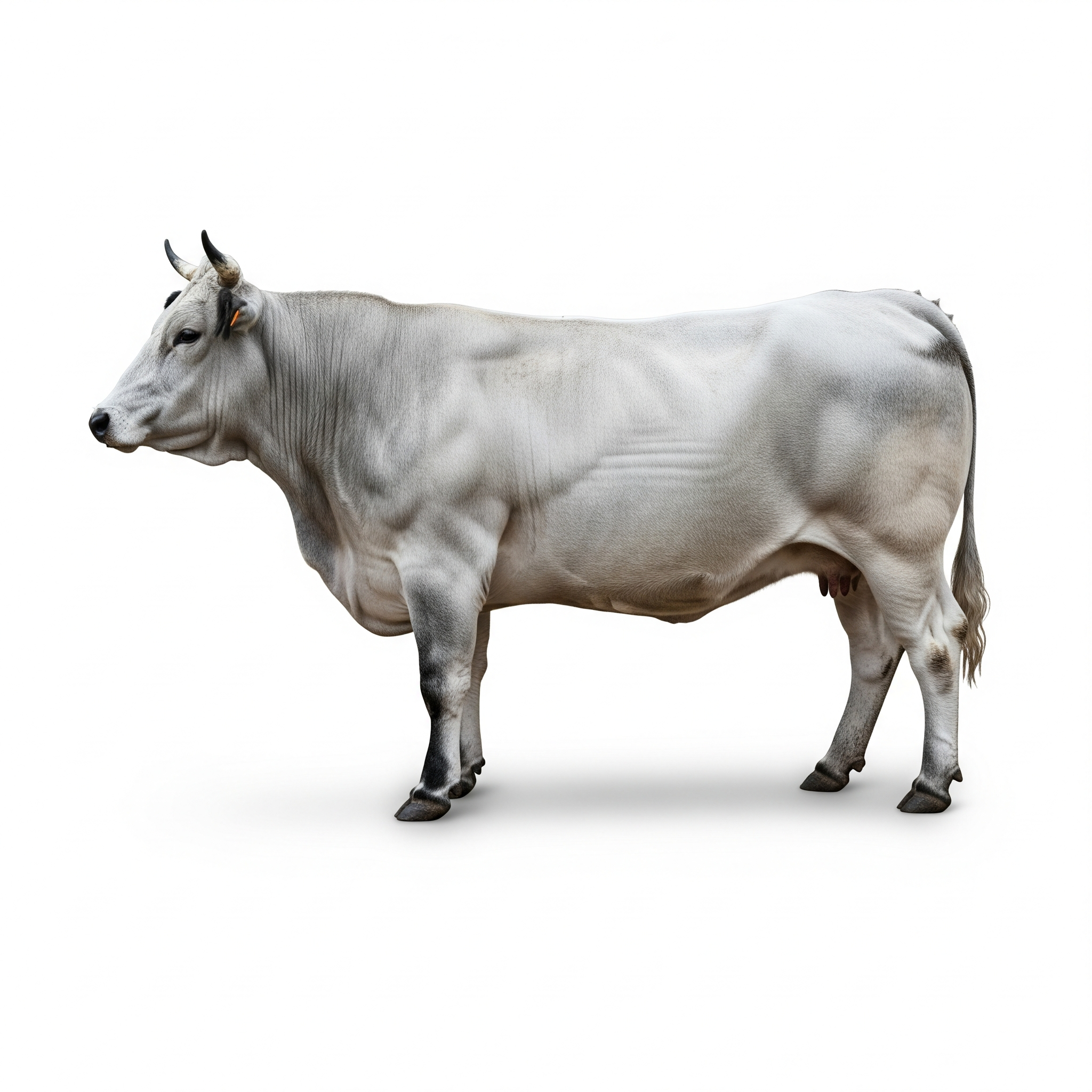
Archival print, museum-grade paper
Buy Poster
Stoneware mug, dishwasher safe
Buy Mug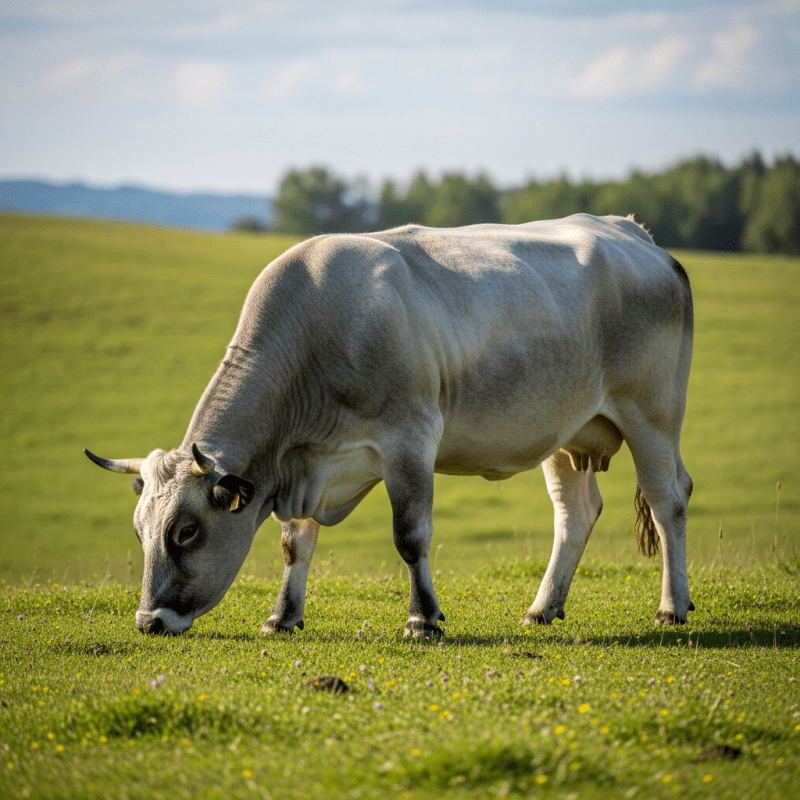
Soft cotton tee, unisex sizes
Buy ShirtIn Italy and beyond, Piedmontese cattle symbolize premium quality beef production, often featured in specialty restaurants and gourmet markets. Their unique genetic trait and regional heritage contribute to their cultural identity as a prized Italian breed.
The Piedmontese breed is a distinct Italian taurine cattle breed without widely recognized sub-breeds or regional variants. It is maintained as a single, registered breed through the national herdbook, ensuring genetic consistency and preservation of its defining double-muscling trait.


Piedmontese cattle produce exceptionally high-quality beef characterized by tenderness, leanness, and low cholesterol content. The double-muscling mutation increases the yield of prime cuts and improves carcass efficiency. Milk production is negligible and not commercially significant for this breed.
Thanks to their rapid growth and high feed efficiency, Piedmontese cattle offer a relatively sustainable beef production option by converting feed into muscle effectively. Their adaptability to various husbandry systems supports efficient land use, though like all beef cattle, their environmental footprint depends on management practices.
Effective management of Piedmontese cattle involves accommodating their muscular build while leveraging their noted calving ease. They thrive under intensive and semi-intensive systems, requiring balanced nutrition to support rapid growth and muscle development. Regular health monitoring and adherence to breed registry standards help maintain their unique genetic traits.