Bos Javanicus
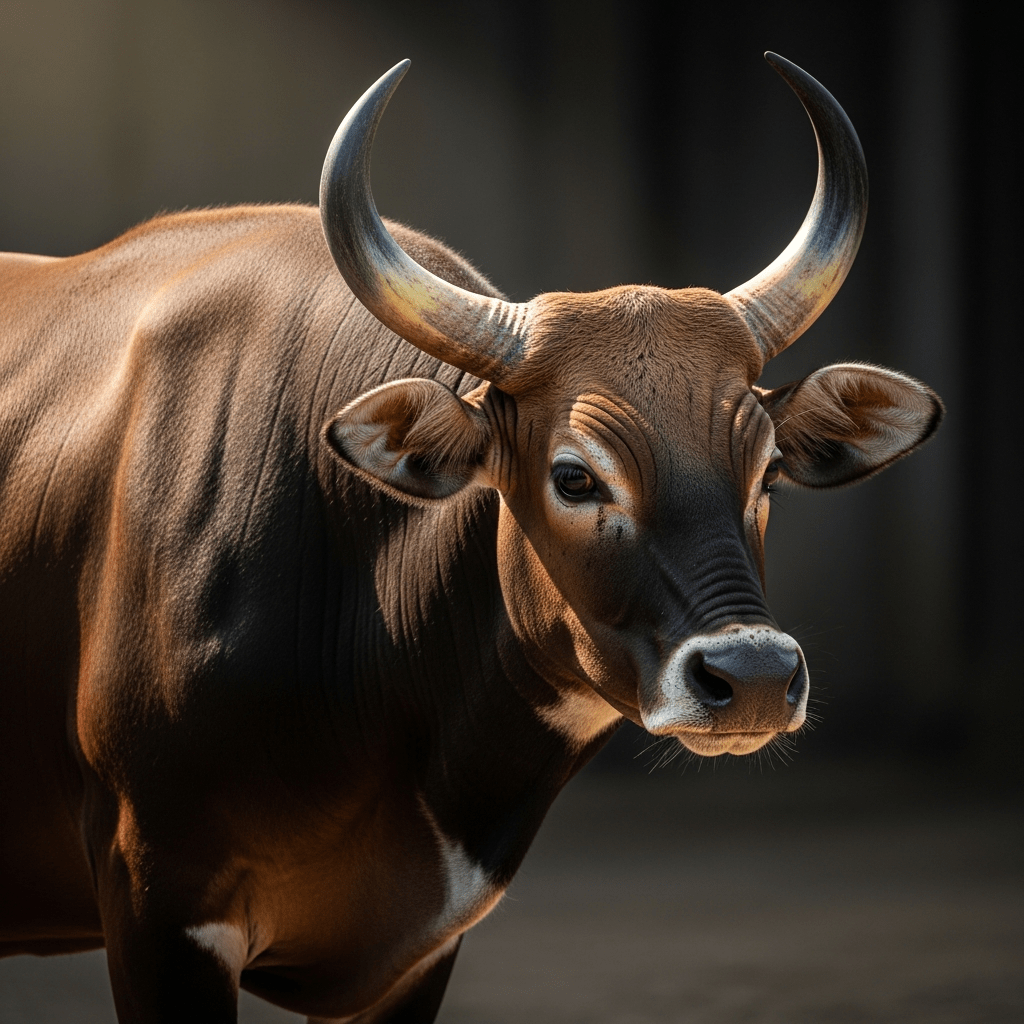
Bos javanicus, commonly known as the banteng, is a wild Southeast Asian bovine species notable for its striking sexual dimorphism, distinctive coloration, and cultural importance in the region.
Bos javanicus, commonly known as the banteng, is a wild Southeast Asian bovine species notable for its striking sexual dimorphism, distinctive coloration, and cultural importance in the region.
Originating in Southeast Asia, Bos javanicus was first scientifically described in 1823. Its natural range spans Indonesia, Cambodia, Thailand, Myanmar, and Malaysia. While primarily wild, semi-domesticated populations have been managed for centuries in Java and Bali, blending wild heritage with human stewardship.
Banteng belong to the genus Bos within the subfamily Bovinae. They are distinct from domestic cattle species such as Bos taurus and Bos indicus, though some hybridization with domestic cattle has occurred in certain regions. This species represents a wild bovine lineage closely related yet genetically separate from common domestic cattle.
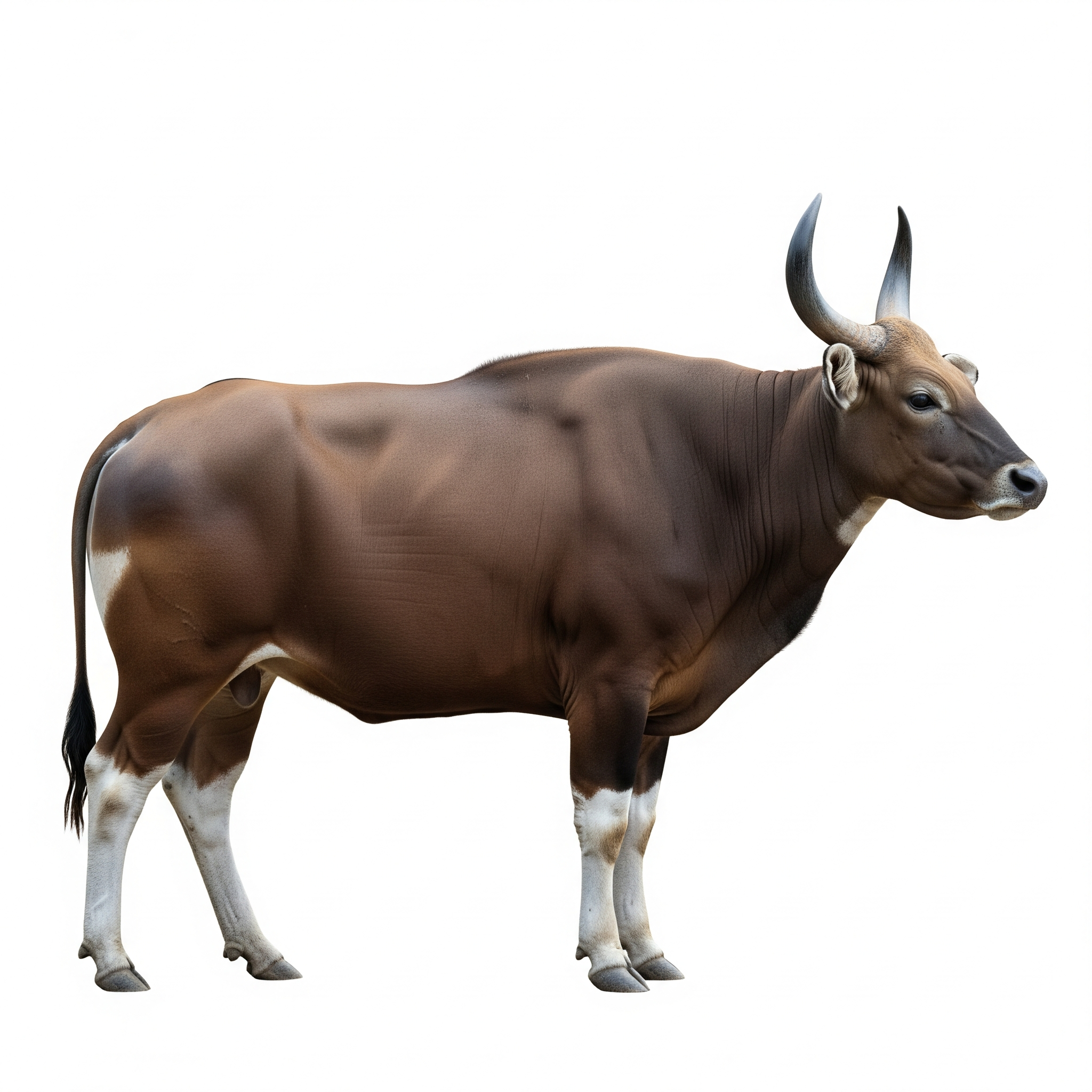
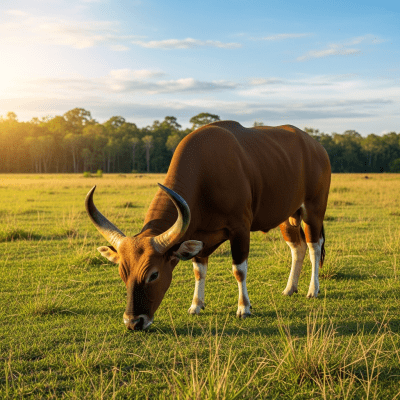
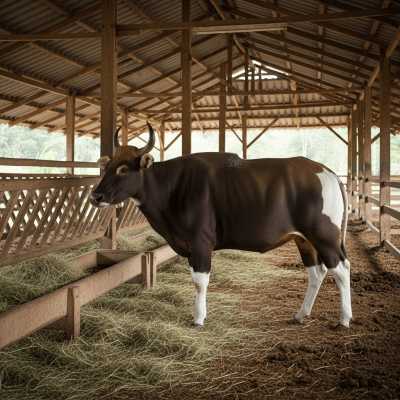
Banteng are medium to large bovids characterized by marked sexual dimorphism. Adult males display a dark chestnut to nearly black coat, while females and juveniles are reddish-brown. Both sexes feature distinctive white stockings on their legs, rump patches, and facial markings. Horns curve upward and slightly inward in both males and females, complementing their robust, agile build.
Adapted to forested and open woodland habitats, banteng exhibit both grazing and browsing behaviors. Their agility and natural wariness make them challenging to manage. In semi-domesticated settings, banteng have been used primarily for draught work and occasionally for meat production, serving as valuable livestock in traditional agricultural systems.
Bring this kind into your world illustrated posters, mugs, and shirts.
Archival print, museum-grade paper
Buy Poster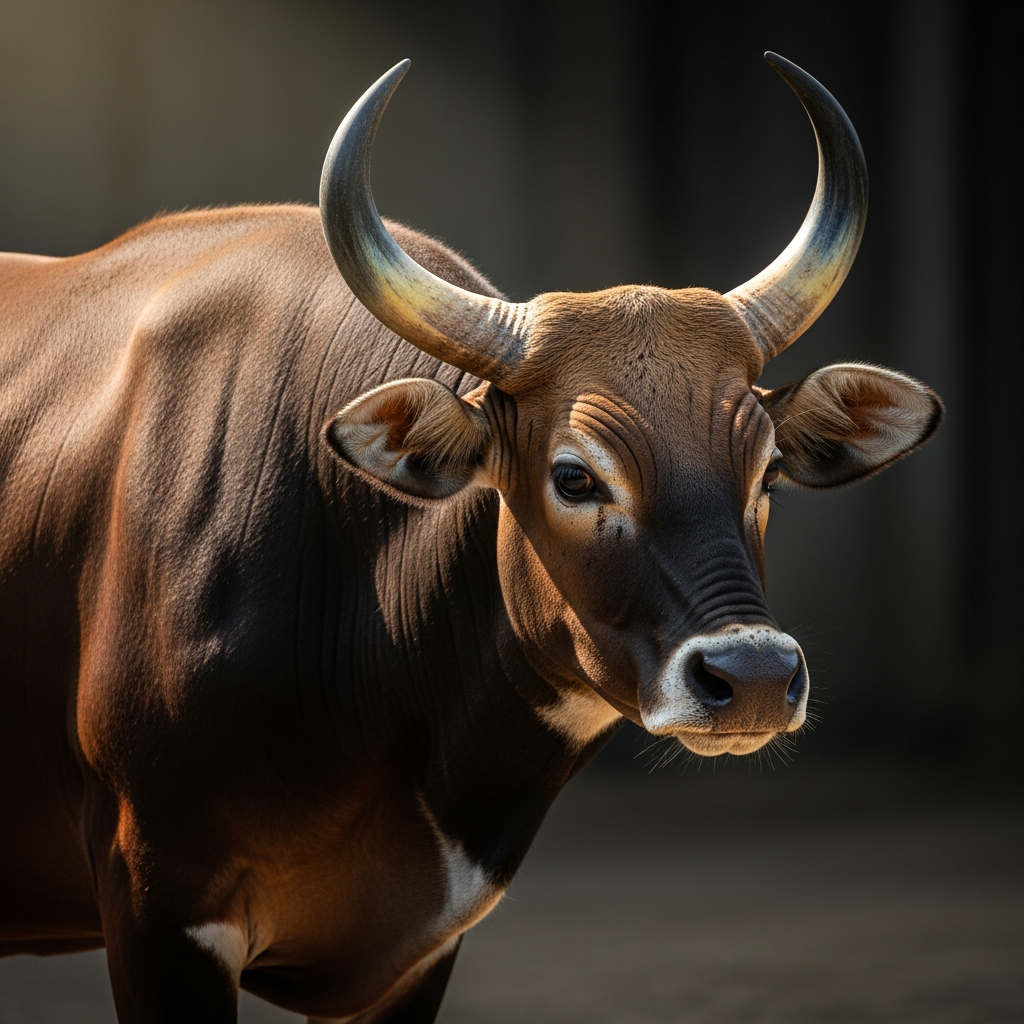
Stoneware mug, dishwasher safe
Buy Mug
Soft cotton tee, unisex sizes
Buy ShirtBanteng hold cultural importance in Southeast Asia, featuring in local traditions and ceremonies. In Bali and Java, semi-domesticated banteng are sometimes involved in ceremonial cattle races and are intertwined with regional agricultural heritage. Their presence symbolizes a link between wild nature and human culture.
While Bos javanicus itself is a wild species, semi-domesticated populations have given rise to related cattle breeds such as the Bali cattle, which retain banteng genetic heritage. These regional variants reflect adaptation to local environments and human use, though pure wild banteng remain distinct from fully domestic breeds.

Banteng are not widely used for milk production, and data on their milk quality is limited. Their meat, however, is traditionally prized for being lean and flavorful. Due to conservation restrictions, commercial exploitation of banteng meat remains minimal and often illegal, with use primarily confined to local, subsistence contexts.
Banteng play an important ecological role in Southeast Asian forests and woodlands, contributing to vegetation dynamics through their grazing and browsing. Semi-domesticated banteng populations, managed in traditional systems, coexist with natural habitats. However, habitat loss and hunting have placed wild banteng under threat, underscoring the need for conservation to maintain ecosystem balance.
Raising banteng requires accommodating their natural agility and wariness. Semi-domesticated herds are typically managed in extensive systems that allow freedom of movement and access to forested areas. Successful husbandry involves balancing their grazing needs with protection from predators and minimizing stress, making management more complex than with fully domesticated cattle.