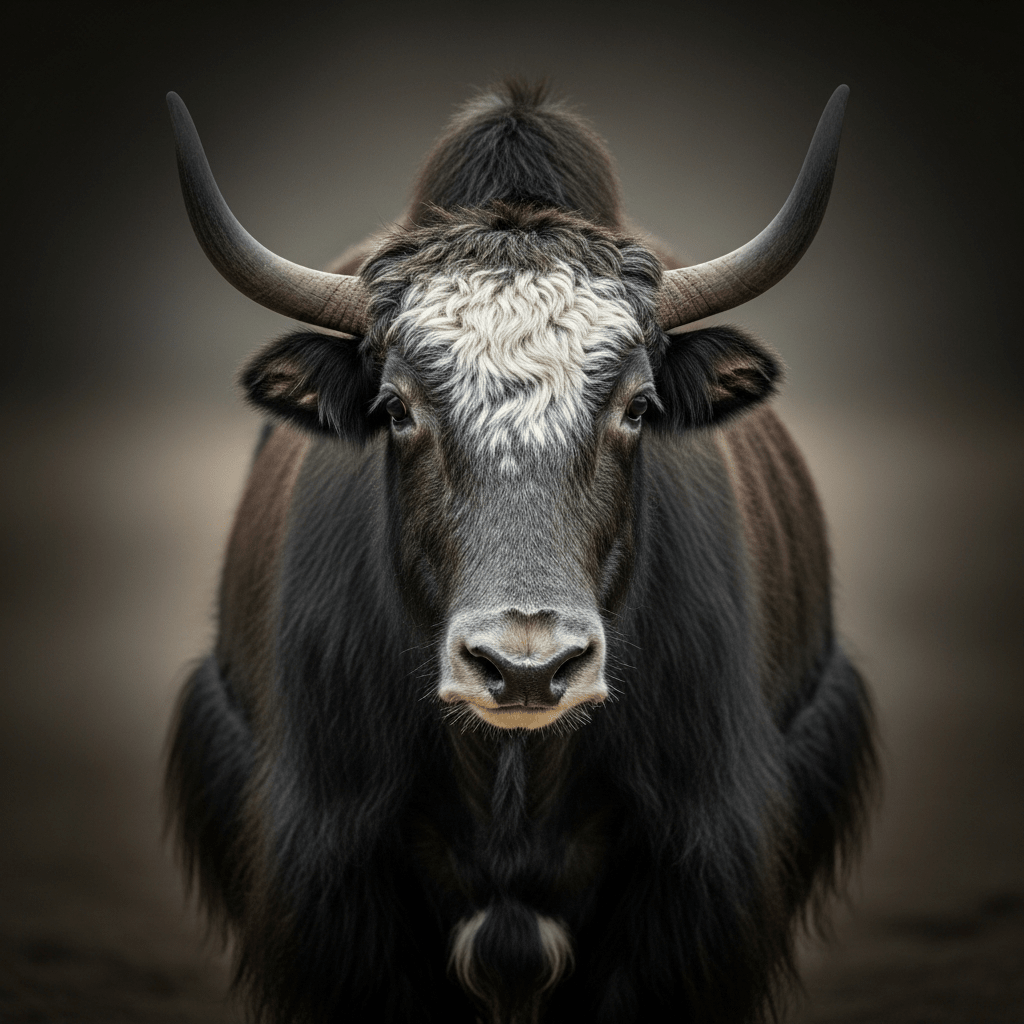
Bos Grunniens
Bos grunniens, commonly known as the yak, is a large, long-haired bovid native to the Himalayan region and Central Asia, valued for its adaptation to high-altitude environments and multipurpose utility in dairy, meat, and draft work.
Bos grunniens, commonly known as the yak, is a large, long-haired bovid native to the Himalayan region and Central Asia, valued for its adaptation to high-altitude environments and multipurpose utility in dairy, meat, and draft work.
The yak originates from the Tibetan Plateau and surrounding high-altitude areas of China, Nepal, Bhutan, and India. Domestication occurred gradually over 2,000 to 3,000 years ago, deriving from wild yak populations that thrived in these cold, hypoxic environments.
Though not true cattle (Bos taurus), Bos grunniens is closely related and often grouped culturally with cows. It belongs to the genus Bos within the subfamily Bovinae, encompassing both wild and domestic forms sometimes treated as subspecies or a species complex.
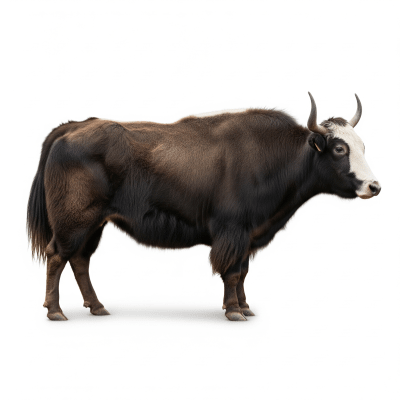
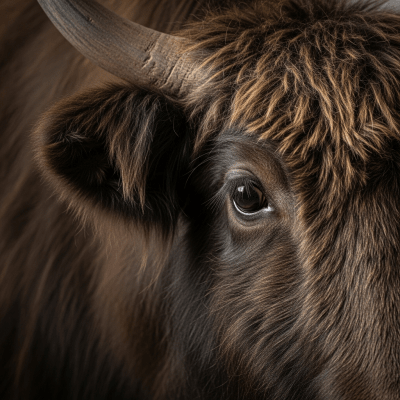
Yaks are large bovids characterized by a dense, long-haired coat that can be black, brown, or white. They feature a pronounced shoulder hump and large, curved horns. Domestic yaks typically weigh between 350 and 600 kilograms, with a robust body built for endurance in cold, high-altitude climates.
Yaks serve multiple roles in Himalayan pastoral cultures: they provide milk, meat, fiber, and labor. Their milk is processed into butter, cheese, and yogurt; meat is lean and flavorful; fiber is used for textiles; hides supply leather; and dung acts as fuel. Yaks are also essential draft animals for transport and plowing in rugged mountainous terrain.
Bring this kind into your world illustrated posters, mugs, and shirts.
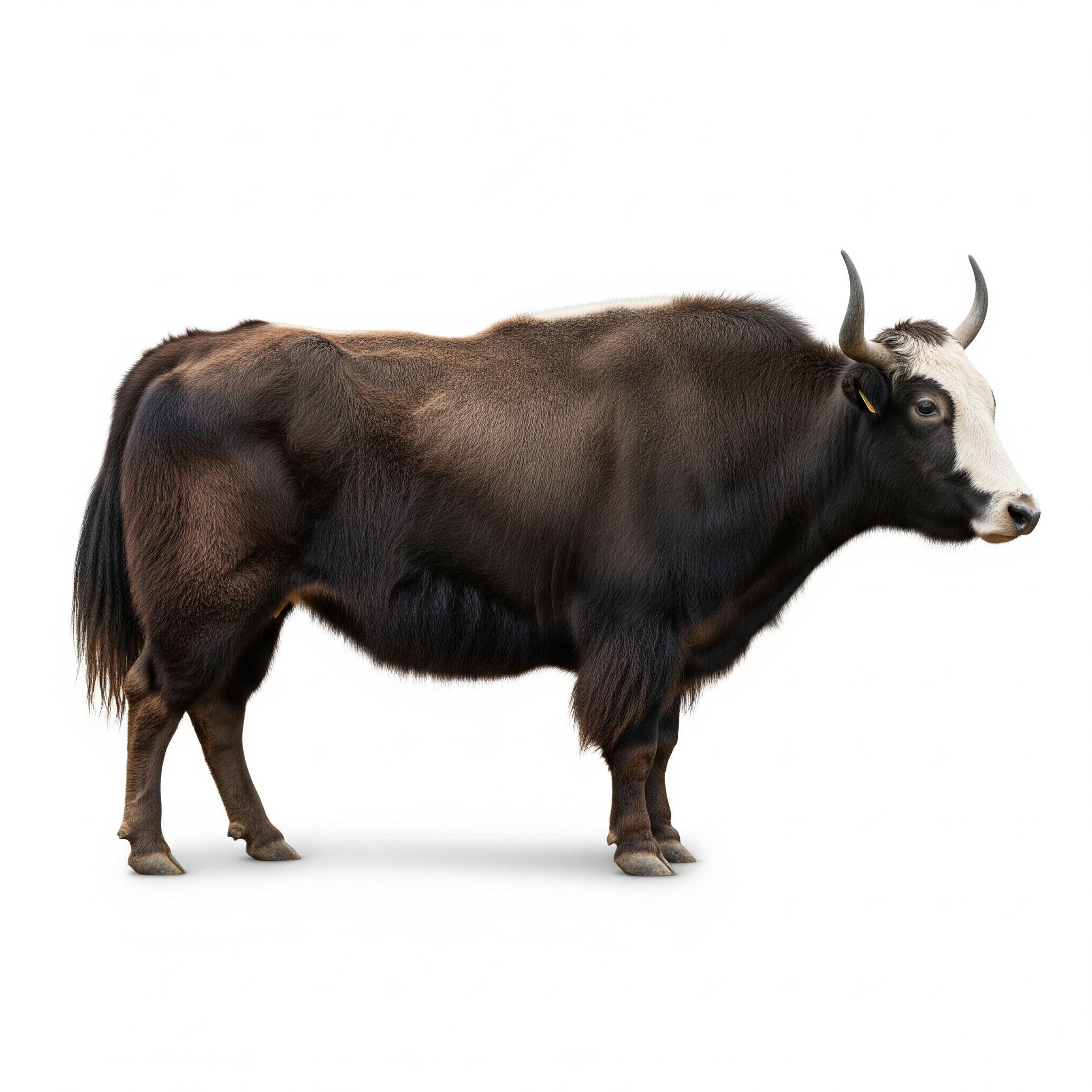
Archival print, museum-grade paper
Buy Poster
Stoneware mug, dishwasher safe
Buy Mug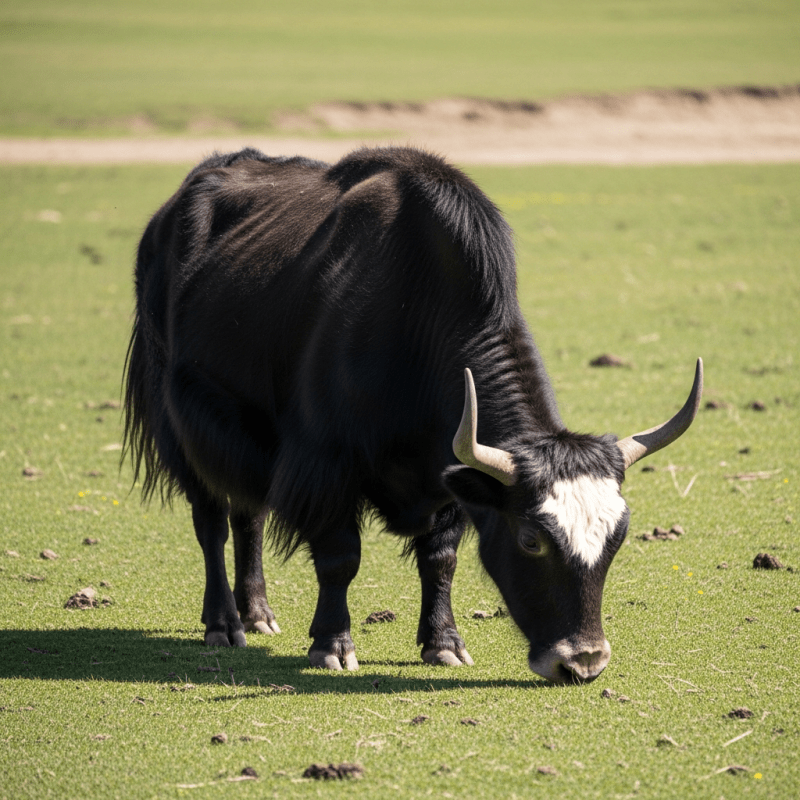
Soft cotton tee, unisex sizes
Buy ShirtIn Himalayan societies, yaks hold deep cultural importance. Yak butter tea is a staple beverage, and yaks appear in local art and mythology as symbols of endurance and prosperity. The term “cow” in these regions often includes female yaks, reflecting their integral role in daily life and tradition.
While formal breed registries for yaks are limited, domestic yaks show regional variations in size, coat color, and fiber quality across the Himalayan and Central Asian range. Wild yaks represent a larger, more robust form with darker coloration and wider horn spans, distinguished from domestic types primarily by size and habitat.
Yak milk production ranges from about 1 to 3 liters per day, with annual yields between 365 and 1,095 liters. The milk is rich and used to produce butter, cheese (notably chhurpi), and yogurt. Yak meat is lean, flavorful, and highly valued in local markets for its quality and nutritional profile.
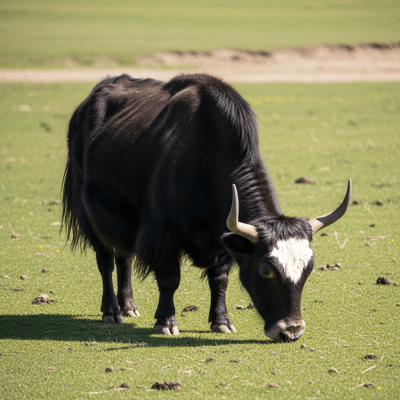
Yaks are well-adapted to fragile high-altitude ecosystems, grazing on sparse vegetation with high feed conversion efficiency. However, their sensitivity to heat and lowland diseases limits their range. Sustainable yak husbandry supports mountain livelihoods but requires careful management to avoid overgrazing and habitat degradation.
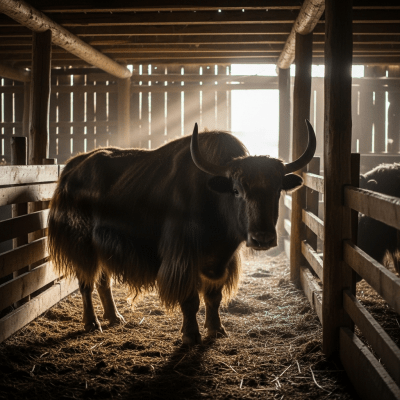
Effective yak management involves maintaining herds in cool, high-altitude pastures above 3,000 meters, protecting them from heat stress and diseases common at lower elevations. Their hardy nature and endurance make them suitable for extensive grazing systems, while their fiber and milk production benefit from attentive seasonal care and supplemental feeding during harsh winters.