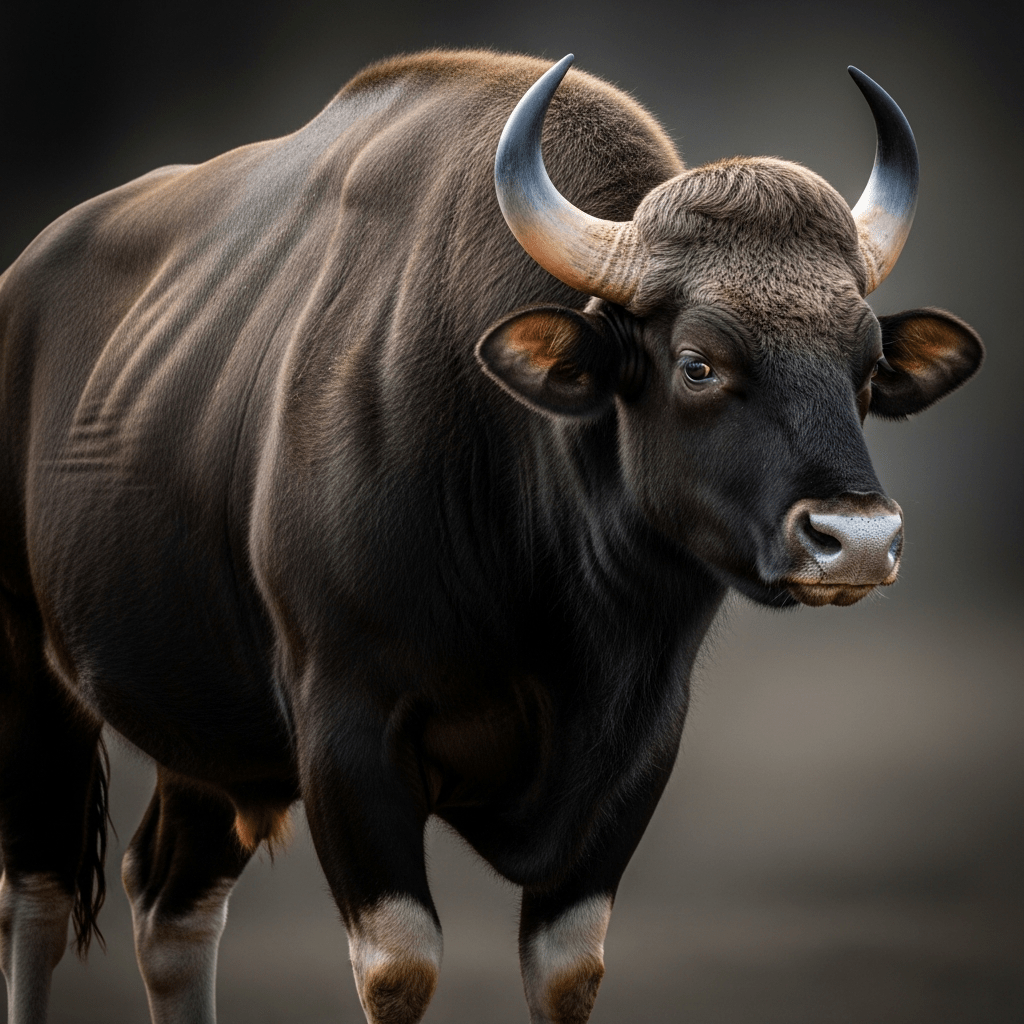
Bos Gaurus
Bos gaurus, commonly known as the gaur, is the largest wild cattle species native to South and Southeast Asia, distinguished by its massive size and dark coat.
Bos gaurus, commonly known as the gaur, is the largest wild cattle species native to South and Southeast Asia, distinguished by its massive size and dark coat.
The gaur was first scientifically described in 1827 by Hamilton Smith. It originates from forested and hilly regions across South and Southeast Asia and remains a wild species with no domesticated descendants.
Belonging to the genus Bos, the gaur is a wild bovine species closely related to domestic cattle but distinct as a wild species without breed derivatives. It is part of the Bovidae family and Bovinae subfamily.
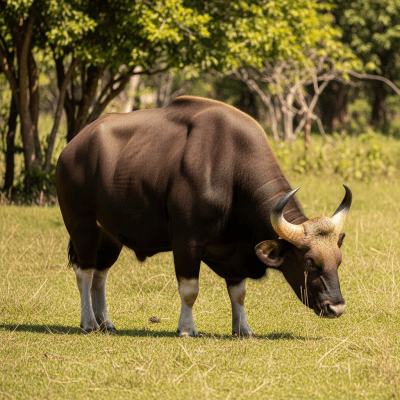
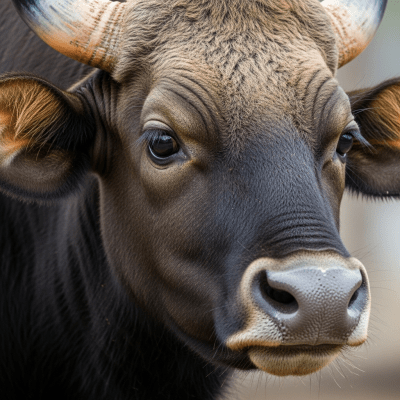
The gaur is notable for its imposing stature, with males reaching up to 1,000 kg and standing between 165 and 220 cm tall at the shoulder. It has a robust build, a pronounced dorsal ridge, and a dark brown to black coat with lighter coloration on the lower legs. Both males and females bear curved horns.
As a wild grazer and browser, the gaur feeds on grasses, leaves, and shrubs, living in social herds adapted to forested and hilly environments. Unlike domestic cattle, it has no agricultural or draught use and is not managed by humans.
Bring this kind into your world illustrated posters, mugs, and shirts.
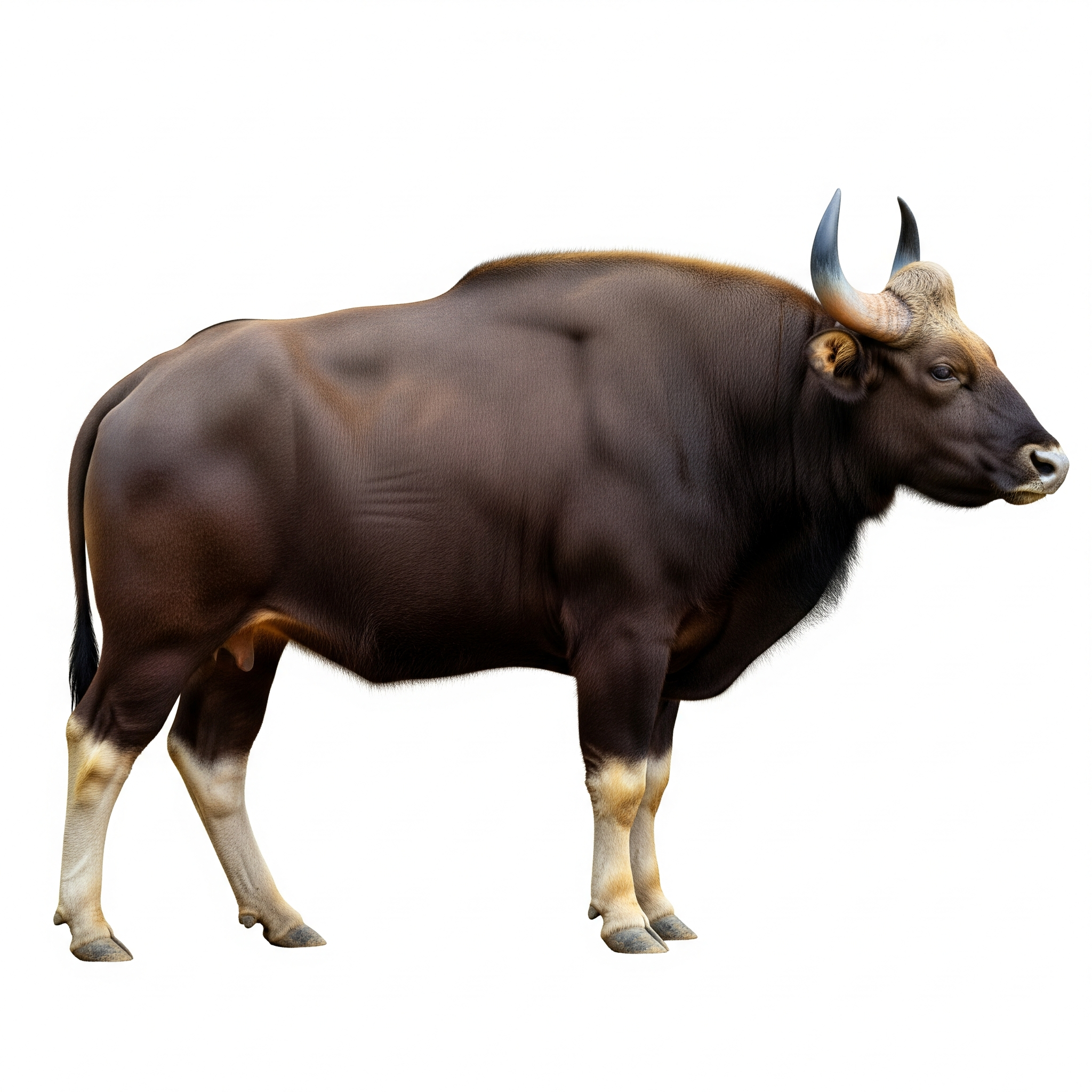
Archival print, museum-grade paper
Buy Poster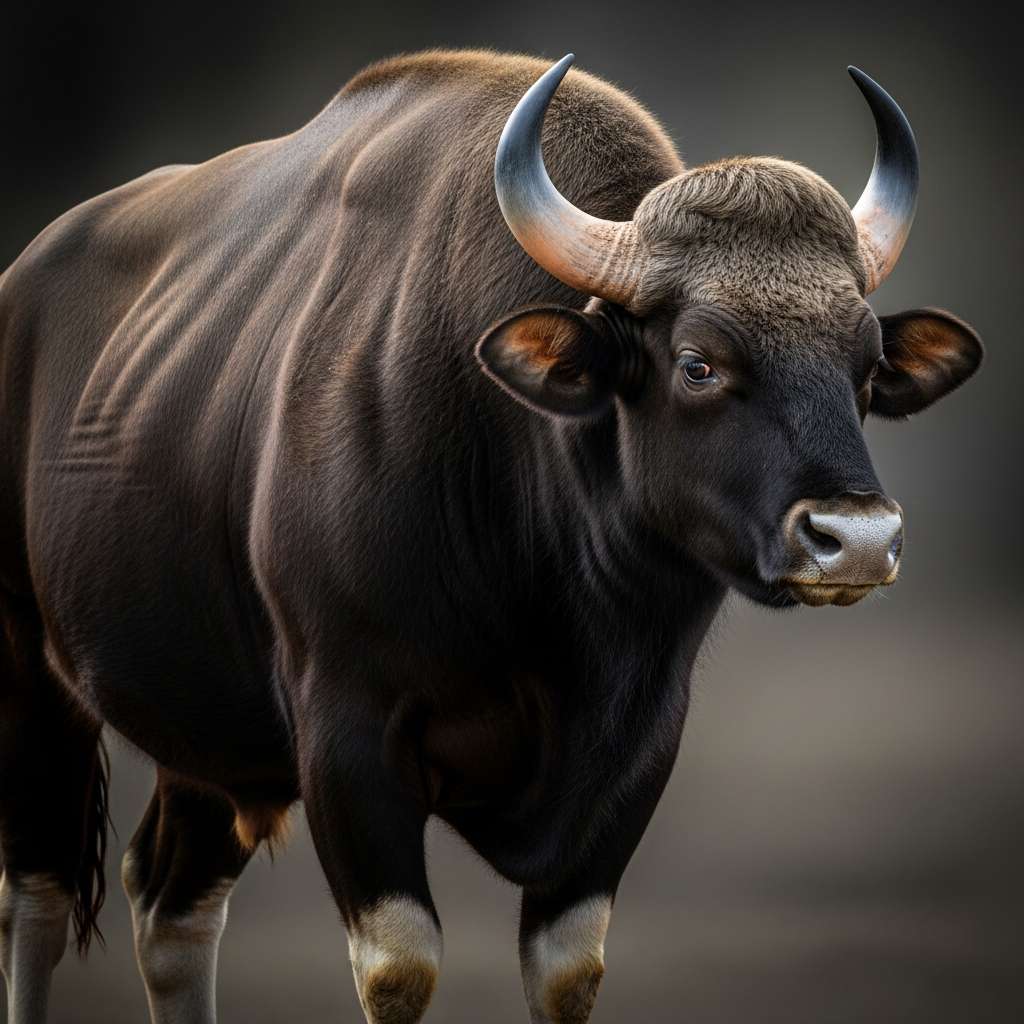
Stoneware mug, dishwasher safe
Buy Mug
Soft cotton tee, unisex sizes
Buy ShirtThe gaur holds cultural importance in some regions of South and Southeast Asia, often recognized in local names such as Indian bison and seladang. While it appears in regional folklore and symbolism, it is primarily valued as a wild species rather than a domesticated animal.
As a wild species, the gaur does not have breeds or domesticated variations. However, recognized subspecies exist, though their classification remains under scientific review.
The gaur is not used for milk or meat production commercially. While illegal hunting for meat occurs in some areas, there is no formal market or agricultural use for its milk or meat.
Gaurs play an important ecological role as large herbivores in forest ecosystems, influencing vegetation dynamics and serving as prey for large predators. Their conservation is vital for maintaining biodiversity in their native habitats.
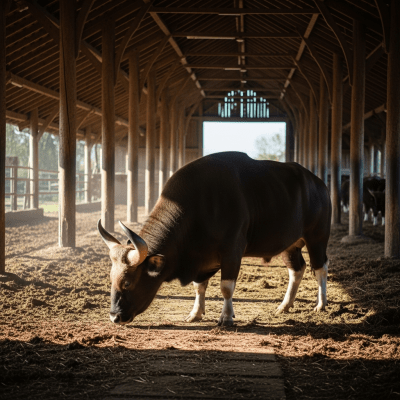
Being a wild species, the gaur is not subject to husbandry or management practices typical of domestic cattle. Conservation efforts focus on habitat protection and anti-poaching measures rather than direct care or breeding management.