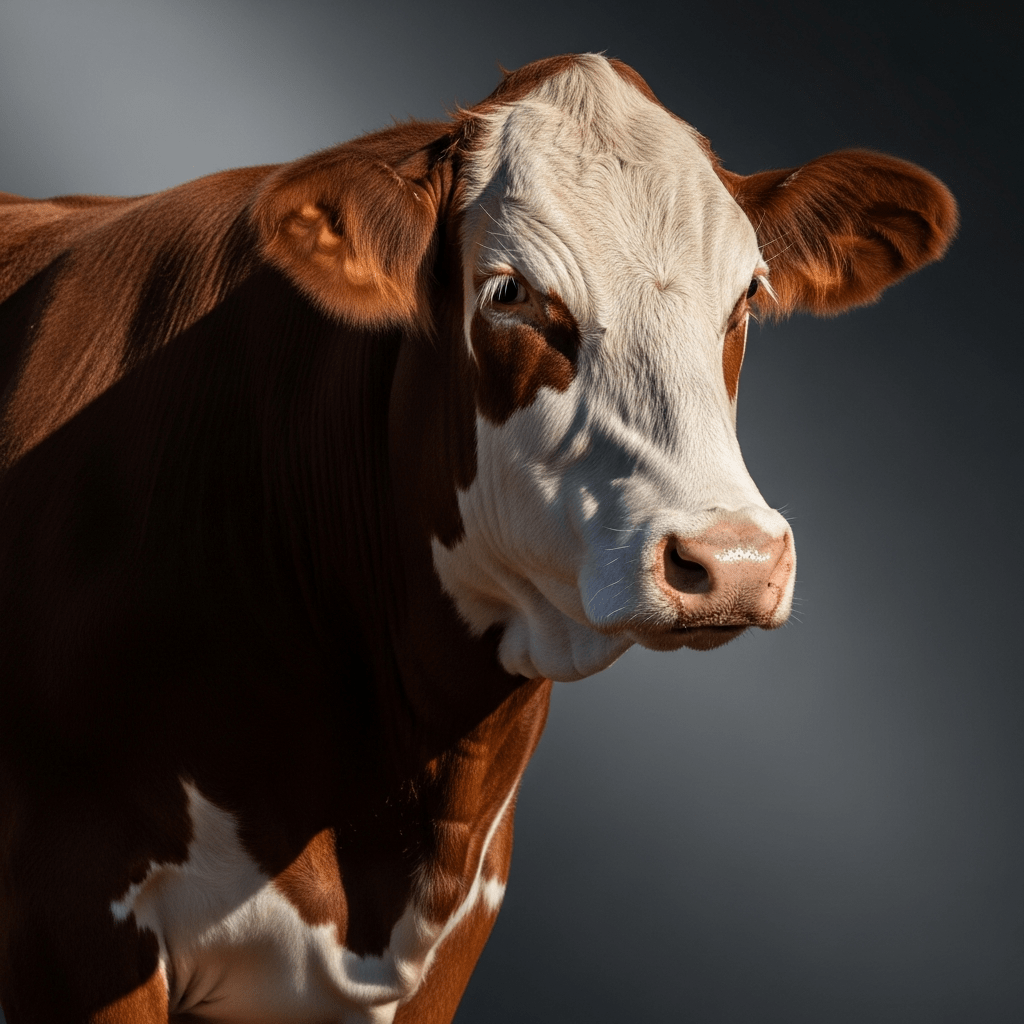
Beefmaster
The Beefmaster is a versatile American beef cattle breed renowned for its adaptability, fertility, and efficient beef production.
The Beefmaster is a versatile American beef cattle breed renowned for its adaptability, fertility, and efficient beef production.
Developed in Texas during the early 1930s by Tom Lasater, the Beefmaster breed combines approximately 50% Brahman, 25% Hereford, and 25% Shorthorn genetics. It was selectively bred for six key traits: weight, conformation, milking ability, fertility, hardiness, and disposition. The breed registry was formally established in 1961 by Beefmaster Breeders United.
The Beefmaster is a composite breed within domestic cattle, blending Bos indicus (Brahman) and Bos taurus (Hereford and Shorthorn) lineages. It fits within beef cattle classifications, emphasizing hybrid vigor from taurine and indicine ancestry to thrive in diverse environments.
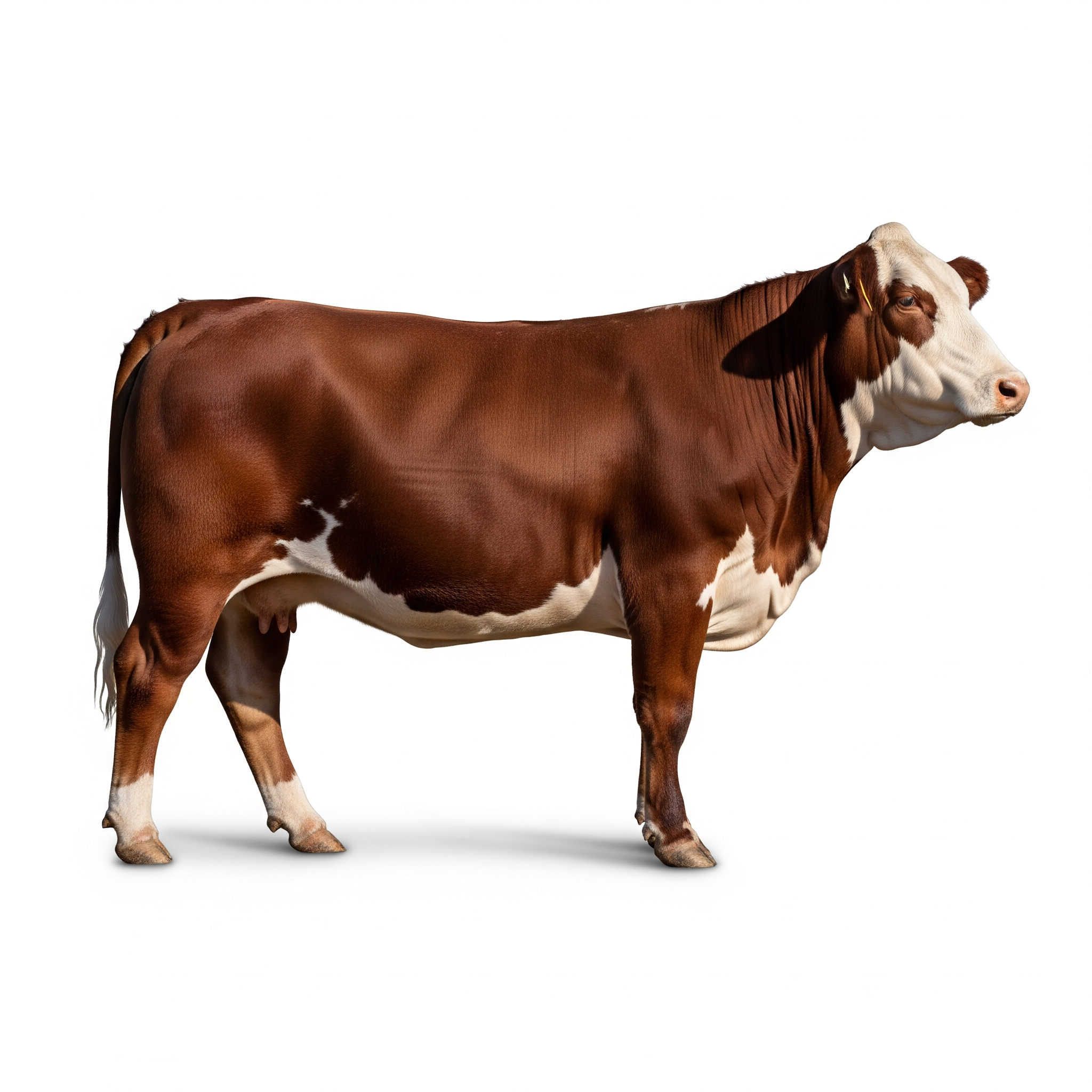
Beefmasters are medium to large cattle with a robust frame, loose skin, and moderate to heavy muscling. Their coat colors vary widely, most commonly red or dun, though all colors are accepted. Mature bulls typically weigh between 900 and 1,200 kg, while cows range from 600 to 800 kg.
Primarily raised for beef, Beefmasters excel in rapid growth and efficient forage utilization. They exhibit strong maternal instincts and demonstrate heat tolerance and disease resistance, making them well-suited for harsh climates, especially in the southern United States. Their adaptability supports sustainable ranching and rotational grazing systems.
Bring this kind into your world illustrated posters, mugs, and shirts.
Archival print, museum-grade paper
Buy Poster
Stoneware mug, dishwasher safe
Buy Mug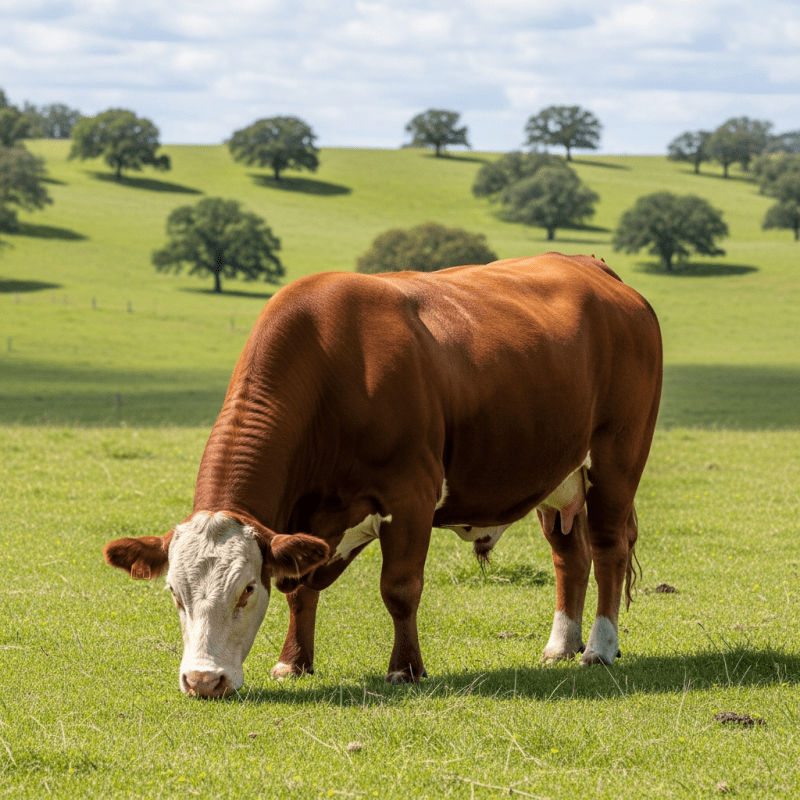
Soft cotton tee, unisex sizes
Buy ShirtWhile not widely featured in art or myth, the Beefmaster holds cultural importance in American ranching heritage as a symbol of innovation in breed development and sustainable beef production, particularly in Texas and the southern U.S.
The Beefmaster itself is a distinct composite breed without widely recognized sub-breeds or regional variants. Its genetic makeup reflects a deliberate blend of Brahman, Hereford, and Shorthorn cattle, optimized for beef production and environmental adaptability.
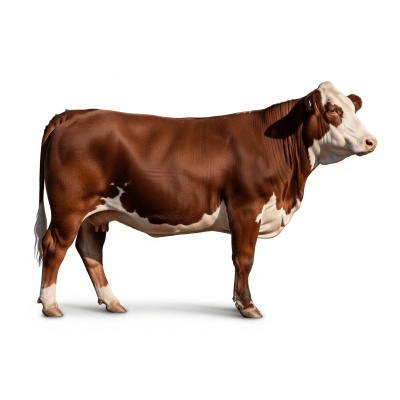
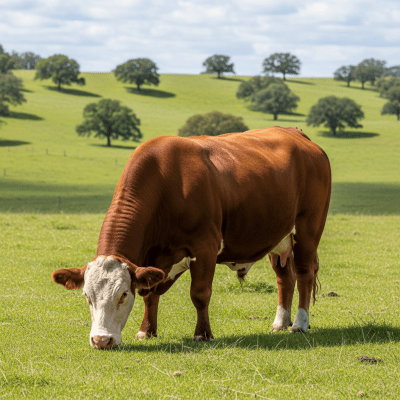
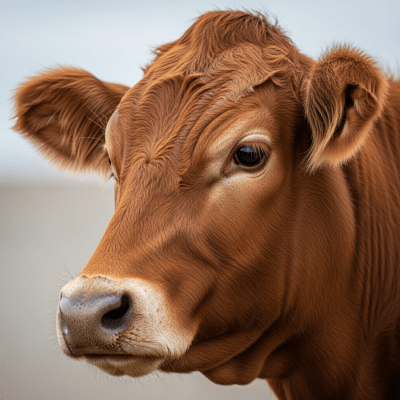
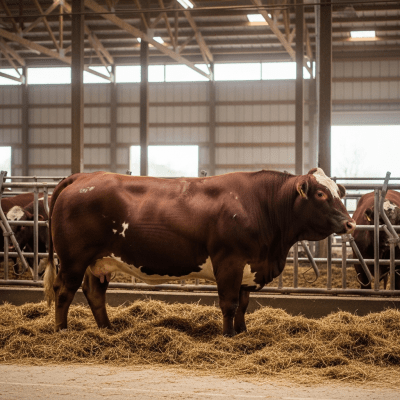
Beefmaster cattle produce beef prized for tenderness and marbling, with steers typically yielding carcasses weighing between 300 and 400 kg at slaughter. While milk production is moderate, it sufficiently supports healthy calf growth, contributing to strong weaning weights.
Thanks to their Brahman heritage, Beefmasters are heat tolerant and disease resistant, enabling efficient forage use and adaptability to harsh environments. These traits support sustainable grazing practices and reduce the need for intensive inputs, making them well-suited for environmentally conscious beef production systems.
Best practices for managing Beefmasters include providing ample forage and water to support their efficient growth and reproductive performance. Their hardiness reduces veterinary interventions, but attention to parasite control and heat stress mitigation remains important. They thrive in extensive ranching systems, particularly in warm climates where their adaptability is a key advantage.