
Fractus
Fractus is a species of cloud recognized by its ragged, irregular fragments that appear as torn or shredded pieces beneath or near larger cloud formations.
Fractus is a species of cloud recognized by its ragged, irregular fragments that appear as torn or shredded pieces beneath or near larger cloud formations.
The name fractus derives from the Latin word meaning "to break" or "to fragment," aptly describing the cloud's torn appearance. Formally classified in the 20th century within the World Meteorological Organization's cloud taxonomy, fractus has historical roots linked to early cloud observations by Luke Howard, who noted similar ragged clouds often called "scud." This species applies to both Stratus and Cumulus genera, reflecting its fragmented form beneath parent clouds.
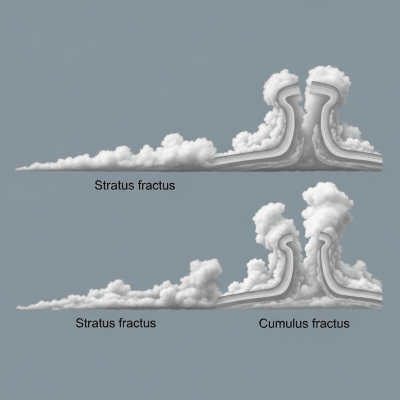
Fractus is a cloud species within the broader genera of Stratus and Cumulus. It is identified by its fragmented morphology and is designated as Stratus fractus or Cumulus fractus. Classified as a low-level cloud, fractus typically forms as accessory fragments beneath larger mother clouds such as Nimbostratus, Cumulonimbus, and Altostratus.
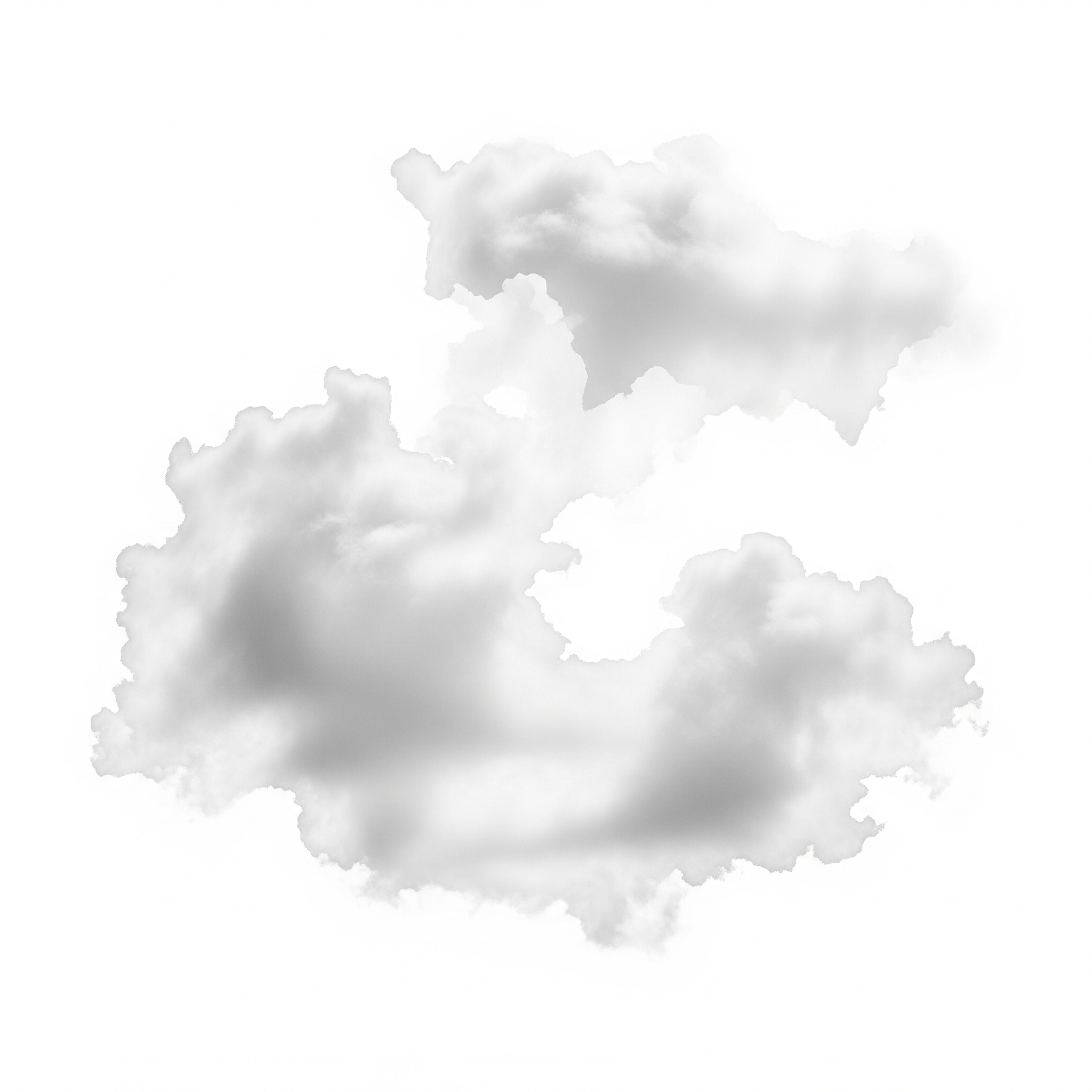
These clouds manifest as small, irregular, ragged fragments with diffuse, wispy edges. They lack a well-defined base or top and often appear as detached shreds or tatters floating beneath or near more substantial cloud masses. Their colors range from gray to whitish, depending on lighting and background clouds, evoking a shredded or torn visual effect often described as "scud."
Fractus clouds form through mechanical disruption—wind shear, turbulence, or precipitation downdrafts break apart larger clouds into these ragged fragments. Stratus fractus commonly develops beneath precipitation-bearing clouds, while Cumulus fractus arises from the disintegration of small cumulus clouds or turbulent mixing. Though fractus itself does not produce precipitation, its presence signals turbulent atmospheric conditions and often indicates nearby active weather, serving as a visual cue for meteorologists and aviators.
Bring this kind into your world illustrated posters, mugs, and shirts.
Archival print, museum-grade paper
Buy Poster
Stoneware mug, dishwasher safe
Buy Mug
Soft cotton tee, unisex sizes
Buy ShirtIn weather lore and storm chasing communities, fractus clouds—commonly called "scud"—symbolize unsettled or stormy weather. They appear in art and literature as evocative signs of atmospheric turbulence and change. Their ragged, torn forms have inspired imagery associated with tempestuous skies and dynamic weather, reinforcing their role as natural indicators of atmospheric unrest.
Fractus clouds form primarily through mechanical disruption of larger cloud masses. Wind shear and turbulence break apart parent clouds such as Nimbostratus, Cumulonimbus, or Altostratus, creating fragmented, ragged pieces. Precipitation downdrafts can also churn moist air beneath these clouds, leading to the development of Stratus fractus. Similarly, Cumulus fractus results from the disintegration of small cumulus clouds or turbulent mixing in the lower atmosphere. These processes produce the characteristic wispy, irregular fragments lacking defined structure.


Fractus clouds are low-level formations, typically occurring from near the surface up to about 2,000 meters above ground level. They are found worldwide wherever turbulent mixing or precipitation downdrafts disrupt larger cloud masses. Their occurrence is especially frequent in mid-latitude and tropical regions during unsettled or stormy weather conditions.
While fractus clouds themselves pose no direct hazard, their presence often indicates turbulent air, gusty winds, and proximity to precipitation or convective activity. These conditions can impact aviation safety by reducing visibility and increasing turbulence. Ground operations may also experience gusty winds and rapidly changing weather when fractus clouds are observed beneath larger storm systems.
Fractus clouds are primarily identified through visual observation due to their small size and diffuse nature. Ground-based photography and ceilometer data can assist in their detection. Satellite imagery offers limited identification capability, as fractus clouds are generally too small and fragmented to be distinctly resolved, though high-resolution visible imagery may reveal wispy, low-level features.
On satellite imagery, fractus clouds are challenging to detect clearly because of their small scale and diffuse edges. They may appear as faint, wispy features in high-resolution visible images but typically lack distinct signatures in infrared or other spectral bands. Their fragmented nature and low altitude contribute to their subtle satellite presence.