
Fog
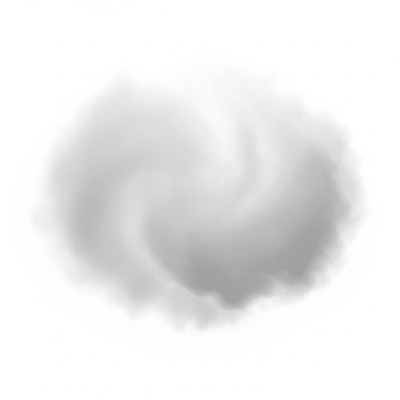
Fog is a ground-level cloud, appearing as a uniform, grayish veil that reduces visibility to less than one kilometer, effectively cloaking the landscape in mist.
Fog is a ground-level cloud, appearing as a uniform, grayish veil that reduces visibility to less than one kilometer, effectively cloaking the landscape in mist.
The word "fog" traces back to Old Norse, meaning "spray" or "drizzle," and has been part of English since the 14th century. Meteorologically, fog is recognized as a surface manifestation of stratus clouds, forming near the Earth’s surface under specific cooling and moisture conditions. Though not originally included in early cloud classification systems, fog is now treated as a cloud type in operational meteorology due to its physical nature and impact.
Fog belongs to the low-level cloud family and is classified as a surface-based stratus cloud. It lacks a formal genus abbreviation but is operationally identified in aviation and meteorology by codes such as FG and FZFG. Its parent cloud type is stratus, reflecting its nature as a ground-hugging cloud layer.
Visually, fog presents as a uniform, featureless veil of gray or white that can vary in density. It often appears as a misty, obscuring layer close to the ground, dulling colors and softening outlines, with a texture that feels damp and cool to the senses.
Fog forms when air near the ground cools to its dew point, causing water vapor to condense into tiny suspended droplets. It plays a critical role in reducing visibility, impacting transportation safety across aviation, maritime, and road travel. Meteorologists monitor fog closely to issue warnings and manage its effects on daily life and operations.
Bring this kind into your world illustrated posters, mugs, and shirts.

Archival print, museum-grade paper
Buy Poster
Stoneware mug, dishwasher safe
Buy Mug
Soft cotton tee, unisex sizes
Buy ShirtFog has long been a symbol of mystery and obscurity in literature and art, evoking moods of uncertainty and quiet introspection. Its ethereal presence often inspires poetic imagery and is woven into cultural narratives as a metaphor for the unknown or the hidden.
Fog forms through several meteorological processes, all involving cooling of moist air near the surface to its dew point. Radiational cooling causes fog on clear nights as the ground loses heat. Advection fog develops when warm, moist air moves over cooler surfaces, cooling the air to saturation. Upslope fog forms as moist air ascends terrain, cooling adiabatically. Steam fog arises when cold air passes over warmer water bodies, causing evaporation and condensation near the surface.


Fog is a low-level cloud phenomenon, typically confined to the surface up to about 50 meters in height. It occurs worldwide but is especially frequent in coastal zones, valleys, and regions prone to temperature inversions where moisture accumulates near the ground.
Fog poses significant hazards by drastically reducing visibility, leading to increased risks of accidents in aviation, maritime navigation, and road transport. Freezing fog can cause dangerous ice accumulation on surfaces and aircraft. Awareness and caution are essential during fog events, with safety measures including reduced speeds, use of fog lights, and reliance on instruments in aviation.
Fog is observed and measured using visibility sensors, ceilometers, lidar, and human observation. Satellite imagery assists in identifying fog-covered areas, though distinguishing fog from low stratus clouds often requires surface data. Meteorological stations routinely monitor fog to support forecasts and warnings.
In satellite imagery, fog appears as low, uniform, bright white areas in visible bands. However, it is challenging to differentiate fog from low stratus clouds solely by satellite, necessitating complementary surface observations. Infrared imagery may show fog as cooler, low-lying features, but resolution limits and atmospheric layering complicate detection.