
Altostratus
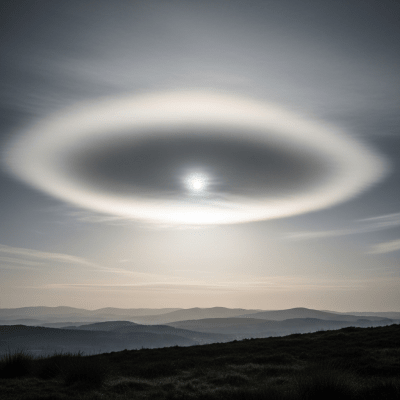
Altostratus translucidus is a mid-level cloud variety characterized by its thin, semi-transparent sheet-like layer that allows the sun or moon to be seen as a diffuse bright spot through a uniform grey or bluish-grey veil.
Altostratus translucidus is a mid-level cloud variety characterized by its thin, semi-transparent sheet-like layer that allows the sun or moon to be seen as a diffuse bright spot through a uniform grey or bluish-grey veil.
The name Altostratus translucidus derives from Latin roots meaning "high layer" and "translucent," reflecting its elevated, thin cloud form. This variety was formally recognized and named in the 20th century within the World Meteorological Organization's International Cloud Atlas, building on Luke Howard’s foundational 19th-century cloud classification.
Altostratus translucidus belongs to the altostratus genus, a group of mid-level clouds forming extensive layers. The translucidus variety specifically denotes the semi-transparent form within this genus, distinguished from the opaque altostratus opacus variety. It is classified as a mid-level cloud, typically found between 2,000 and 7,000 meters altitude.
This cloud appears as a broad, uniform sheet of grey to bluish-grey color, thin enough to reveal the sun or moon as a bright, softly diffused spot rather than a sharp disk. It lacks distinct structure or shading, presenting a smooth, continuous veil across the sky.
Altostratus translucidus commonly signals the approach of warm or occluded fronts, formed by widespread ascent of moist air. While it rarely produces precipitation itself, it often precedes thicker altostratus or nimbostratus layers that bring rain or snow. Meteorologists use its presence as an early indicator of changing weather, and aviators note it for potential visibility reductions and evolving conditions.
Bring this kind into your world illustrated posters, mugs, and shirts.

Archival print, museum-grade paper
Buy Poster
Stoneware mug, dishwasher safe
Buy Mug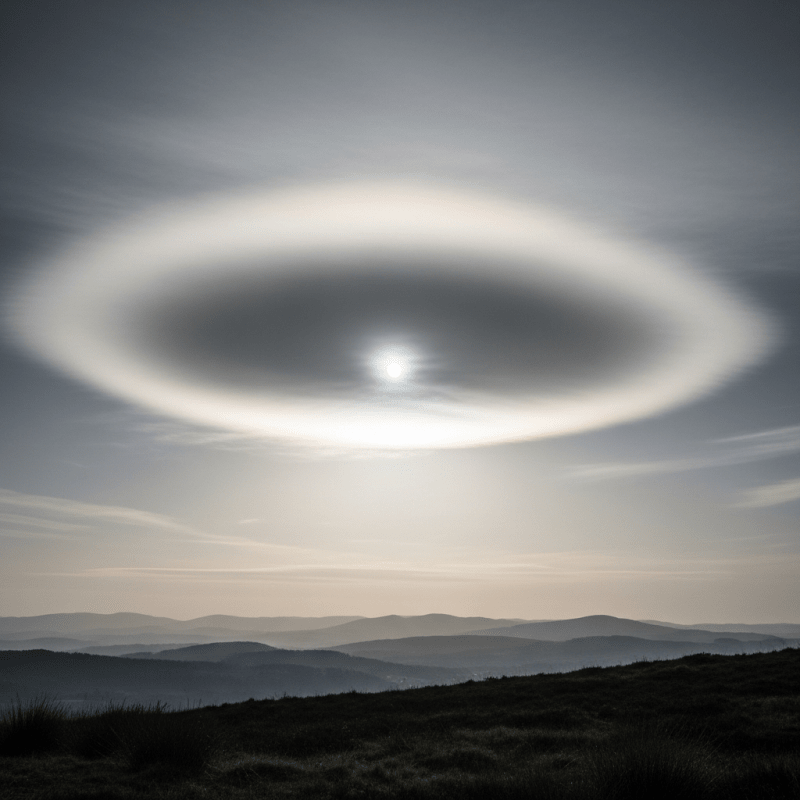
Soft cotton tee, unisex sizes
Buy ShirtThough lacking prominent cultural symbolism, altostratus translucidus is noted in educational and observational contexts as the cloud that softly veils the sun or moon, creating a diffuse glow. It features in cloud identification guides and serves as a subtle atmospheric sign of impending weather shifts.
Altostratus translucidus forms through the broad, gentle ascent of moist air masses, commonly ahead of warm or occluded fronts. This lifting cools the air, causing condensation into a widespread, thin cloud layer. It may develop from the thinning of nimbostratus clouds or the thickening of altocumulus layers, resulting in its characteristic translucent sheet.



As a mid-level cloud, altostratus translucidus typically occurs between 2,000 and 7,000 meters altitude, though exact heights vary with latitude and season. It is globally distributed but most frequently observed in mid-latitude regions where frontal weather systems are common.
Altostratus translucidus poses minimal direct hazards. It may reduce visibility of celestial bodies and indicate deteriorating weather conditions. For aviation, it signals potential changes in visibility and the approach of precipitation but rarely causes turbulence or icing.
This cloud is primarily identified through visual observation, noting its uniform, semi-transparent appearance and the visible sun or moon. Ceilometers can measure its base height, while satellite remote sensing (using visible and infrared bands) detects its uniform, light-grey signature and semi-transparent nature.
In satellite imagery, altostratus translucidus appears as a uniform, light-grey area in visible wavelengths, often semi-transparent in infrared images. Its thin, extensive sheet contrasts with thicker, more opaque cloud types, aiding meteorologists in distinguishing it from denser layers.