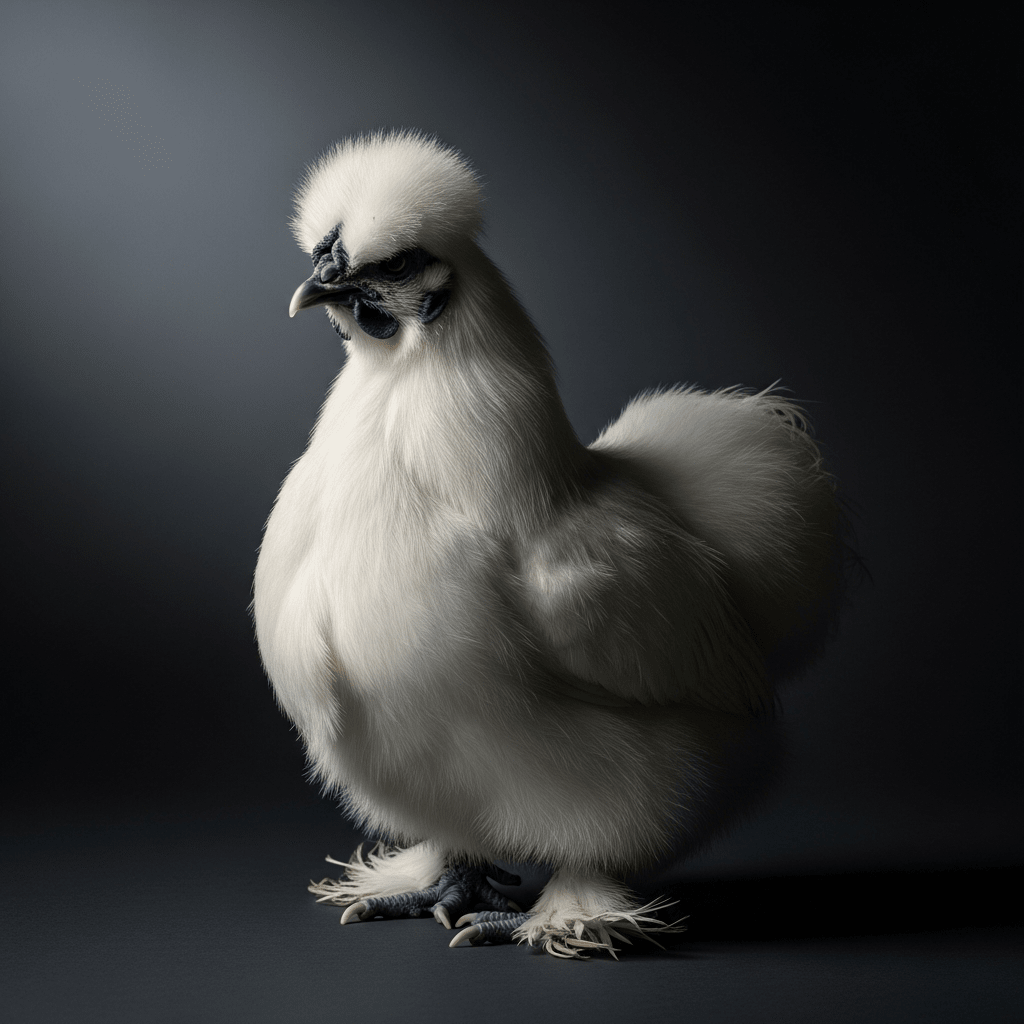
Silkie
The Silkie is a distinctive ornamental chicken breed known for its soft, fluffy plumage that resembles silk, black skin and bones, and a gentle, docile temperament.
The Silkie is a distinctive ornamental chicken breed known for its soft, fluffy plumage that resembles silk, black skin and bones, and a gentle, docile temperament.
Originating in Asia, most likely China, the Silkie has a history dating back to the 13th century, with early references appearing in Marco Polo's writings. It was introduced to Western countries through trade routes in the 18th century and formally recognized by the American Poultry Association in 1874.
The Silkie is classified as a breed within the domestic chicken species (Gallus gallus domesticus), notable for its ornamental use. It exists in both bantam and standard sizes, with recognized breed standards maintained by authorities such as the American Poultry Association and British Poultry Standards.
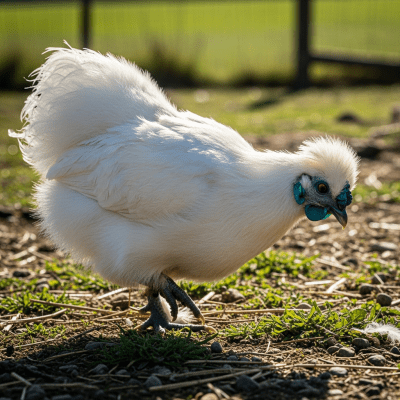
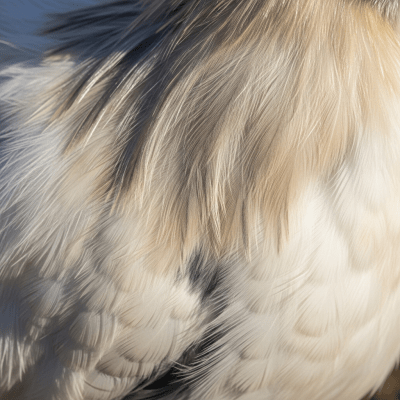
Silkies are easily identified by their unique fluffy plumage that lacks barbicels, giving them a fur-like texture. Their skin and bones are black due to fibromelanosis, and they possess five toes per foot, a rare trait called polydactyly. They have walnut combs, turquoise-blue earlobes, feathered legs, and come in various colors including white, black, blue, buff, gray, partridge, and splash.
Known for their gentle and non-aggressive nature, Silkies are highly broody and often used to incubate eggs of other poultry breeds. Their slow to moderate growth rate and low egg production make them less suited for commercial farming but ideal as companion animals and exhibition birds.
Bring this kind into your world illustrated posters, mugs, and shirts.
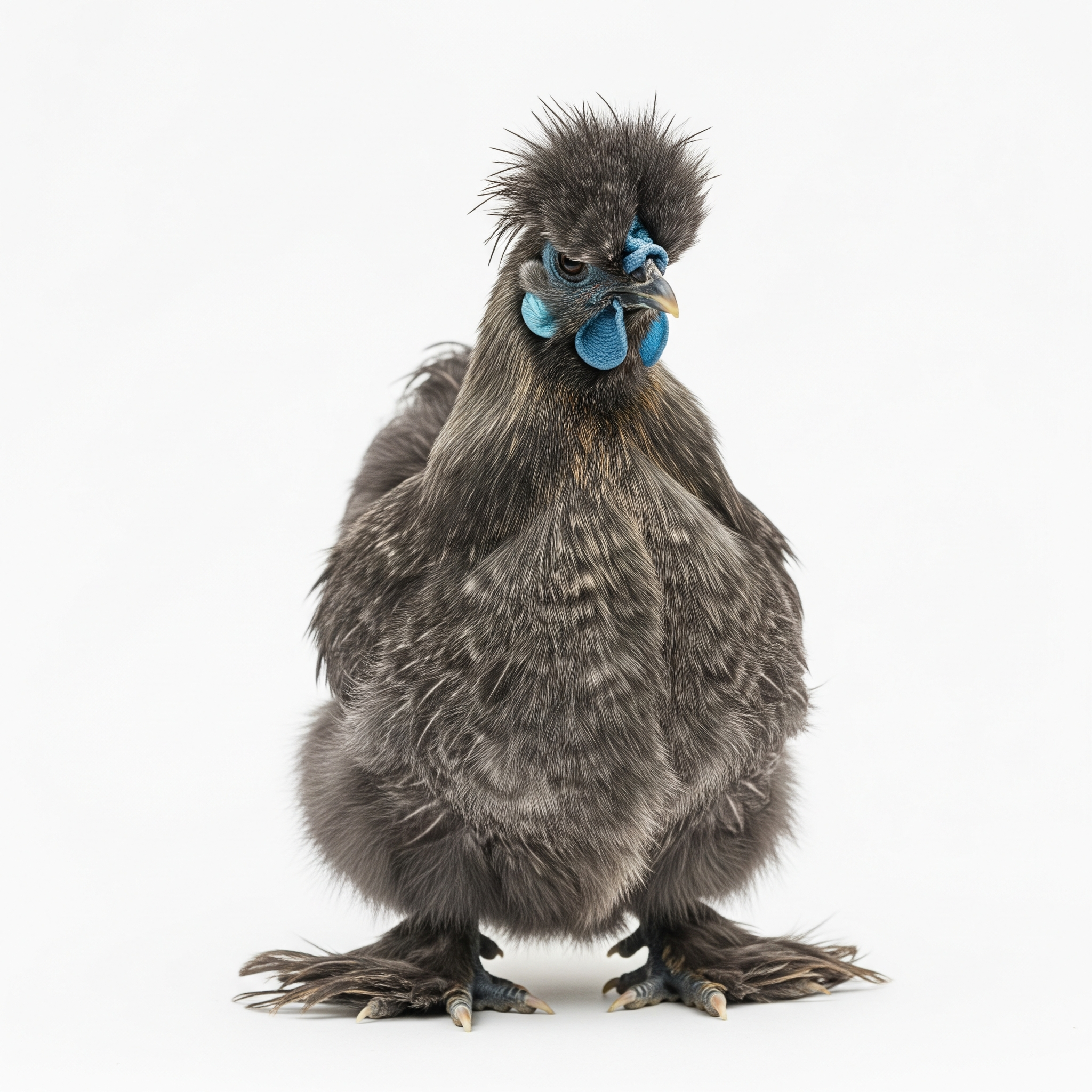
Archival print, museum-grade paper
Buy Poster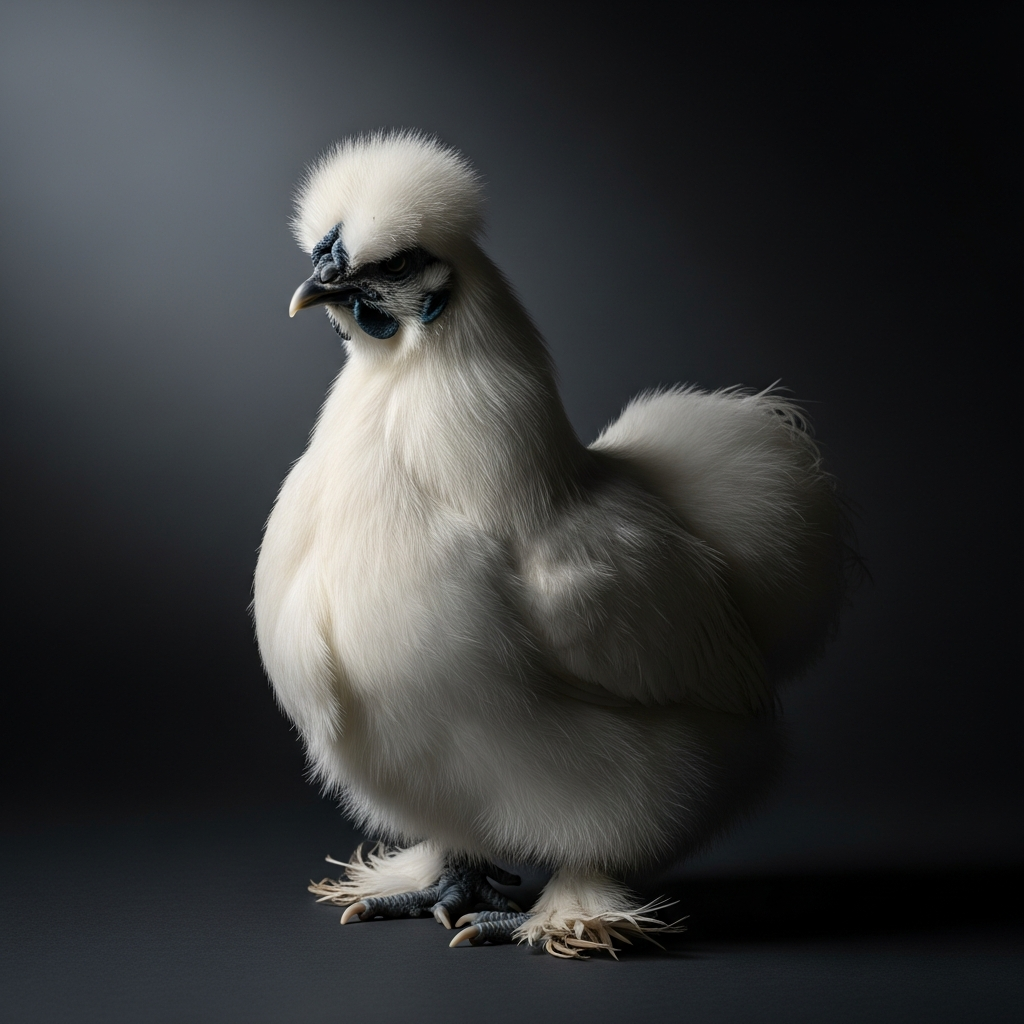
Stoneware mug, dishwasher safe
Buy Mug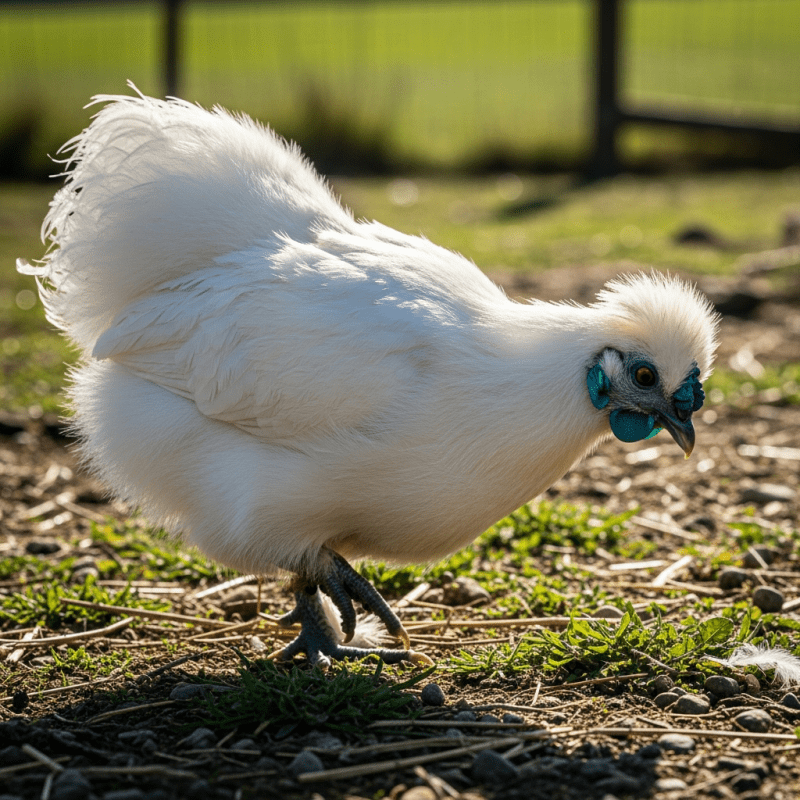
Soft cotton tee, unisex sizes
Buy ShirtSilkies hold a special place in various cultures, particularly in Asia where their black meat is prized in traditional medicinal dishes. Their unique appearance has made them popular in poultry shows and as pets worldwide, symbolizing exotic beauty and calm temperament.
The Silkie breed includes both bantam and standard-sized varieties, with recognized color varieties such as white, black, blue, buff, gray, partridge, and splash. Regional standards may vary, with some authorities recognizing large fowl types alongside bantams. Alternate names include Chinese Silkie, Silky, Wu Gu Ji, and Ukokkei.

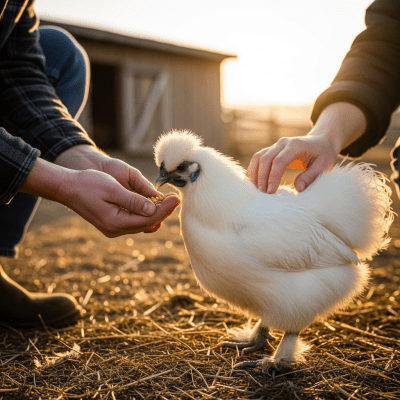

Silkies require gentle handling due to their delicate feathers and are best suited to backyard or ornamental farming rather than commercial production. Their broody nature makes them excellent natural incubators. Providing a safe, calm environment with protection from harsh weather and predators is essential for their well-being.
While not commonly raised for commercial meat or eggs, Silkie chickens are prized in some Asian cultures for their black meat, which is believed to have medicinal properties. They are used in specialty dishes such as Chinese black chicken soup, valued for flavor and health benefits.
The Silkie breed is widely maintained worldwide, primarily for ornamental and exhibition purposes. It is not currently considered at risk, benefiting from global popularity and active breeding communities that support its preservation.