Plymouth Rock
The Plymouth Rock is a classic American dual-purpose chicken breed, celebrated for its hardy nature, gentle temperament, and reliable production of both meat and eggs.
The Plymouth Rock is a classic American dual-purpose chicken breed, celebrated for its hardy nature, gentle temperament, and reliable production of both meat and eggs.
Originating in Massachusetts during the mid-19th century, the Plymouth Rock was developed through crosses of Dominique, Black Java, Cochin, and possibly Brahma chickens. Standardized between the 1860s and 1870s, this breed emerged from collaborative efforts among New England poultry breeders and was officially recognized by the American Poultry Association in 1874.
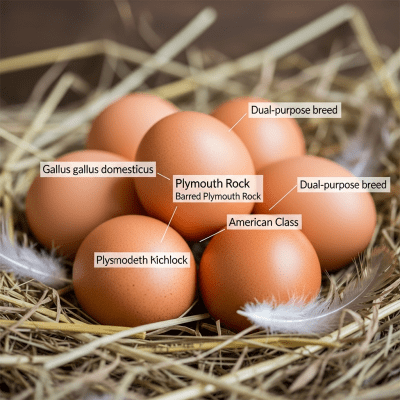
As a member of the domesticated chicken species Gallus gallus domesticus, the Plymouth Rock is classified as a dual-purpose breed, valued for both egg laying and meat production. It fits within the broader family of American heritage breeds, recognized by major poultry authorities such as the American Poultry Association and British Poultry Standards.
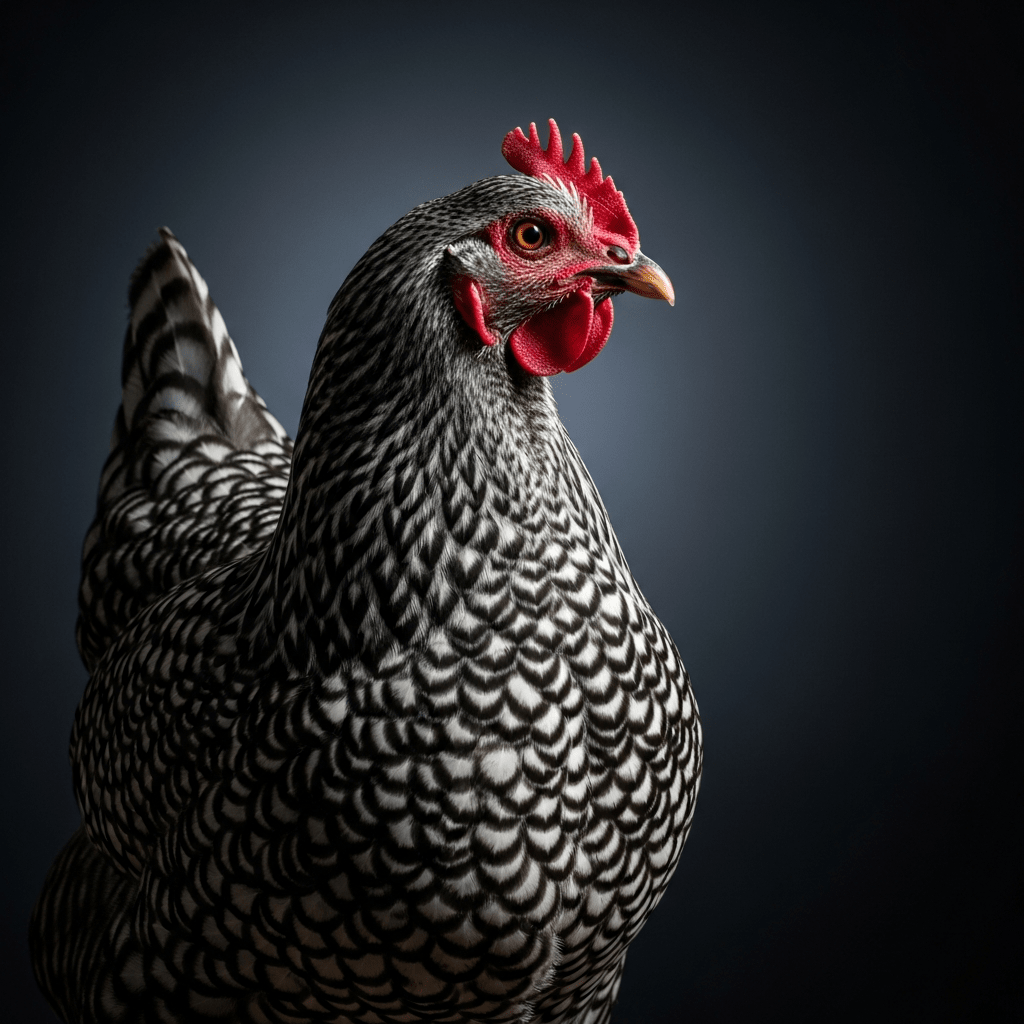
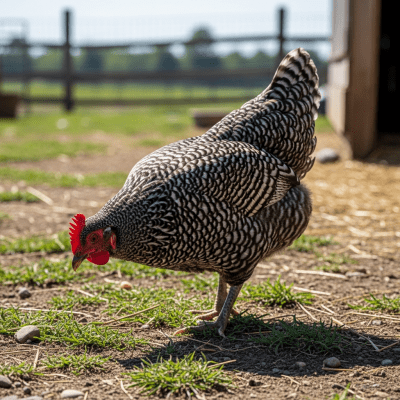
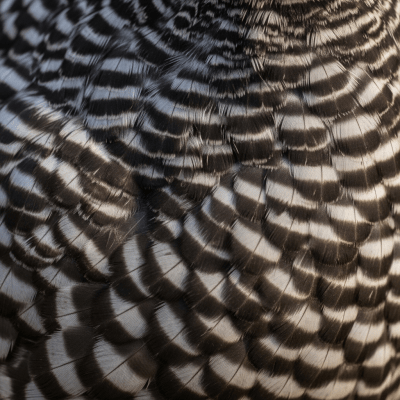
Plymouth Rocks are medium to large chickens with a broad, deep body and a distinctive single upright comb featuring five points. Males typically weigh up to 4.3 kg, females around 3.4 kg. The breed’s most iconic appearance is the Barred variety, showcasing striking alternating black and white stripes. Other recognized plumage colors include White, Buff, Silver Penciled, Partridge, Blue, and Columbian. Both skin and legs are yellow, complementing their classic look.
Known for their docile temperament, Plymouth Rocks adapt well to various environments, thriving in both free-range and confined settings. They exhibit moderate growth rates, reaching market weight within 16 to 20 weeks. Hens lay between 200 and 280 large brown eggs annually and often display reliable brooding instincts. Their hardiness includes resistance to common poultry diseases and tolerance to colder climates, making them a versatile choice for backyard and small-scale farms.
Bring this kind into your world illustrated posters, mugs, and shirts.

Archival print, museum-grade paper
Buy Poster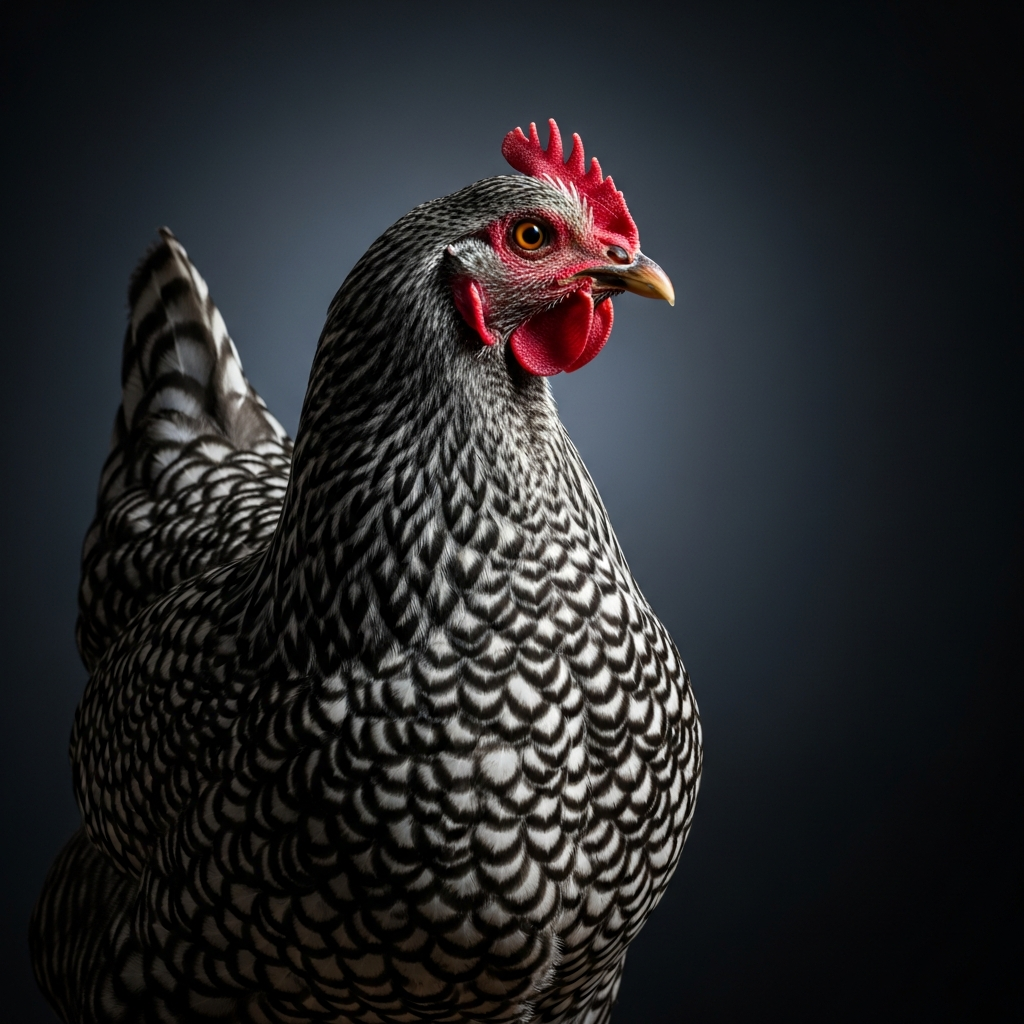
Stoneware mug, dishwasher safe
Buy Mug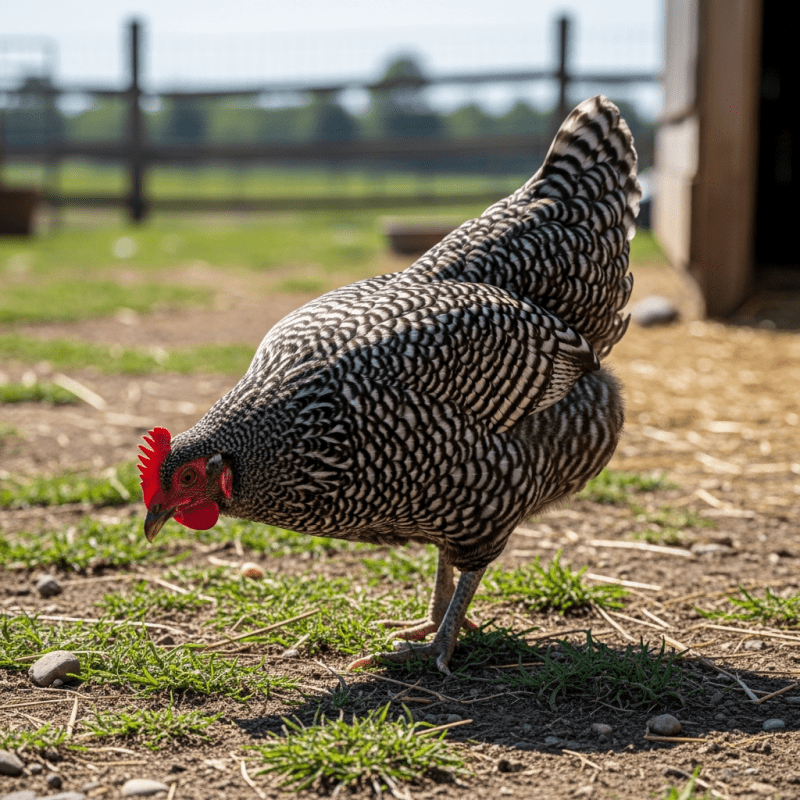
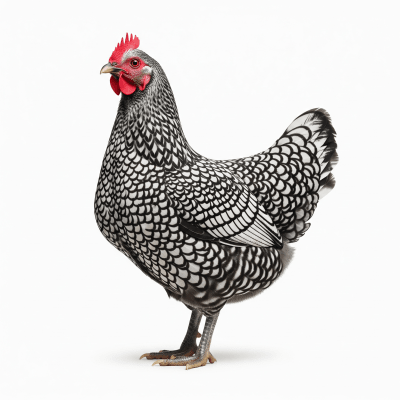
Soft cotton tee, unisex sizes
Buy ShirtThe Plymouth Rock holds a storied place in American agricultural history as a foundational breed for poultry farming. Its recognizable barred plumage and calm nature have made it a favorite in exhibition poultry shows. The breed’s enduring presence reflects its role not only in food production but also as a symbol of traditional American farming heritage.
The Plymouth Rock breed includes several recognized color varieties, each with unique plumage patterns. These include Barred, White, Buff, Silver Penciled, Partridge, Blue, and Columbian. The Barred variety is the most iconic and historically significant, while others offer diverse appearances for breeders and enthusiasts. Regional standards acknowledge these varieties, with slight naming differences such as “Barred Rock” or “White Rock.”
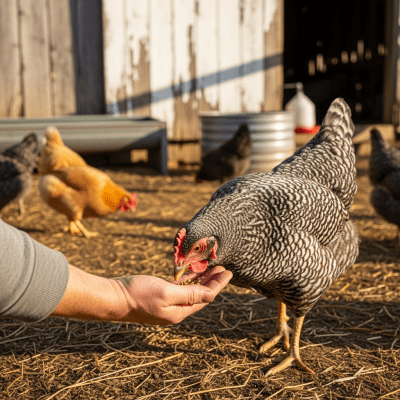
Raising Plymouth Rocks requires providing adequate space for foraging and shelter, as they thrive in both free-range and confined systems. Their cold hardiness reduces heating needs in cooler climates. Regular health monitoring is important, though they show resistance to common poultry diseases. Hens often brood reliably, so managing broody behavior may be necessary depending on flock goals. Balanced nutrition supports their moderate growth and steady egg production.
Plymouth Rocks are prized for tender, flavorful yellow-skinned meat favored in American markets. Their eggs, large and brown-shelled, are sought after for both home consumption and commercial sale. This dual-purpose utility makes them a versatile choice for small farms and homesteads. Historically, they have also contributed to the development of commercial meat and egg hybrid lines.
While Plymouth Rocks remain widely popular and not currently at risk, they are recognized as a heritage breed with ongoing interest in preservation. Conservation efforts focus on maintaining genetic diversity and supporting small-scale breeders who uphold traditional standards. The breed’s robust population and broad distribution contribute to its stable conservation status.