New Hampshire Red
The New Hampshire Red is an American dual-purpose chicken breed prized for its rapid growth, early maturity, and efficient production of both meat and large brown eggs.
The New Hampshire Red is an American dual-purpose chicken breed prized for its rapid growth, early maturity, and efficient production of both meat and large brown eggs.
Developed around 1915 in New Hampshire, United States, the New Hampshire Red emerged through selective breeding of Rhode Island Reds. This collective effort by local poultry farmers and agricultural institutions focused on enhancing faster feathering, increased growth rate, and improved meat yield. The breed gained formal recognition by the American Poultry Association in 1935.
As a distinct breed within the domestic chicken species, the New Hampshire Red belongs to the dual-purpose category, valued for both egg laying and meat production. It shares close genetic lineage with the Rhode Island Red but is distinguished by its specific selection for growth and production traits.
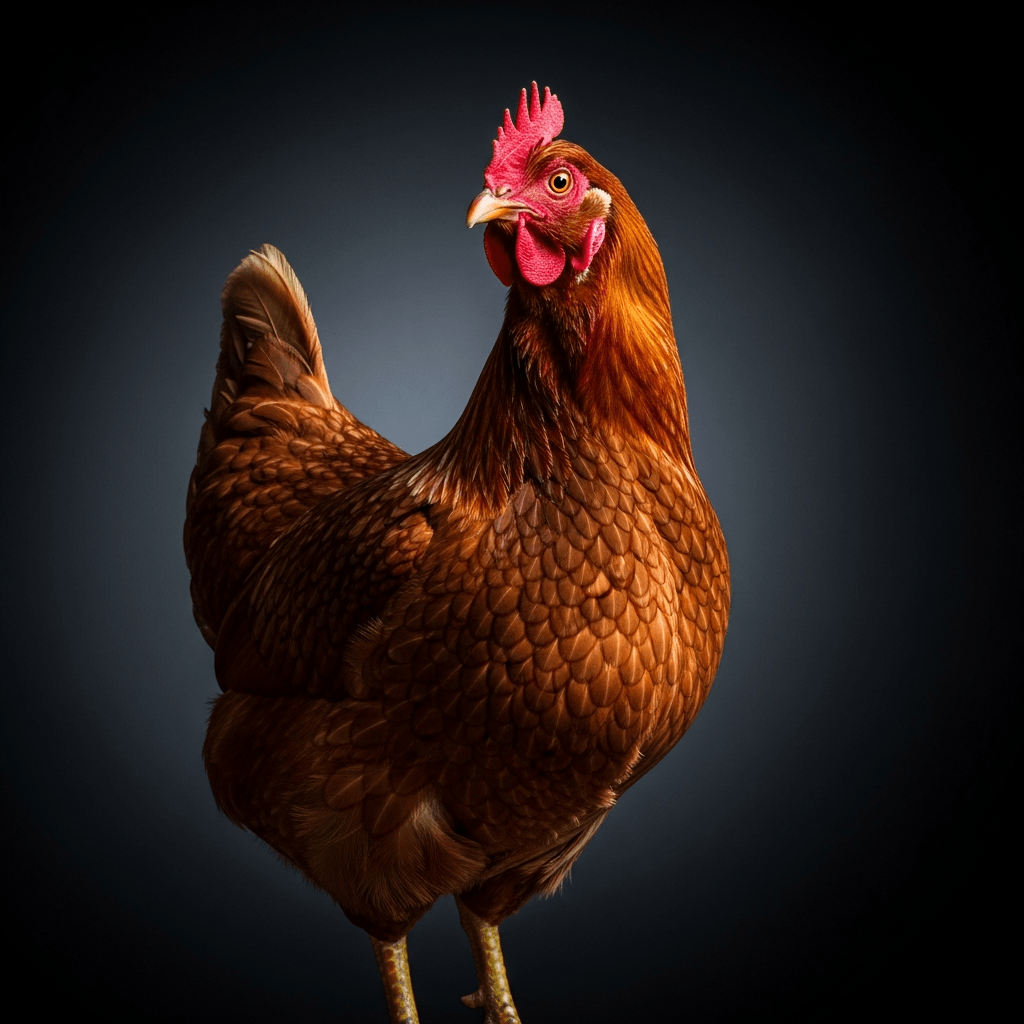
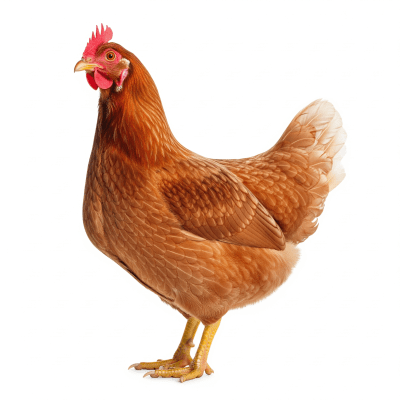
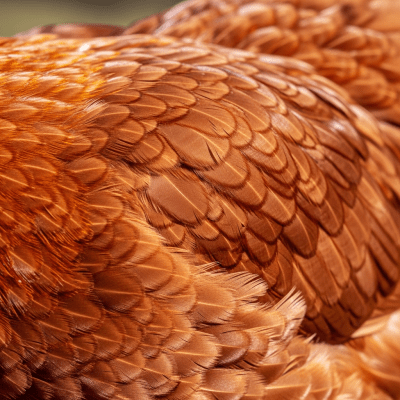
New Hampshire Reds are medium to large chickens with a broad, deep body and a well-rounded breast, ideal for meat production. Males typically weigh around 3.9 kg (8.5 lbs), females about 2.9 kg (6.5 lbs). Their plumage is a rich chestnut to reddish-brown, occasionally showing white in the tail and wing feathers. They feature a medium-sized, upright single comb, red wattles and earlobes, and yellow skin and legs.
Known for their rapid growth and early maturity, New Hampshire Reds are hardy and adaptable to various climates. They exhibit generally docile temperaments and show broody tendencies, making them good mothers. Their consistent laying of 200 to 240 large brown eggs annually complements their suitability for meat production, supporting their role as a versatile dual-purpose breed.
Bring this kind into your world illustrated posters, mugs, and shirts.
Archival print, museum-grade paper
Buy Poster
Stoneware mug, dishwasher safe
Buy Mug
Soft cotton tee, unisex sizes
Buy ShirtThe New Hampshire Red holds a respected place in American poultry heritage as a breed developed through regional agricultural collaboration. It is also appreciated in poultry exhibitions and has contributed genetically to commercial hybrid strains, reflecting its ongoing influence in both traditional and modern poultry farming.
The New Hampshire Red is recognized primarily as a single breed without significant regional varieties. It is sometimes simply called "New Hampshire." While closely related to the Rhode Island Red, it stands apart due to its distinct selection traits. No notable sub-varieties or bantam forms are widely documented.
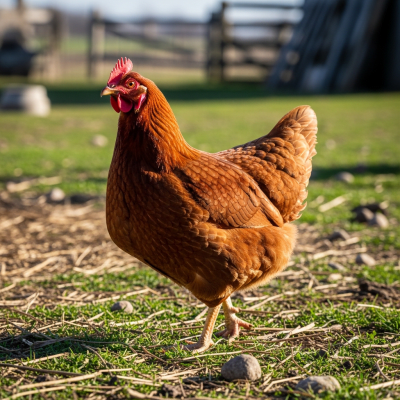
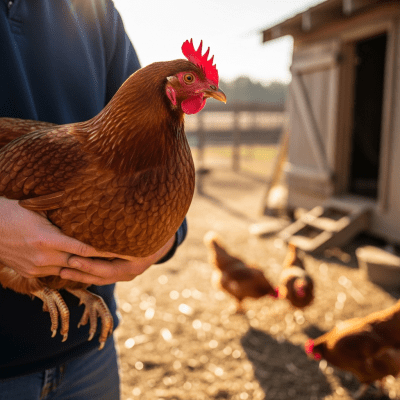
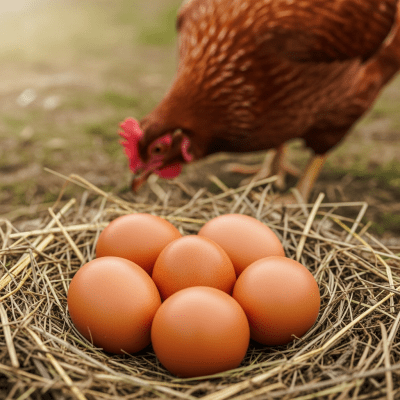
New Hampshire Reds thrive in diverse farming systems, including small farms, backyard flocks, and some commercial operations. They require standard poultry care with attention to nutrition supporting their rapid growth and egg production. Their hardiness makes them adaptable to various climates, and their broody nature means they may need management if continuous egg production is desired.
Valued for their well-developed breast and rapid growth, New Hampshire Reds are suitable for broiler meat production, providing flavorful and tender poultry. Their consistent laying of large brown eggs also makes them a reliable source for fresh eggs. This dual-purpose utility supports their popularity among small-scale producers and specialty markets.
The New Hampshire Red is not currently considered at risk and enjoys stable populations due to its ongoing use in both commercial and small-scale poultry farming. It benefits from recognition by major poultry authorities and continues to be preserved through active breeding programs and exhibition circles.