Minorca
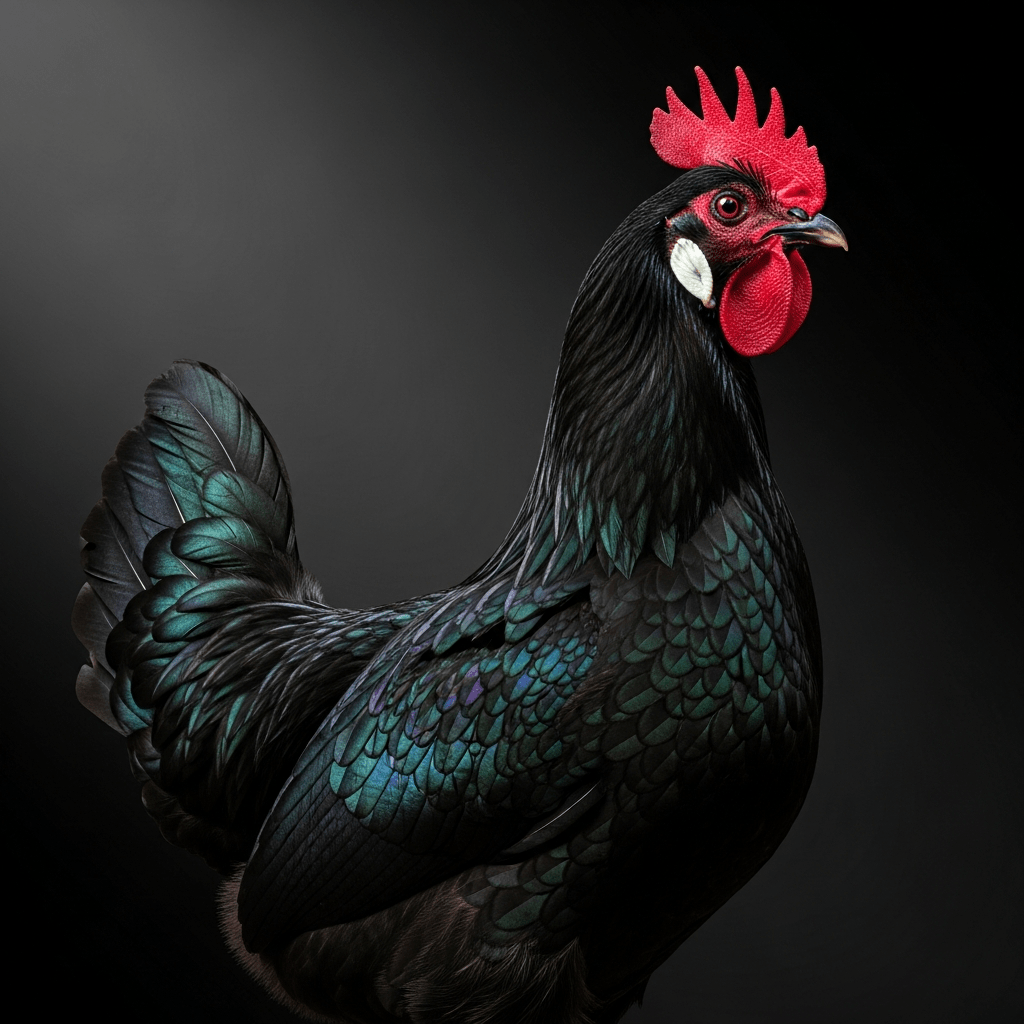
The Minorca is a large Mediterranean chicken breed famed for its glossy black plumage, striking white earlobes, and prolific laying of large white eggs.
The Minorca is a large Mediterranean chicken breed famed for its glossy black plumage, striking white earlobes, and prolific laying of large white eggs.
Originating from the island of Menorca in Spain's Balearic Islands, the Minorca breed developed between the late 18th and early 19th centuries from local Mediterranean landrace stock. It was later refined in Britain during the late 1800s, where breeders enhanced its size and distinctive features, leading to formal recognition by major poultry authorities around 1900.
Classified within the domestic chicken species Gallus gallus domesticus, the Minorca is recognized as a distinct breed valued primarily for egg production. It belongs to the Mediterranean group of chickens, known for their high egg yield and elegant appearance, and includes both standard and bantam varieties.
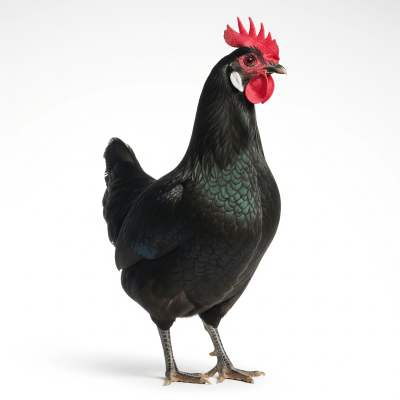
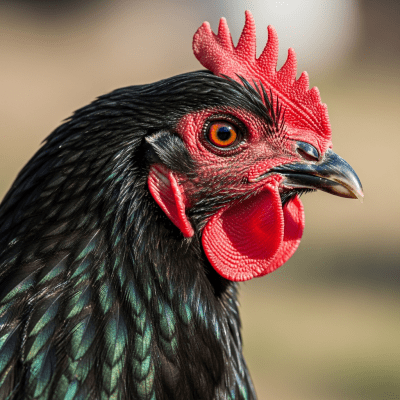
The Minorca is a large, upright bird with a long, deep body and a well-developed breast. Males typically weigh around 3.4 kg, females about 3.0 kg. Its plumage is predominantly glossy black, though white and buff varieties exist regionally. The breed is notable for its large, oval pure white earlobes and a prominent single comb that stands upright in males and flops in females; rose comb types are also recognized. Legs are slate or dark colored, completing its striking silhouette.
Primarily valued for egg production, Minorcas are prolific layers, producing 220 to 250 large white eggs annually. They mature at a moderate rate and rarely exhibit broodiness, making them efficient layers. Hardy in warm climates, they can be vulnerable to frostbite due to their large combs. Their temperament and foraging ability are typical of Mediterranean breeds, suited to free-range and backyard environments.
Bring this kind into your world illustrated posters, mugs, and shirts.
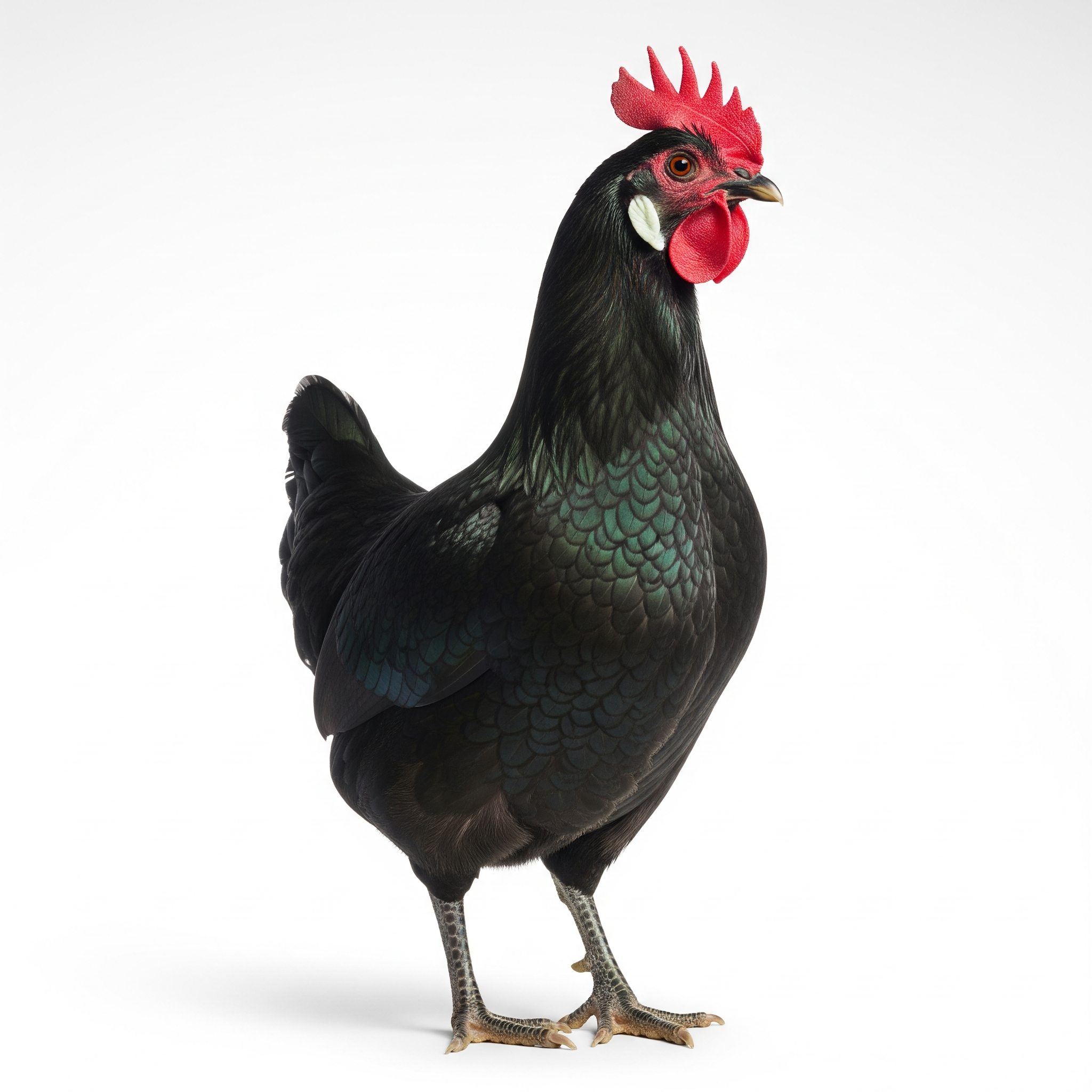
Archival print, museum-grade paper
Buy Poster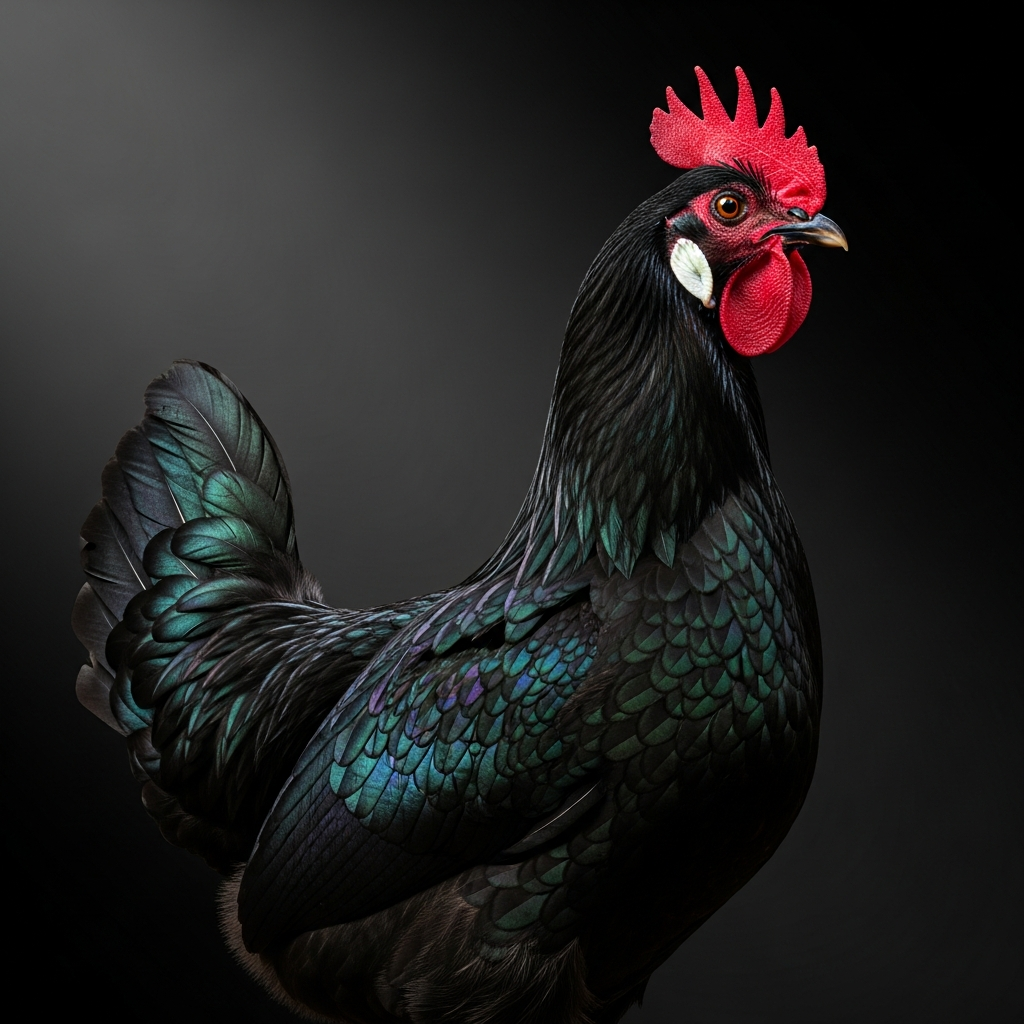
Stoneware mug, dishwasher safe
Buy Mug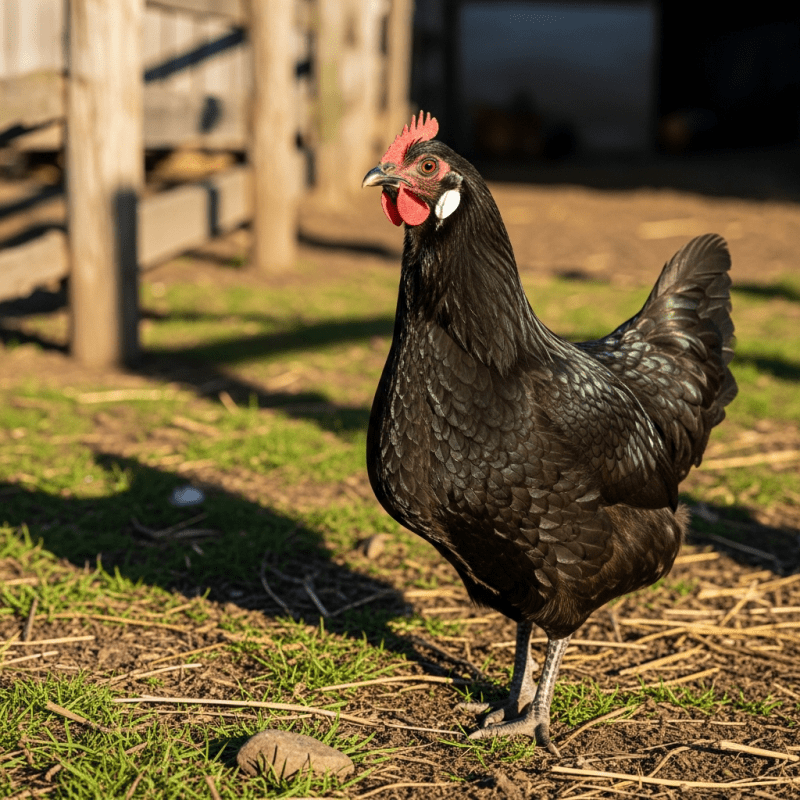
Soft cotton tee, unisex sizes
Buy ShirtThe Minorca holds a respected place in poultry exhibitions worldwide, admired for its elegant appearance and distinctive white earlobes. In Spain, it is known as Gallina de Menorca, reflecting its island heritage. The breed’s Mediterranean roots and British refinement symbolize a blend of cultural influences in poultry breeding traditions.
The Minorca breed includes both standard and bantam sizes, with bantams weighing about one-third of the standard birds. Color varieties recognized primarily in Britain and Australia include black, white, and buff, though black remains the dominant and most widespread plumage worldwide. Rose comb Minorcas are also acknowledged regionally, offering variation in comb type alongside the classic single comb.

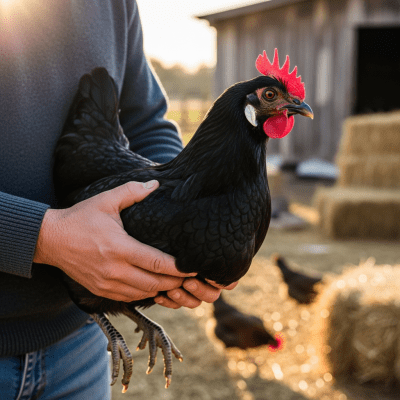

Minorca chickens thrive best in warm climates due to their Mediterranean origins. Their large combs require protection from frostbite in colder environments. They are non-broody and need regular management to maintain high egg production. Suitable for free-range or backyard systems, they benefit from ample space to forage and moderate feeding to support their moderate growth and egg-laying capacity.
Minorca chickens are prized for their large, white eggs, which are favored in specialty and gourmet markets as well as household consumption. Due to their lean body and low meat yield, they are rarely raised for meat. Their eggs are often sought after for baking and culinary uses where large egg size enhances recipes.
The Minorca is a well-established breed with stable populations maintained by poultry enthusiasts and breeders worldwide. It is not currently considered endangered, thanks to its popularity in exhibitions and egg production. Conservation efforts focus on preserving its distinctive traits and promoting awareness among heritage breed supporters.