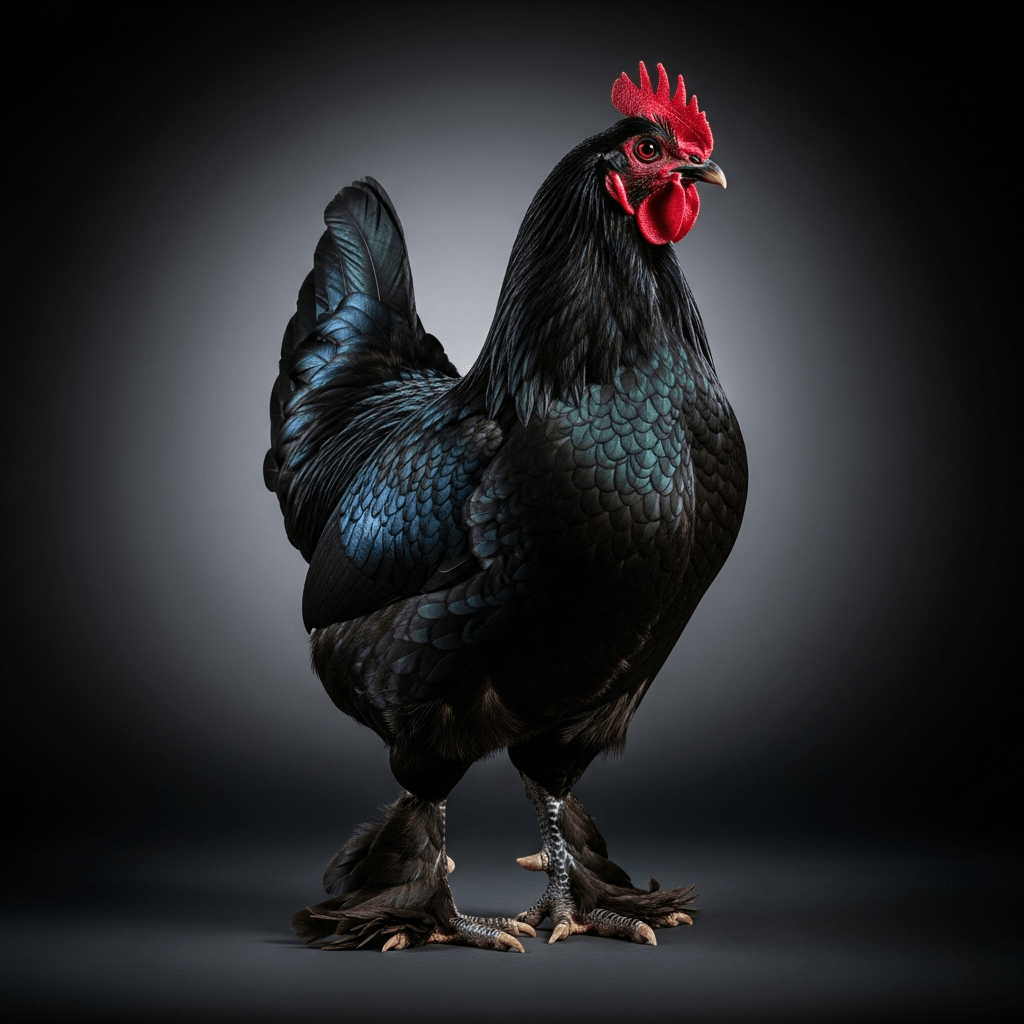
Langshan
The Langshan is a distinguished large chicken breed from China, prized for its tall stature, feathered legs, and dual-purpose use for both meat and egg production.
The Langshan is a distinguished large chicken breed from China, prized for its tall stature, feathered legs, and dual-purpose use for both meat and egg production.
Originating in the Langshan district near Nantong, Jiangsu Province, China, the Langshan breed was first imported to England in 1872 by Major F.T. Croad. It later reached North America in the late 19th century. The breed descends from indigenous Chinese chickens without documented crossbreeding, forming the foundation for both the Croad Langshan and Modern Langshan varieties developed abroad.
Langshan fits within the domestic chicken species Gallus gallus domesticus as a large, feather-legged breed classified as dual-purpose, valued for both egg laying and meat. It is recognized by major poultry authorities such as the American Poultry Association and British Poultry Standards, and is part of the heritage and ornamental breed groups.
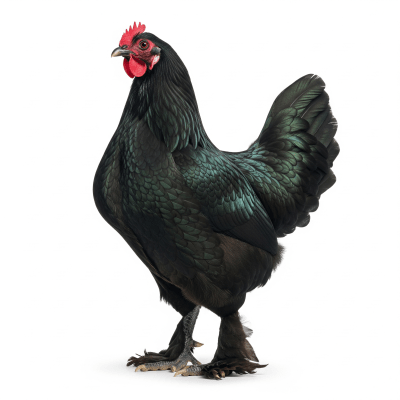
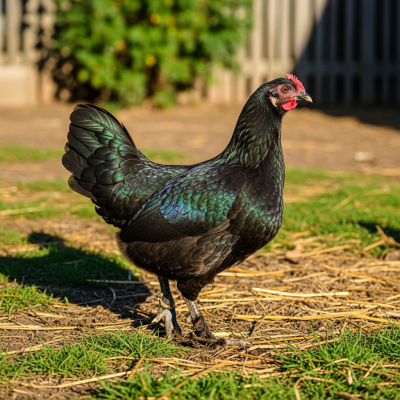
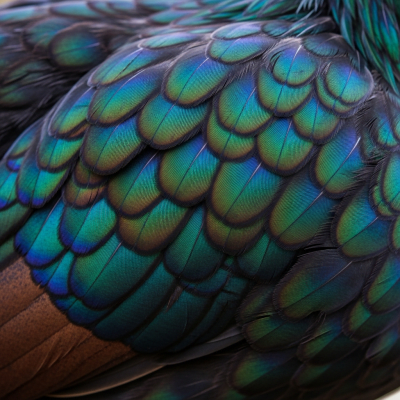
Langshans are tall, upright chickens notable for their feathered legs extending down to the toes and glossy plumage that typically appears black with a green sheen. They also come in white and blue varieties. Males weigh around 4.3 kg and females about 3.4 kg. Their medium-sized, single comb stands upright, complemented by red wattles and earlobes. Slate or black legs and white skin complete their distinctive look.
Known for their hardiness and adaptability, Langshans are moderate growers reaching market size in 16 to 20 weeks. Hens are reliable layers of 140 to 180 large brown eggs annually and exhibit strong broody tendencies, making them attentive mothers. Their temperament is calm, and they thrive in various climates with moderate disease resistance, suitable for small-scale and backyard farming.
Bring this kind into your world illustrated posters, mugs, and shirts.
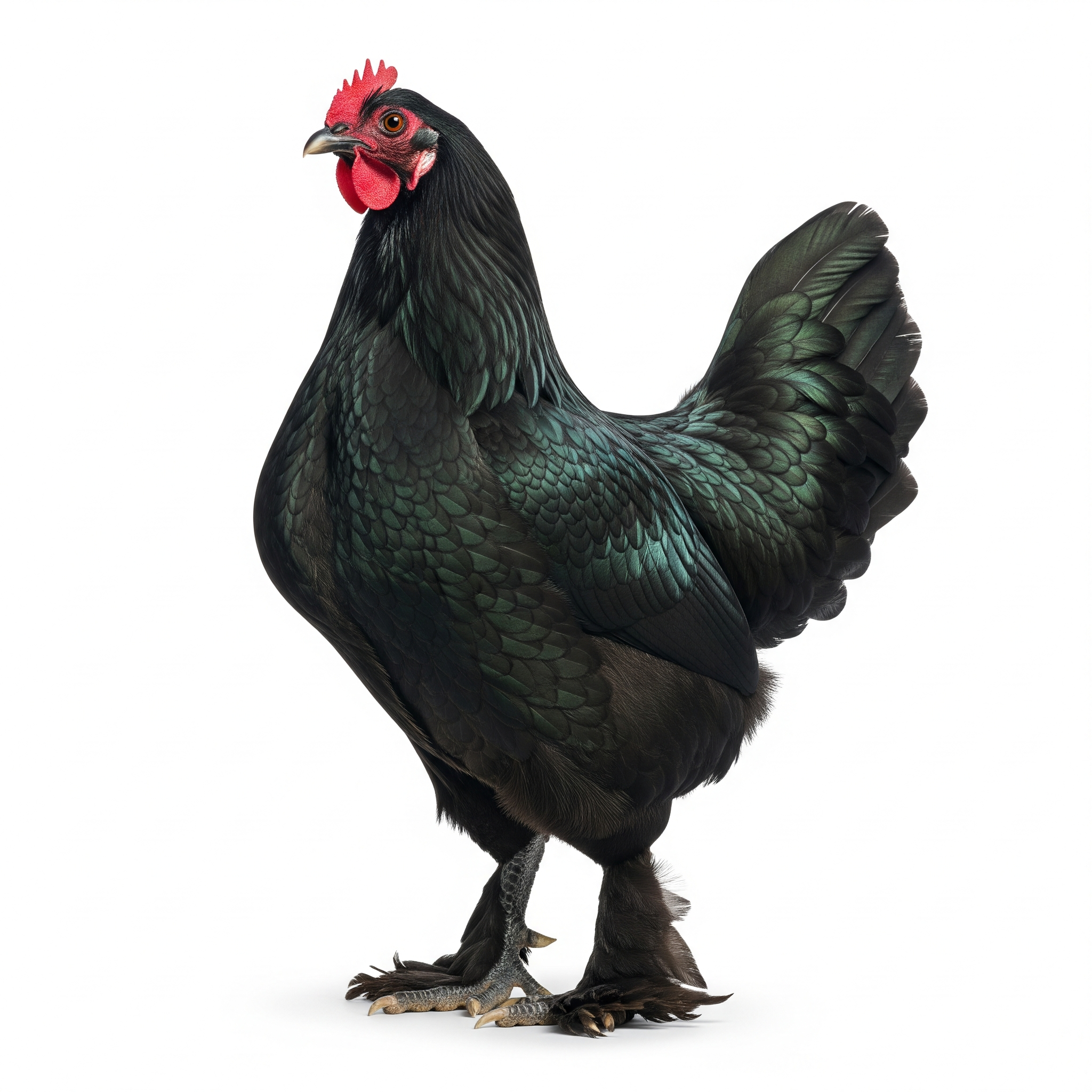
Archival print, museum-grade paper
Buy Poster
Stoneware mug, dishwasher safe
Buy Mug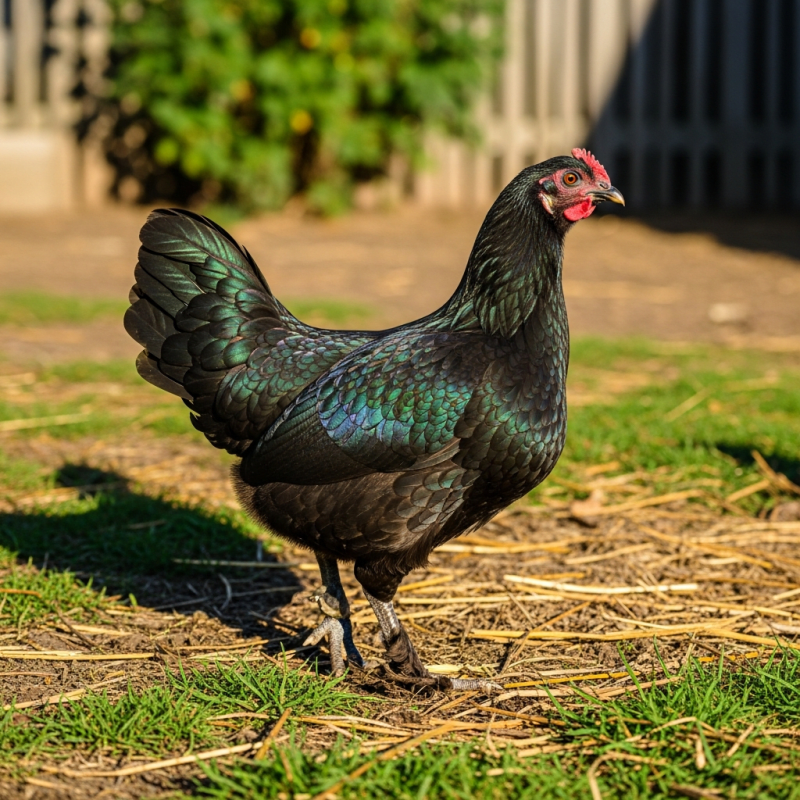
Soft cotton tee, unisex sizes
Buy ShirtLangshans hold cultural importance as one of the earliest Asian breeds introduced to the West, influencing the development of other feather-legged breeds in Europe and North America. Their elegant carriage and striking feathering have made them favorites in poultry exhibitions and heritage breed conservation, symbolizing the blend of utility and ornamental beauty in poultry culture.
The Langshan breed includes several recognized varieties, primarily the Black Langshan, which is the most common and historically significant. White and Blue Langshan varieties are also acknowledged, especially in British and Australian standards. The breed is further divided into types such as the Croad Langshan, named after its principal importer, and the Modern Langshan, a more refined and upright variant developed in Britain.
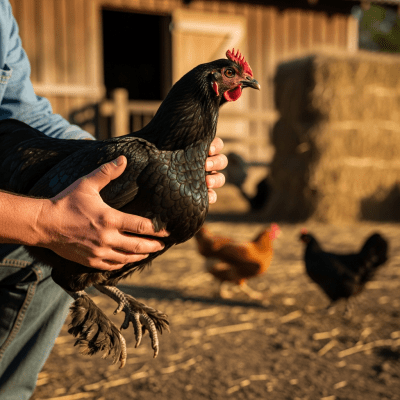

Langshans thrive under heritage and backyard farming systems where their hardiness and adaptability can be fully utilized. They require standard poultry housing with protection from extreme weather, though they tolerate varied climates well. Their feathered legs need occasional inspection to prevent mud or debris buildup. Due to their broody nature, management may include monitoring hens during incubation periods. Balanced nutrition supports their moderate growth and sustained egg production.
Langshan chickens provide fine-textured, flavorful meat prized in specialty markets and home cooking. Their large brown eggs are favored for baking due to their size and strong shells. While not common in large-scale commercial production, Langshans are valued by heritage breeders and culinary enthusiasts seeking quality over quantity in both meat and eggs.
Though not currently classified as endangered, Langshan chickens are maintained primarily by heritage breeders and poultry enthusiasts dedicated to preserving their lineage. Conservation efforts focus on sustaining genetic diversity and promoting the breed’s dual-purpose qualities. Regional variations, such as the Black and White Langshan in Australia and the UK, benefit from ongoing recognition and breeding programs that support their continued presence in small-scale and exhibition settings.