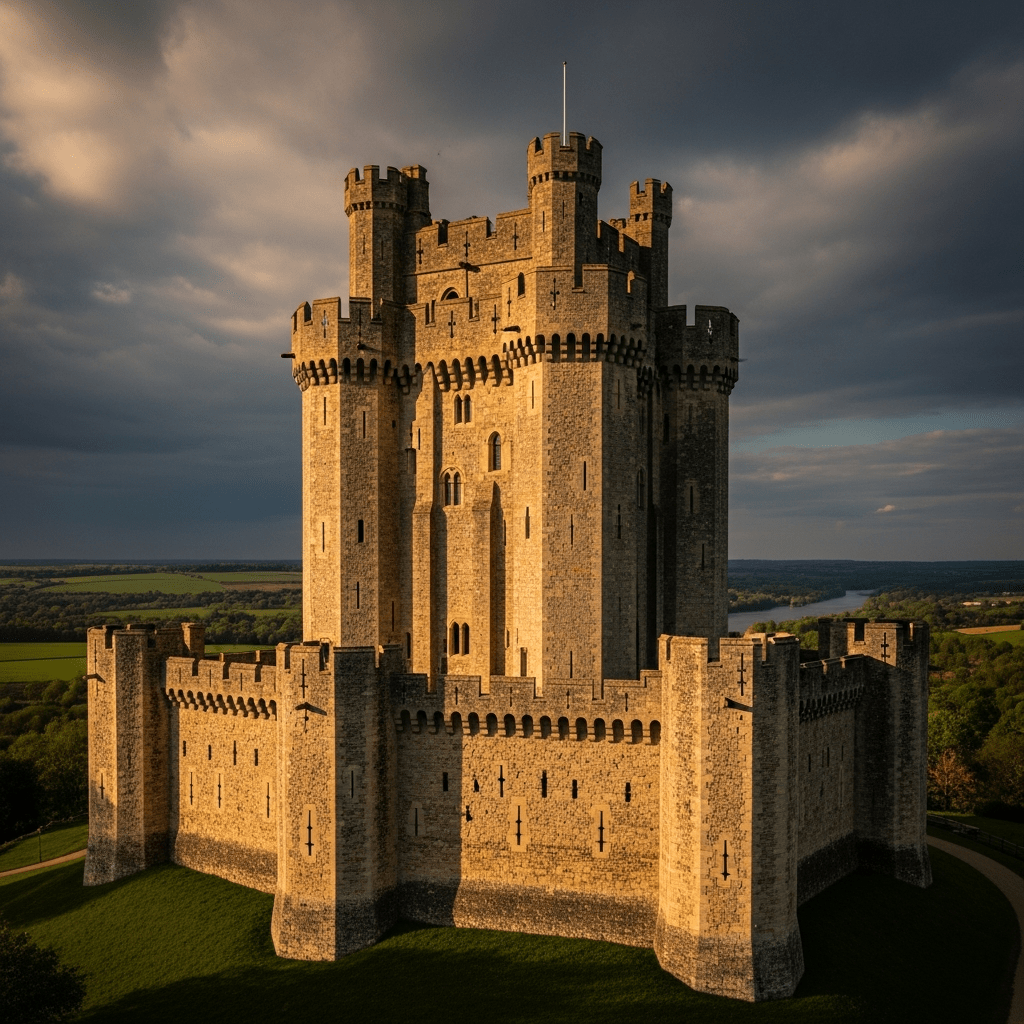
Stone Keep Castle
Stone keep castles are imposing medieval fortresses defined by their central, multi-story stone tower (the keep), which served as both a stronghold and the residence of nobility.
Stone keep castles are imposing medieval fortresses defined by their central, multi-story stone tower (the keep), which served as both a stronghold and the residence of nobility.
Stone keep castles originated in Normandy and England during the late 11th and early 12th centuries, following the Norman Conquest of England in 1066. Early examples, such as the White Tower of London and Rochester Castle, were commissioned by William the Conqueror and his Norman barons to assert control and prestige. This architectural innovation marked a shift from vulnerable timber motte-and-bailey designs to enduring stone structures, setting a new standard for fortification across Europe.
Within the broader taxonomy of castles, stone keep castles represent a crucial evolutionary stage. They are classified as fortified residential structures, bridging the gap between early motte-and-bailey castles and later concentric or shell keep designs. Their defining feature—the massive stone keep—distinguishes them from other types, and they are most commonly associated with the high medieval period in Western Europe.
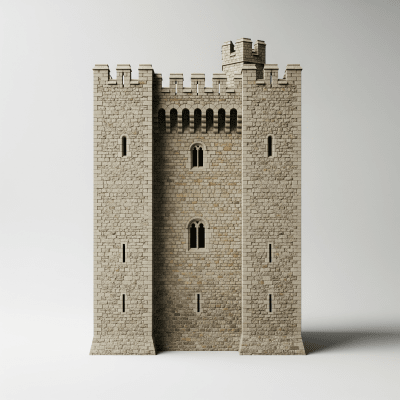
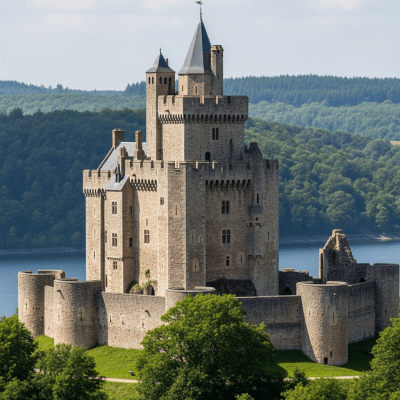
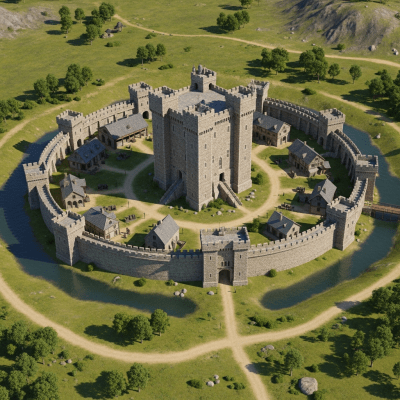
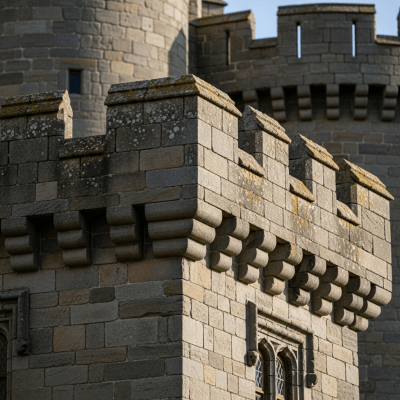
Stone keep castles are visually dominated by a towering, rectangular or polygonal stone structure rising several stories above the landscape. Thick walls, often 2–4 meters deep, are punctuated by narrow arrow slits and battlements. The keep is surrounded by a bailey or courtyard, with additional defensive elements such as curtain walls, moats, and mural towers. The overall impression is one of formidable strength and austere grandeur, with locally quarried stone lending regional character to each castle’s appearance.
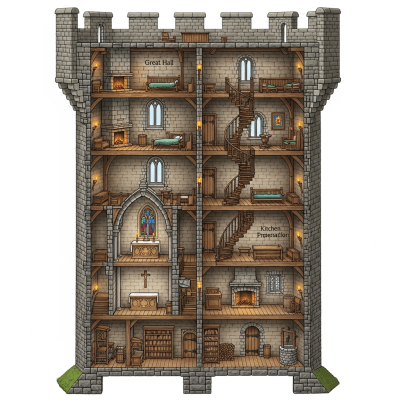
These castles functioned as fortified homes for lords and their households, administrative centers, and military bastions. The keep itself was the last refuge during sieges, housing private chambers, a great hall, chapel, and storerooms. Stone keep castles were hubs of feudal power, overseeing local governance and serving as symbols of authority. Over time, many were adapted for greater comfort, but their defensive role remained paramount throughout the medieval era.
Bring this kind into your world illustrated posters, mugs, and shirts.
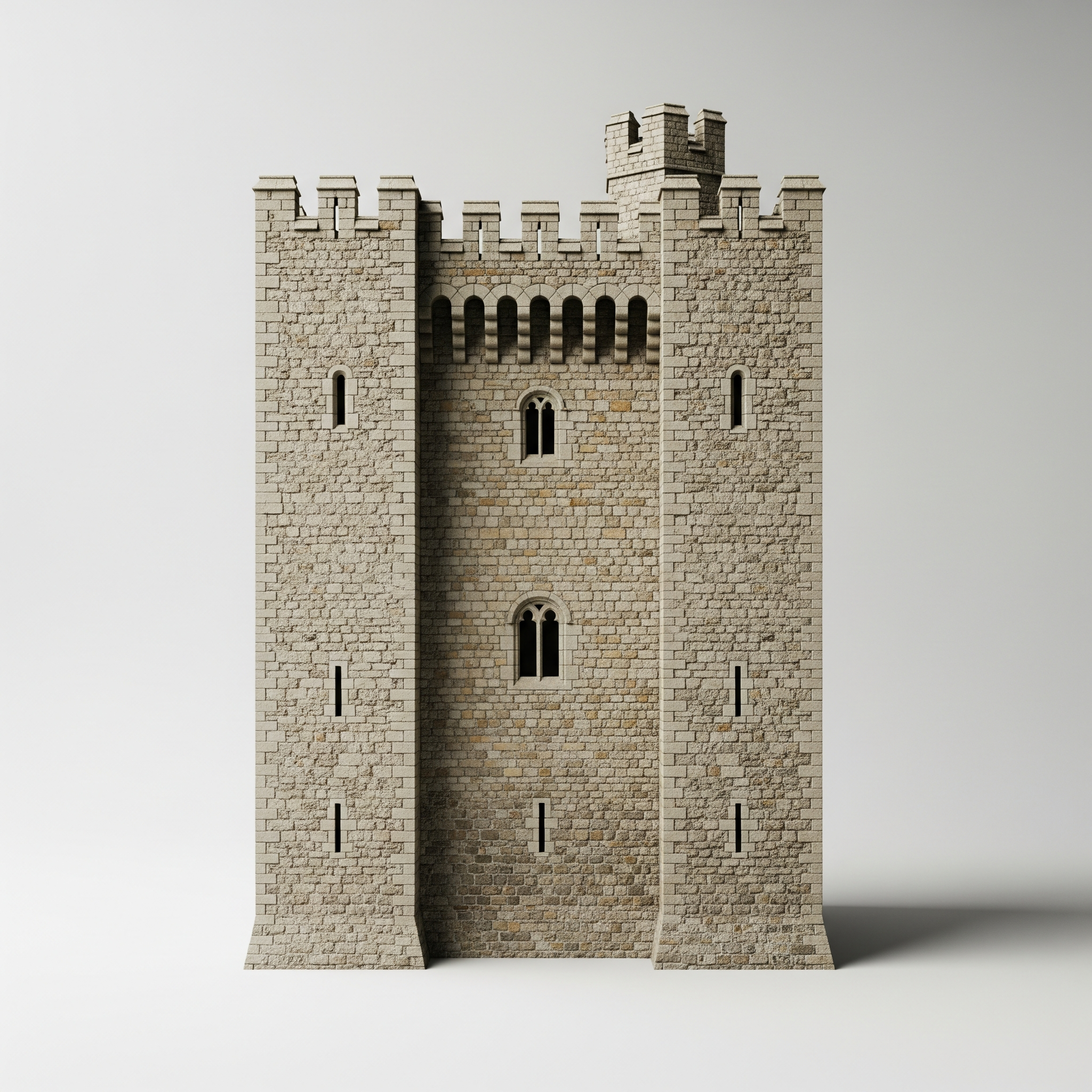
Archival print, museum-grade paper
Buy Poster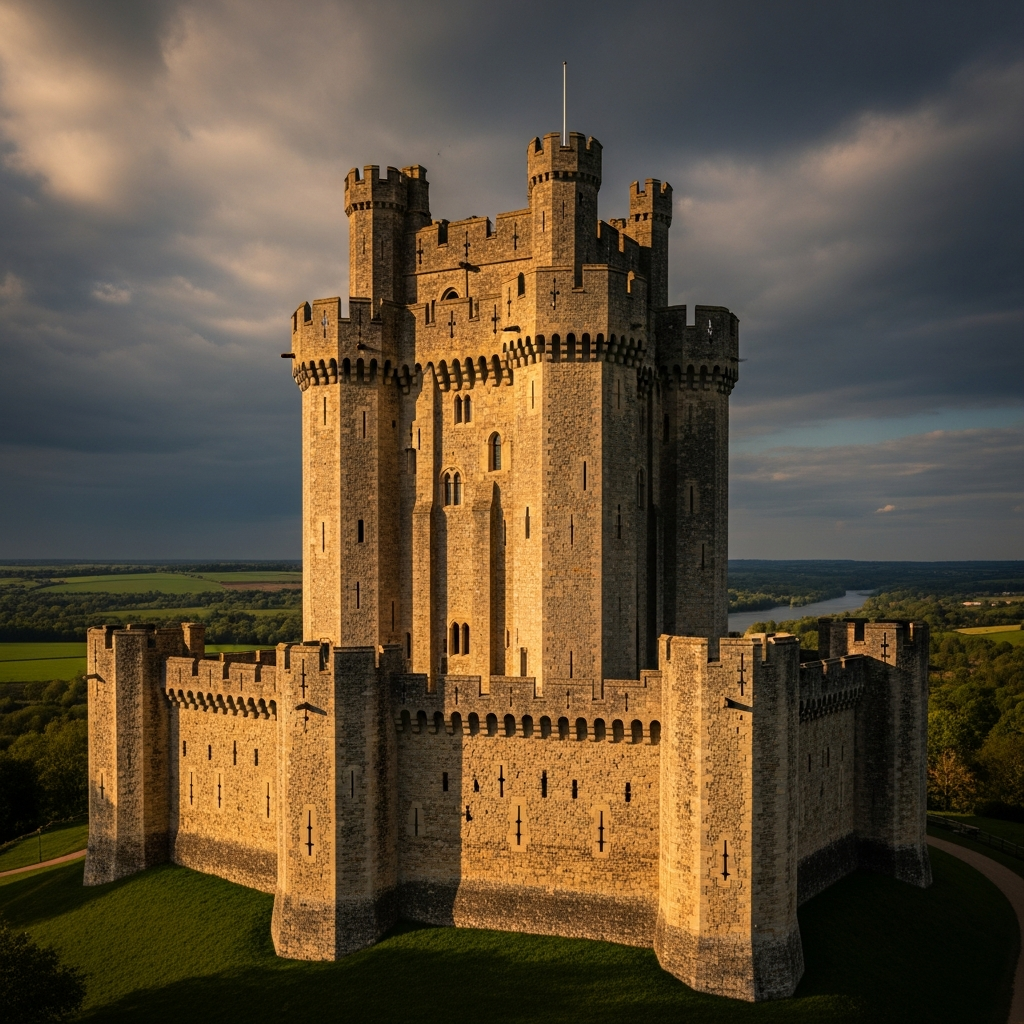
Stoneware mug, dishwasher safe
Buy Mug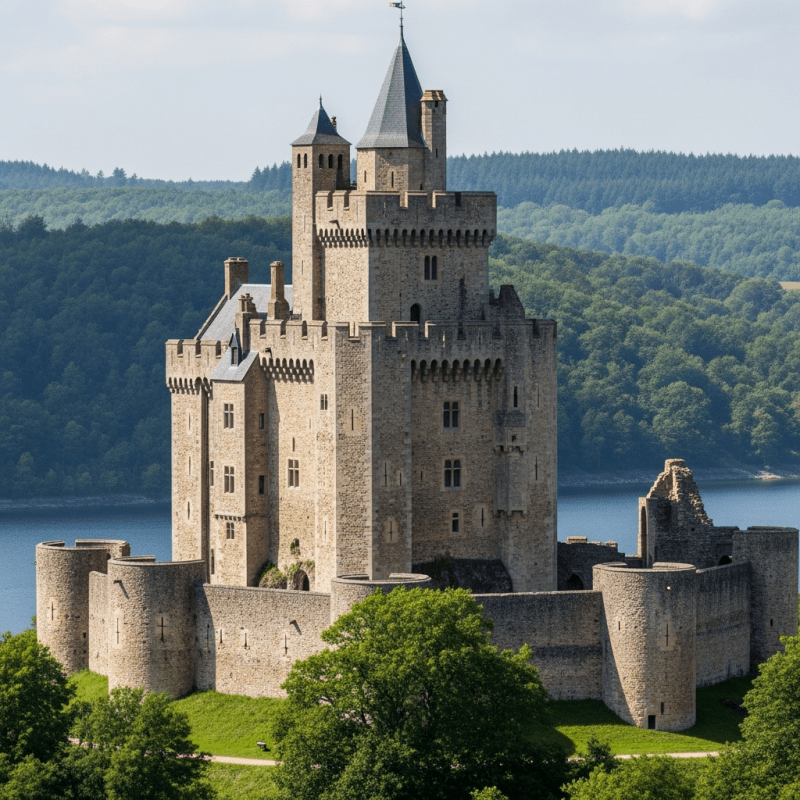
Soft cotton tee, unisex sizes
Buy ShirtStone keep castles have become enduring icons of medieval Europe, frequently depicted in art, literature, and film as emblems of chivalry, power, and intrigue. Their imposing silhouettes dominate landscapes and inspire tales of knights and royalty. The transition to stone construction signaled not only technological advancement but also the consolidation of feudal authority, shaping the cultural memory of the Middle Ages in Western imagination.
Key architectural features include a massive central keep with thick stone walls, battlements, arrow slits, and limited external entrances for defense. The keep housed living quarters, a great hall, and a chapel, often accessed via a fortified forebuilding. Surrounding elements might include a bailey, curtain walls, moat or ditch, and mural towers. Construction relied on locally sourced stone—limestone, sandstone, or flint—chosen for strength and availability.
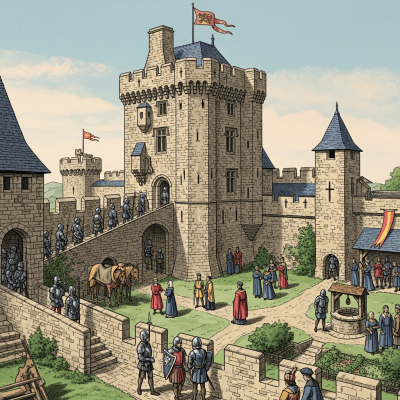
Stone keep castles served as the administrative and military heart of feudal domains. They provided secure residences for lords, acted as centers for local governance, and were critical strongholds during periods of conflict such as The Anarchy and the Hundred Years’ War. The keep was designed to withstand prolonged sieges, functioning as the final defensive position when outer walls were breached.
In England, the term "keep" is standard, while French castles use "donjon." German regions distinguish between keeps and "Bergfrieds," which may differ in function and layout. The use of local stone—such as flint in southern England or limestone in northern France—gives each castle a distinct regional character. In French contexts, "château fort" may refer specifically to stone keep castles.
Many stone keep castles survive as iconic ruins, restored monuments, or active heritage sites. Restoration efforts, especially in the UK and France, have preserved key examples for public access and education. Some, like the Tower of London, are UNESCO World Heritage Sites, while others remain under the stewardship of national trusts or local authorities. Conservation focuses on stabilizing ancient masonry and maintaining historical authenticity.
Stone keep castles are steeped in legend, from tales of imprisoned royalty and daring escapes to ghost stories haunting ancient halls. The Tower of London, for example, is famed for its spectral residents and dramatic histories. These castles often feature in folklore as the setting for heroic deeds, mysterious disappearances, and supernatural events, fueling centuries of storytelling and myth-making.
When visiting stone keep castles, check opening times and guided tour availability, as many are managed heritage sites. Wear comfortable shoes for uneven stone floors and steep staircases. Photography is usually permitted, but respect any restricted areas. The best times to visit are spring and autumn, when crowds are lighter and weather is mild. Always follow site etiquette and preservation guidelines to help protect these historic treasures.
Alternate terms include "donjon" (French), "great tower," "main tower," "Bergfried" (German), and "château fort" (French). While "keep" is the standard English term, regional distinctions exist—Germanic castles may use "Bergfried" for a different type of tower, and "donjon" is preferred in French contexts. Understanding these nuances helps clarify architectural and historical differences across Europe.