
Shell Keep Castle
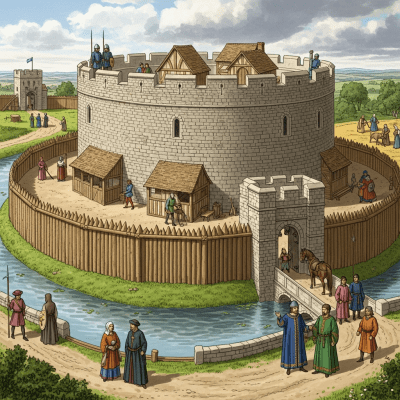
Shell keep castles are medieval fortifications distinguished by a circular or polygonal stone wall built atop a motte, enclosing a courtyard and replacing earlier timber keeps.
Shell keep castles are medieval fortifications distinguished by a circular or polygonal stone wall built atop a motte, enclosing a courtyard and replacing earlier timber keeps.
Shell keep castles originated in the late 11th to early 13th centuries, primarily in England and Wales. They evolved as a direct response to the vulnerabilities of timber motte-and-bailey castles, especially their susceptibility to fire and siege. Norman builders pioneered the transition, replacing wooden keeps with robust stone shells atop existing mounds. Notable early examples include Windsor Castle and Restormel Castle, which showcase the adaptation and innovation of this architectural form during a period of intense castle-building and consolidation of royal power.
Within the broader taxonomy of castles, shell keep castles represent an evolutionary stage between timber motte-and-bailey structures and more complex stone keeps or concentric castles. They are classified as a subtype of medieval defensive residences, notable for their use of a surrounding stone wall in place of a central tower. This architectural solution reflects both technological advancement and adaptation to the landscape, fitting squarely within the Norman and Plantagenet traditions of castle construction in the British Isles.
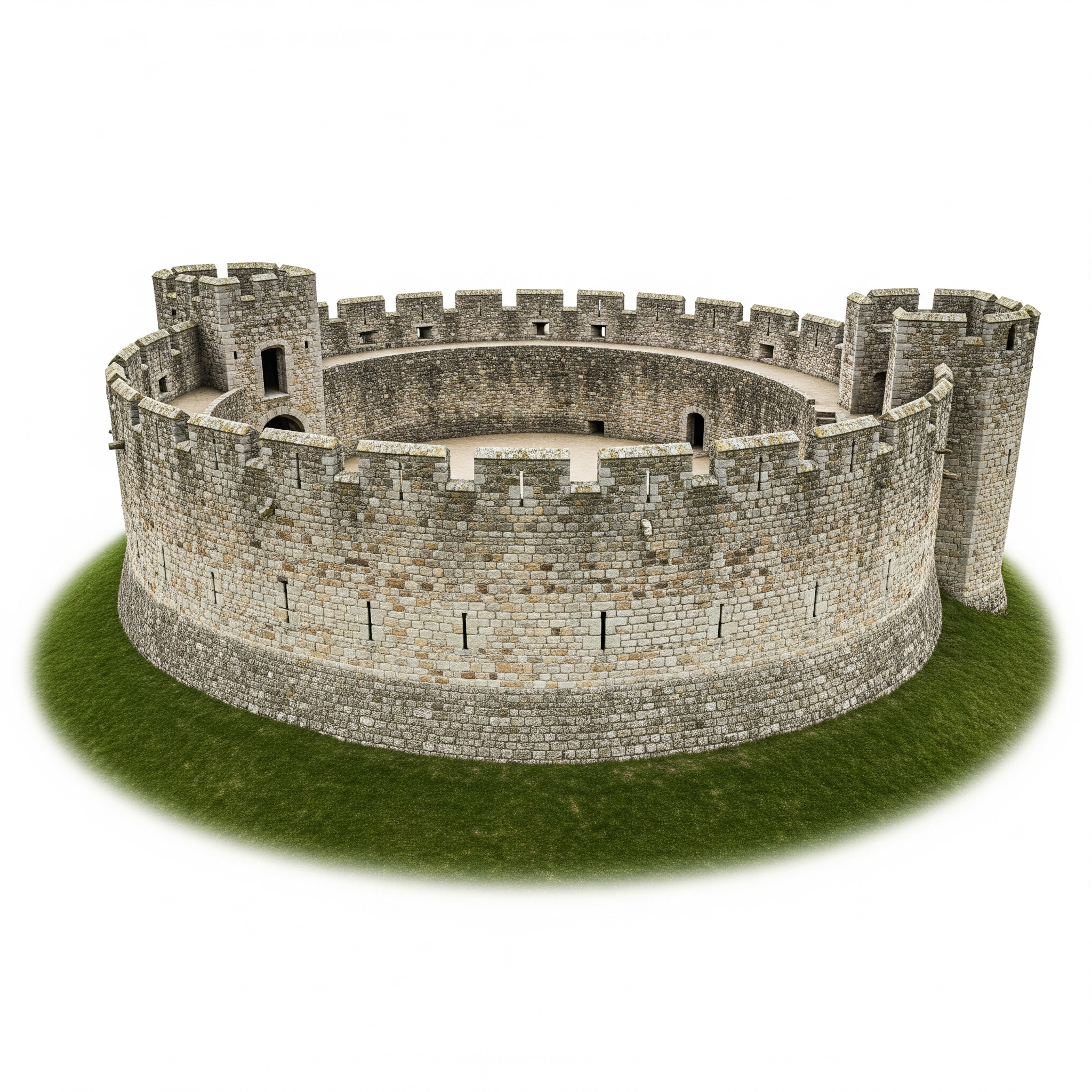
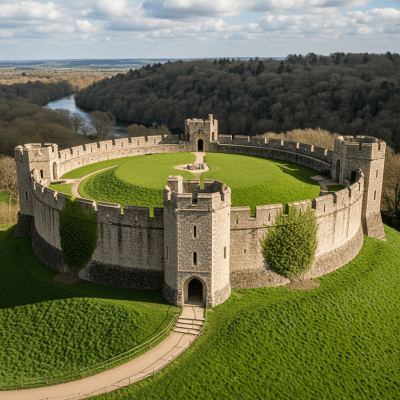
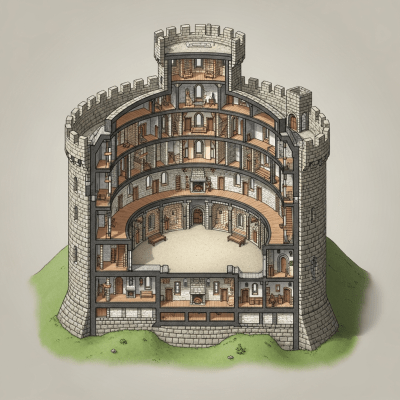
Shell keep castles are visually striking for their circular, oval, or polygonal stone walls that crown the summit of a motte—an artificial or natural mound. The wall, often imposing at 2–4 meters thick and up to 10 meters high, forms a continuous defensive ring. Inside, timber or stone buildings such as halls, chapels, and lodgings are built against the inner wall, leaving a central open courtyard exposed to the sky. The entrance is typically fortified and accessed via a bridge or stair, and the wall itself is punctuated by battlements and arrow slits. The overall shape is dictated by the motte’s contours, resulting in irregular and organic plans that blend with the landscape.
Shell keep castles functioned as fortified residences for nobility and administrative centers. Their design allowed for rapid construction atop existing mottes, offering enhanced defense against fire and siege compared to their timber predecessors. The enclosed courtyard facilitated daily life, governance, and ceremonial functions, while the surrounding wall provided a formidable barrier to attackers. Over time, many shell keeps were adapted or replaced as castle architecture evolved, but their utility as both stronghold and seat of power remained central during their heyday.
Bring this kind into your world illustrated posters, mugs, and shirts.
Archival print, museum-grade paper
Buy Poster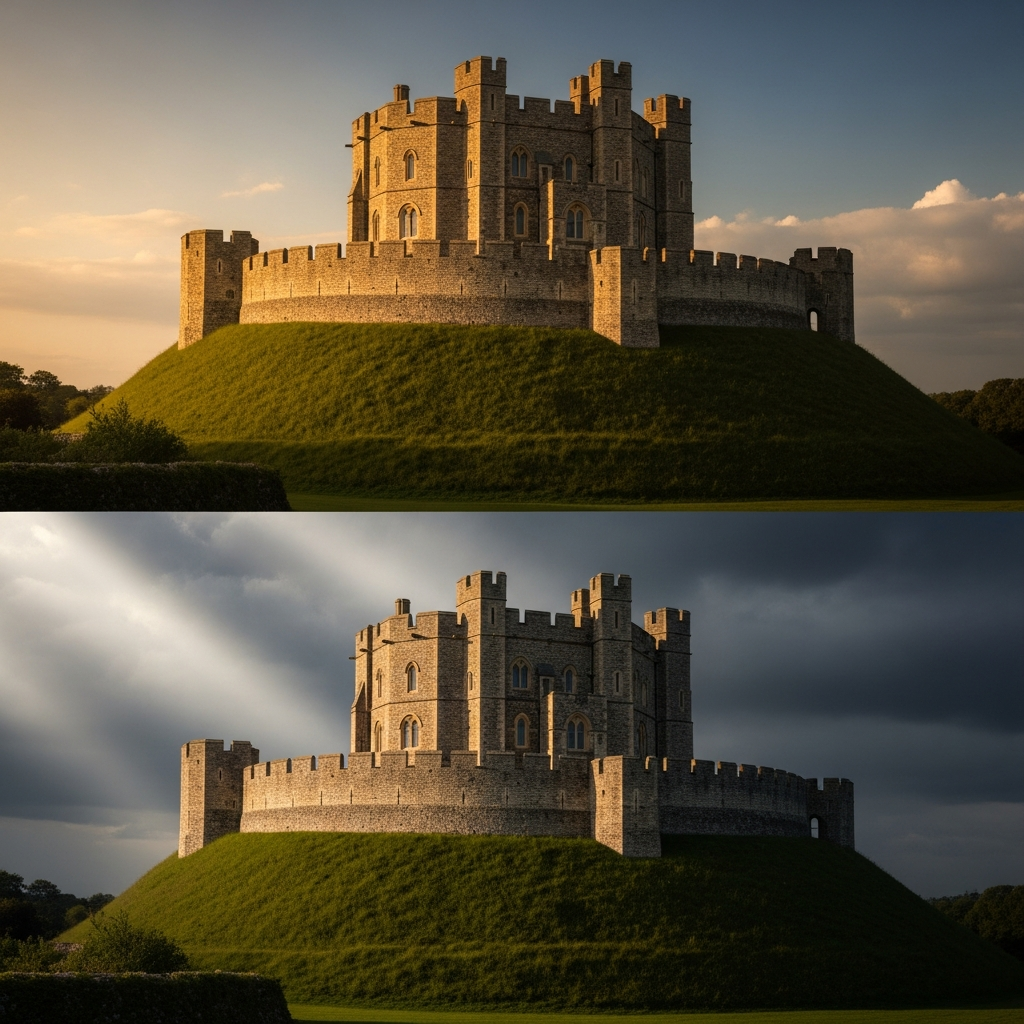
Stoneware mug, dishwasher safe
Buy Mug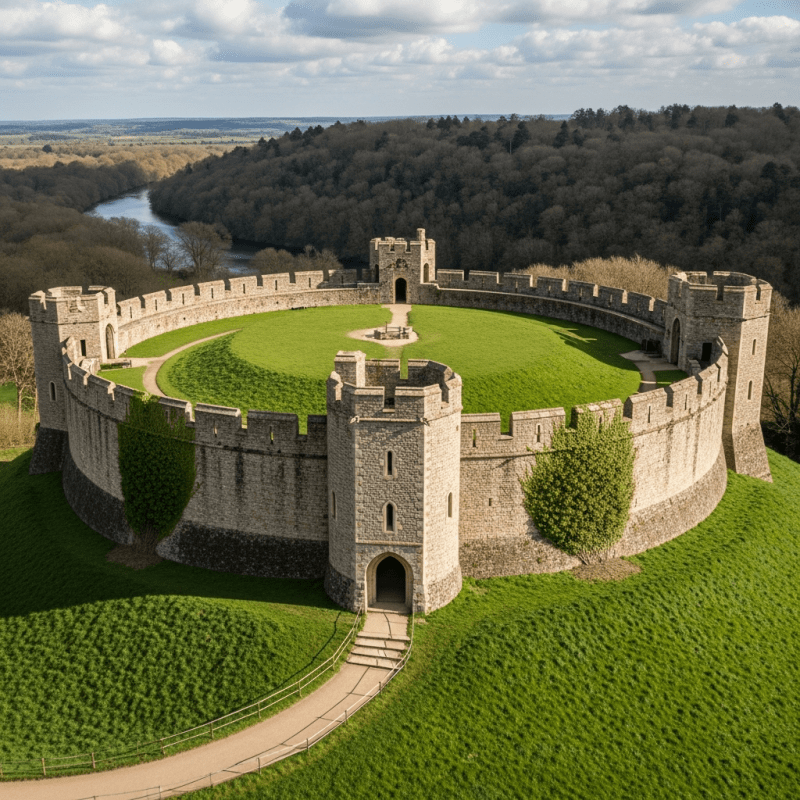
Soft cotton tee, unisex sizes
Buy ShirtShell keep castles are enduring symbols of Norman and Plantagenet authority in the British Isles. They represent a pivotal moment in the evolution of medieval fortification, embodying both technological innovation and the assertion of feudal power. Surviving examples, such as Windsor Castle, continue to hold cultural resonance as royal residences and heritage sites, appearing in art, literature, and popular media as icons of medieval strength and ingenuity. Their rarity outside Britain further underscores their unique place in the architectural and historical landscape.
Key architectural features of shell keep castles include a thick stone wall (2–4 meters) forming a circular, oval, or polygonal enclosure atop a motte. The wall is often crowned with battlements and pierced by arrow slits for defense. Internal buildings—halls, chapels, lodgings—are constructed against the inner wall, leaving a central courtyard. The main entrance is fortified and typically accessed by bridge or stair. Locally quarried stone (limestone, sandstone, granite) is used for the wall, while timber is common for internal structures. The absence of a central tower is a defining trait, with the shell itself serving as the primary defensive element.
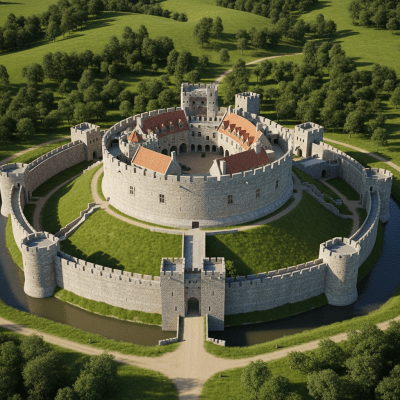
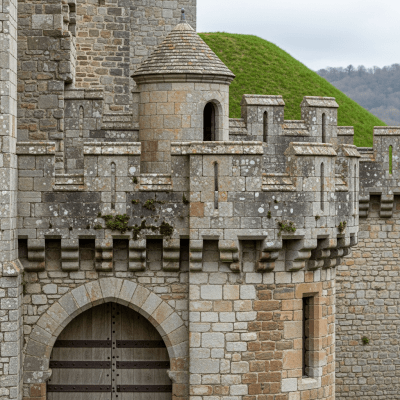
Shell keep castles played vital roles as fortified noble residences, administrative centers, and symbols of feudal authority. Their improved defensive capabilities over timber motte-and-bailey castles made them attractive during periods of conflict and consolidation. They facilitated rapid construction on existing earthworks, enabling rulers to establish control and manage local governance. Over time, as castle architecture advanced, shell keeps were often superseded by more elaborate stone keeps or concentric castles, but their historical significance endures in the surviving examples.
Shell keep castles are predominantly a British phenomenon, found almost exclusively in England and Wales. In French contexts, similar structures are referred to as château à enceinte sommitale, though true shell keeps are rare on the continent. In Germanic regions, the term Ringmauerburg (ring wall castle) may describe analogous forms, but these are not strictly equivalent. The prevalence and terminology of shell keeps reflect regional architectural preferences and historical circumstances, with heritage listings such as Scheduled Monuments (UK) underscoring their local significance.
Many shell keep castles survive as ruins, protected as Scheduled Monuments and listed on the National Heritage List for England. Restoration efforts focus on stabilizing stonework and preserving unique architectural features, while some, like Windsor Castle, remain in active use. Public access varies, with some sites managed by organizations such as the National Trust or Historic England. Their heritage status ensures ongoing conservation and recognition of their historical value.
Shell keep castles, like Windsor, are often surrounded by tales of royal intrigue, ghostly apparitions, and legendary sieges. Local folklore may recount hidden treasures buried within the motte or spectral figures haunting the battlements. While not as myth-laden as some older castles, their association with Norman and Plantagenet rulers lends an aura of medieval mystery and romance to these enduring structures.
When visiting a shell keep castle, check opening times and access arrangements, as some sites are managed by heritage organizations. Wear sturdy footwear for uneven terrain and motte climbs. Early mornings or weekdays offer quieter experiences, especially at popular locations like Windsor Castle. Respect preservation efforts by staying on marked paths and avoiding restricted areas. Guided tours can enrich your understanding of the castle’s history and architecture.
Alternate names for shell keep castles include shell keep, encircling wall keep, and, in French, château à enceinte sommitale. In Germanic regions, the term Ringmauerburg (ring wall castle) may be used, though it is not strictly synonymous. The terminology reflects both architectural features and regional classification, with shell keeps most commonly referenced in British castle studies.