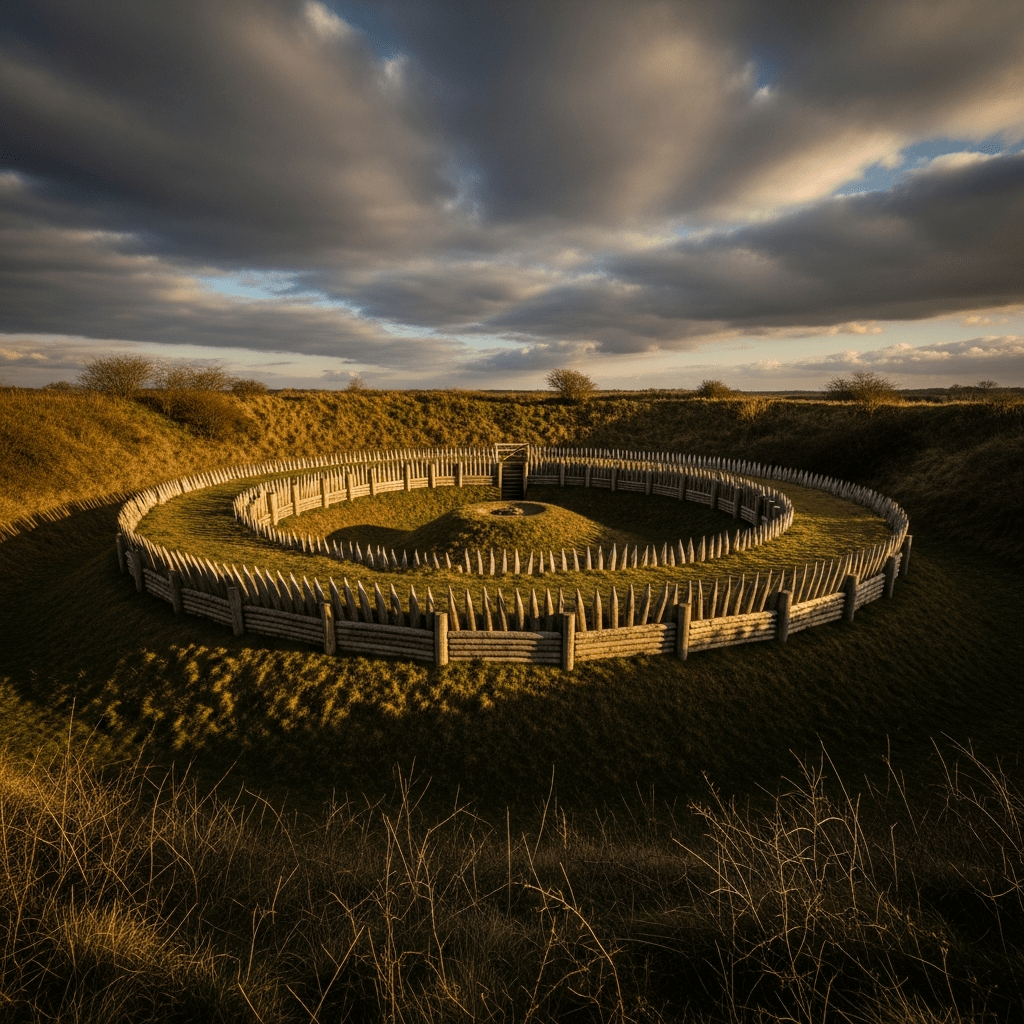
Ringwork Castle
Ringwork castles are early medieval fortifications defined by their circular or oval earthwork enclosures, surrounded by a ditch and bank, and represent a pivotal transitional phase in the evolution of European castle architecture.
Ringwork castles are early medieval fortifications defined by their circular or oval earthwork enclosures, surrounded by a ditch and bank, and represent a pivotal transitional phase in the evolution of European castle architecture.
Ringwork castles originated in the late 10th to early 12th centuries, most notably during and after the Norman Conquest (c. 1066–1150 CE) in Britain and continental Europe. Built by local lords and Norman invaders, these structures drew inspiration from earlier Saxon and Viking fortifications, offering rapid, defensible residences and administrative centers in newly conquered territories. Their emergence marks a crucial adaptation of continental military architecture to the landscapes and needs of feudal society in England and Wales.
Within the broader taxonomy of castles, ringwork castles are recognized as a distinct type, separate from motte-and-bailey and shell keep forms. They are classified based on their earthwork construction, absence of a central mound (motte), and reliance on banks and ditches for defense. Authorities such as the Castle Studies Group and Historic England treat ringworks as a unique evolutionary step in medieval fortification, bridging the gap between earlier fortresses and more advanced stone castles.
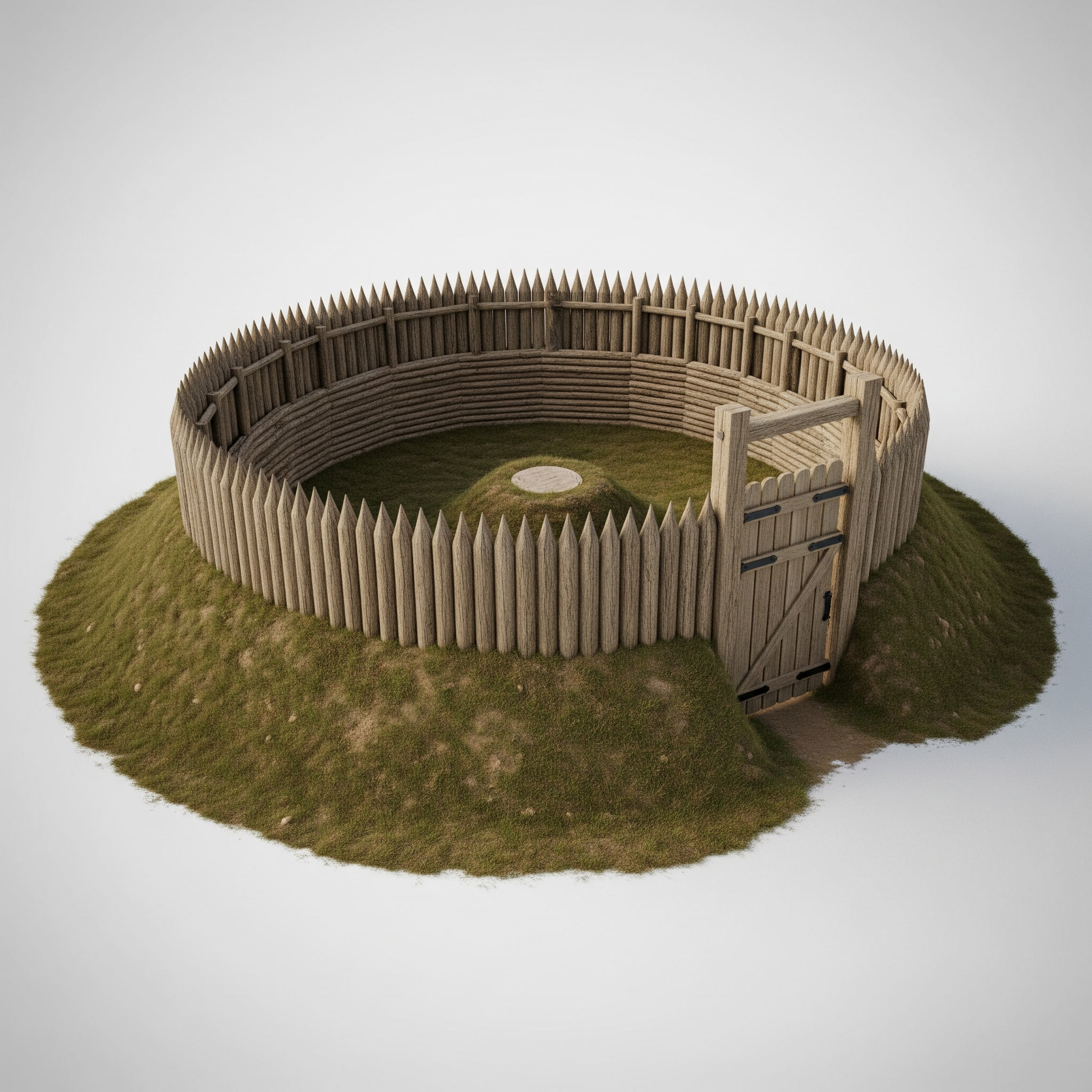
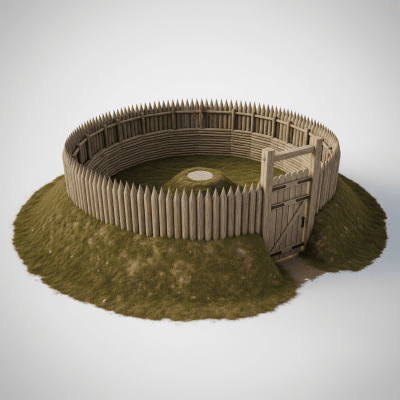
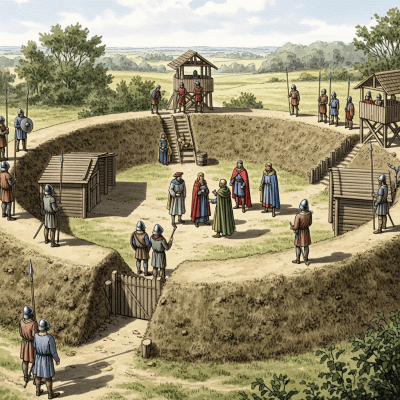
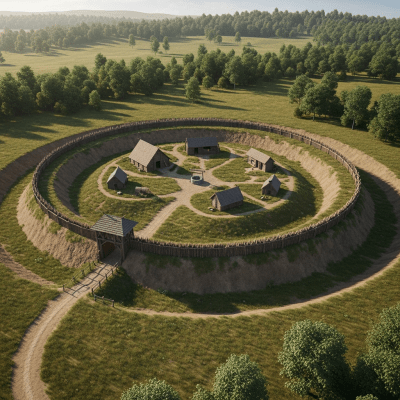
A ringwork castle typically presents as a circular or oval enclosure, defined by a substantial earthen bank—sometimes topped with timber palisades—and an external ditch. The enclosed area, ranging from 30 to 100 meters in diameter, would have housed timber or stone buildings such as halls, chapels, and ancillary structures. The landscape often retains the sweeping curves of the earthworks, with steep banks and deep ditches creating a sense of enclosure and defensive strength. Unlike motte-and-bailey castles, there is no central mound; the fortification relies on its perimeter for protection.
Ringwork castles functioned as fortified homes, administrative hubs, and military outposts, especially during periods of conquest and unrest. Their rapid construction enabled lords to assert control and organize local governance swiftly. Over time, many ringworks were upgraded to motte-and-bailey or stone keep castles, reflecting evolving military needs and architectural advancements. The structures were designed for both defense and daily life, housing not only soldiers but also the lord’s household and staff.
Bring this kind into your world illustrated posters, mugs, and shirts.
Archival print, museum-grade paper
Buy Poster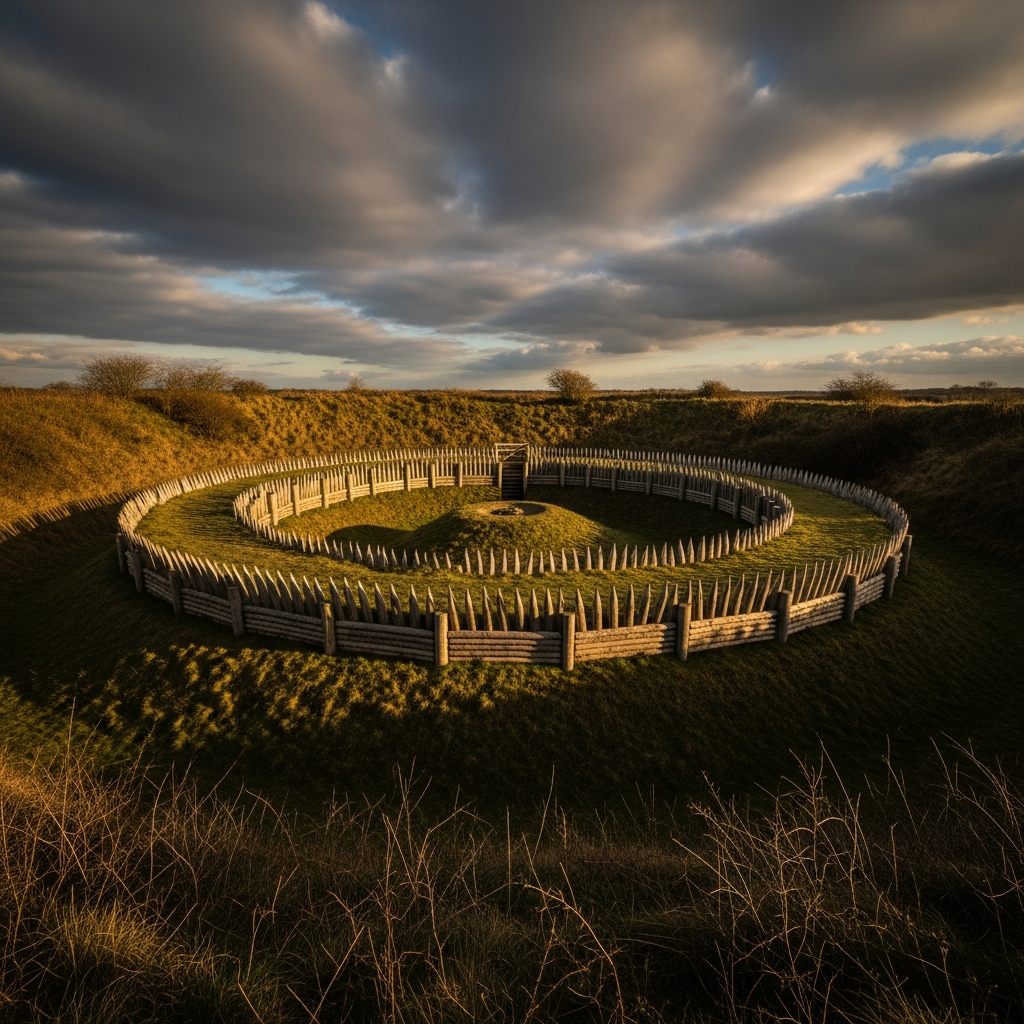
Stoneware mug, dishwasher safe
Buy Mug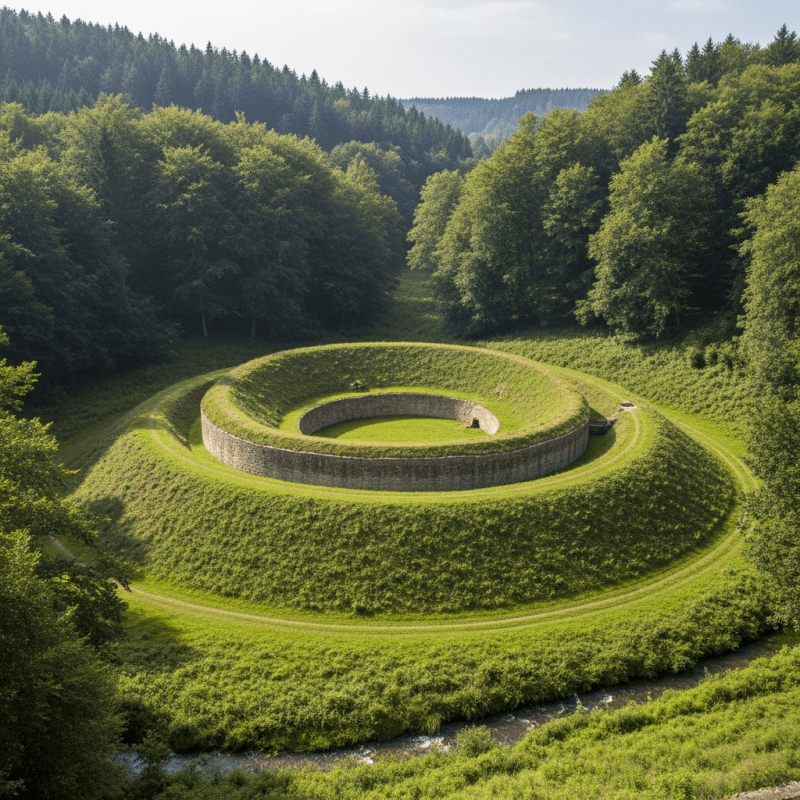
Soft cotton tee, unisex sizes
Buy ShirtRingwork castles are culturally significant as symbols of feudal power and the adaptation of continental fortification techniques to local British and European contexts. Their remains offer valuable insights into early medieval society, land control, and the spread of Norman influence. In modern times, they are studied by archaeologists and historians as key evidence of the transition from simple earthworks to more complex stone castles, and they occasionally feature in local folklore and heritage tourism.
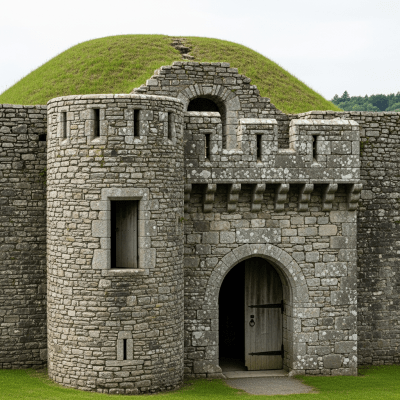
Key architectural features of ringwork castles include a circular or oval earthen bank, often reinforced with timber palisades, and an external ditch for defense. The enclosed area typically contains timber or stone buildings, such as a hall and chapel. Some ringworks feature simple gatehouses and, in rare cases, secondary enclosures (baileys). Later modifications sometimes added stone curtain walls. The primary materials are earth and timber, with occasional stone used in upgrades.


Historically, ringwork castles served as fortified residences for local lords, administrative centers for governance, and military strongpoints during periods of conflict, especially the Norman expansion into Britain. Their rapid construction enabled immediate assertion of control over newly conquered lands, making them vital tools in the establishment of feudal order and defense against unrest.
Regional terminology and dating vary: in England and Wales, ringwork castles are classified as distinct from motte-and-bailey forms, while in Germany, "Ringwallburg" may refer to similar or earlier fortifications, sometimes overlapping with prehistoric sites. In France, "enceinte circulaire" describes analogous structures. The prevalence and architectural details of ringwork castles reflect local landscapes, available materials, and historical circumstances.
Most ringwork castles survive as earthwork remains, with banks and ditches visible in the landscape but few standing structures. Archaeological surveys and heritage organizations, such as Historic England, have documented and protected many sites. Restoration is rare due to the nature of the materials, but conservation efforts focus on maintaining the integrity of the earthworks and interpreting them for visitors. Some sites are designated as scheduled monuments or included in national heritage registers.
While ringwork castles are less commonly associated with grand legends than later stone castles, local folklore sometimes attributes mysterious origins or supernatural events to their earthworks. Stories of hidden treasures, ancient battles, and ghostly apparitions occasionally surround these sites, reflecting their enduring presence in the landscape and community memory.
When visiting a ringwork castle site, wear sturdy footwear suitable for uneven terrain and be prepared for limited facilities, as most sites are open earthworks. The best times to visit are spring and autumn, when vegetation highlights the contours of the banks and ditches. Respect the site by staying on marked paths and avoiding disturbance to the earthworks. Many locations offer interpretive signage or guides, and some are accessible via public footpaths.
Alternate terms for ringwork castles include "earthwork castle," "ringfort" (though more often used for earlier settlements), "ringwall castle," and "Ringwallburg" (German). In French contexts, "enceinte circulaire" is used. It is important to distinguish ringwork castles from motte-and-bailey and shell keep forms, as well as from prehistoric ringforts, which differ in function and period.