Origin Story

The palace-castle hybrid emerged in late medieval and Renaissance Europe, reflecting a shift in priorities from pure fortification to courtly display and governance. Early exemplars include Prague Castle, which originated in the 9th century and evolved under Holy Roman Emperors and Bohemian kings, and the Château de Chambord in France, commissioned by King Francis I in 1519. These structures mark a transition from feudal strongholds to grand residences, often built by monarchs or high-ranking nobles seeking to demonstrate both military might and cultural sophistication.

Classification

Palace-castle hybrids occupy a distinct place within the castle taxonomy, representing a fusion of military and residential architecture. They are classified by their dual function: robust fortifications paired with elaborate palatial elements. This type is typically grouped with other transitional forms, bridging the gap between medieval castles and later ceremonial palaces, and often incorporates Renaissance, Baroque, or Gothic influences.

Appearance or Form

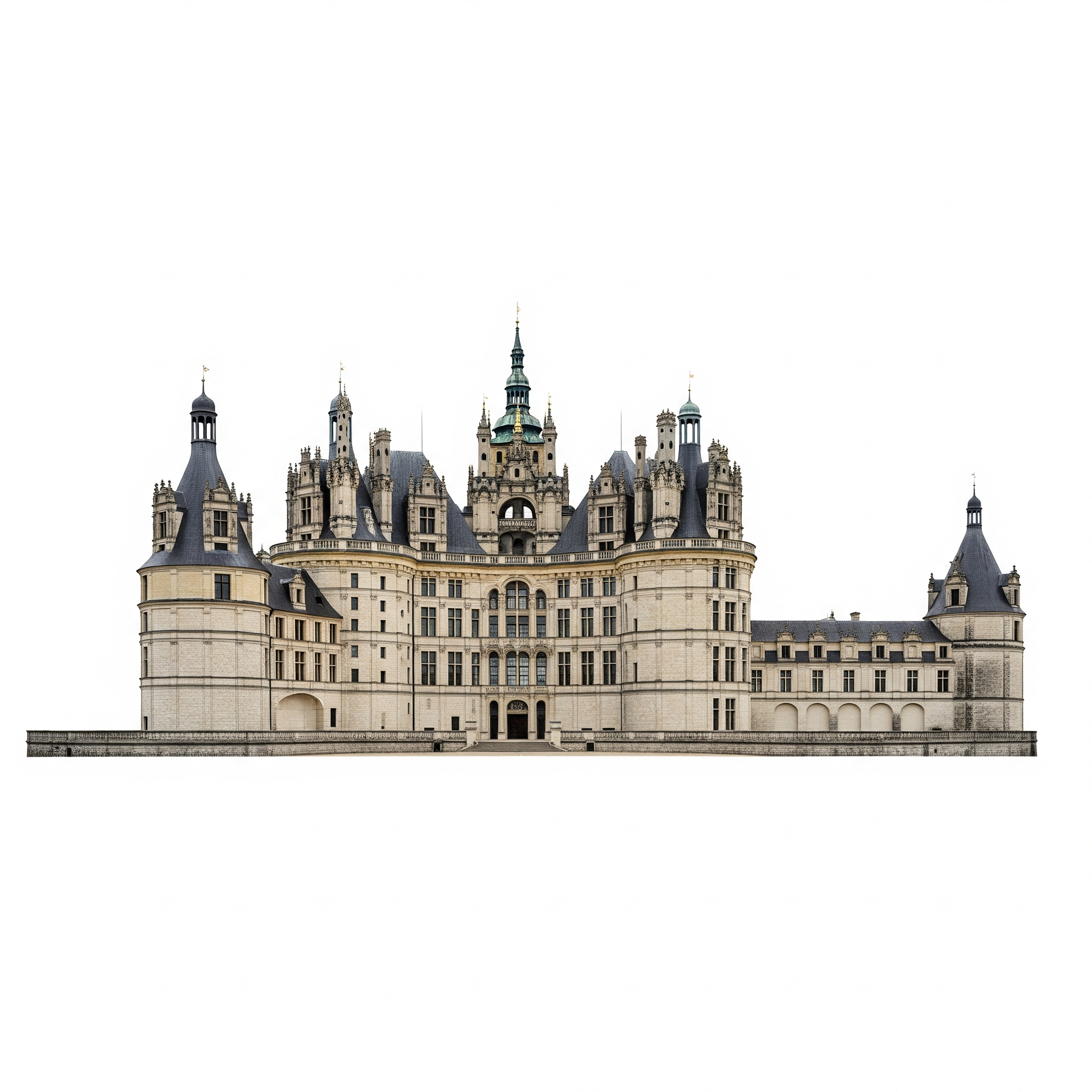
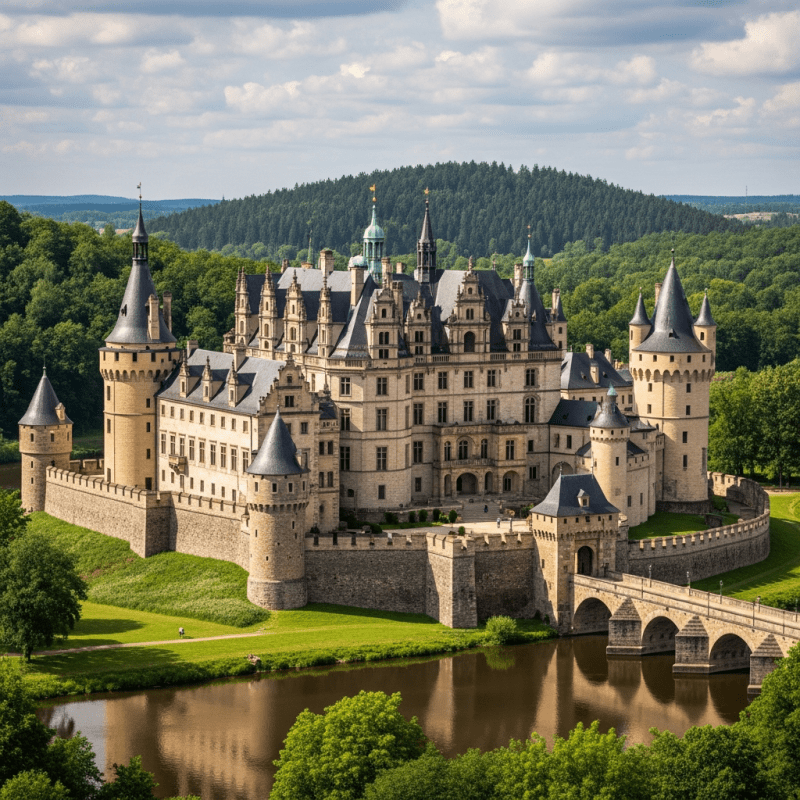
These hybrids are visually striking, featuring imposing curtain walls, moats, and towers alongside grand residential wings, ceremonial halls, and ornate facades. The use of stone, brick, marble, and stucco creates a sense of permanence and luxury. Monumental staircases, such as the double helix at Chambord, extensive gardens, and richly decorated exteriors contribute to their majestic presence. The overall scale is typically larger and more complex than standard castles, reflecting their multifaceted roles.

Behavior or Usage

Palace-castle hybrids served as royal or noble residences, administrative centers, and venues for diplomatic and ceremonial events. While retaining some defensive capacity, their primary function shifted toward governance, representation, and cultural patronage. These buildings often hosted courts, state functions, and artistic endeavors, embodying both martial heritage and refined taste.

Merchandise & Prints

Bring this kind into your world � illustrated posters, mugs, and shirts.

Palace-Castle Hybrid Palace-Castle Hybrid Poster

Palace-Castle Hybrid Poster

Archival print, museum-grade paper

Palace-Castle Hybrid Palace-Castle Hybrid Mug

Palace-Castle Hybrid Mug

Stoneware mug, dishwasher safe

Palace-Castle Hybrid Palace-Castle Hybrid Shirt

Palace-Castle Hybrid Shirt

Soft cotton tee, unisex sizes

Attributes & Insights

Taxon-Specific Insights

🌍Cultural Significance

These structures are enduring symbols of power, artistry, and historical transition. They frequently appear in art, literature, and popular media as icons of royal grandeur and intrigue. Many palace-castle hybrids are now national monuments, museums, or UNESCO World Heritage Sites, celebrated for their architectural innovation and their role in shaping regional and national identities.

📌Notable Facts

  • The double helix staircase at Château de Chambord is a masterpiece of Renaissance engineering, attributed to Leonardo da Vinci.
  • Prague Castle is the largest ancient castle complex in the world and has continuously served as a seat of power for over a millennium.
  • Defensive elements in palace-castle hybrids often became symbolic, with bastions and moats integrated into palatial designs more for prestige than military necessity.
  • Many of these hybrids are listed under both castle and palace categories in heritage registers, reflecting their dual nature.

🏰Architectural Features

Key architectural features include curtain walls, moats, towers, and gatehouses integrated with grand residential wings, monumental staircases, and ornate facades. Materials range from limestone and sandstone to marble and stucco. Layouts are complex, accommodating both military and ceremonial functions, with highlights such as extensive gardens and richly decorated interiors.

Visual Variations

High quality studio photograph of a Palace-Castle Hybrid, belonging to the castles taxonomy
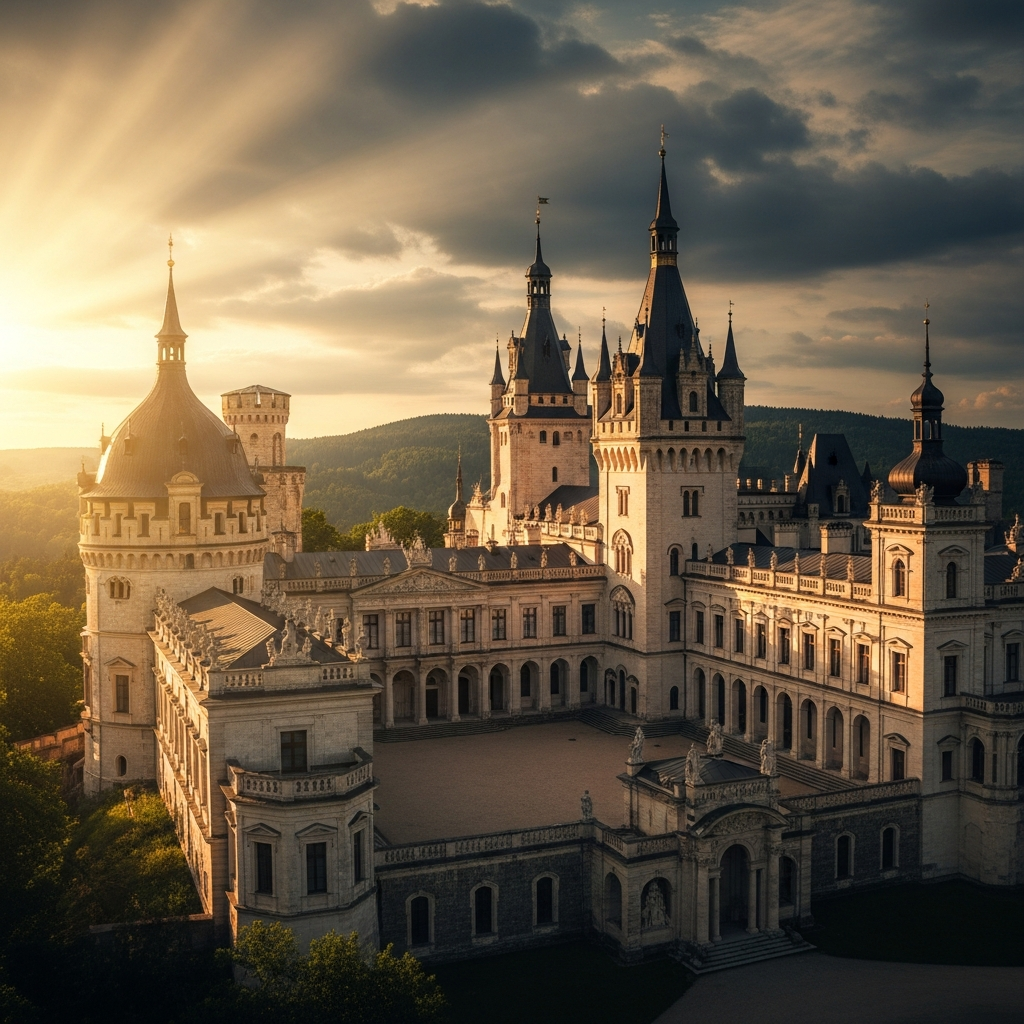
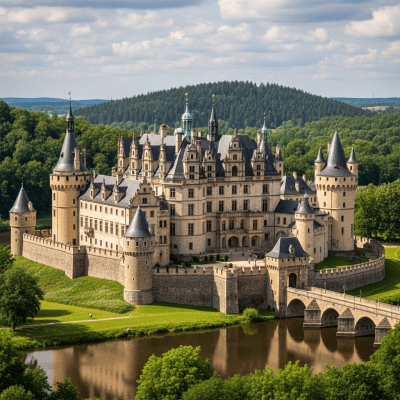
A realistic image of the Palace-Castle Hybrid from the castles taxonomy, situated in its historical or natural environment
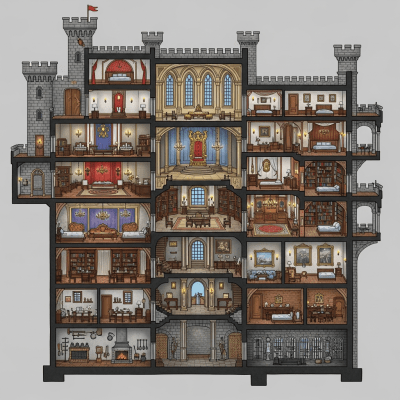
A detailed cross-sectional illustration of a Palace-Castle Hybrid, from the castles taxonomy
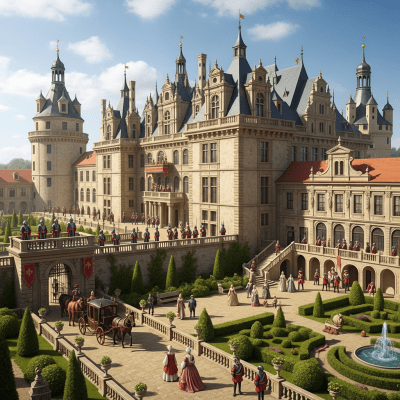
An image showing the Palace-Castle Hybrid from the castles taxonomy being used or inhabited historically
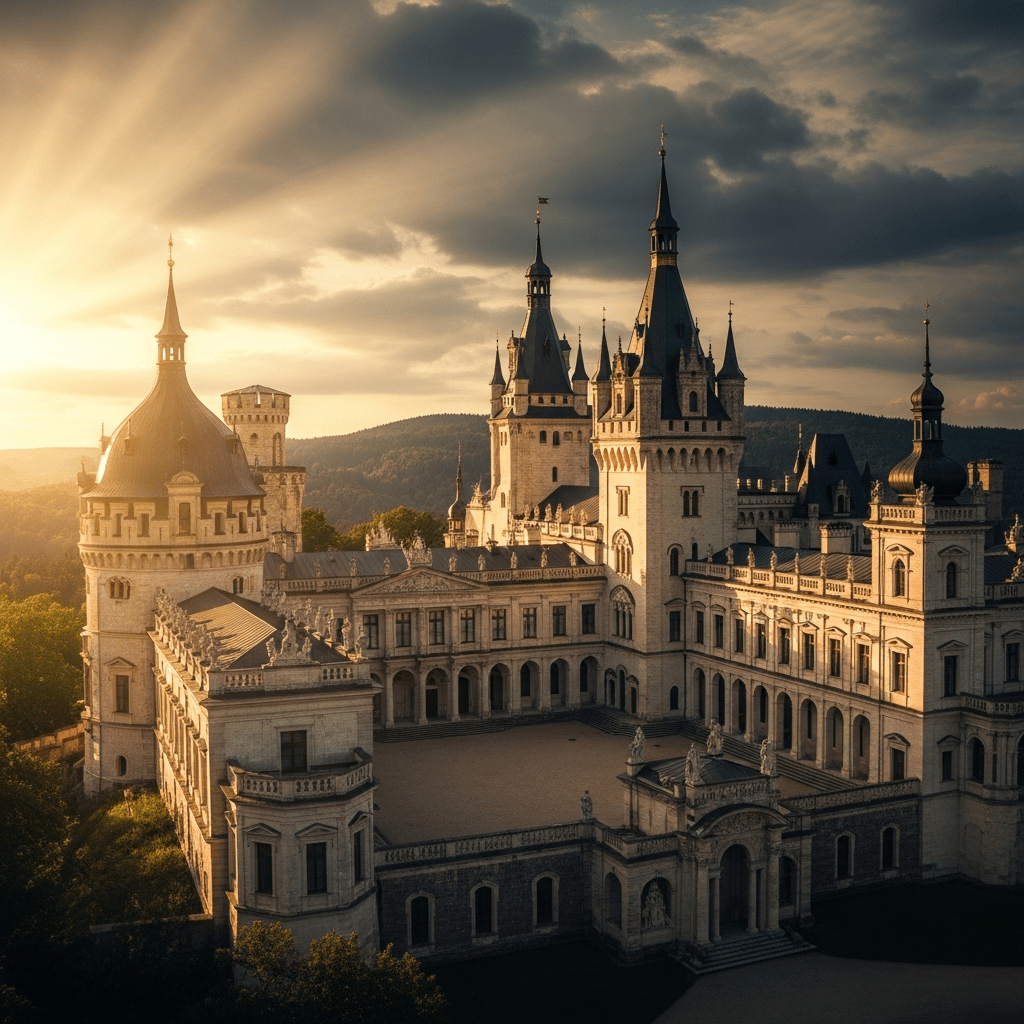
A bird's-eye view rendering of a Palace-Castle Hybrid, classified in the castles taxonomy
A close-up image focusing on unique architectural details of a Palace-Castle Hybrid, from the castles taxonomy

Composition & Context

Taxon-Specific Insights

⚔️Historical Roles

Historically, palace-castle hybrids served as fortified residences for royalty and nobility, administrative centers, and venues for diplomatic and ceremonial events. Their evolution reflects shifting societal needs, from martial defense to governance, representation, and cultural patronage.

🌍Famous Examples

  • Château de Chambord (France)
  • Prague Castle (Czech Republic)
  • Schloss Heidelberg (Germany)
  • Alcázar of Segovia (Spain)

🗺️Regional Variations

Regional terminology and classification vary: in France, "château" refers to both castles and palaces; in Germany, "Schloss" often denotes a palace with defensive origins. Italian "palazzo-fortezza" and citadel-palace in other regions reflect local adaptations. Heritage registers may list these structures under multiple categories, and UNESCO designations are common.

🛡️Preservation Status

Many palace-castle hybrids are well-preserved, often restored as national monuments or museums. Some, like Prague Castle and Chambord, benefit from UNESCO World Heritage protection and ongoing conservation efforts. Restoration typically balances historical accuracy with adaptive reuse, ensuring continued public access and cultural relevance.

👻Legends And Myths

Palace-castle hybrids are steeped in legend and folklore, from tales of royal intrigue at Prague Castle to stories of secret passages and ghostly apparitions at Chambord. Their dramatic architecture and storied histories inspire myths of hidden treasures, haunted halls, and mysterious staircases, captivating visitors and storytellers alike.

🎟️Visiting Tips

  • Check official websites for opening hours and guided tour availability; advance booking is recommended for popular sites like Chambord and Prague Castle.
  • Visit early in the day to avoid crowds and enjoy quieter exploration of gardens and ceremonial halls.
  • Respect preservation guidelines: stay on marked paths, avoid touching historic surfaces, and observe photography restrictions where posted.

📝Terminology And Synonyms

Alternate terms for palace-castle hybrids include château (French), Schloss (German), palazzo-fortezza (Italian), and citadel-palace. Usage varies by region and context, with some languages blurring the distinction between castle and palace. Heritage registers and UNESCO listings may apply both terms, reflecting the dual nature of these structures.

Faq

  • What is a palace-castle hybrid?
    A palace-castle hybrid is a building that combines the defensive features of a castle with the luxurious, ceremonial aspects of a palace.
  • Are palace-castle hybrids still inhabited?
    Most serve as museums or government buildings today, though some retain ceremonial or administrative functions.
  • How do they differ from regular castles or palaces?
    They uniquely blend fortification and courtly residence, whereas castles focus on defense and palaces on luxury and ceremony.