Origin Story

Motte-and-bailey castles first emerged in Normandy, northern France, during the 10th century. Their rapid spread across England, Wales, and parts of continental Europe was catalyzed by the Norman Conquest of 1066, when William the Conqueror and his nobles sought swift, effective means to secure newly conquered territories. The design evolved from earlier wooden fortifications, setting the stage for later stone castles.

Classification

This castle type belongs to the broader family of medieval defensive residences, specifically categorized as an 'earthwork castle' due to its prominent use of artificial mounds and timber. It represents one of the earliest and most influential forms in the typology of European castles, preceding stone keeps and concentric designs.

Appearance or Form

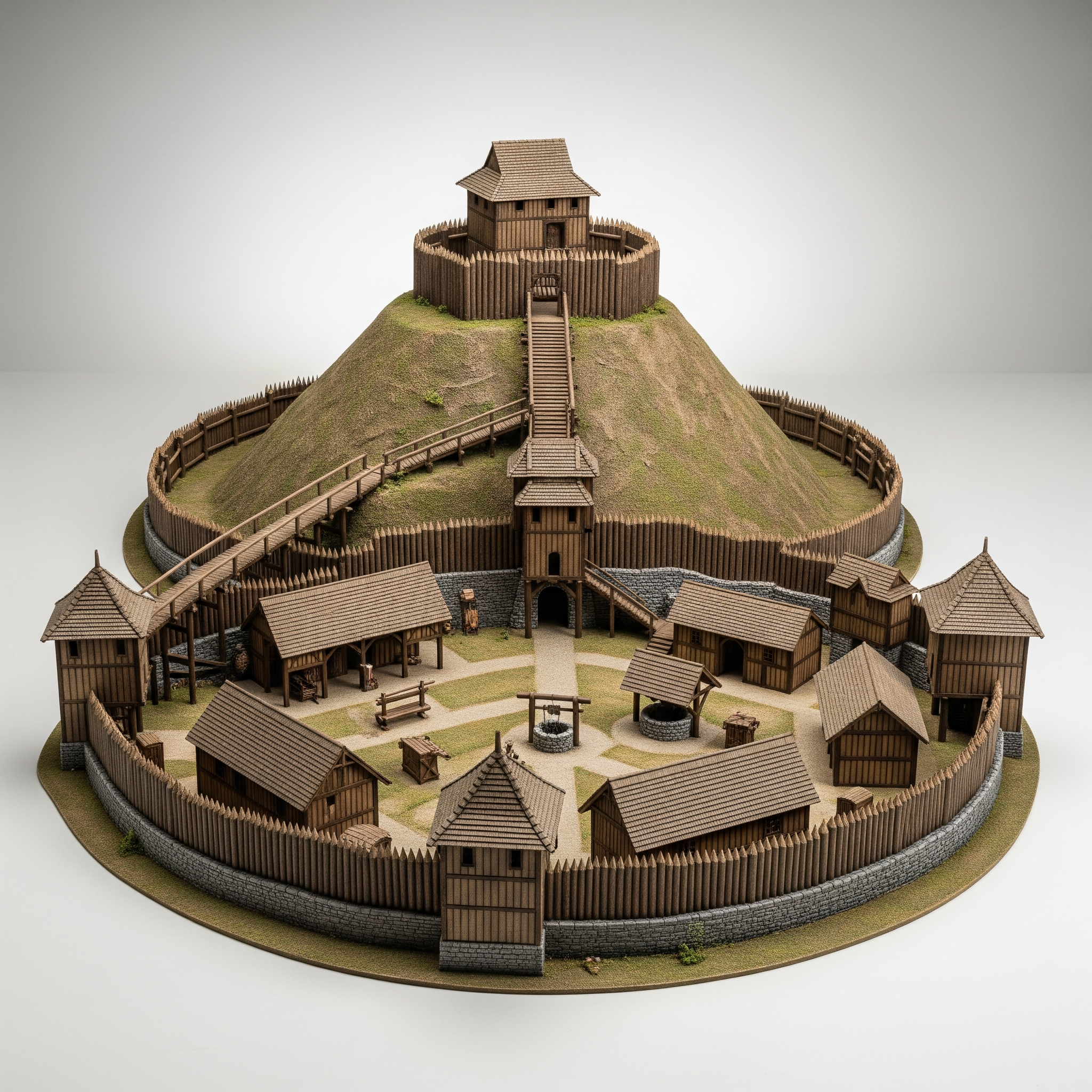
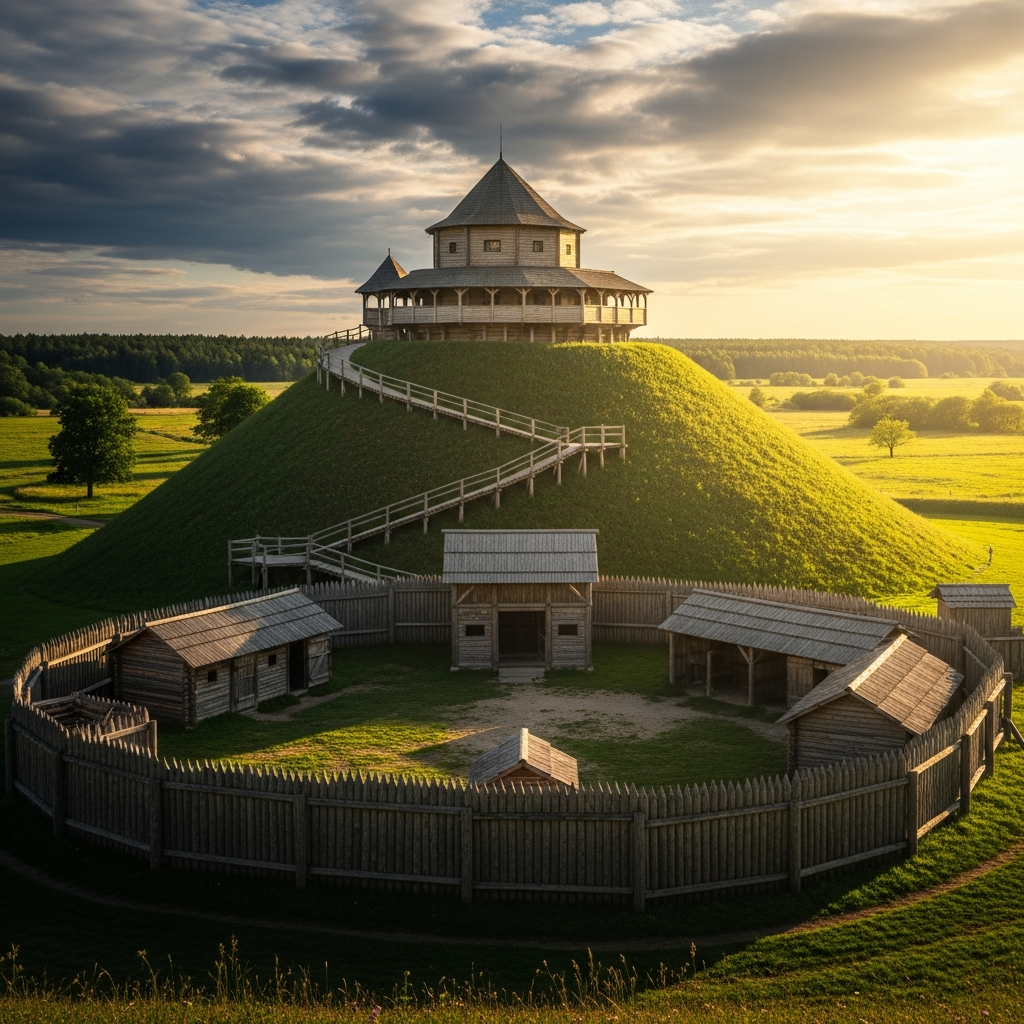
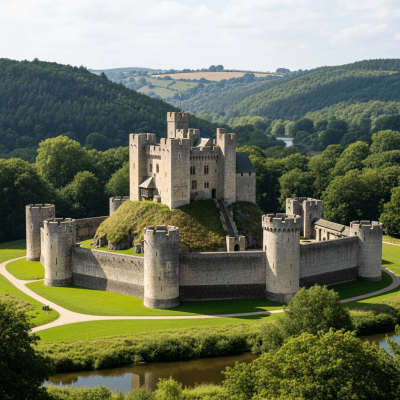
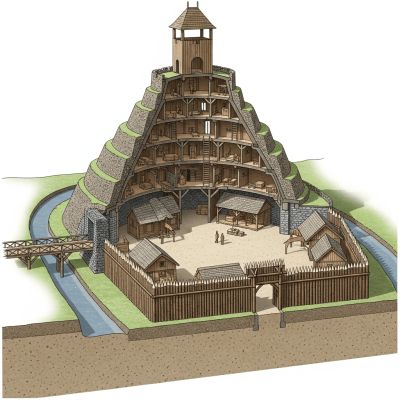
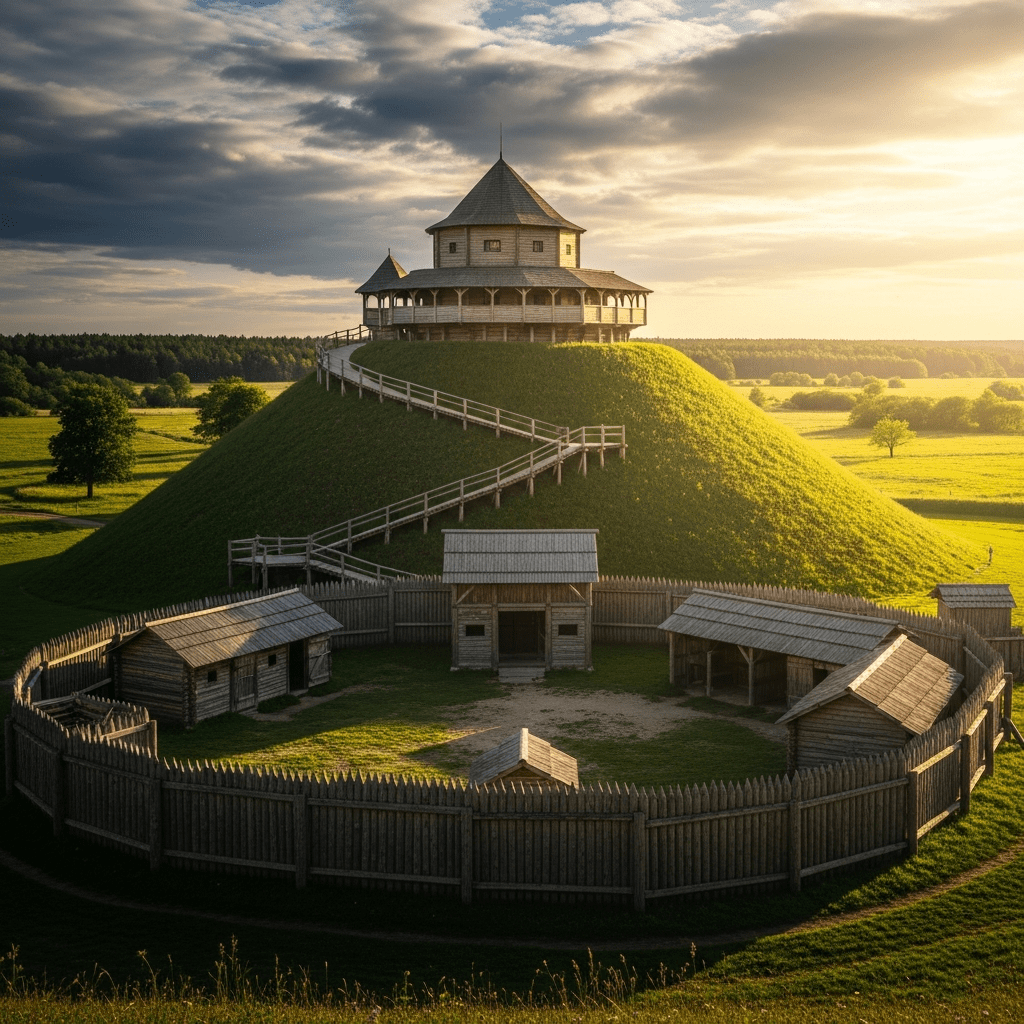
A typical motte-and-bailey castle features a steep, towering mound (the motte), often rising 5–30 meters, topped by a wooden or stone keep. Beside it lies the bailey—a bustling, enclosed courtyard ringed by a stout wooden palisade and deep ditch, sometimes filled with water. The motte and bailey are connected by a bridge or stairway, and the entire complex is often sited to exploit natural terrain, giving an impression of rugged, purposeful strength and rapid construction.

Behavior or Usage

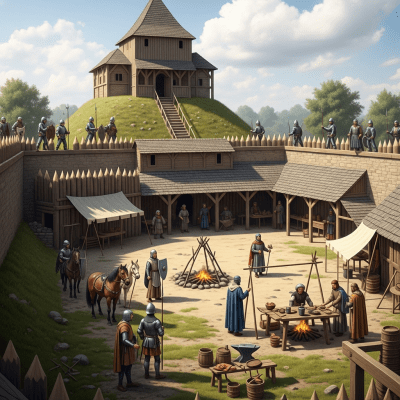
These castles functioned as military strongholds, administrative centers, and noble residences. Lords and garrisons occupied the keep atop the motte for defense and command, while daily life and essential operations unfolded within the bailey. Their swift construction allowed rulers to establish control over new lands, and their design facilitated both defense and governance.

Merchandise & Prints

Bring this kind into your world � illustrated posters, mugs, and shirts.

Motte-and-Bailey Castle Motte-and-Bailey Castle Poster

Motte-and-Bailey Castle Poster

Archival print, museum-grade paper

Motte-and-Bailey Castle Motte-and-Bailey Castle Mug

Motte-and-Bailey Castle Mug

Stoneware mug, dishwasher safe

Motte-and-Bailey Castle Motte-and-Bailey Castle Shirt

Motte-and-Bailey Castle Shirt

Soft cotton tee, unisex sizes

Attributes & Insights

Taxon-Specific Insights

🌍Cultural Significance

Motte-and-bailey castles symbolize the transformative power of the Norman Conquest and the dawn of feudal Europe. Their enduring presence in landscapes and literature evokes tales of conquest, authority, and medieval life. In modern culture, they are celebrated as archetypes of the classic 'castle,' inspiring historical reenactments, educational programs, and popular media representations.

📌Notable Facts

  • Thousands of motte-and-bailey castles were constructed across the British Isles and Europe between the 11th and 13th centuries.
  • Early examples were built almost entirely of timber, enabling completion in weeks rather than years.
  • Many motte-and-bailey sites remain visible today as earthworks, even where original structures have vanished.
  • The design directly influenced the development of more advanced stone castles.

🏰Architectural Features

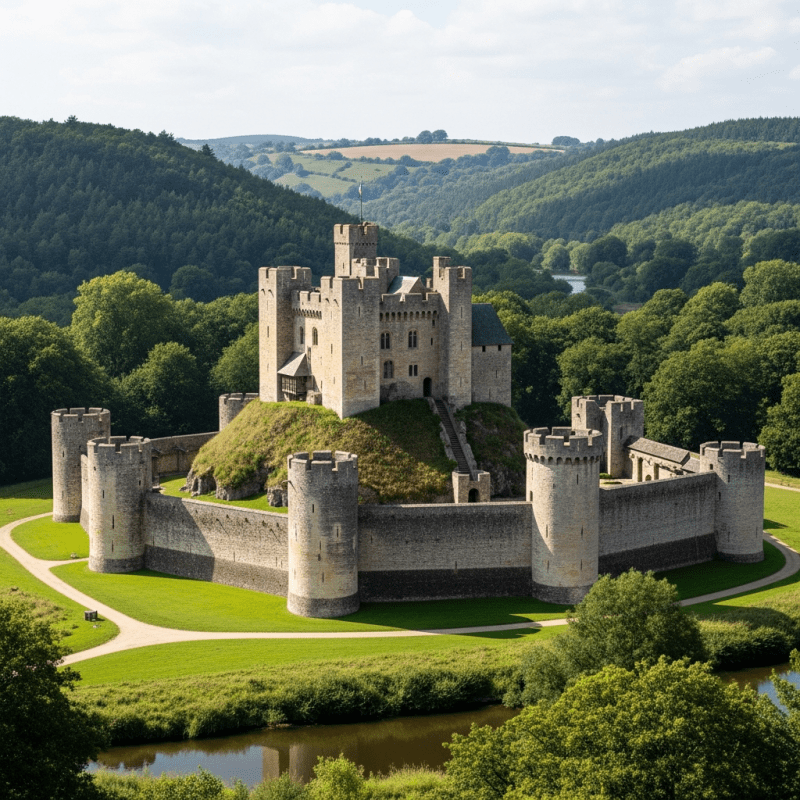
Key features include the motte—a large, artificial earth mound topped by a timber or stone keep—and the bailey, an enclosed courtyard protected by a wooden palisade and deep ditch (sometimes a moat). Defensive ditches, drawbridges, and gatehouses were common, and some castles boasted multiple baileys or subsidiary enclosures. Early construction favored timber for speed, with stone gradually replacing wood for durability.

Visual Variations

High quality studio photograph of a Motte-and-Bailey Castle, belonging to the castles taxonomy
A realistic image of the Motte-and-Bailey Castle from the castles taxonomy, situated in its historical or natural environment
A detailed cross-sectional illustration of a Motte-and-Bailey Castle, from the castles taxonomy
An image showing the Motte-and-Bailey Castle from the castles taxonomy being used or inhabited historically
A bird's-eye view rendering of a Motte-and-Bailey Castle, classified in the castles taxonomy
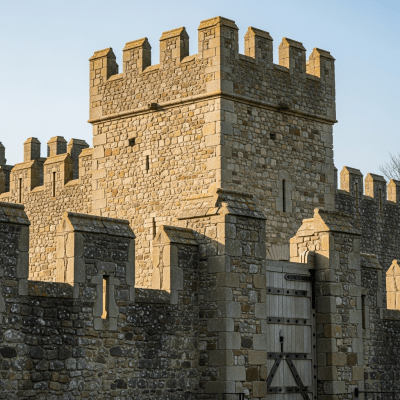
A close-up image focusing on unique architectural details of a Motte-and-Bailey Castle, from the castles taxonomy

Composition & Context

Taxon-Specific Insights

⚔️Historical Roles

Motte-and-bailey castles served as military bastions, administrative hubs, and residences for feudal lords. They were instrumental in consolidating Norman control over England and Wales, acting as centers for governance, defense, and local authority. Their rapid construction enabled swift establishment of power in newly conquered regions, shaping the medieval landscape and social structure.

🌍Famous Examples

  • Windsor Castle (original motte-and-bailey phase) – England
  • Clifford's Tower (York Castle) – England
  • Tamworth Castle – England
  • Berkhamsted Castle – England
  • Château de Fougères – France (original motte-and-bailey elements)

🗺️Regional Variations

Motte-and-bailey castles are most prevalent in the British Isles and Normandy, where they are often called 'Norman castles' or 'château à motte' in France. In Germany, terms like 'Erdwerkburg' and 'Motteburg' are used. While less common in Eastern Europe and the Low Countries, regional adaptations may include variations in materials and layout, reflecting local terrain and building traditions.

🛡️Preservation Status

Many motte-and-bailey sites are protected as Scheduled Monuments in the UK and listed in national heritage registers across Europe. While most original timber structures have not survived, the earthworks—mottes and ditches—remain prominent features in the landscape. Some sites have undergone restoration or reconstruction, and ongoing conservation efforts aim to preserve their archaeological and historical value.

👻Legends And Myths

Motte-and-bailey castles often feature in local folklore, with tales of hidden treasures buried within the motte, ghostly apparitions haunting ruined keeps, and legendary sieges. Some sites are said to be cursed or guarded by spectral knights, adding a layer of mystery and enchantment to their historical legacy.

🎟️Visiting Tips

When visiting motte-and-bailey sites, wear sturdy footwear as many remain as grassy earthworks with uneven terrain. Check for public access and opening times, as some are on private land or managed by heritage organizations. Spring and summer offer the best conditions for exploring, and visitors are encouraged to respect archaeological features by staying on marked paths and avoiding climbing on mounds.

📝Terminology And Synonyms

Alternate names include Motte castle, Bailey castle, Motte-and-bailey fort, Norman castle (in English contexts), Châtelet à motte (French), Erdwerkburg and Motteburg (German). The term 'motte-and-bailey' specifically refers to the dual structure; regional terminology may vary, reflecting linguistic and architectural nuances.

Faq

  • What is a motte-and-bailey castle?
    An early medieval castle type featuring a raised mound (motte) with a keep and an adjacent courtyard (bailey) for living and administration.
  • Why were motte-and-bailey castles built?
    They provided rapid, effective fortification for newly conquered lands, especially following the Norman Conquest.
  • Are any motte-and-bailey castles still standing?
    While most original timber structures are gone, many sites remain as earthworks or have been rebuilt in stone.