Japanese Castle
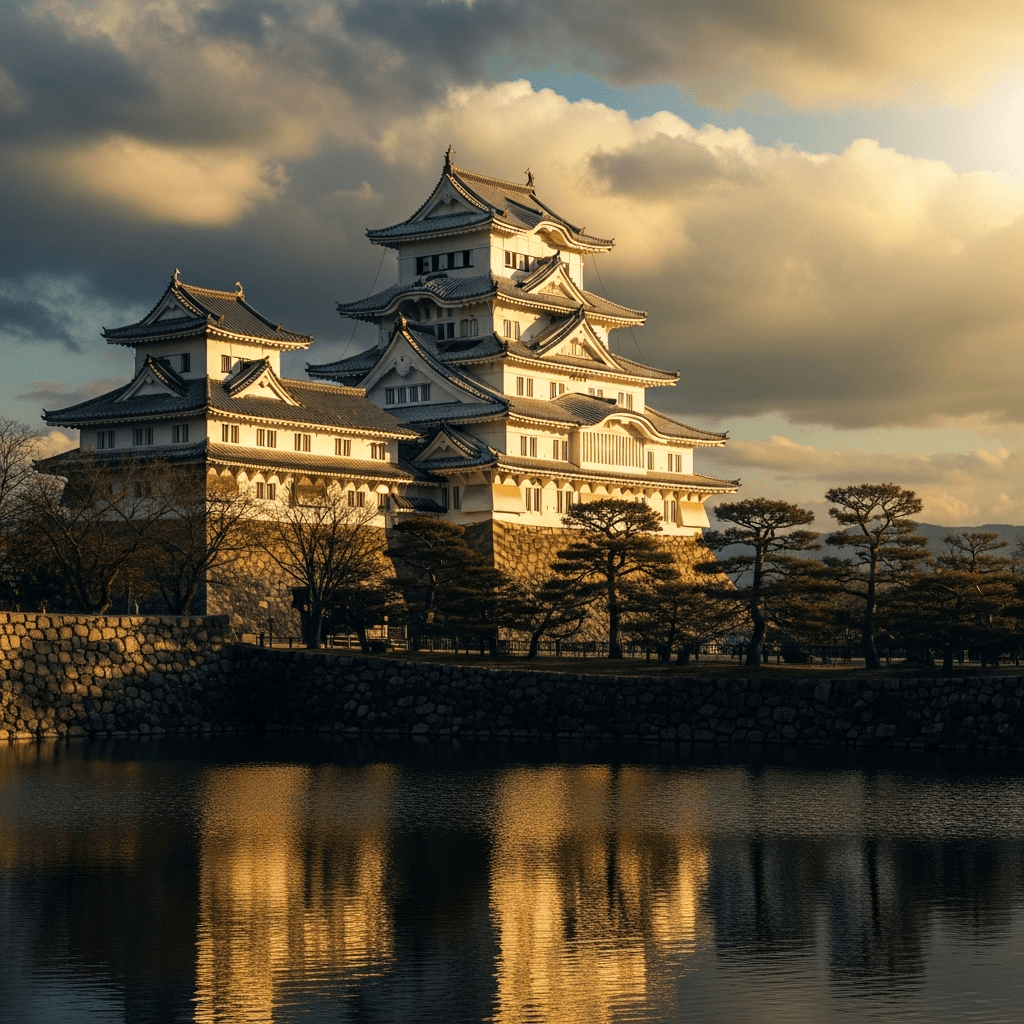
A Japanese castle (Shiro) is a distinctive multi-storied fortress, renowned for its elegant architecture and strategic design, serving as both a military stronghold and a symbol of feudal authority in Japan.
A Japanese castle (Shiro) is a distinctive multi-storied fortress, renowned for its elegant architecture and strategic design, serving as both a military stronghold and a symbol of feudal authority in Japan.
Japanese castles originated during the turbulent Sengoku period (c. 1467–1603), when feudal lords (daimyo) vied for control across fragmented territories. While early prototypes appeared in the 14th century, the classic castle form was shaped by the demands of gunpowder warfare, local geography, and social hierarchy. Visionary builders like Oda Nobunaga, Toyotomi Hideyoshi, and Tokugawa Ieyasu oversaw the development of grand complexes, culminating in the elaborate structures of the Edo period (1603–1868).
Japanese castles are a unique branch within the global family of fortified residences, distinguished by their adaptation to East Asian warfare and aesthetics. Unlike European stone keeps or concentric castles, Japanese castles feature timber-framed main keeps (tenshu), extensive use of natural topography, and a blend of defensive and ornamental elements. They are classified by location—hilltop (yamajiro) or flatland (hirajiro)—and by their role as both military and administrative centers.
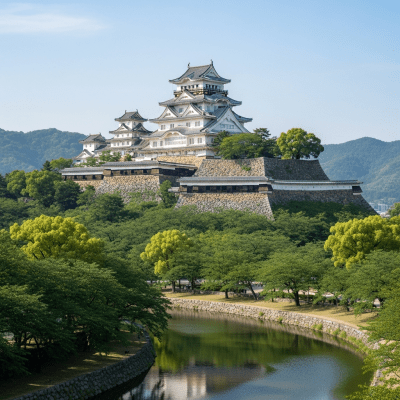
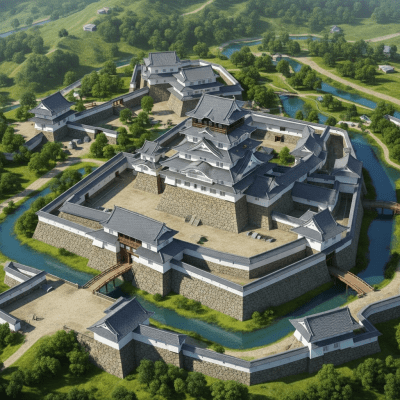
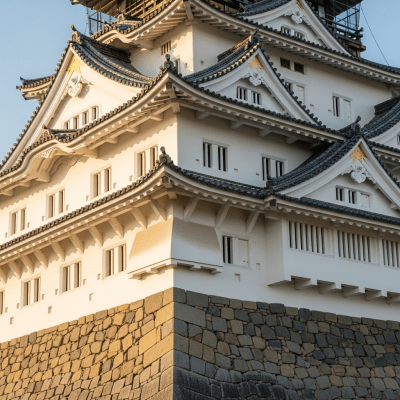
Japanese castles impress with their multi-storied silhouette, white plaster walls, and sweeping tiled roofs, often adorned with decorative gables (karahafu). The central keep rises above stone bases (ishigaki), encircled by moats, earthen ramparts, and intricate gate systems. Visitors encounter winding paths, watchtowers (yagura), and lush gardens, all harmoniously integrated with the surrounding landscape. The visual contrast between the stark stone foundations and the elegant timber superstructures creates a striking, memorable form.
Historically, Japanese castles served as military headquarters, administrative hubs, and residences for daimyo and their retainers. Their design facilitated defense against siege, with labyrinthine approaches and concealed firing positions. Beyond warfare, castles functioned as centers of governance, culture, and daily life, housing samurai, bureaucrats, and artisans. Today, surviving castles are preserved as museums, cultural landmarks, and popular tourist destinations, hosting festivals and educational programs.
Bring this kind into your world illustrated posters, mugs, and shirts.
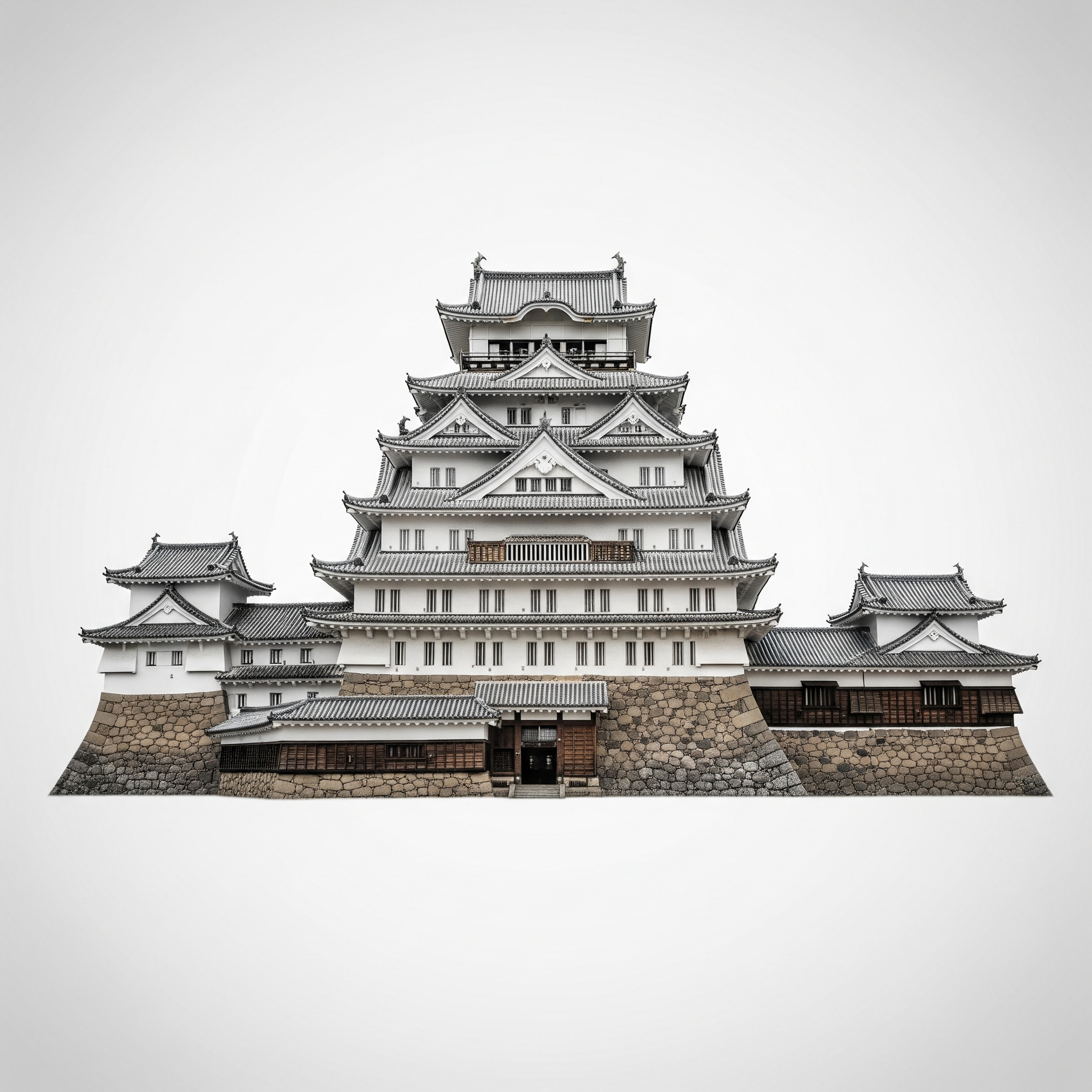
Archival print, museum-grade paper
Buy Poster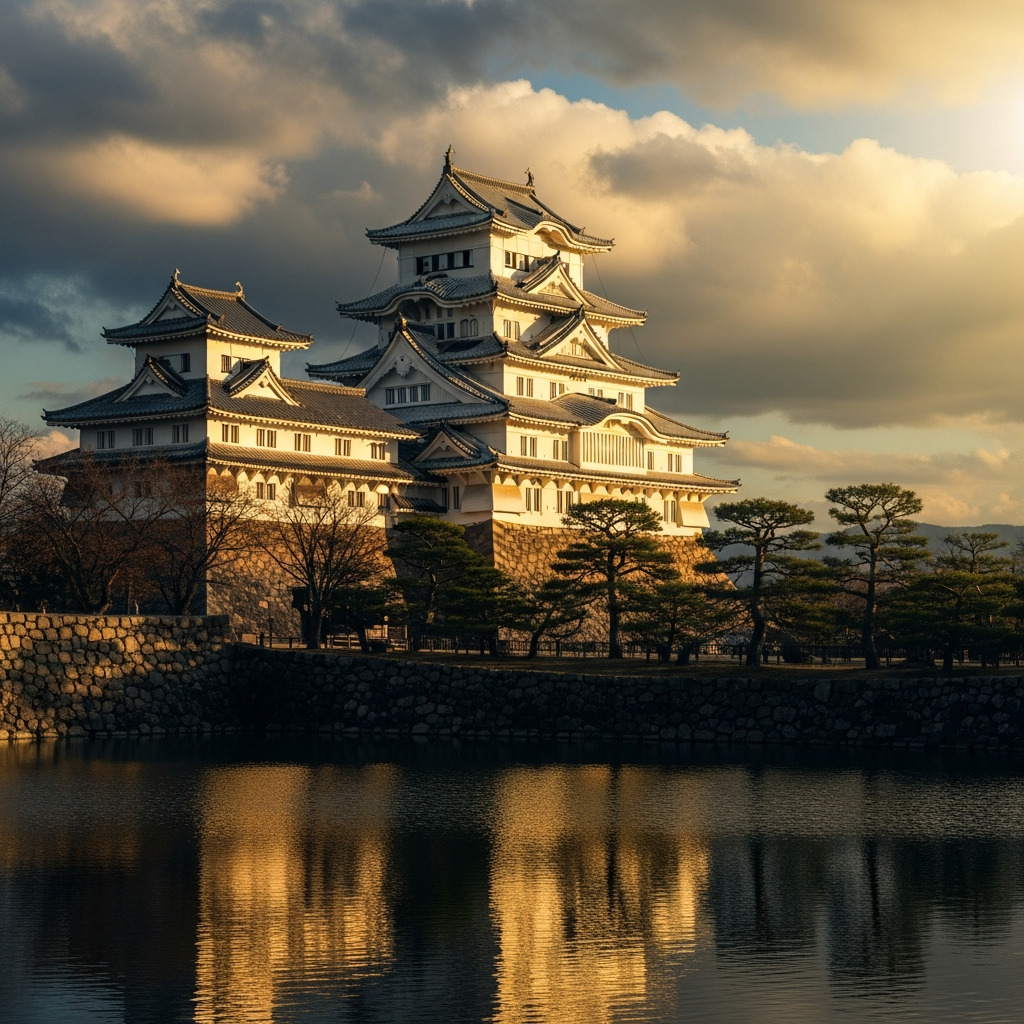
Stoneware mug, dishwasher safe
Buy Mug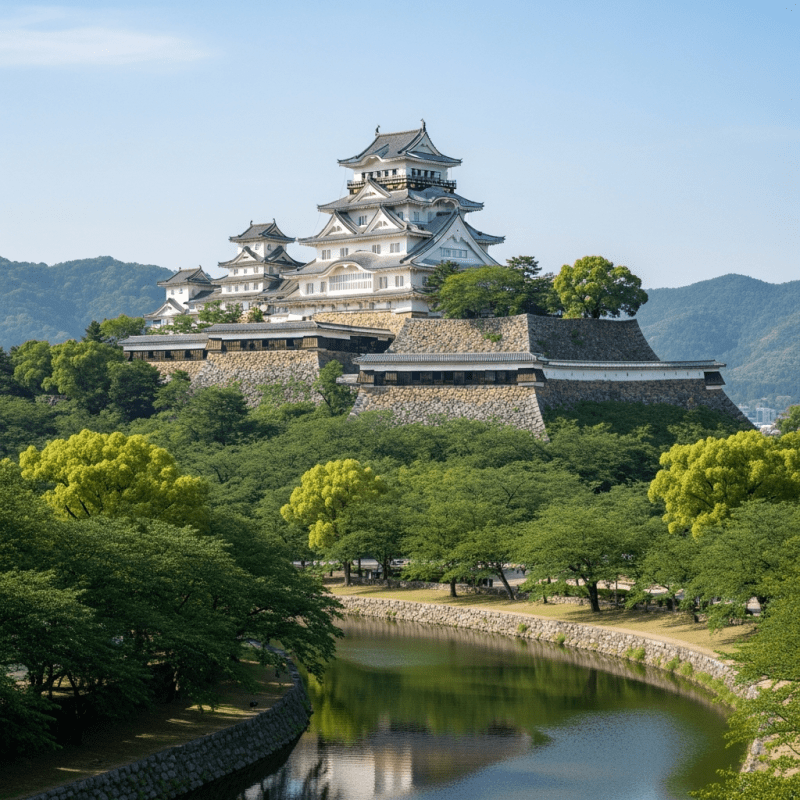
Soft cotton tee, unisex sizes
Buy ShirtJapanese castles are enduring icons of national heritage, celebrated in art, literature, and popular media. Their dramatic silhouettes and storied histories inspire countless works, from ukiyo-e prints to modern films and anime. Castles such as Himeji and Matsumoto are revered as masterpieces of architecture and are recognized as UNESCO World Heritage Sites. They symbolize resilience, beauty, and the legacy of Japan’s feudal era, remaining central to local identity and pride.
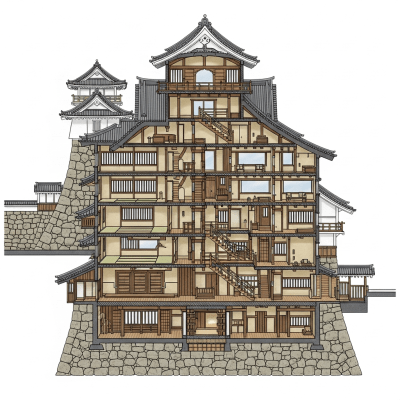
Key architectural features include multi-storied tenshu (main keeps) built with timber frames atop stone bases (ishigaki), surrounded by moats (hori), earthen walls, and complex gate systems. Defensive innovations such as angled stone walls, watchtowers (yagura), and concealed firing positions are integrated with aesthetic flourishes like white plaster walls, sweeping tiled roofs, and ornamental gables (karahafu). Many castles also boast gardens and residential quarters for the daimyo and their retainers.

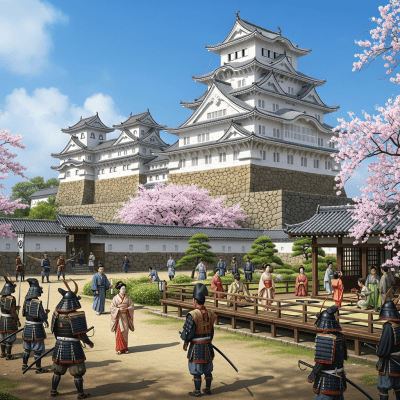
Japanese castles have served as military strongholds, administrative centers, and symbols of feudal power. They were pivotal in regional governance, housing samurai, bureaucrats, and artisans, and played key roles in historic events such as the Siege of Osaka and the consolidation of Japan under the Tokugawa shogunate. After the Meiji Restoration, many castles were dismantled or repurposed, but those that remain continue to shape Japan’s cultural and historical landscape.
Regional differences are pronounced: castles in western Japan (Kansai, Chūgoku) tend to be larger and more ornate, reflecting wealth and political power, while those in eastern regions (Kantō, Tōhoku) often prioritize defensive simplicity. Terminology also varies—Shiro denotes any castle, Tenshu refers to the main keep, Yamajiro to hilltop castles, and Hirajiro to flatland castles. Local climate and terrain influenced architectural choices, resulting in a rich diversity of forms.
Many Japanese castles were lost during the Meiji Restoration and subsequent modernization, but surviving examples are protected as cultural treasures. Himeji Castle is a UNESCO World Heritage Site, while others are designated National Treasures (Kokuhō) or listed on Japan’s Important Cultural Properties register. Restoration efforts focus on authenticity, using traditional materials and techniques to preserve both structure and legacy for future generations.
Japanese castles are steeped in folklore and supernatural tales. Himeji Castle is said to be haunted by Okiku, a servant wronged by her master, while Matsumoto Castle is linked to legends of hidden gold and secret tunnels. Many castles feature stories of loyal samurai, tragic betrayals, and mysterious disappearances, adding an aura of intrigue and mystique to their historic walls.
Alternate terms for Japanese castles include Shiro (generic castle), Tenshu (main keep), Yamajiro (hill castle), Hirajiro (flatland castle), and Jōkaku (fortified castle). These terms reflect both architectural features and regional distinctions, with "Shiro" most commonly used in Japanese. Understanding these nuances helps appreciate the diversity and specificity of castle forms across Japan.