Irish Tower House
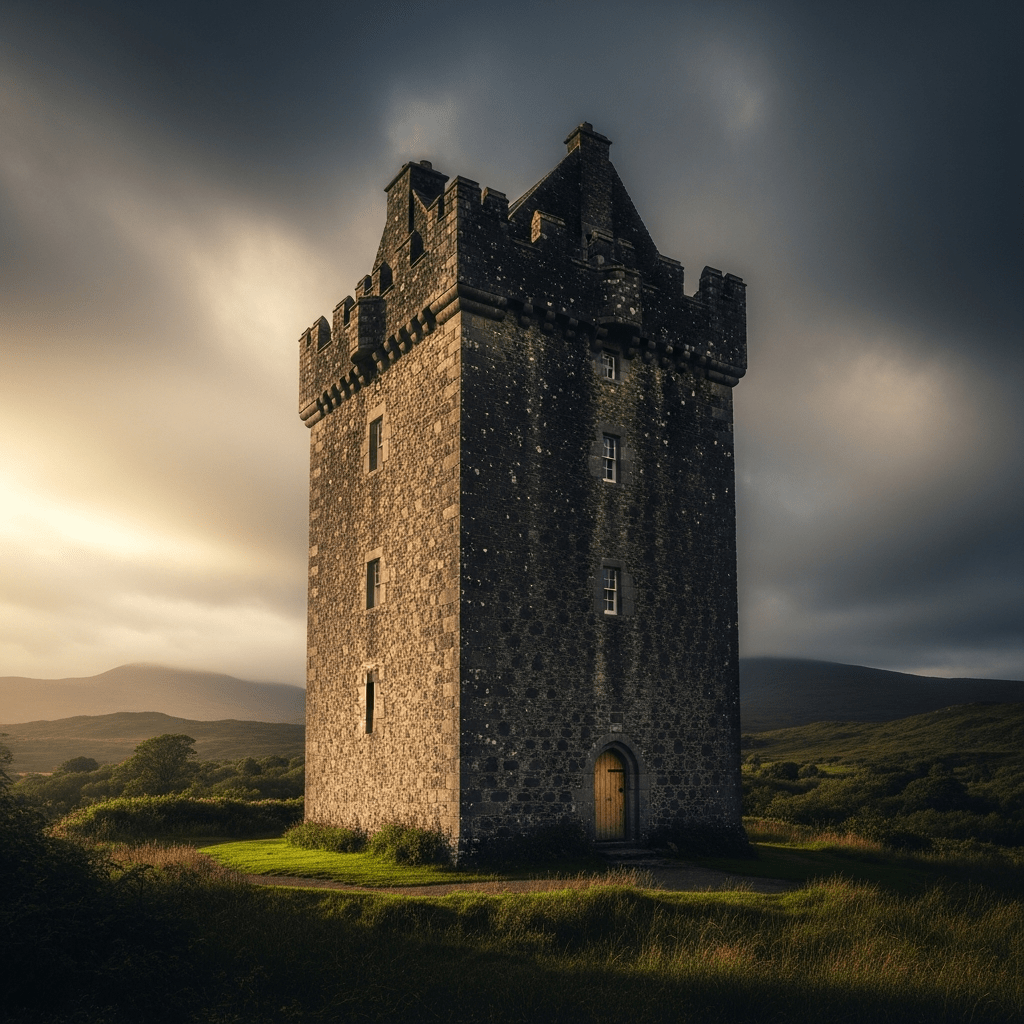
Irish Tower Houses are vertically oriented, multi-storey medieval stone residences unique to Ireland, built as fortified homes for local lords between the late 14th and early 17th centuries.
Irish Tower Houses are vertically oriented, multi-storey medieval stone residences unique to Ireland, built as fortified homes for local lords between the late 14th and early 17th centuries.
Emerging across Ireland from circa 1400 to 1650 CE, Irish Tower Houses were commissioned by Gaelic chieftains, Anglo-Norman lords, and wealthy landowners. Their rise was shaped by the need for defensible dwellings during a period of frequent local unrest, with construction further encouraged by English statutes like the 1429 "Ten Pound Castle" grant under Henry VI. While inspired by Norman keeps and continental tower house forms, the Irish variant quickly developed distinctive features tailored to local conditions and social dynamics.
Irish Tower Houses form a prolific and recognizable subtype within the broader taxonomy of medieval castles. They are classified as fortified residential structures—specifically, tower houses—distinguished from larger castles and palaces by their compact footprint, vertical emphasis, and defensive architecture. Recognized by authorities such as the National Monuments Service and the Castle Studies Group, they stand apart from similar structures in Scotland and England due to their scale, function, and regional adaptations.
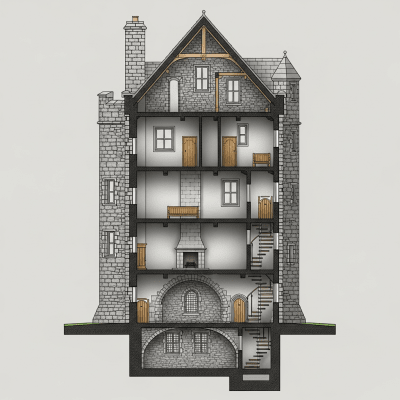
Typically rising three to five storeys, Irish Tower Houses present a striking vertical silhouette, often rectangular or square in plan. Their thick limestone or sandstone walls exude solidity, punctuated by narrow slit windows and projecting turrets (bartizans) at the corners. Crenellated parapets crown the roofline, while spiral staircases wind within. The ground floor, usually vaulted, was reserved for storage or livestock, with living quarters above. Many are encircled by a bawn—a walled courtyard—adding to their fortress-like presence amid the Irish landscape.
Serving as both home and stronghold, Irish Tower Houses were centers of administration, defense, and local lordship. They protected inhabitants from raids and feuds, acted as seats of power for prominent families, and provided secure storage for goods and livestock. Their design facilitated surveillance and defense, with features like murder holes and machicolations deterring intruders. Over time, some evolved into symbols of status and authority, while others became focal points for community life or, in modern times, museums and private residences.
Bring this kind into your world illustrated posters, mugs, and shirts.
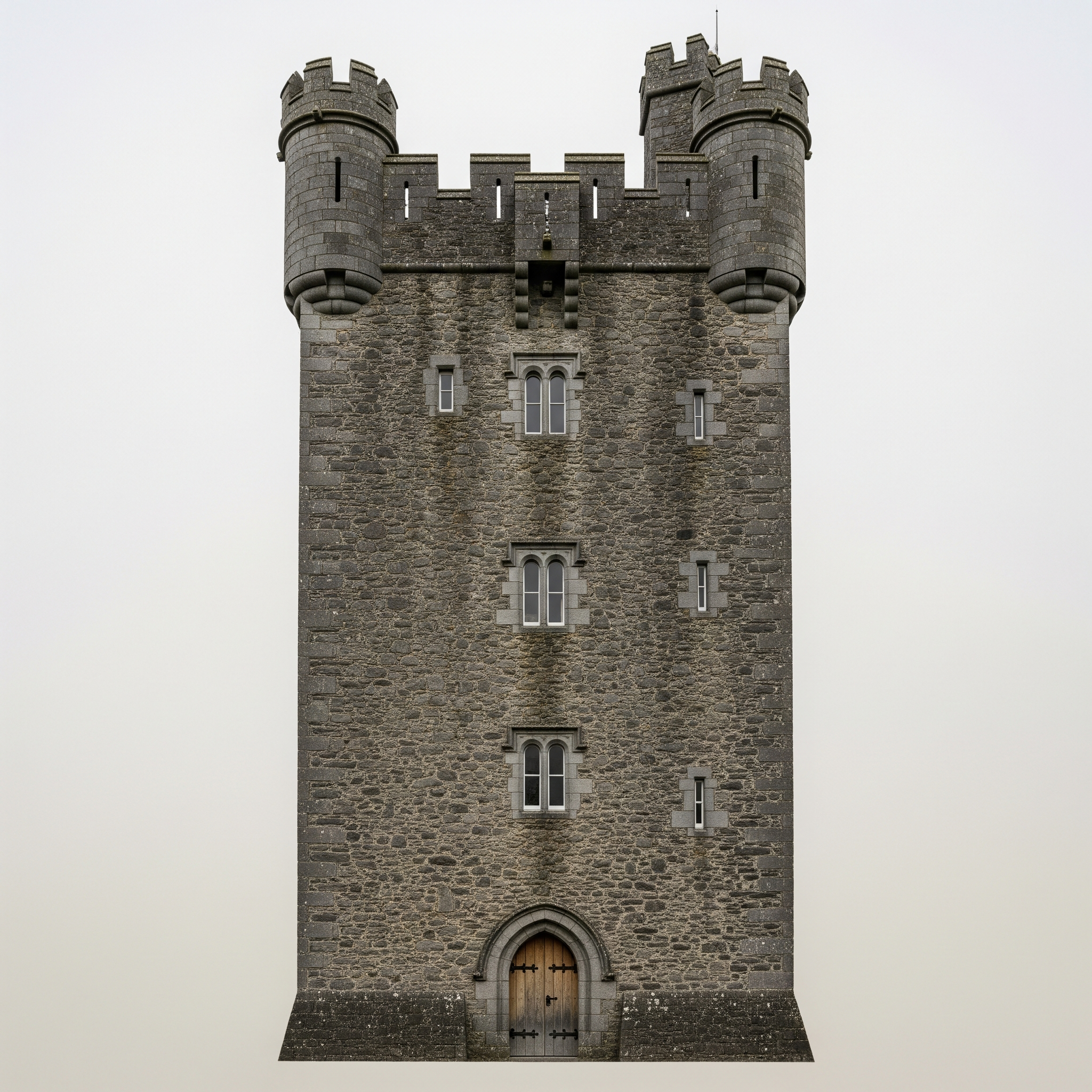
Archival print, museum-grade paper
Buy Poster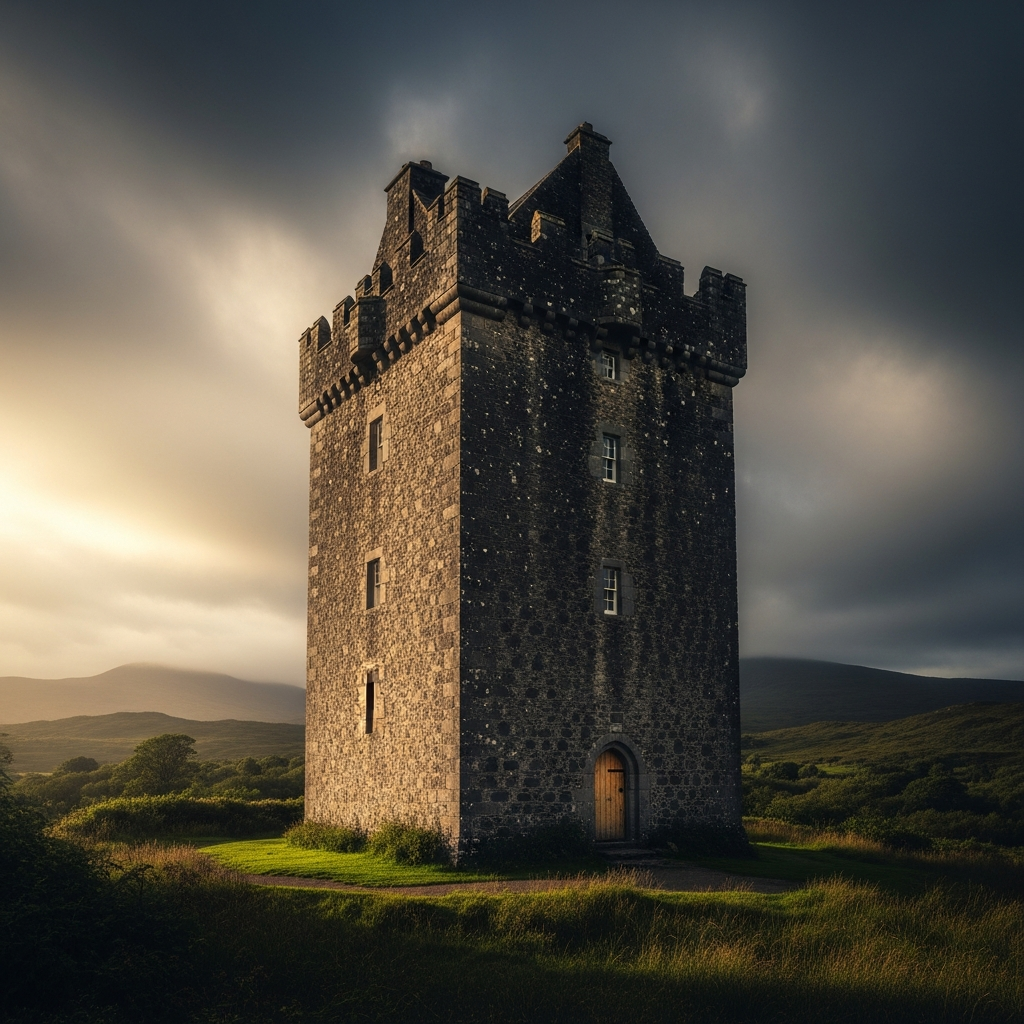
Stoneware mug, dishwasher safe
Buy Mug
Soft cotton tee, unisex sizes
Buy ShirtIrish Tower Houses are emblematic of Ireland's medieval heritage, representing the resilience and ingenuity of its people during centuries of conflict and shifting power. They appear frequently in Irish folklore, literature, and art, often evoking themes of clan rivalry, romance, and supernatural intrigue. Their enduring presence in the landscape has made them icons of national identity, and their restoration and preservation are celebrated in cultural tourism and scholarly study.
Irish Tower Houses are defined by their thick stone walls—often limestone or sandstone—rectangular or square plans, and vertical rise of three to five storeys. Defensive elements abound: slit windows for archers, machicolations for dropping objects on attackers, bartizans at corners, and crenellated parapets for cover. Spiral staircases provide access between floors, while murder holes above entrances add another layer of security. Vaulted ground floors were used for storage or livestock, and many tower houses are enclosed by a bawn, a walled courtyard that further enhances their defensibility.

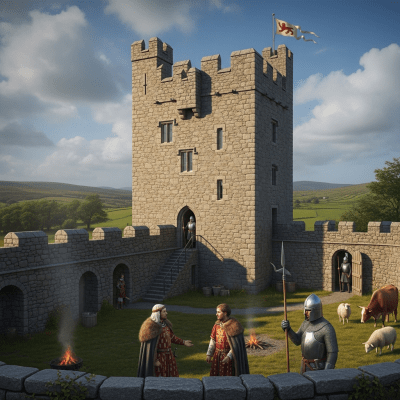

Throughout late medieval Ireland, tower houses served as fortified homes, administrative centers, and symbols of local lordship. They protected families and retainers from raids and feuds, provided secure storage, and acted as seats of power for clans such as the O'Briens, O'Flahertys, and Fitzgeralds. Their proliferation mirrors the fragmented authority and endemic conflict of the era. Many were besieged or destroyed during the Cromwellian conquest and subsequent wars, reflecting their central role in Ireland's turbulent history.
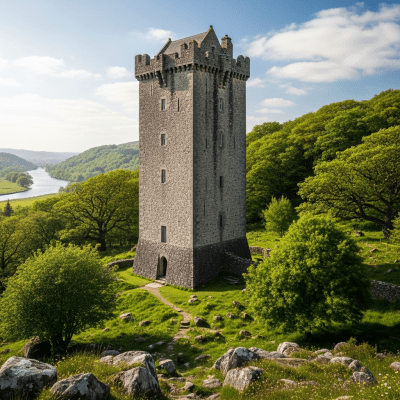
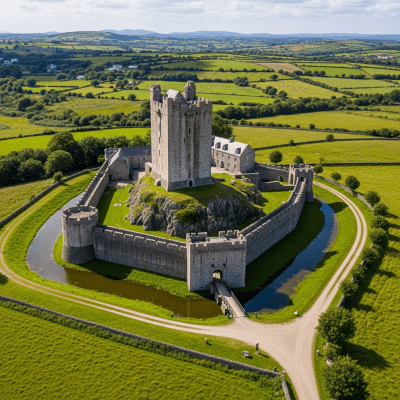
These castles exemplify the Irish Tower House form, showcasing classic defensive features and vertical design. Each stands as a testament to the architectural ingenuity and historical significance of the type.
Irish Tower Houses are distinctive to Ireland, setting them apart from Scottish and English tower houses in both scale and function. Regional terminology includes "Caisleán" and "Teach Túr" in Irish, with "bawn castle" referring to those with a walled enclosure. While prevalent throughout the island, variations in size, layout, and defensive features reflect local resources and historical influences, especially in areas of strong Gaelic or Anglo-Norman presence.
Many Irish Tower Houses survive as ruins, though a significant number have been restored or stabilized for heritage and tourism purposes. Some, like Bunratty Castle, operate as museums, while others remain private dwellings. Preservation efforts are overseen by organizations such as the National Monuments Service (Ireland), which recognizes their cultural value and works to protect these iconic structures for future generations.
Irish Tower Houses are steeped in folklore and legend, with tales of haunted halls, hidden treasures, and ghostly apparitions woven into local tradition. Stories often center on clan rivalries, tragic romances, or supernatural guardians, enhancing the mystique of these ancient strongholds and contributing to their enduring allure in Irish culture.
When visiting Irish Tower Houses, check ahead for access—some are open as museums, while others are private or in ruins. Guided tours at restored sites offer rich historical insights. Wear sturdy footwear for uneven ground and spiral stairs, and respect preservation guidelines by not climbing on fragile structures. Spring and early autumn offer pleasant weather and fewer crowds for exploration.
Alternate terms for Irish Tower Houses include "tower house," "castle" (in Irish usage), and "bawn castle" for those with walled courtyards. In Irish, "Caisleán" and "Teach Túr" are common. The designation "Irish Tower House" distinguishes these structures from similar forms in other regions, underscoring their unique architectural and historical identity.