
Hill Castle
Hill castles are fortified residential structures built atop elevated terrain, strategically designed to harness natural topography for defense and dominance.
Hill castles are fortified residential structures built atop elevated terrain, strategically designed to harness natural topography for defense and dominance.
The origin of hill castles traces back to the early medieval period, around the 9th to 12th centuries, when local nobility and military orders in Europe and the Middle East sought to fortify key positions. Drawing inspiration from ancient hilltop fortifications like Iron Age hillforts, these castles evolved as stonework and defensive technology advanced, allowing builders to transform commanding hills into strongholds that controlled vital routes and territories.
Hill castles belong to the broader family of medieval castles, distinguished primarily by their siting on natural elevations such as hills, ridges, or rocky outcrops. They are a central type within castle typology, often contrasted with water castles, motte-and-bailey castles, and mountain castles. In Germanic regions, the formal term is Bergburg, while in other areas, they may be classified as citadels or hilltop fortresses depending on local context.
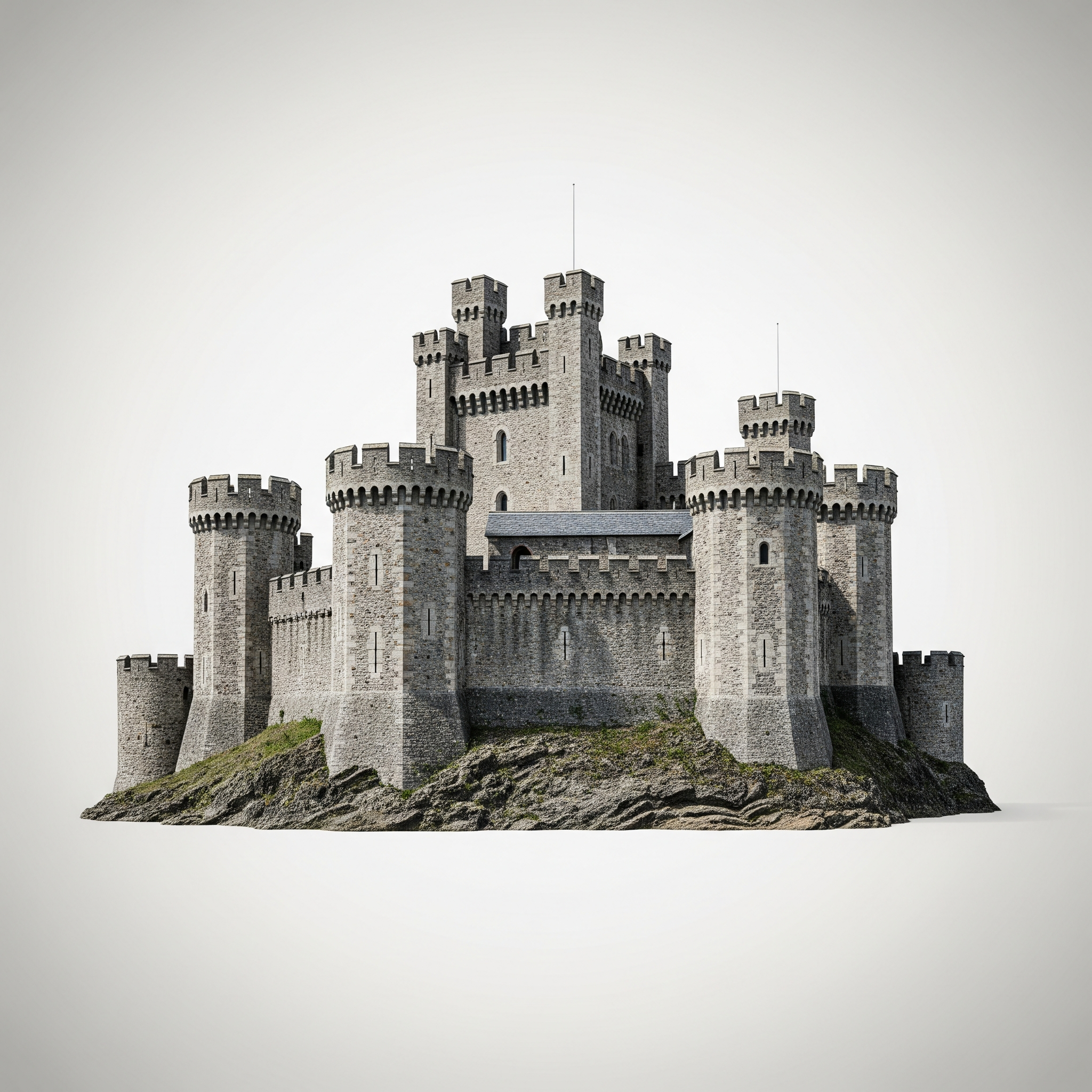
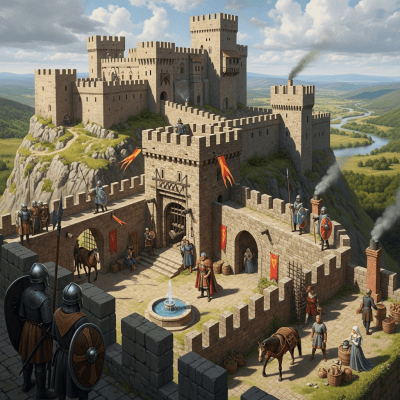
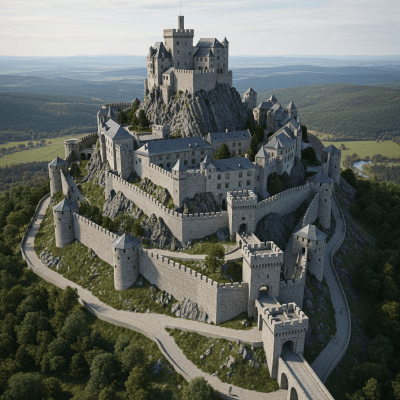
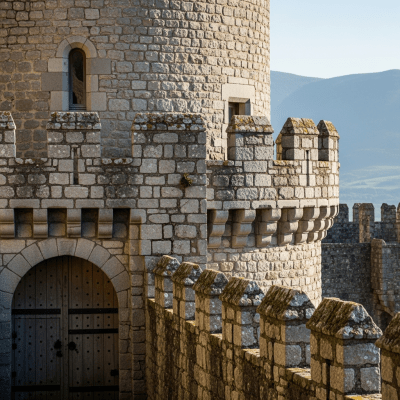
Visually, hill castles blend dramatically with their surroundings, perched atop slopes or rocky crags and often appearing as stone crowns above valleys. Their layouts are typically irregular, shaped by the contours of the hill, with terraced baileys and winding walls. Central keeps or donjons rise above curtain walls, while towers and gatehouses punctuate the silhouette. The use of locally quarried stone and rubble masonry gives these castles a rugged, enduring presence, and the absence of moats is compensated by steep escarpments or dry ditches.
Hill castles served as fortified homes, administrative seats, and military bastions. Their elevated positions enabled surveillance over surrounding lands, control of trade routes, and rapid response to threats. Residents relied on cisterns and storage facilities for siege resilience, while the castle’s defenses deterred attackers and provided refuge during conflict. Over centuries, many hill castles transitioned from active strongholds to heritage sites and tourist destinations, preserving their legacy in stone and story.
Bring this kind into your world illustrated posters, mugs, and shirts.
Archival print, museum-grade paper
Buy Poster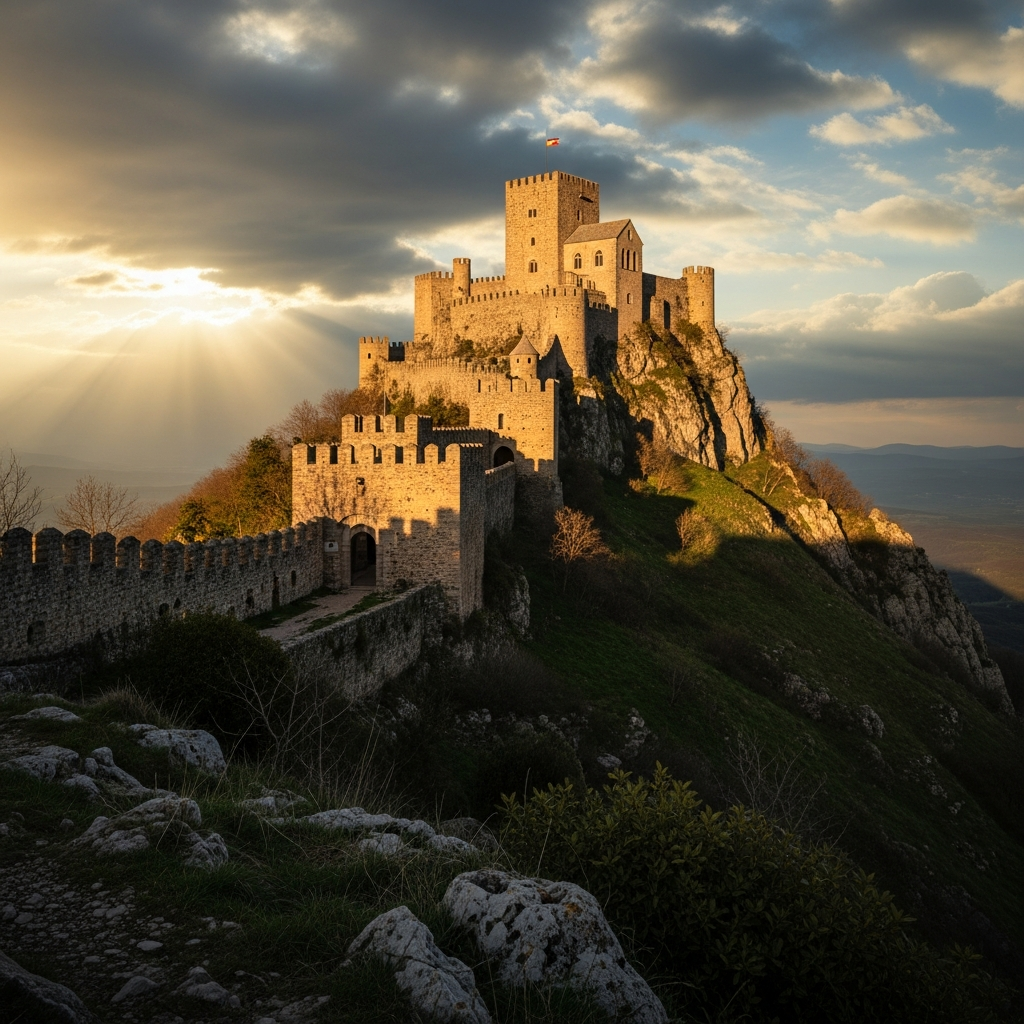
Stoneware mug, dishwasher safe
Buy Mug
Soft cotton tee, unisex sizes
Buy ShirtThroughout history, hill castles have symbolized feudal authority, military prowess, and the enduring struggle for control. Their dramatic ruins inspire local legends and national pride, featuring prominently in art, literature, and folklore. Today, they are celebrated as cultural landmarks, drawing visitors and scholars alike to explore their storied walls and panoramic vistas.
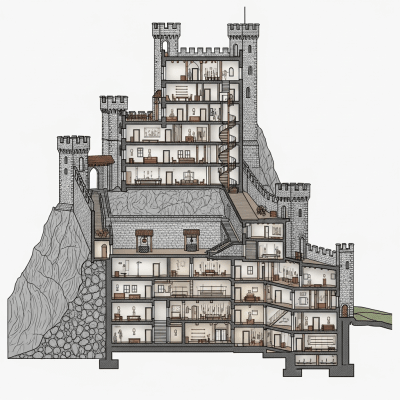
Key architectural features of hill castles include a central keep or donjon, curtain walls that follow the contours of the hill, defensive towers, and robust gatehouses. Construction materials typically consist of locally sourced stone and rubble masonry, with timber used in earlier phases. The layout is often irregular, adapting to the terrain, and may feature multiple baileys or wards terraced along slopes. Defensive elements such as dry ditches, escarpments, and cisterns for water storage are common, while moats are rare due to the elevated setting.

Historically, hill castles functioned as fortified residences for nobility, administrative centers for local governance, and military strongholds during times of conflict. Their strategic locations allowed control over trade routes, river valleys, and borders, making them focal points in feudal power struggles and regional wars. Many hill castles were besieged, destroyed, or rebuilt in the course of medieval and early modern history, reflecting their central role in shaping territorial boundaries and local authority.
Regional terminology and classification for hill castles vary: in German-speaking areas, they are known as Bergburg, while in France, terms like château sur colline are used. In the Middle East, similar structures may be called qal’a or citadel when integrated with urban centers. Some heritage registers apply local names, and confusion can arise with mountain castles (Gebirgsburg), which occupy even higher elevations and harsher terrain.
Many hill castles survive as picturesque ruins, protected as heritage sites or listed on national registers. Restoration efforts vary by region, with some castles meticulously preserved and open to visitors, while others remain largely untouched. Their dramatic locations often make conservation challenging, but their historical and cultural value ensures ongoing interest in their maintenance and study.
Hill castles are steeped in legend, often associated with tales of sieges, lost treasures, and heroic defenders. Château de Montségur, for example, is linked to Cathar mysteries and the search for the Holy Grail. Local folklore frequently features ghost stories, secret tunnels, and dramatic escapes, adding a layer of intrigue to the already evocative ruins.
Alternate names for hill castles include Bergburg (German), château sur colline (French), hilltop castle, and fortress on the hill. In the Middle East, terms like qal’a or citadel may apply. Regional nuances and heritage registers sometimes use local names, and distinctions are made between hill castles and mountain castles (Gebirgsburg), which occupy higher elevations.