Desman Castle
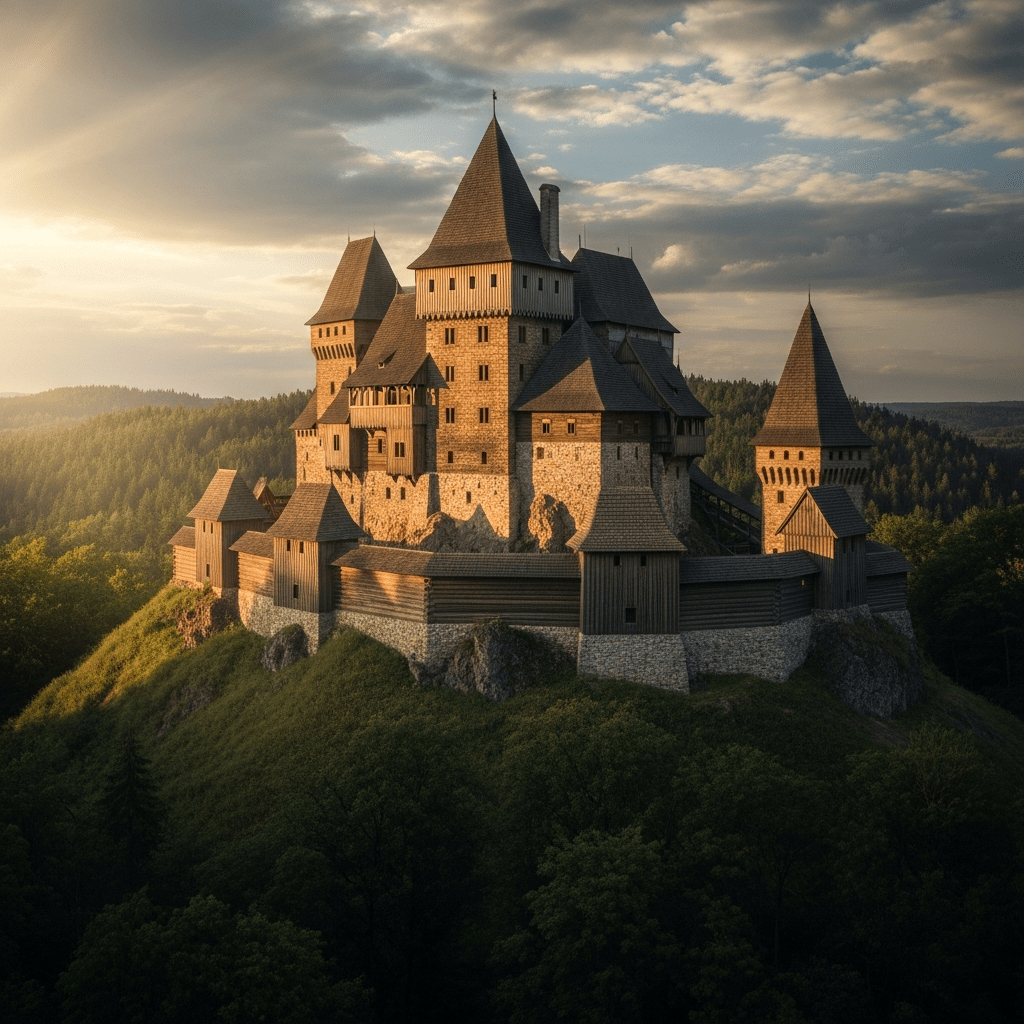
Desman Castle is a representative example of medieval timber castles from Central and Eastern Europe, distinguished by their wooden construction and rare surviving remains.
Desman Castle is a representative example of medieval timber castles from Central and Eastern Europe, distinguished by their wooden construction and rare surviving remains.
Emerging between the 10th and 13th centuries, Desman Castle typifies the timber fortifications built by local nobility and military authorities in regions rich in wood but lacking stone. These castles arose from the need for rapid, cost-effective defense during periods of territorial expansion and feudal consolidation, evolving from earlier motte-and-bailey designs.
Desman Castle belongs to the broader family of medieval castles, specifically classified as a timber castle. This type is closely related to motte-and-bailey structures and stands apart from stone keeps or concentric castles due to its primary use of wood and earthworks. Regional terms such as "Holzburg" in German and "gród" in Polish reflect local classification nuances.
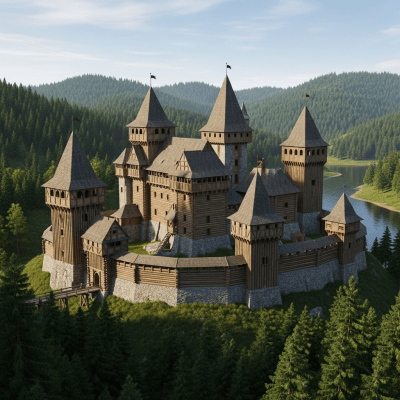
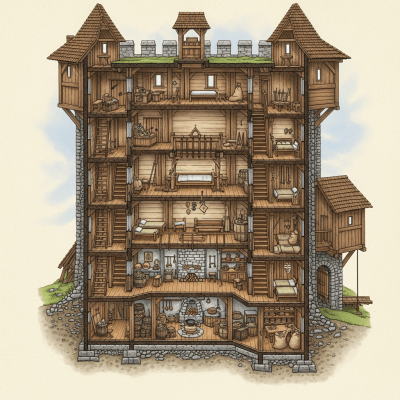
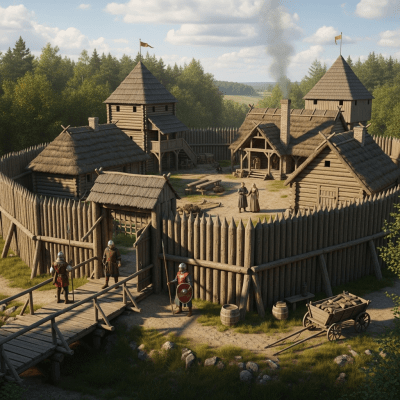
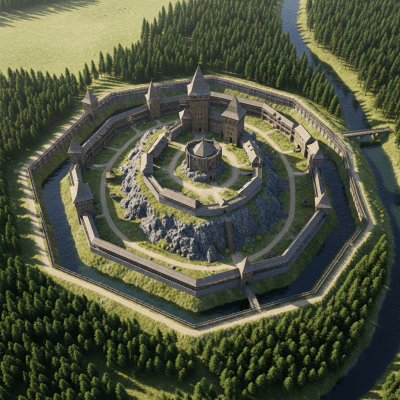
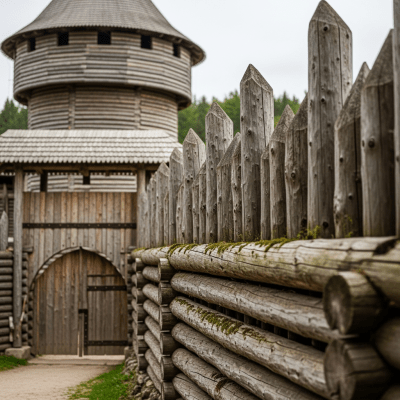
Timber castles like Desman Castle featured imposing wooden palisades, towers, and keeps, often perched atop earthen mounds or encircled by ditches and ramparts. The structures were compact, with high walls constructed from heavy logs, and sometimes included simple gatehouses or a central tower. The overall impression was one of sturdy, utilitarian defense, with natural materials blending into the landscape. Today, physical traces are minimal, typically limited to earthworks, post-holes, and archaeological outlines.
These castles served as residences for local lords, administrative hubs, and military strongholds. Their swift construction made them ideal for frontier defense or temporary occupation during campaigns. Over time, many timber castles were replaced or upgraded to stone fortifications as resources and technology advanced, marking a transition in medieval defensive architecture.
Bring this kind into your world illustrated posters, mugs, and shirts.
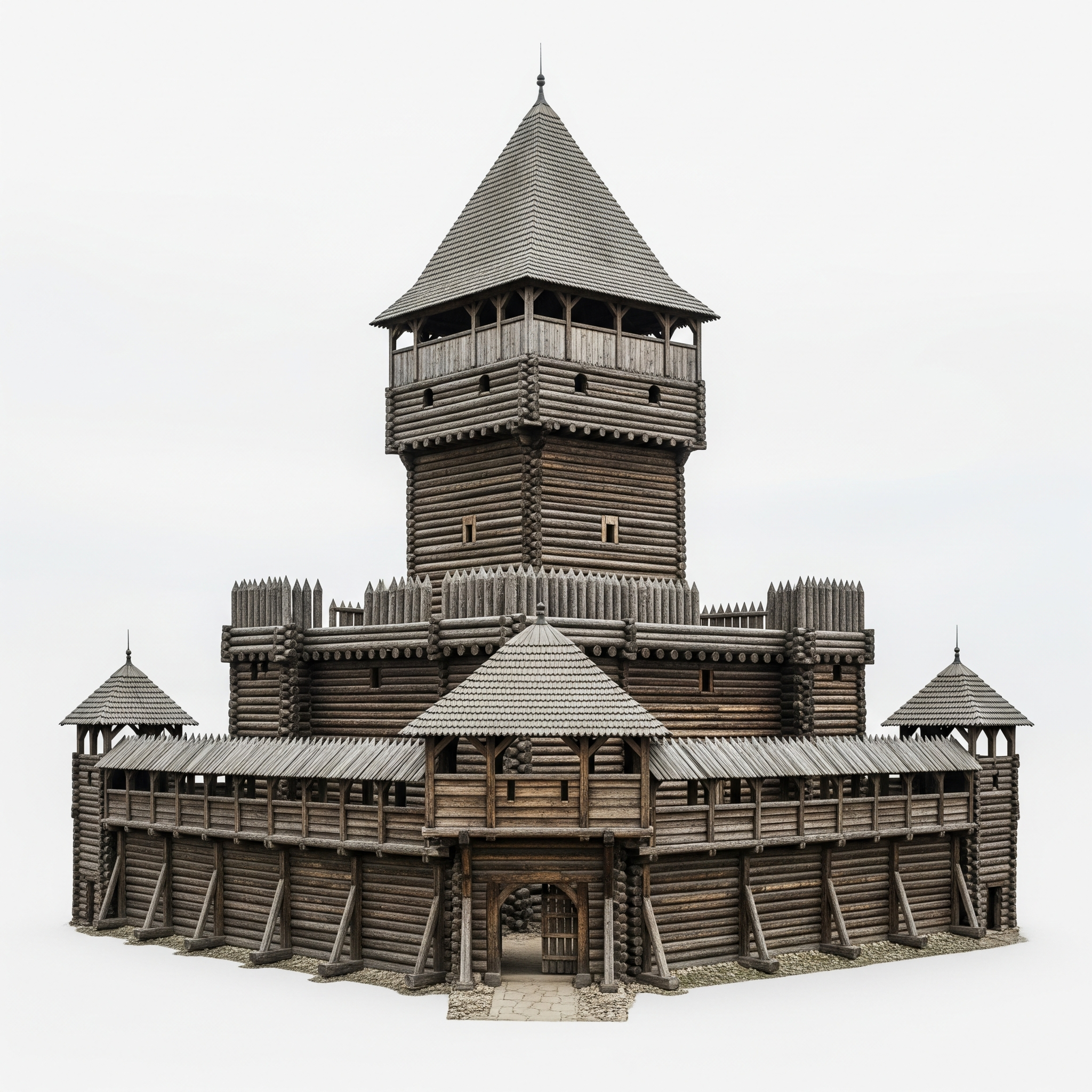
Archival print, museum-grade paper
Buy Poster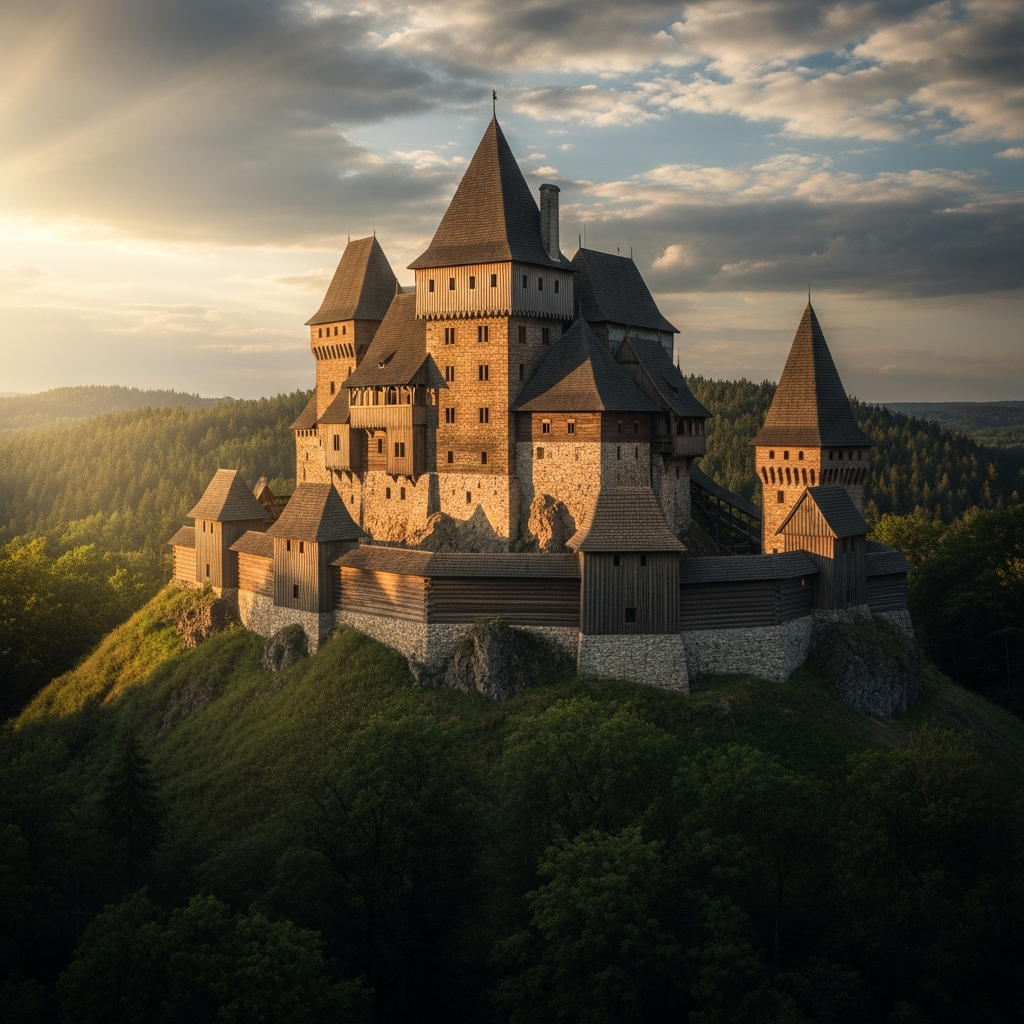
Stoneware mug, dishwasher safe
Buy Mug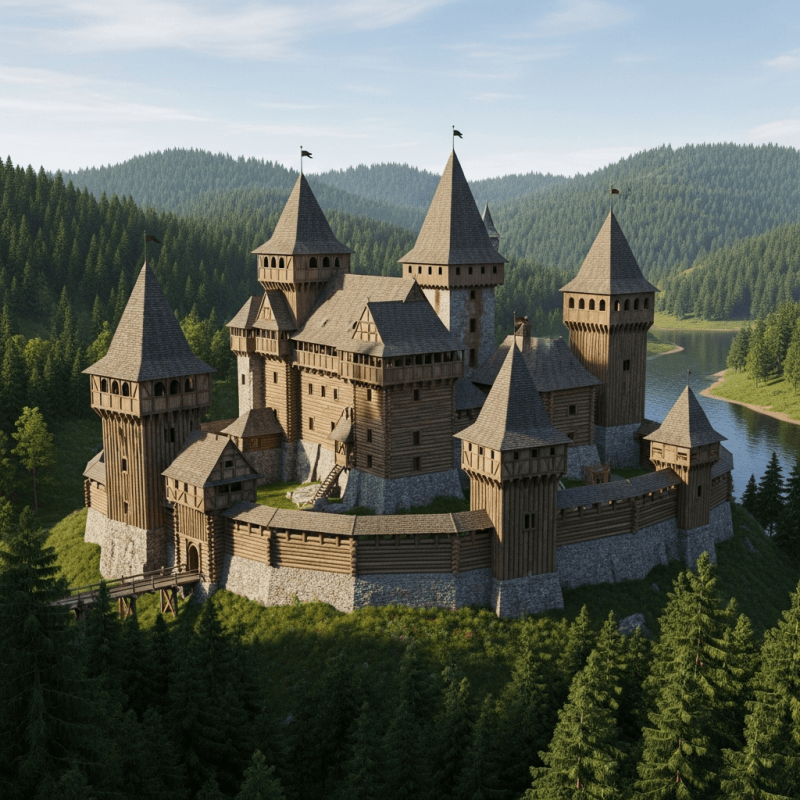
Soft cotton tee, unisex sizes
Buy ShirtDesman Castle and its timber counterparts hold cultural importance as precursors to more permanent stone castles. They illustrate early medieval settlement patterns and the adaptation of architecture to local resources. Though few survive intact, their legacy endures in archaeological research and regional folklore, offering a glimpse into the formative stages of European castle-building traditions.
Key architectural features include robust wooden palisades, compact layouts, and towers constructed from heavy logs. Earthen mounds or ramparts often formed the base, with ditches providing additional defense. Gatehouses and central keeps were common, though moats and water defenses were less frequent. The reliance on local timber shaped both the appearance and durability of these castles.

Desman Castle functioned as a residence for nobility, an administrative center, and a defensive outpost. Its rapid construction suited frontier zones and periods of conflict, providing temporary protection and asserting territorial control. As feudal systems matured and resources allowed, these timber castles were often superseded by more enduring stone structures.
While few timber castles remain visible, these regional examples illustrate the type's historical prevalence.
Timber castles are most common in Central and Eastern Europe, where wood was abundant. In Poland, such sites are called "gród" (fortified settlement); in Hungary, "földvár" (earth castle) denotes similar structures. Germanic regions use "Holzburg" or "Holzburganlage." These terms reflect local building traditions and resource availability, with stone castles predominating in areas where stone was accessible.
Few timber castles like Desman Castle survive as visible structures due to the perishable nature of wood. Most are recognized only as archaeological sites or earthworks. Heritage designations are rare, though some sites appear in national archaeological registers. Preservation efforts focus on excavation, documentation, and interpretation rather than restoration.
While specific legends about Desman Castle are scarce, timber castles often feature in regional folklore as ancient seats of power or sites of heroic defense. Stories may recount battles, noble families, or supernatural events tied to the vanished fortresses, with the earthworks themselves sometimes believed to be haunted or enchanted.
Visitors to timber castle sites like Desman Castle should expect subtle earthworks and archaeological remains rather than standing structures. Wear sturdy shoes for uneven terrain, bring maps or guides to interpret the site, and visit during daylight for the best visibility. Respect any signage or conservation measures, as these sites are often fragile and protected.
Desman Castle is also known as a "wooden fortress," "timber stronghold," "Holzburg" (German), "Holzburganlage," "gród" (Polish), and "földvár" (Hungarian). These terms reflect linguistic and regional variations, with some overlap in meaning depending on local traditions and historical context.