Concentric Castle
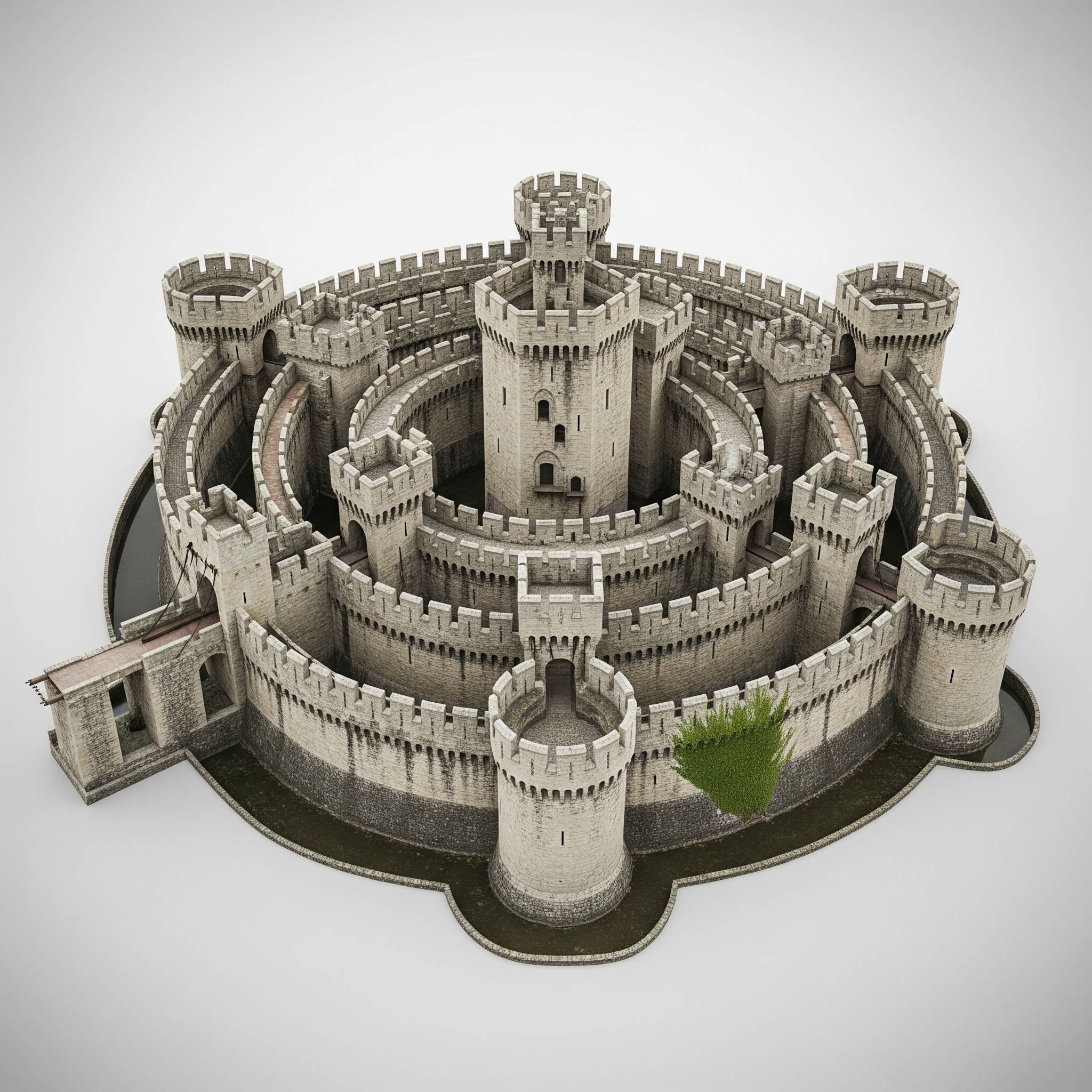
A concentric castle is a fortified structure distinguished by multiple layers of defensive walls arranged concentrically around a central stronghold, representing the apex of medieval military architecture.
A concentric castle is a fortified structure distinguished by multiple layers of defensive walls arranged concentrically around a central stronghold, representing the apex of medieval military architecture.
The concentric castle originated in the Crusader States of the Levant during the 12th century, with pioneering examples like Krak des Chevaliers built by the Knights Hospitaller. This innovative design was later imported to Europe, where monarchs and military orders—most notably Edward I of England—refined and popularized it during campaigns in Wales in the late 13th century. The evolution from earlier motte-and-bailey and stone keep forms marked a major leap in defensive strategy and architectural sophistication.
Concentric castles belong to the broader family of medieval fortifications, specifically as an advanced subtype distinguished by their layered wall systems. They are classified within the "castle" taxonomy as a structural and functional evolution beyond motte-and-bailey and stone keep types, reflecting the technological and tactical advancements of the High and Late Middle Ages.
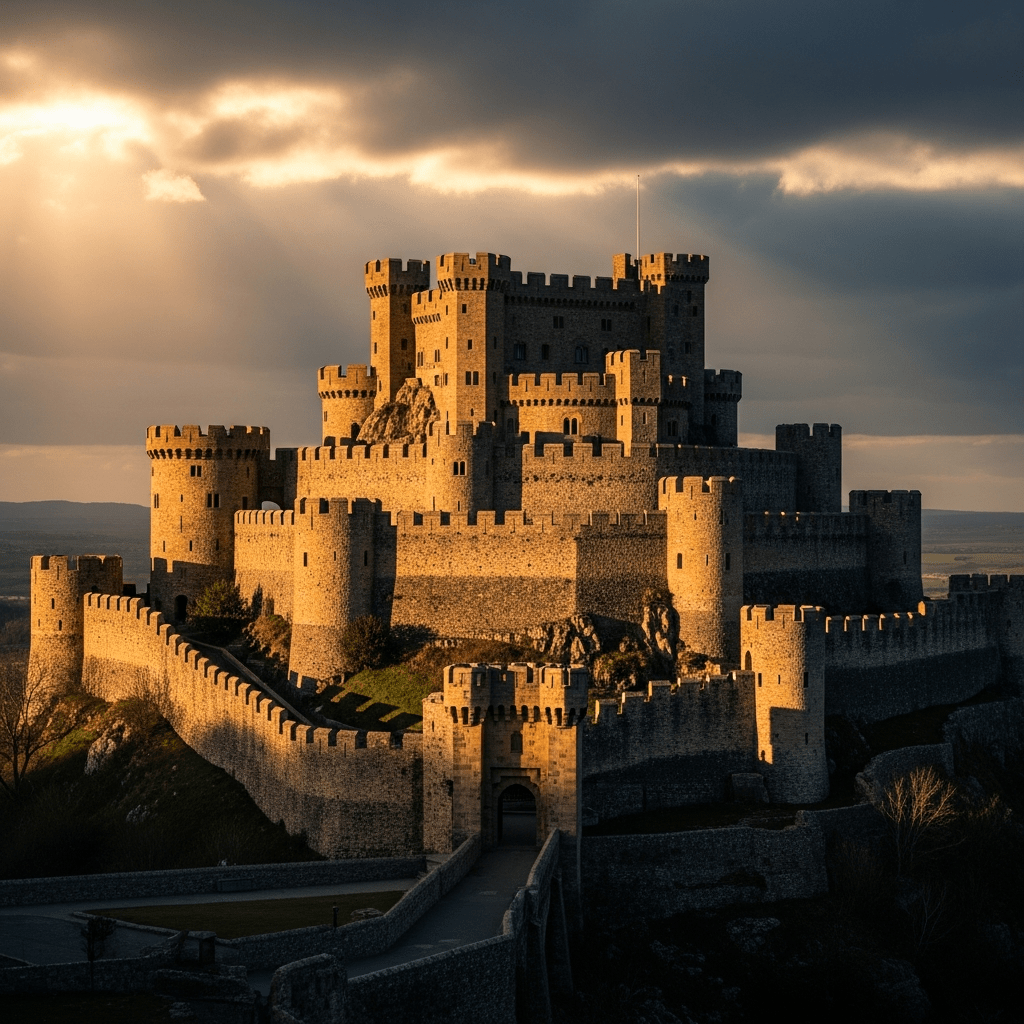
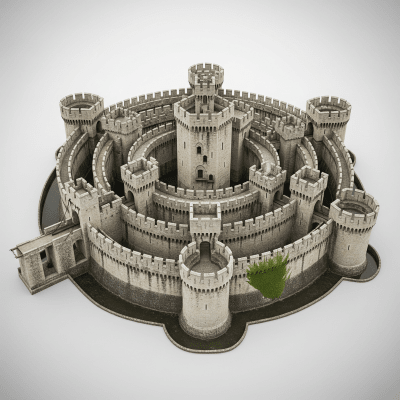
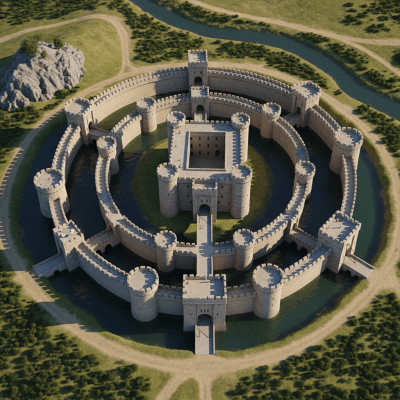
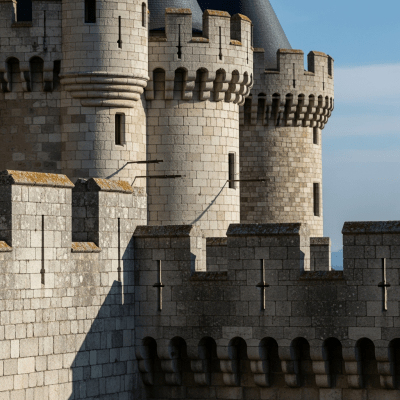
Concentric castles present a formidable and geometric silhouette, with two or more rings of stone walls rising in tiers—the inner wall always higher than the outer. Central courtyards, robust gatehouses, flanking towers, and sometimes moats or water defenses add to their imposing presence. The interplay of curtain walls, arrow slits, and machicolations creates a layered, almost labyrinthine effect, while the use of locally sourced stone—limestone, sandstone, or granite—gives each castle a distinct regional character.
These castles functioned as military strongholds, administrative centers, and noble residences. Their concentric design enabled defenders to retreat inward while maintaining overlapping fields of fire, making direct assault extremely difficult. In the Crusader States, they protected strategic routes and garrisons; in Britain and France, they served as symbols of royal authority and control over newly conquered lands. The architecture facilitated both defense and governance, adapting to the threats of siege engines and organized armies.
Bring this kind into your world illustrated posters, mugs, and shirts.
Archival print, museum-grade paper
Buy Poster
Stoneware mug, dishwasher safe
Buy Mug
Soft cotton tee, unisex sizes
Buy ShirtConcentric castles have become enduring symbols of medieval power, technological ingenuity, and the turbulent history of the Middle Ages. Their imposing forms feature prominently in art, literature, and popular media, evoking images of knights, sieges, and royal intrigue. Many are UNESCO World Heritage Sites, celebrated for their architectural brilliance and historical impact. Their legacy continues to inspire fascination, scholarship, and tourism worldwide.
Key architectural features of concentric castles include multiple rings of stone walls, with the inner wall always higher for superior defense. Central courtyards, robust gatehouses, flanking towers, moats or water defenses, and multiple baileys are common. Defensive elements such as curtain walls, arrow slits, machicolations, murder holes, and portcullises exemplify their military purpose. Locally sourced stone—limestone, sandstone, or granite—was typically used, lending regional flavor to each structure.


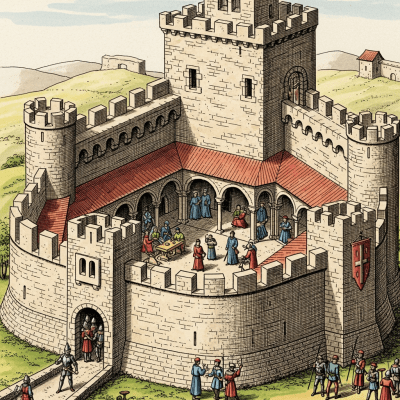
Concentric castles played crucial roles as military bastions, administrative hubs, and noble residences. They provided secure bases for garrisons, protected strategic routes, and enabled rulers to assert control over contested territories. Their advanced defenses responded to the increasing sophistication of siege warfare, while their grandeur projected authority and stability during periods of conquest and consolidation.
In the British Isles, concentric castles are distinguished from earlier motte-and-bailey and stone keep types, often associated with royal campaigns and conquest. In the Levant, they are linked to Crusader fortifications, reflecting unique adaptations to local terrain and threats. Regional terminology varies: "château concentrique" in French, "Konzentrische Burg" in German. Materials and layouts may differ according to local resources and strategic needs.
Many concentric castles remain well-preserved, thanks to heritage designations and ongoing restoration efforts. Krak des Chevaliers and several Welsh castles, including Beaumaris and Caerphilly, are UNESCO World Heritage Sites, benefiting from international conservation standards. Some castles are partially ruined, while others serve as museums or tourist attractions, ensuring their continued appreciation and protection.
Concentric castles are often woven into local legends and folklore, from tales of valiant knights defending besieged walls to stories of hidden treasures and secret passages. Krak des Chevaliers is said to have inspired myths of invincible fortresses, while Welsh castles like Harlech are linked to ancient songs and ghostly apparitions. These stories enrich the mystique and allure of these formidable structures.
Alternate names for concentric castles include "multi-walled castle," "double-walled castle," "château concentrique" (French), and "Konzentrische Burg" (German). These terms reflect regional linguistic nuances and classification practices. In the broader context of castle studies, concentric castles are recognized as a distinct subtype, setting them apart from motte-and-bailey, stone keep, and other medieval fortification forms.