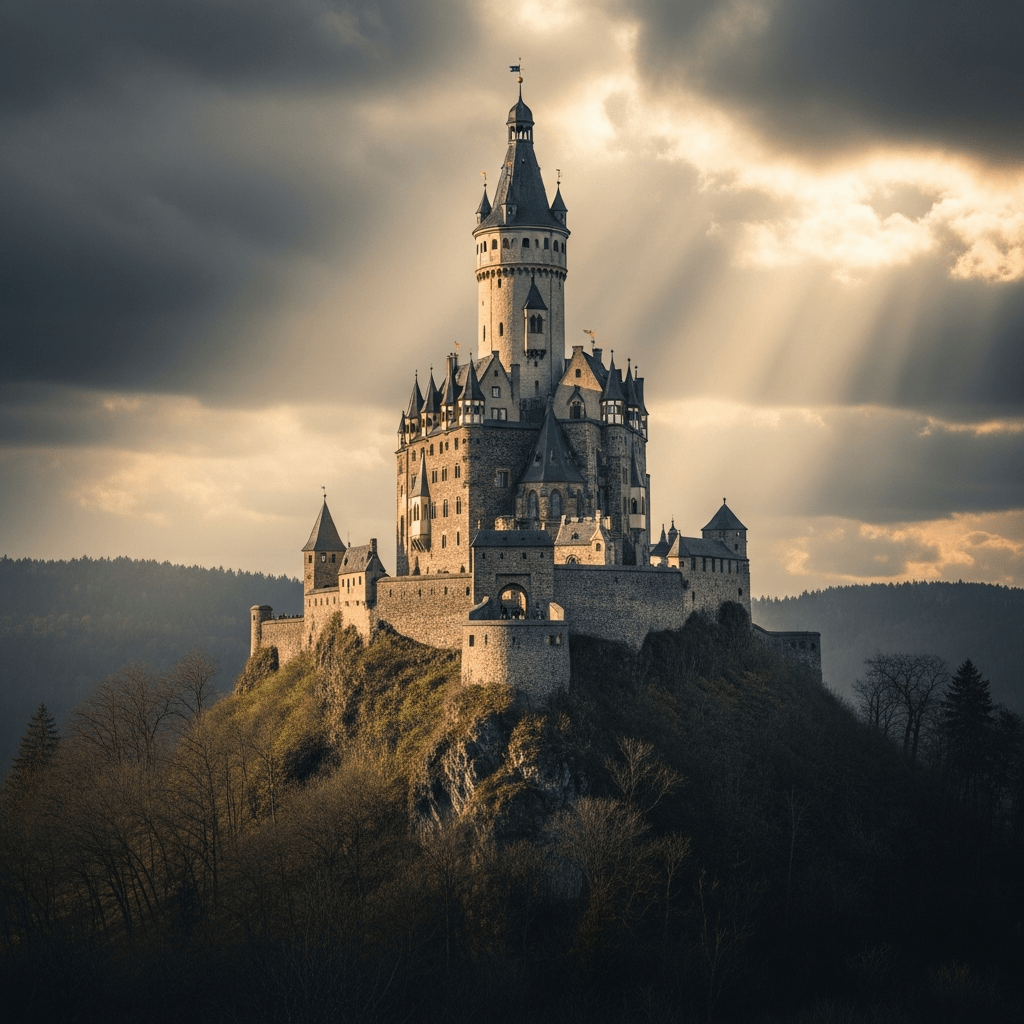
Bergfried Castle
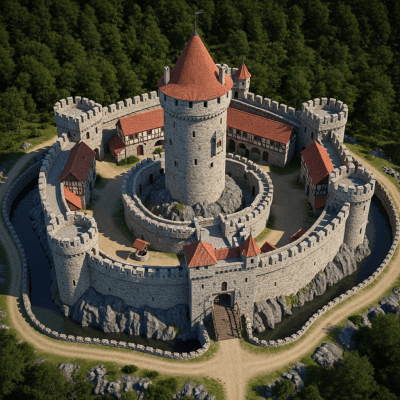
Bergfried Castle is a distinctive type of medieval Germanic fortress defined by its imposing, freestanding defensive tower—the bergfried—which serves as the central stronghold rather than a traditional residential keep.
Bergfried Castle is a distinctive type of medieval Germanic fortress defined by its imposing, freestanding defensive tower—the bergfried—which serves as the central stronghold rather than a traditional residential keep.
Bergfried Castles originated in the German-speaking regions of Central Europe, notably present-day Germany, Austria, Switzerland, and parts of the Czech Republic, during the 12th to 15th centuries. Developed within the feudal landscape, these castles were commissioned by local nobles and lords seeking both defense and prestige. Their architectural lineage traces back to earlier motte-and-bailey and stone keep traditions, but diverged by emphasizing the bergfried—a massive, round or polygonal tower—as the focal point of the castle complex.
Bergfried Castles belong to the broader family of medieval fortifications but are classified by their unique central tower, the bergfried. Unlike Western European castles centered on a residential keep, Bergfried Castles prioritize a defensive, non-residential tower. Within castle typology, they are distinct from Wohnburg (residential castles) and are most prevalent in Central European, especially Germanic, contexts.
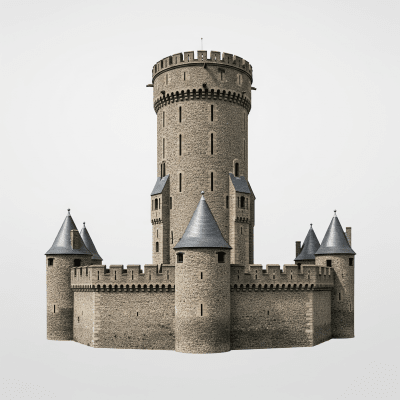
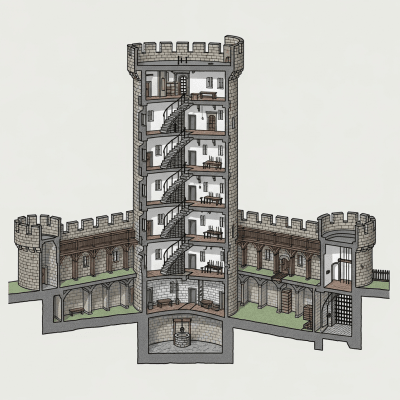
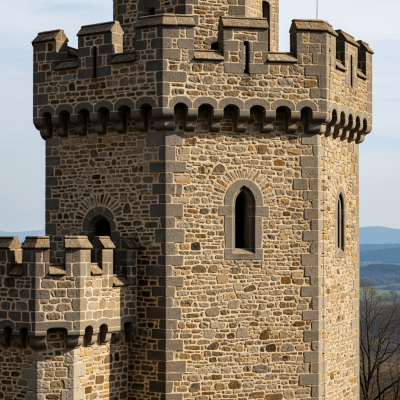
The hallmark of a Bergfried Castle is its tall, thick-walled tower, often rising 20 to over 50 meters and constructed from local stone. The bergfried itself is typically round or polygonal, with walls up to 4 meters thick at the base. Elevated entrances several meters above ground level, minimal windows, and limited internal access underscore its defensive purpose. The castle complex may include curtain walls, gatehouses, moats, and adjacent living quarters (palas), all arranged to maximize both defense and visual impact.
Bergfried Castles functioned primarily as military fortresses and symbols of feudal authority. The bergfried served for observation, as a last refuge during sieges, and as a deterrent to would-be attackers. Unlike keeps in other regions, it was not intended for continuous habitation; residential buildings were located nearby. These castles played pivotal roles in regional conflicts, administration, and the assertion of noble status.
Bring this kind into your world illustrated posters, mugs, and shirts.
Archival print, museum-grade paper
Buy Poster
Stoneware mug, dishwasher safe
Buy Mug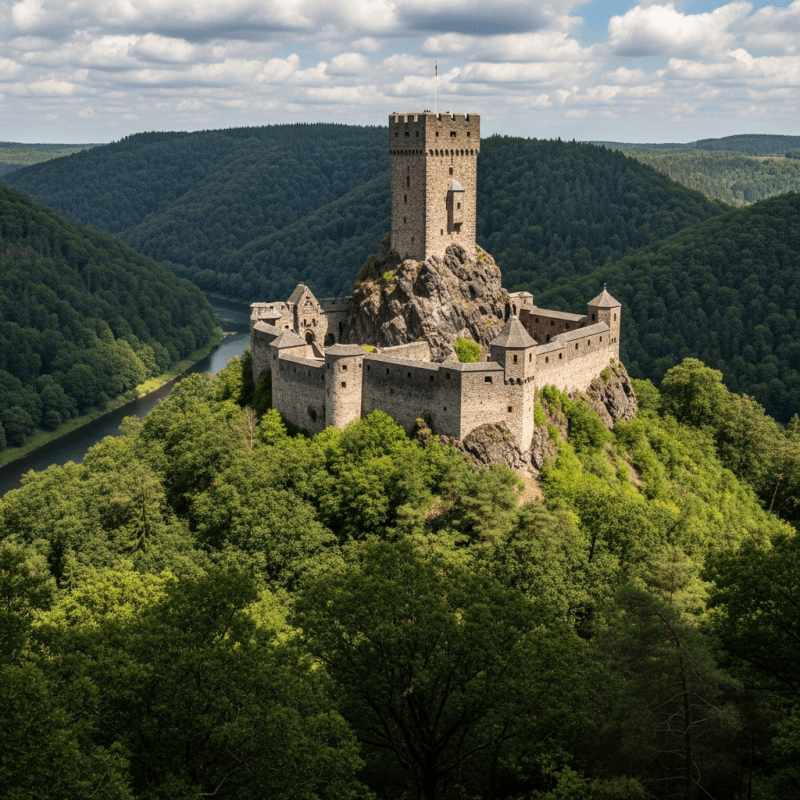
Soft cotton tee, unisex sizes
Buy ShirtBergfried Castles are emblematic of Central European medieval architecture and feudal power. Their monumental towers became enduring symbols of strength and lordship, frequently featured in art, literature, and folklore. Today, many bergfrieds are celebrated as architectural landmarks, tourist attractions, and heritage sites, reflecting their lasting impact on regional identity and cultural memory.
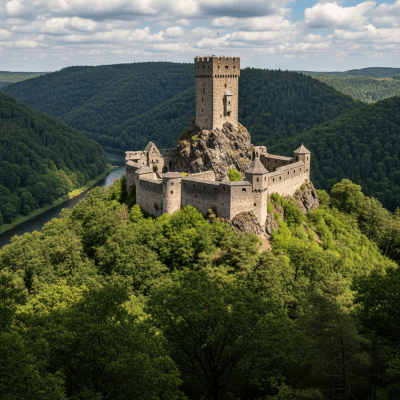
The architectural centerpiece is the bergfried: a tall, freestanding tower with thick stone walls, minimal windows, and elevated entrances. The castle complex often includes curtain walls, moats, gatehouses, and multiple baileys. Living quarters are housed in separate buildings, and timber is used for floors and roofs. Defensive design is paramount, with limited internal access and strategic placement on elevated terrain.
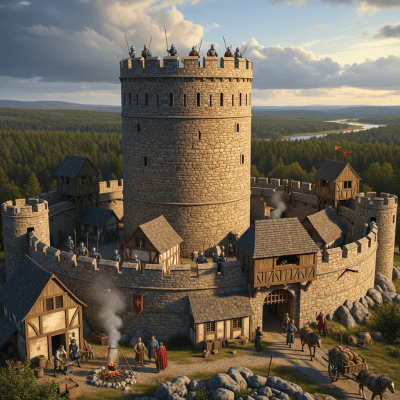
Bergfried Castles served as military fortresses, administrative centers, and symbols of feudal power. Their bergfrieds provided a last line of defense during sieges and projected authority over the surrounding lands. They were instrumental in regional conflicts and governance, reflecting the social and political structures of medieval Central Europe.
Bergfried Castles are most common in German-speaking Central Europe, especially Germany, Austria, and Switzerland. The term 'bergfried' is specific to this region, distinguishing these castles from those centered on residential keeps (Wohnburg). In local heritage registers, many are listed as Denkmalschutz (protected monuments) and catalogued in the Denkmalliste. Outside Central Europe, similar towers may exist but are classified differently, such as 'donjon' in France or 'keep' in England.
Many Bergfried Castles are protected as historical monuments, with some, like Marksburg, receiving UNESCO World Heritage designation. Preservation efforts vary: some castles remain largely intact and serve as museums, while others are partially ruined or restored. Regional heritage laws, such as Germany's Denkmalschutz, ensure ongoing conservation and public access where possible.
Bergfried Castles, like many medieval fortresses, are often surrounded by local legends and folklore. Tales of secret tunnels, ghostly apparitions in the tower, and heroic last stands during sieges are common. These stories contribute to the mystique and cultural allure of the bergfried, enhancing its status as a symbol of endurance and mystery in the landscape.
When visiting a Bergfried Castle, check for guided tours, as many sites offer insights into medieval life and architecture. Wear comfortable shoes for uneven terrain and steep staircases, especially if climbing the bergfried tower. The best times to visit are spring and autumn, when crowds are lighter and the scenery is vibrant. Respect posted rules, as many castles are protected heritage sites with restricted areas to preserve their integrity.
Alternate names for Bergfried Castles include Bergfriedburg, tower castle, and stronghold. In Germanic castle typology, 'bergfried' refers specifically to the main defensive tower, while 'Wohnburg' denotes castles centered on residential keeps. The term is uncommon outside Central Europe, with analogous structures called 'donjon' in French and 'keep' in English contexts.