Stollen
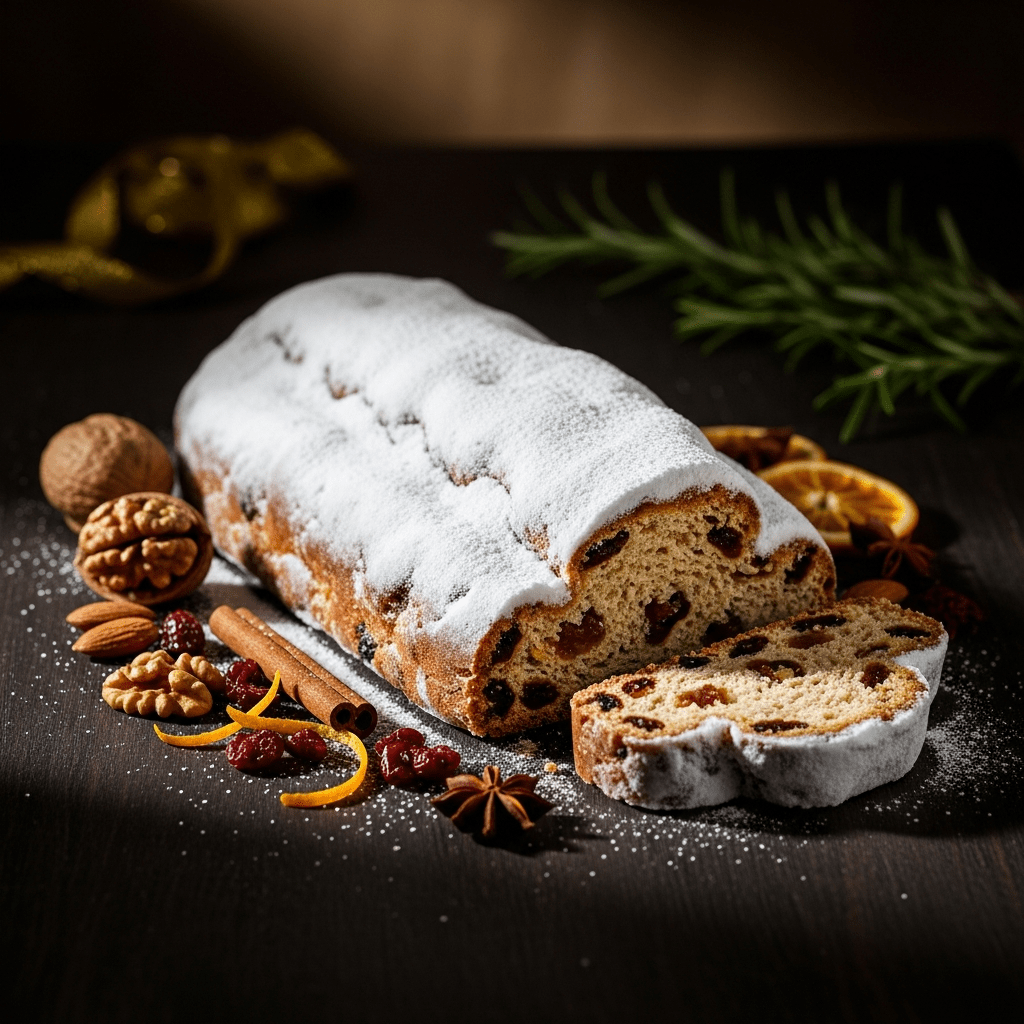
Stollen is a traditional German yeast-leavened fruit cake, renowned for its dense, buttery dough studded with dried fruits, nuts, and often marzipan, typically shaped as a loaf and dusted with powdered sugar.
Stollen is a traditional German yeast-leavened fruit cake, renowned for its dense, buttery dough studded with dried fruits, nuts, and often marzipan, typically shaped as a loaf and dusted with powdered sugar.
Originating in 15th-century Germany, specifically Dresden, Stollen began as a simple Advent bread. Over time, it evolved into a richer cake enriched with butter, dried fruits, and nuts, especially after the 1491 papal dispensation known as the "Butter Letter" allowed the use of butter in its preparation. This cake became deeply intertwined with Christmas traditions and remains a festive staple today.
Stollen belongs to the category of yeast-leavened fruit cakes, distinguished by its use of yeast for rising rather than chemical leaveners, and its incorporation of dried fruits and nuts. It is a seasonal specialty within the broader family of European holiday cakes.
Typically shaped as a loaf with a slightly domed top, Stollen is generously coated with powdered sugar after baking, often following a brushing of melted butter. Its dense interior reveals a rich mixture of dried fruits, nuts, and sometimes a marzipan core, giving it a textured and inviting appearance.
Stollen is primarily enjoyed during the Christmas season, sliced and served alongside coffee or tea. It functions as both a celebratory treat and a gift, embodying holiday spirit. Its rich ingredients and dense texture make it a satisfying accompaniment to festive gatherings.
Bring this kind into your world illustrated posters, mugs, and shirts.
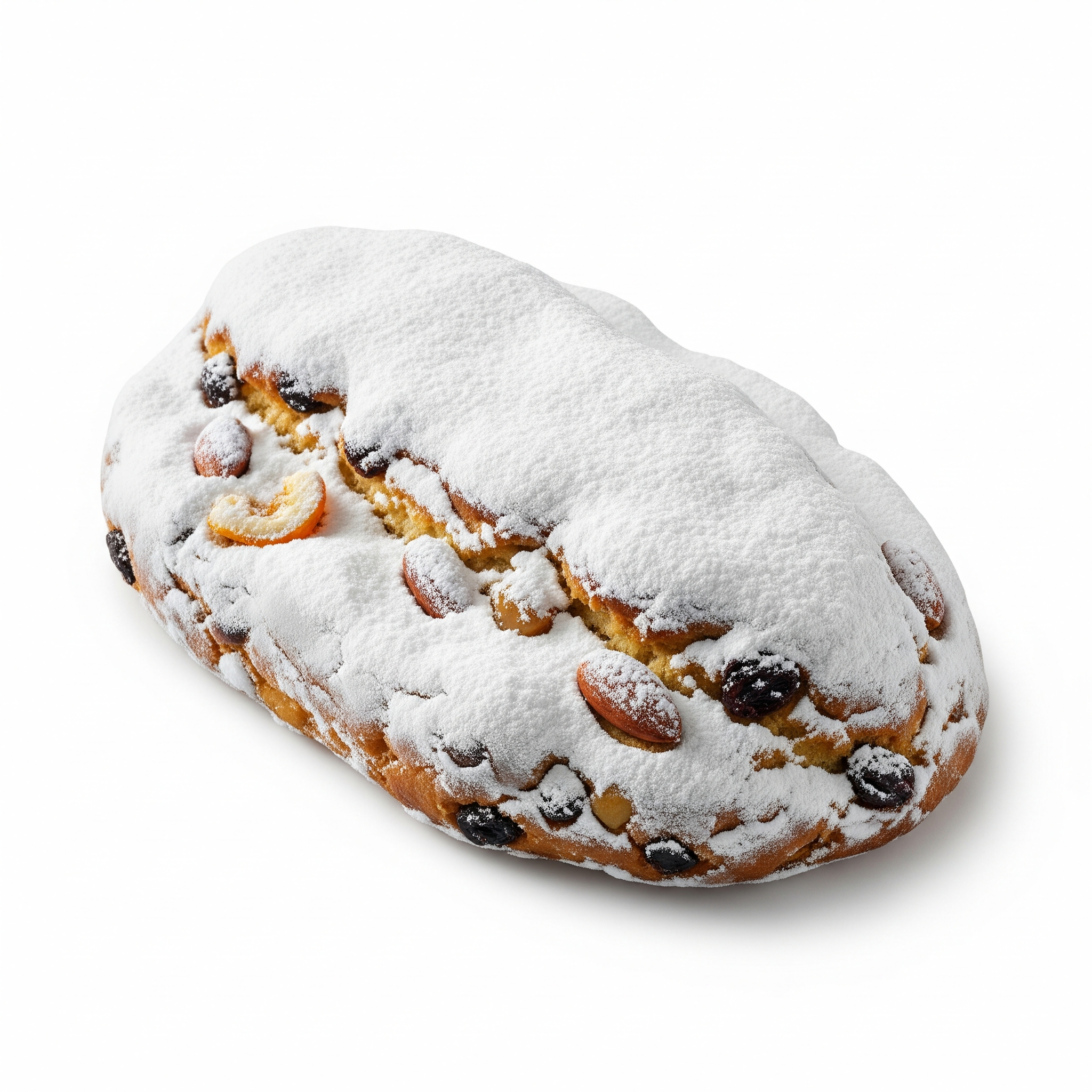
Archival print, museum-grade paper
Buy Poster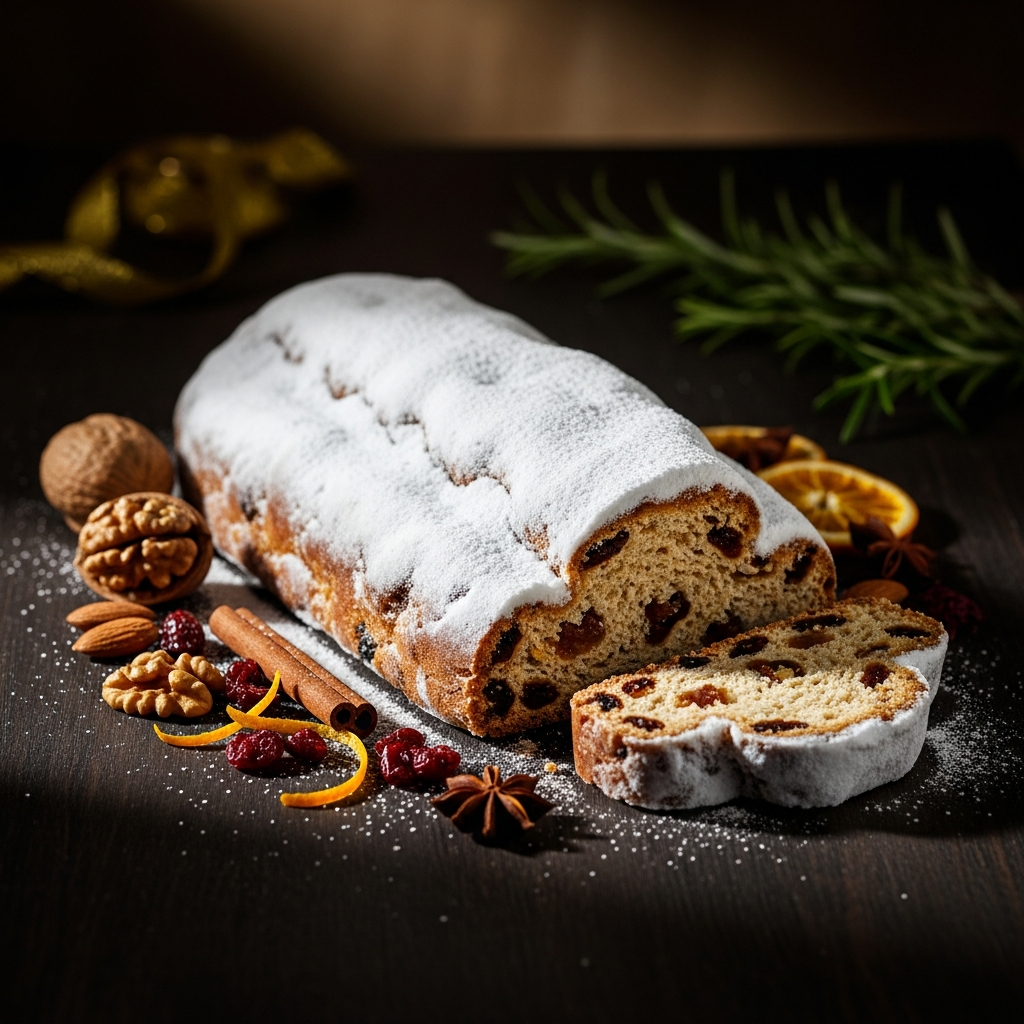
Stoneware mug, dishwasher safe
Buy Mug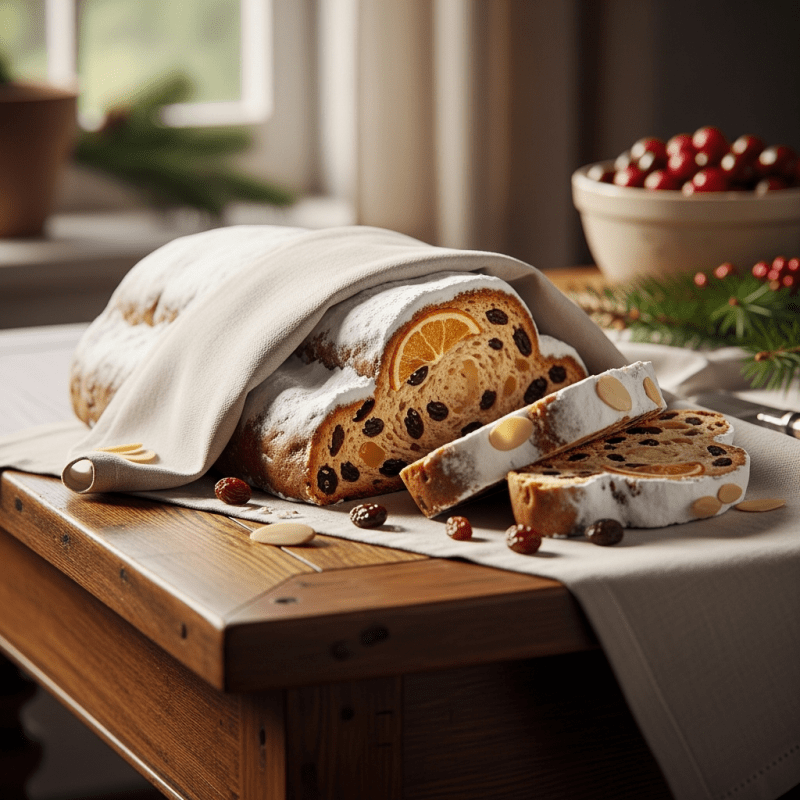
Soft cotton tee, unisex sizes
Buy ShirtDeeply rooted in German Christmas customs, Stollen symbolizes warmth and celebration. The cake's shape is said to represent the swaddled Christ Child, reinforcing its religious and cultural importance. The annual Dresden Stollen Festival honors this heritage, highlighting its role as a cherished holiday icon.
Key ingredients include: wheat flour, yeast, butter, milk, eggs, dried fruits (such as raisins and candied citrus peel), nuts (commonly almonds), spices like cardamom and cinnamon, and often marzipan.
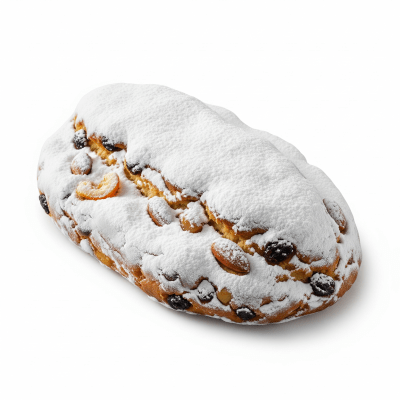
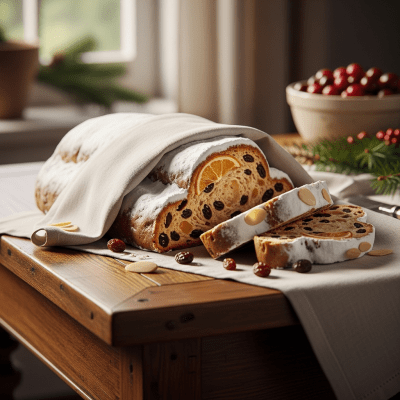
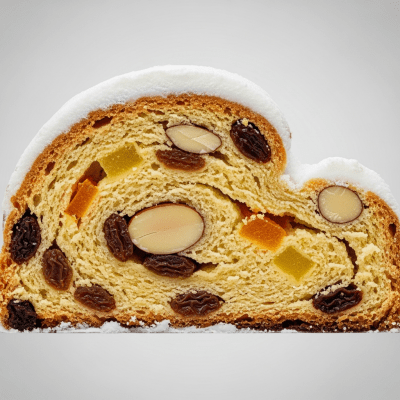
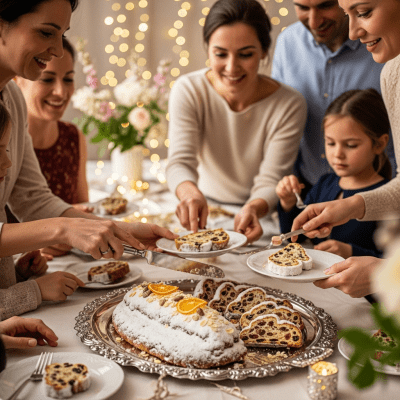
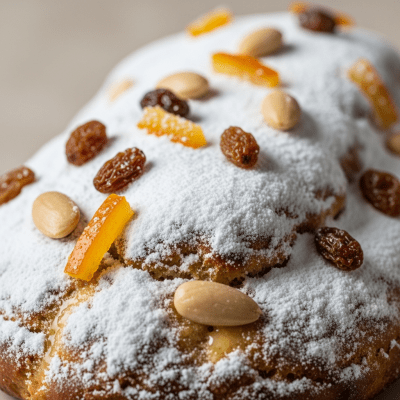
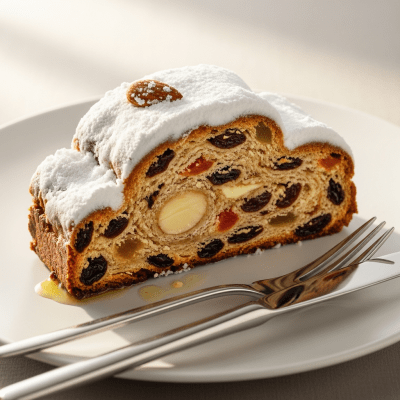
Stollen is prepared by mixing a yeast-leavened dough enriched with butter, milk, and eggs, then folding in dried fruits, nuts, and spices. It is shaped into a loaf, sometimes with a marzipan roll at its center, baked until golden, then brushed with melted butter and coated in powdered sugar to finish.
Stollen offers a dense yet tender crumb with a rich buttery flavor. Sweet notes come from dried fruits and candied citrus peel, complemented by warm spices like cardamom and cinnamon. The marzipan center adds a smooth, almond-sweet contrast, while the powdered sugar coating provides a delicate sweetness and slight crunch.
Stollen typically contains gluten (from wheat flour), dairy (butter and milk), eggs, and tree nuts (almonds). Some commercial versions may include traces of soy. It is not generally suitable for gluten-free, dairy-free, or nut-free diets.
Dresden Stollen: The most famous variant, protected by EU designation, featuring a traditional recipe with marzipan and specific fruit and nut selections.
Other German regional variants: These differ in the inclusion or omission of marzipan and vary in the types and proportions of dried fruits and nuts used, reflecting local tastes and traditions.
After baking, Stollen is brushed with melted butter and generously dusted with powdered sugar, creating a snowy white exterior evocative of winter. It is typically presented as a whole loaf or sliced thickly for serving, often accompanied by coffee or tea during festive occasions.