Red Velvet Cake
Red Velvet Cake is a visually striking, cocoa-flavored butter cake known for its deep red color and tender, moist crumb, typically layered and frosted with cream cheese or ermine icing.
Red Velvet Cake is a visually striking, cocoa-flavored butter cake known for its deep red color and tender, moist crumb, typically layered and frosted with cream cheese or ermine icing.
Originating in the United States during the early 20th century, Red Velvet Cake's precise beginnings are debated. Some attribute its rise to the Waldorf-Astoria Hotel in New York City in the 1920s, while others link it to Southern home baking traditions. Its vibrant red hue became widely popular mid-century following the introduction of red food coloring and marketing efforts by companies like Adams Extract in Texas. The cake evolved from earlier "velvet" cakes, prized for their soft, fine crumb achieved through the use of cocoa and buttermilk.
Red Velvet Cake belongs to the butter cake family, characterized by the use of butter or oil as fat and a tender crumb. It is distinguished within this group by its mild cocoa flavor, acidic components like buttermilk and vinegar, and its signature red coloring, setting it apart from other chocolate or devil's food cakes.
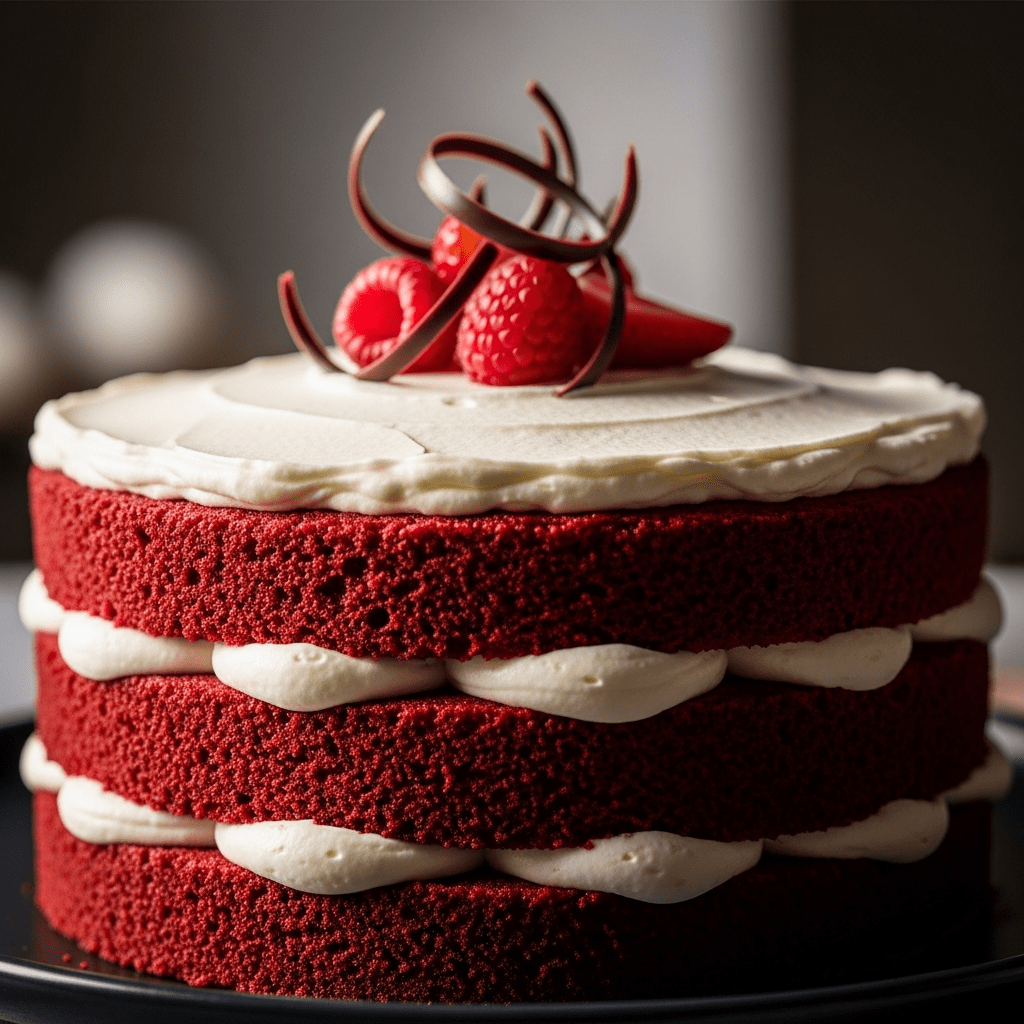
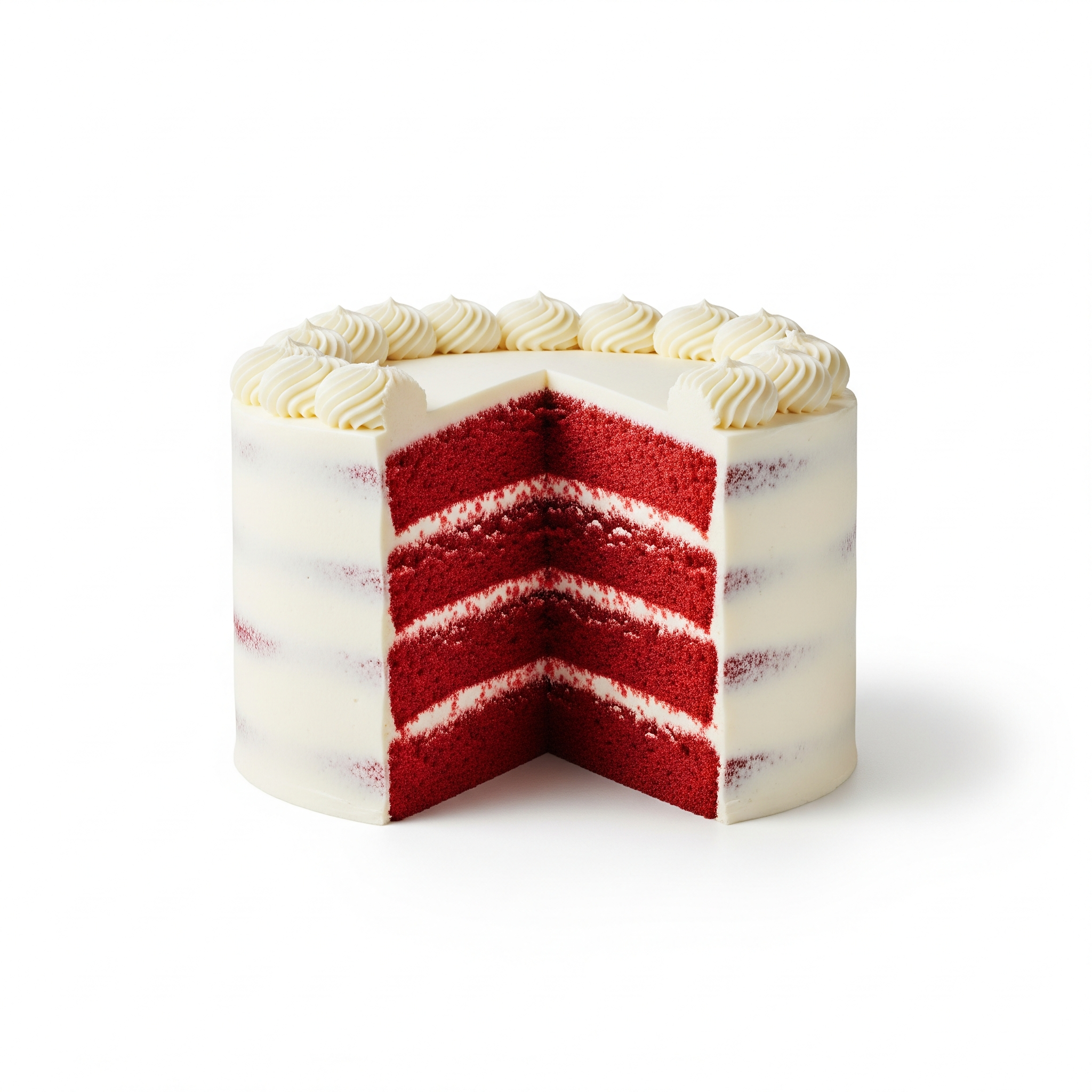
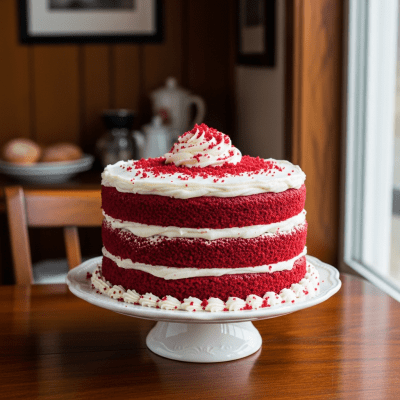
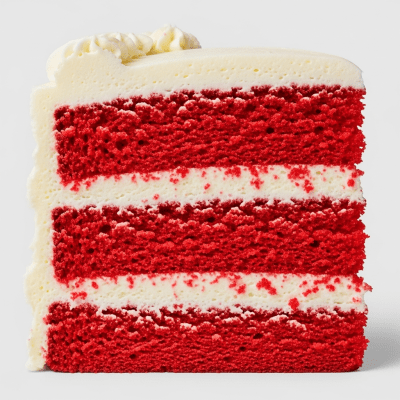
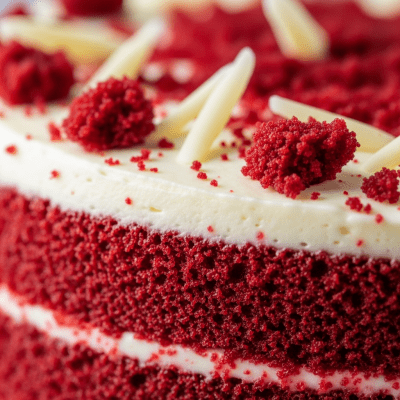
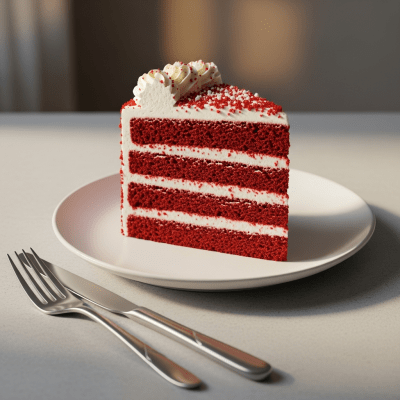
Typically baked in round pans and assembled as a multi-layer cake, Red Velvet Cake showcases a rich red interior contrasted by creamy white frosting. Its surface is often smooth and glossy, adorned with cream cheese or ermine icing, and occasionally garnished with nuts for added texture and visual appeal.
Red Velvet Cake serves as a celebratory dessert, commonly enjoyed at birthdays, weddings, and holidays such as Christmas and Valentine’s Day. Its distinctive color and flavor make it a popular choice for both home baking and commercial bakeries, where it is also adapted into cupcakes, cookies, and other confections.
Bring this kind into your world illustrated posters, mugs, and shirts.
Archival print, museum-grade paper
Buy Poster
Stoneware mug, dishwasher safe
Buy Mug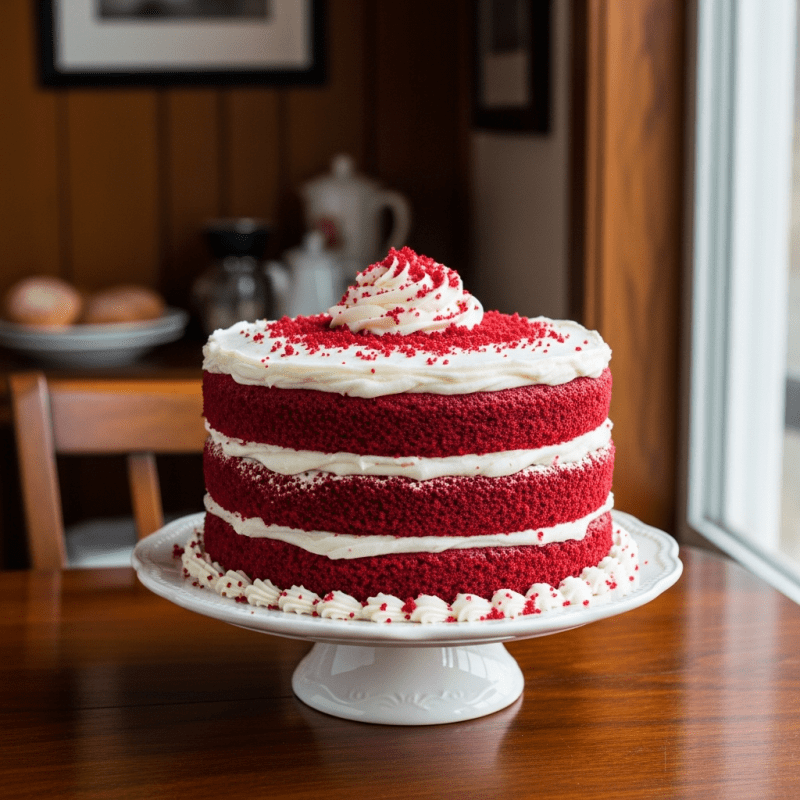
Soft cotton tee, unisex sizes
Buy ShirtDeeply rooted in Southern U.S. culinary tradition, Red Velvet Cake has become an iconic symbol of celebration and festivity across North America and beyond. Its vibrant hue and unique flavor profile have inspired a variety of derivative treats and have cemented its place in modern dessert culture.
Key ingredients defining Red Velvet Cake include wheat flour, sugar, eggs, unsweetened cocoa powder, buttermilk, vegetable oil, butter, baking soda, vinegar, and red food coloring.


Red Velvet Cake is prepared primarily through baking, combining wet and dry ingredients carefully to maintain a tender crumb, followed by layering and frosting once cooled.
The cake features a tender, moist crumb with a mild cocoa flavor balanced by a distinctive tang from buttermilk and vinegar. This is complemented by the creamy, slightly tangy frosting that enhances its overall richness.
Red Velvet Cake typically contains gluten, dairy, and eggs, making it unsuitable for those with allergies to these ingredients. Common dietary variants are limited, though adaptations for gluten-free or vegan diets exist outside traditional recipes.
While Red Velvet Cake is primarily associated with the United States, especially the South, there are no widely recognized regional variants; however, alternate names such as "Red Waldorf Cake" and "Velvet Cake" appear in some Southern regions.
Red Velvet Cake is commonly decorated with smooth layers of cream cheese or ermine frosting, often finished with a glossy surface. Optional garnishes include chopped nuts or cake crumbs, enhancing both texture and visual appeal, and it is typically presented as a multi-layered round cake.