Napoleon Cake
Napoleon Cake is a multi-layered dessert featuring alternating sheets of delicate puff pastry and rich custard or cream, celebrated for its tender texture and elegant presentation.
Napoleon Cake is a multi-layered dessert featuring alternating sheets of delicate puff pastry and rich custard or cream, celebrated for its tender texture and elegant presentation.
Napoleon Cake is most closely associated with Russia, where it rose to prominence in the 19th century, particularly after Napoleon Bonaparte's defeat in 1812. Though its roots trace back to the French mille-feuille—a classic pastry of thin puff pastry layers and cream—the Russian version evolved into a distinct style with more layers and a softer, custard-soaked texture. This cake became a popular celebratory dessert in Russia and Eastern Europe, symbolizing both culinary skill and festive tradition.
Classified as a layered cake, Napoleon Cake belongs to the broader family of cakes defined by multiple thin layers of baked goods separated by creamy fillings. It shares lineage with French patisserie, particularly the mille-feuille, but is distinguished by its custard-heavy filling and softer texture, placing it firmly within Eastern European dessert traditions.
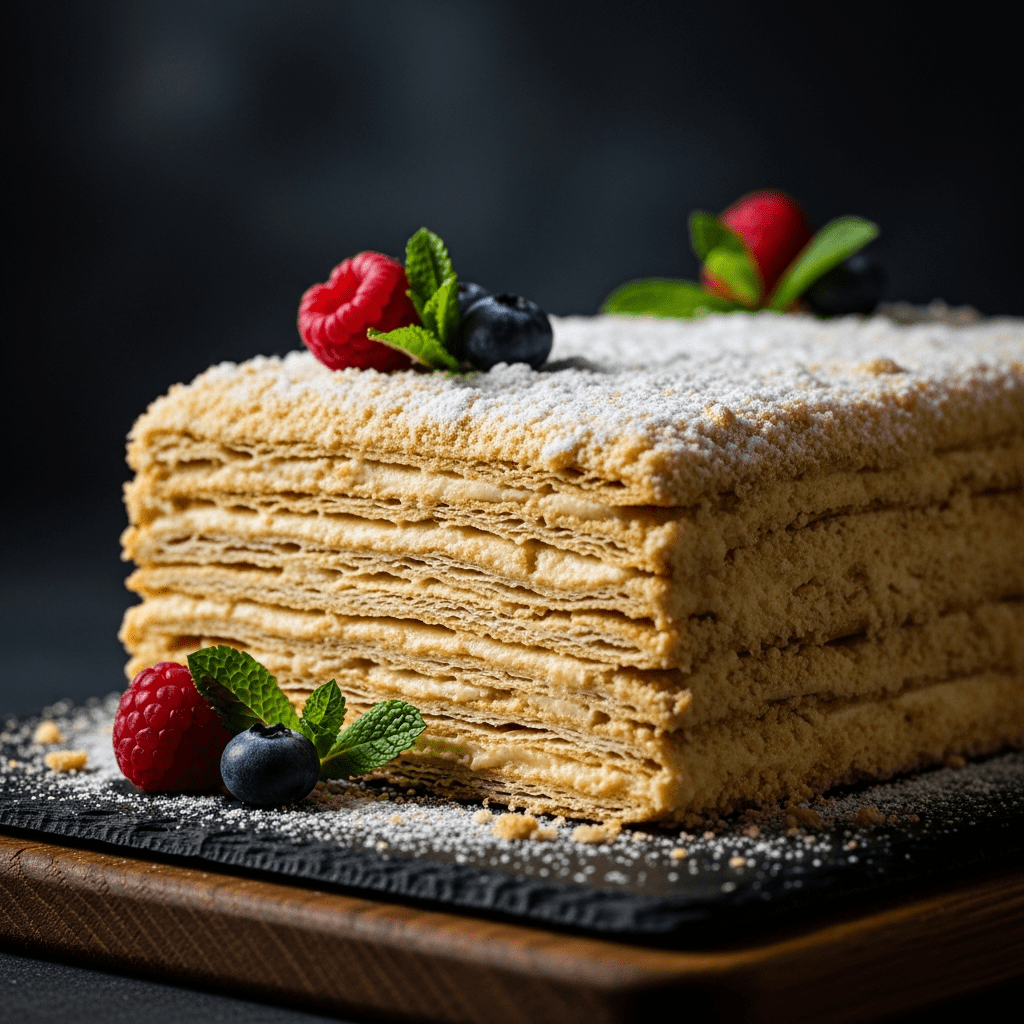
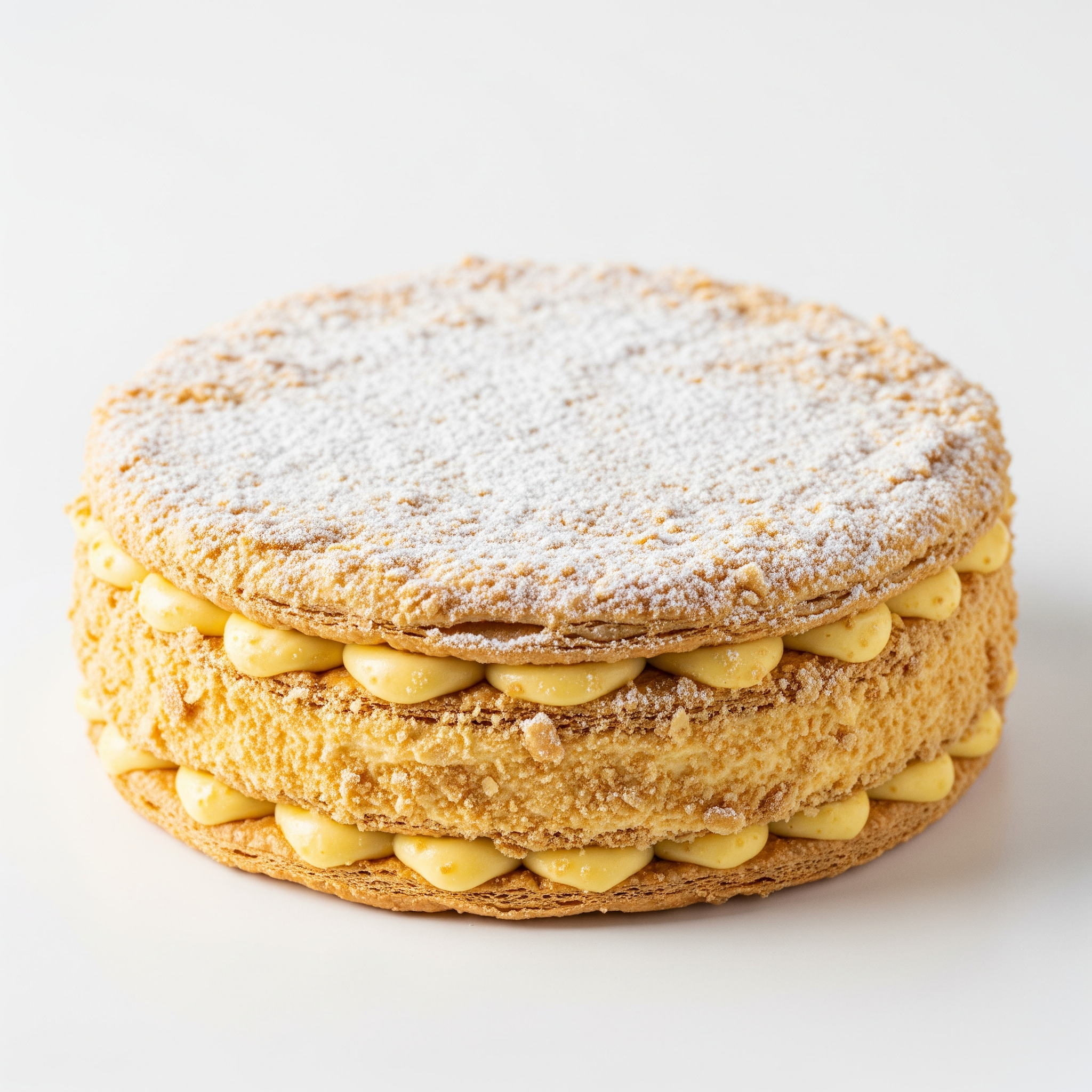
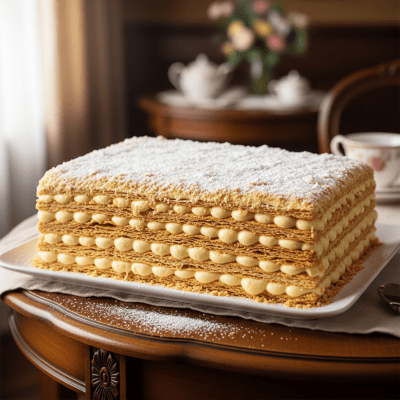
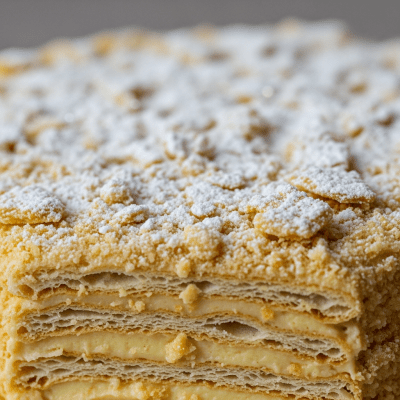
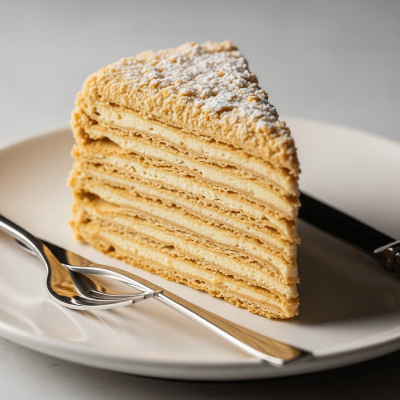
Napoleon Cake typically appears as a rectangular or square multi-layered cake, though round versions are also found. It consists of 7 to 12 thin, crisp puff pastry sheets layered with smooth, rich custard or cream. The top is often adorned with a dusting of powdered sugar, pastry crumbs, or occasionally nuts, lending a refined and inviting finish.
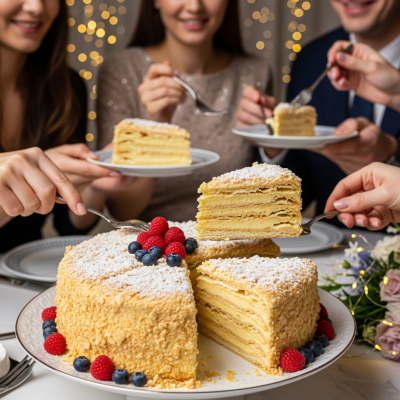
Primarily enjoyed as a celebratory dessert, Napoleon Cake is served at festive occasions such as New Year’s celebrations, birthdays, and weddings across Russia and neighboring countries. Its preparation demands skillful baking and layering, making it both a culinary challenge and a symbol of hospitality. The cake is typically sliced and served chilled, allowing the layers to meld into a tender, sliceable delicacy.
Bring this kind into your world illustrated posters, mugs, and shirts.
Archival print, museum-grade paper
Buy Poster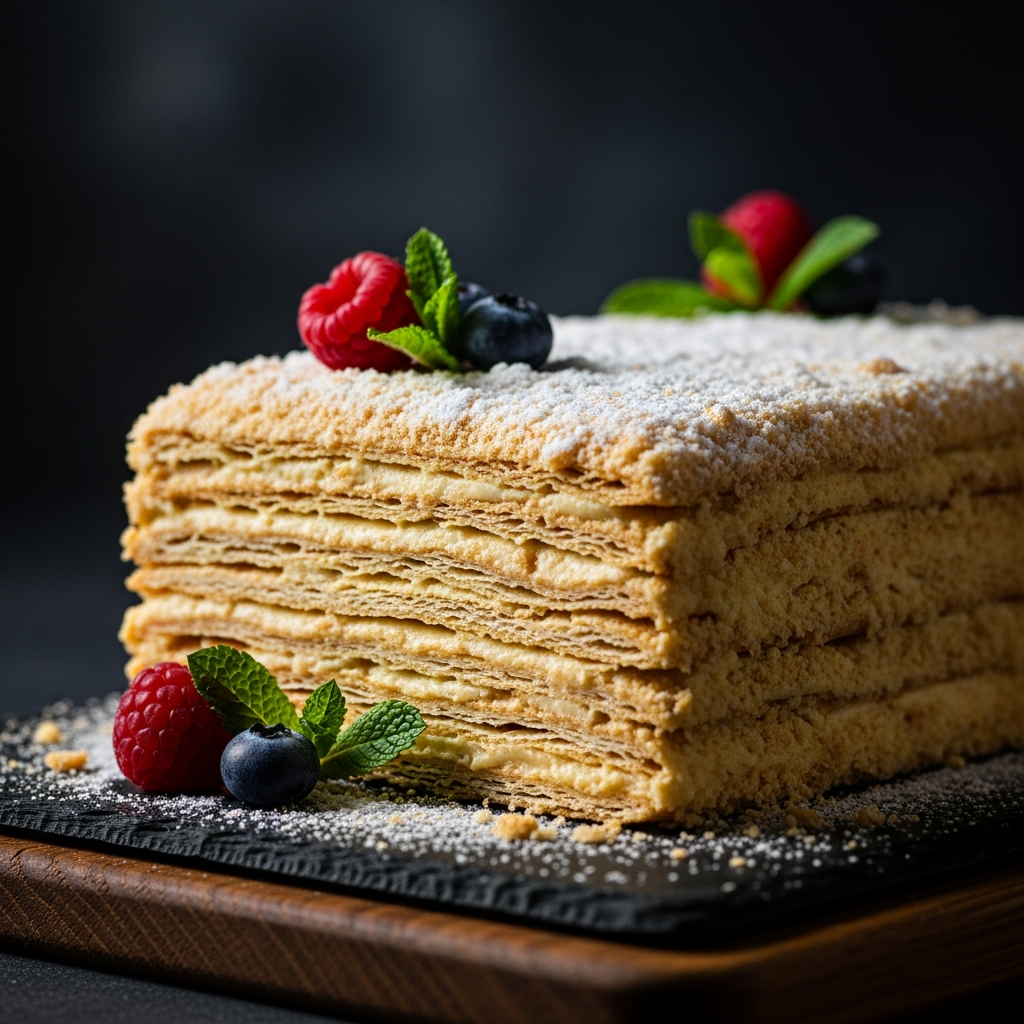
Stoneware mug, dishwasher safe
Buy Mug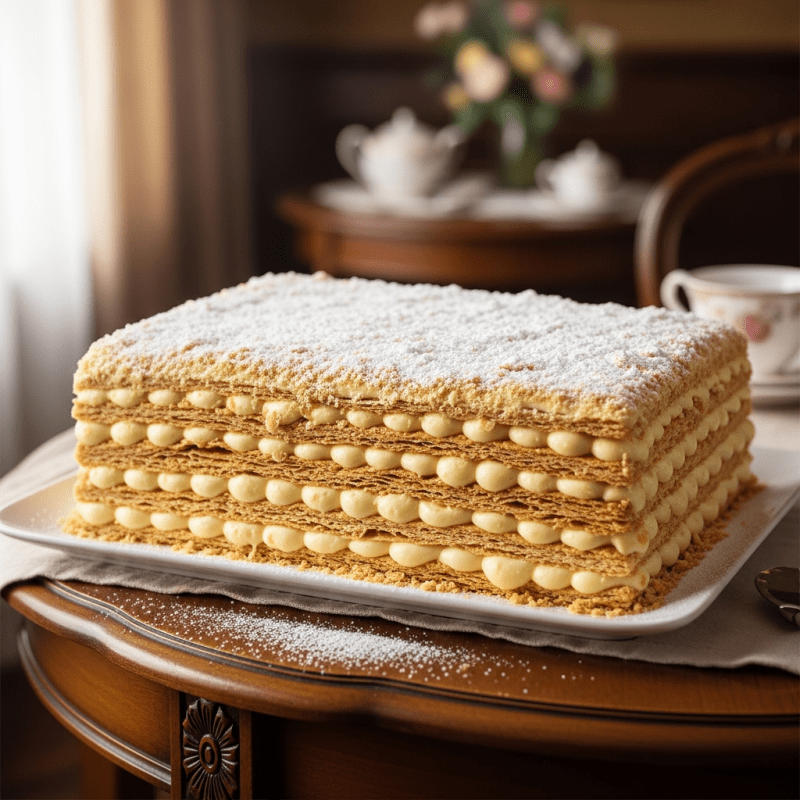
Soft cotton tee, unisex sizes
Buy ShirtNapoleon Cake holds a cherished place in Russian and Eastern European culture, often regarded as a symbol of culinary heritage and festive celebration. While its name and form acknowledge French origins, the cake’s evolution in Russia has made it a distinctive emblem of national pride and tradition. It is widely available in bakeries and supermarkets throughout post-Soviet states and features prominently in holiday feasts and special occasions.
Key ingredients defining Napoleon Cake include wheat flour and butter for the puff pastry, eggs, milk, sugar, and vanilla for the rich custard filling.
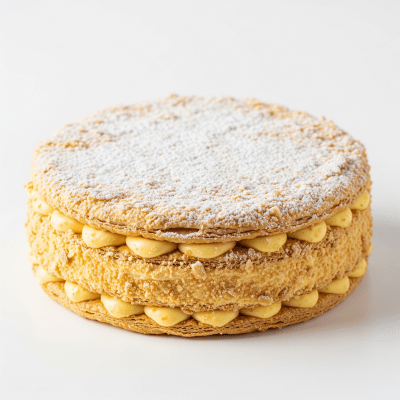
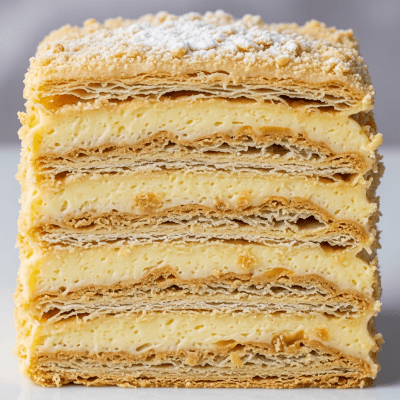
Preparation involves baking multiple thin sheets of puff pastry separately, preparing a smooth vanilla custard or pastry cream, and then layering the pastry sheets alternately with the custard. The assembled cake is chilled to allow the layers to soften and meld, enhancing its tender texture.
Napoleon Cake is characterized by a tender, sliceable texture resulting from custard-soaked puff pastry layers. Its flavor is rich and creamy, with a delicate balance between buttery pastry and sweet vanilla custard, offering an elegant and satisfying dessert experience.
Allergens: Contains gluten, dairy, and eggs. It typically does not contain soy. There are no widely recognized gluten-free or vegan variants of Napoleon Cake.
Napoleon Cake is commonly finished with a dusting of powdered sugar or scattered pastry crumbs on top, sometimes accented with chopped nuts. It is usually presented as a rectangular or square cake, sliced into portions to showcase its delicate, layered interior, emphasizing both its visual appeal and textural elegance.