Marble Cake
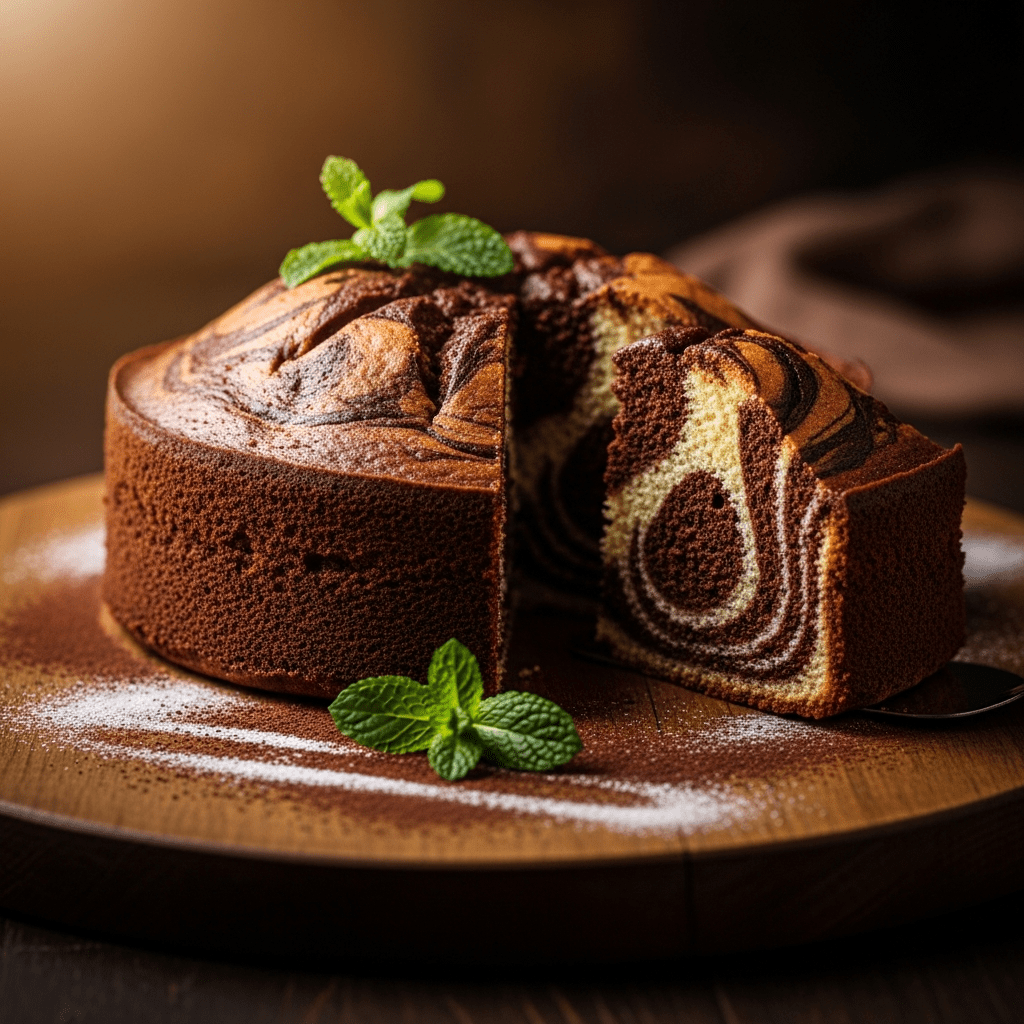
Marble Cake is a visually striking butter cake known for its characteristic swirled pattern of light vanilla and dark chocolate batters, offering a moist and tender crumb.
Marble Cake is a visually striking butter cake known for its characteristic swirled pattern of light vanilla and dark chocolate batters, offering a moist and tender crumb.
Marble Cake originated in nineteenth-century Germany, where it was called "Marmorkuchen." It was introduced to America by German immigrants in the mid-1800s, evolving from traditional pound and butter cakes. The marbling technique creatively blends flavors and aesthetics, making it a beloved classic in both European and American baking traditions.
Classified as a butter cake, Marble Cake belongs to the family of cakes made with a rich batter that includes butter, flour, sugar, eggs, and leavening agents. It is distinguished within this group by its marbled pattern, which combines two batters—typically vanilla and chocolate—into a single, single-layer cake.
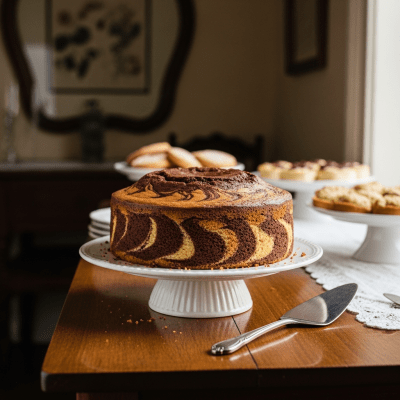
Marble Cake is commonly baked in loaf, bundt, or round pans, resulting in a single-layer cake with a distinctive marbled interior. The swirling of light and dark batters creates a visually appealing, variegated pattern. Decoration is usually minimal, often featuring a simple glaze or icing that complements rather than overshadows the marbled design.
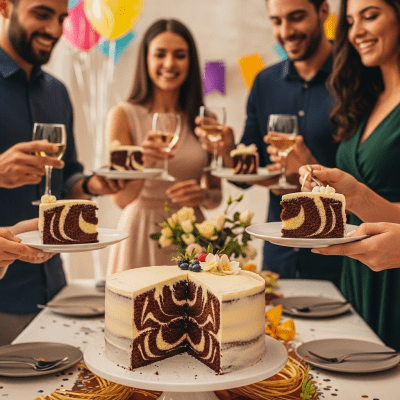
Marble Cake is typically served as a snack or dessert and pairs well with tea or coffee. Its balanced flavor and tender texture make it suitable for birthdays, family gatherings, and casual occasions. Widely available in bakeries and as packaged mixes, it enjoys popularity across diverse settings and age groups.
Bring this kind into your world illustrated posters, mugs, and shirts.
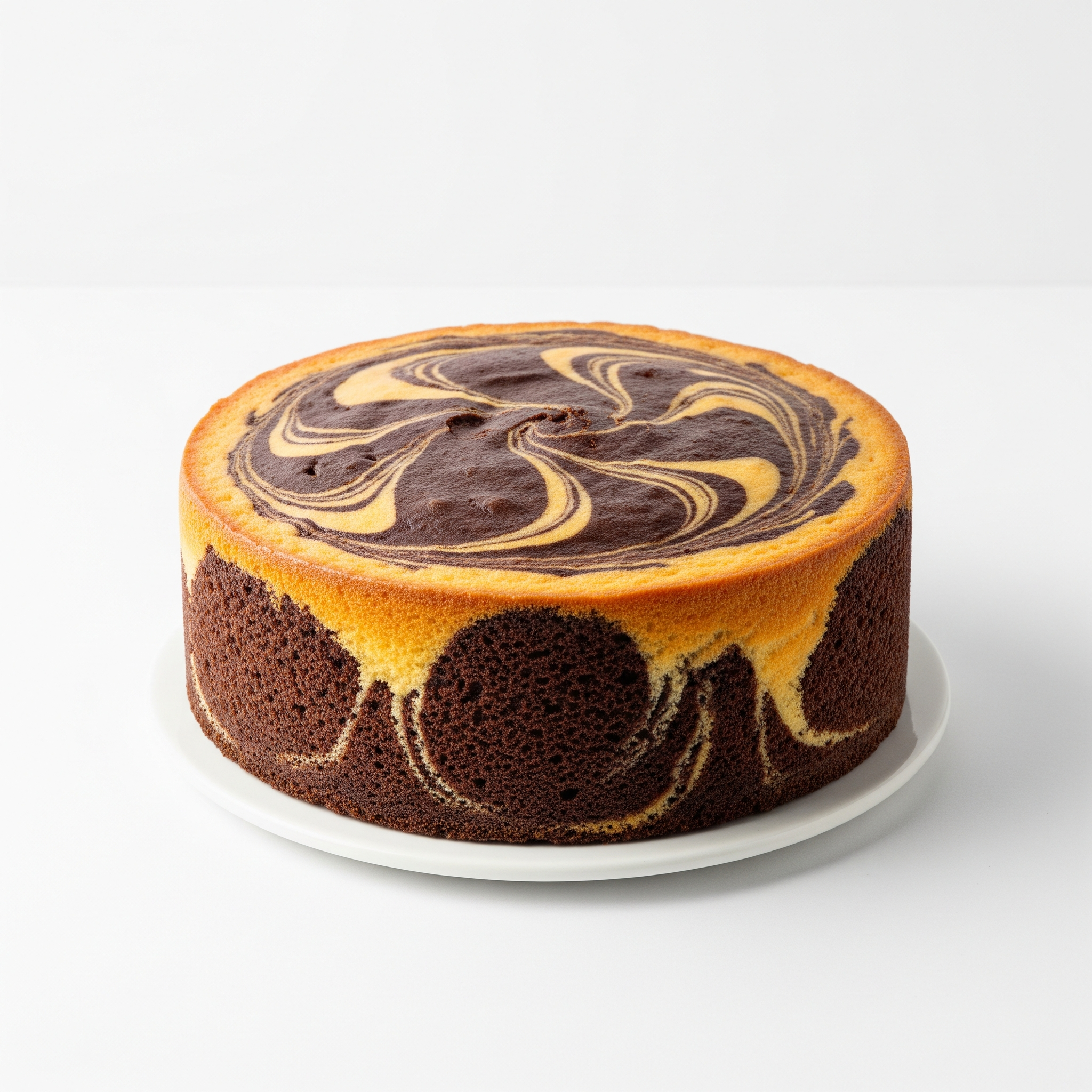
Archival print, museum-grade paper
Buy Poster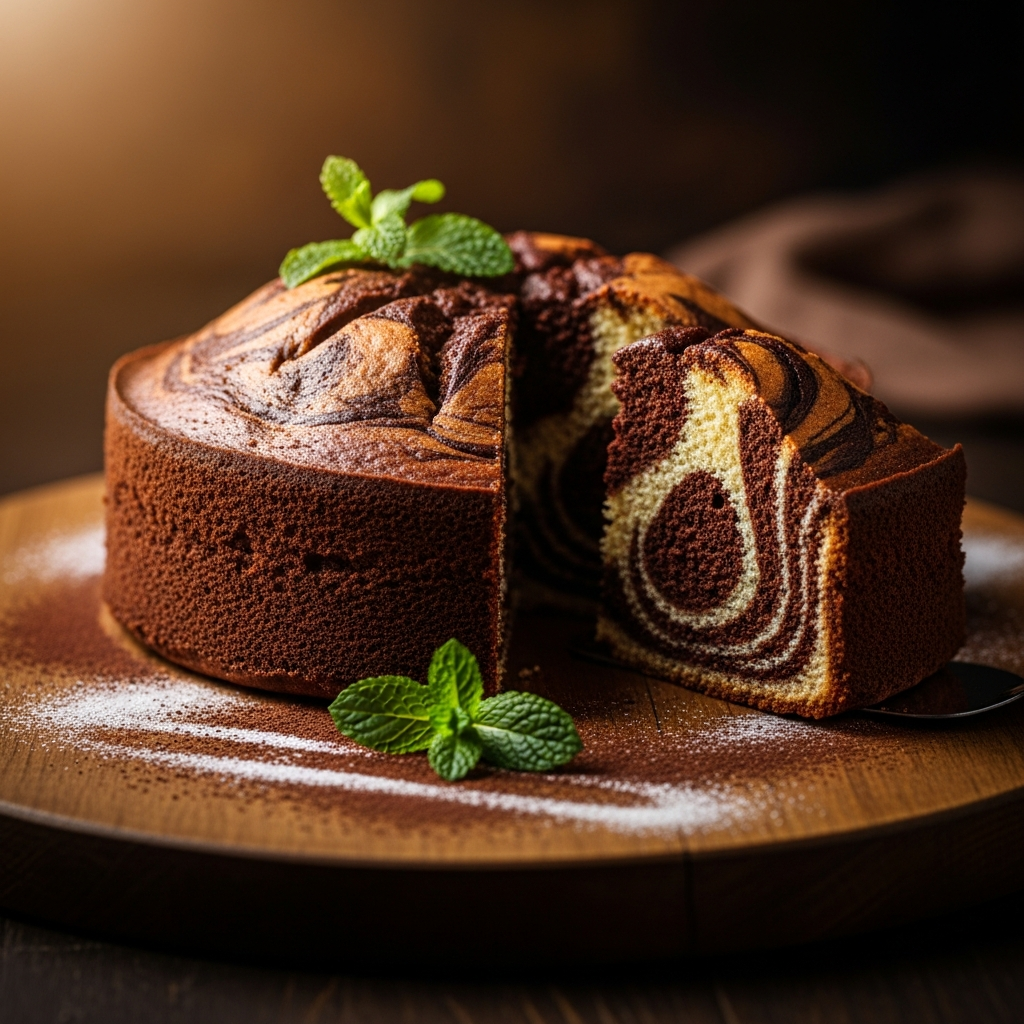
Stoneware mug, dishwasher safe
Buy Mug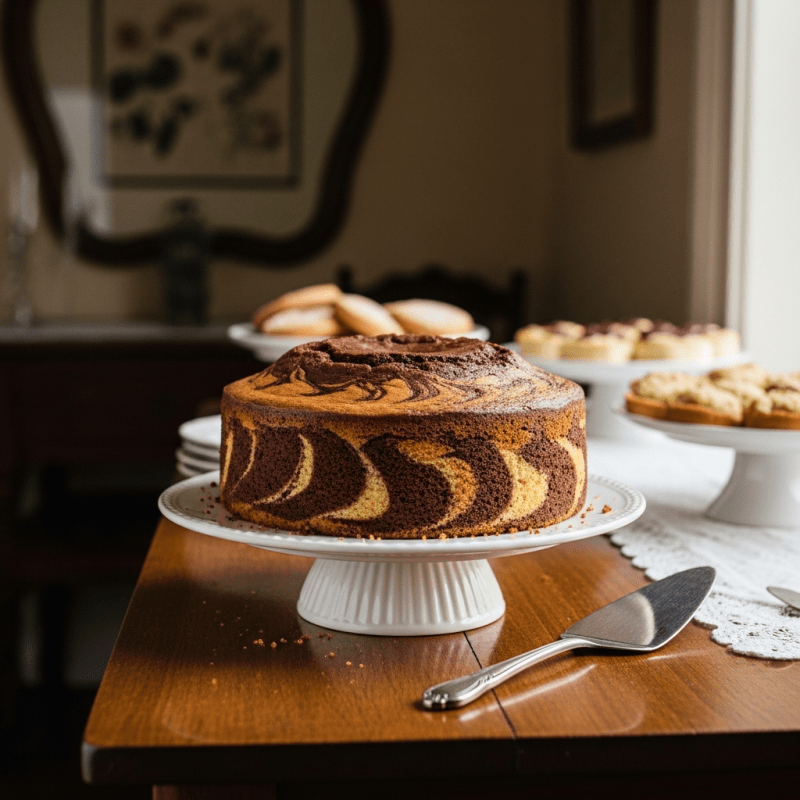
Soft cotton tee, unisex sizes
Buy ShirtWhile Marble Cake is generally considered an everyday treat, it holds cultural significance as a symbol of German baking heritage and American home baking traditions. Its iconic marbled pattern has inspired artistic representations in culinary arts and remains a nostalgic favorite in many households.
Primary ingredients include:
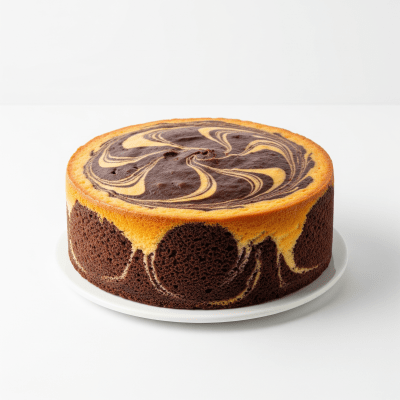
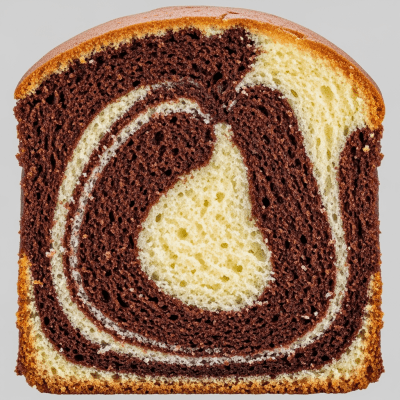


Marble Cake is prepared by making two batters—typically vanilla and chocolate—which are alternately spooned into a pan and gently swirled to create the marbled effect. The cake is then baked in an oven, commonly in loaf, bundt, or round pans, until moist and tender.
The cake features a moist and tender texture with a fine crumb. Its flavor harmoniously blends the sweetness and richness of vanilla with the deep, slightly bitter notes of chocolate, creating a balanced and appealing taste experience.
Dietary considerations: Marble Cake typically contains gluten (from wheat flour), dairy (butter and milk), and eggs, making it unsuitable for those with allergies to these ingredients. It generally does not contain soy. Common dietary adaptations are rare but possible.
Notable regional variants include:
Marble Cake is usually presented with minimal decoration to highlight its marbled interior. Common finishing touches include a light glaze or simple icing. It is often sliced to showcase the swirled pattern and served plain or with accompaniments like tea or coffee.