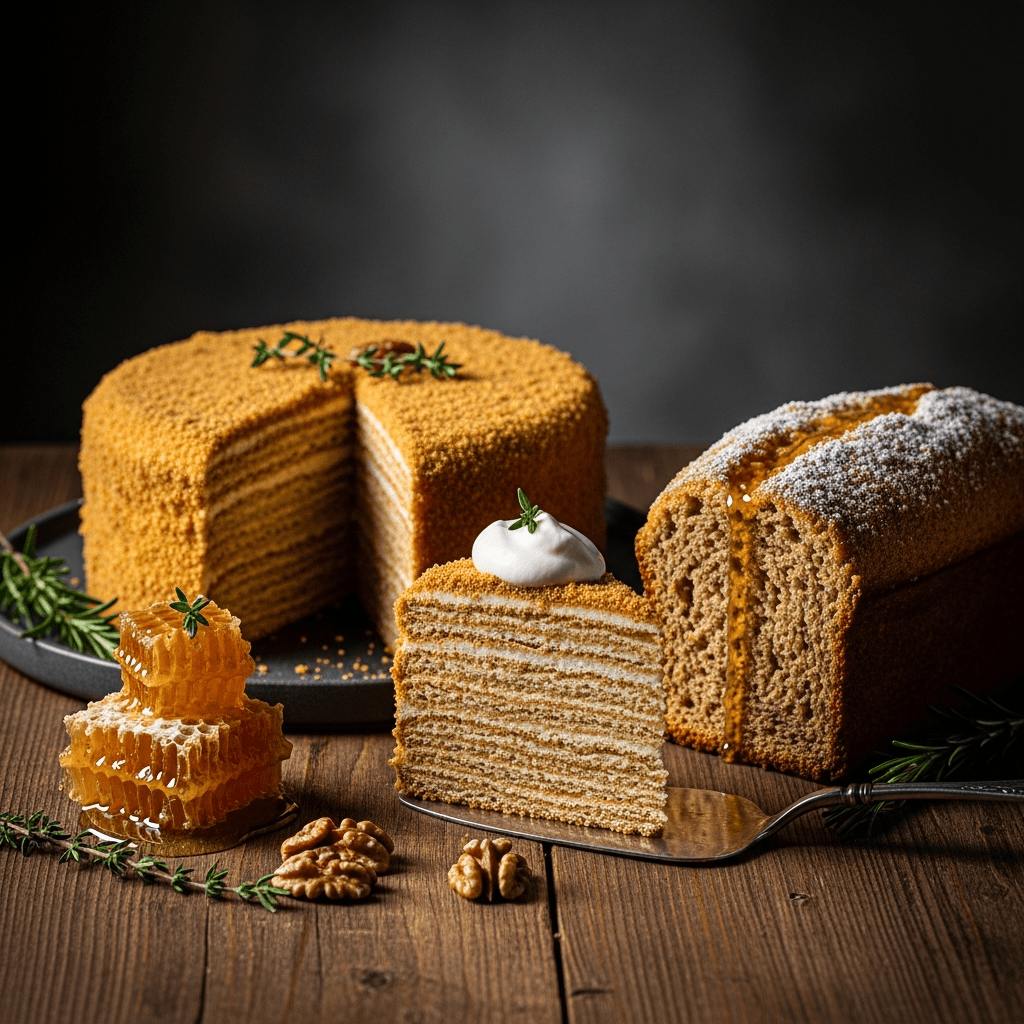
Honey Cake
Honey Cake is a sweet, often spiced cake primarily sweetened and flavored with honey, celebrated for its moist texture and warm aromatic profile.
Honey Cake is a sweet, often spiced cake primarily sweetened and flavored with honey, celebrated for its moist texture and warm aromatic profile.
Honey cake traces its roots to ancient Europe, where honey was the main sweetener before sugar became widespread. It has deep historical ties to Jewish, Russian, and Central European cultures. In Jewish tradition, the cake known as lekach is linked to Rosh Hashanah celebrations, symbolizing wishes for a sweet new year. The Russian Medovik, a layered honey cake, emerged in the 19th century, while Central European variants like German Honigkuchen and Czech Perník boast centuries-old legacies. Rather than a single point of origin, honey cake reflects a rich tapestry of regional adaptations across time.
Classified broadly as a spice cake, honey cake belongs to the family of sweet, baked goods distinguished by the use of honey as the primary sweetener and flavoring agent. It fits within the wider category of cakes that emphasize aromatic spices and moist textures, often overlapping with traditional European festive cakes.
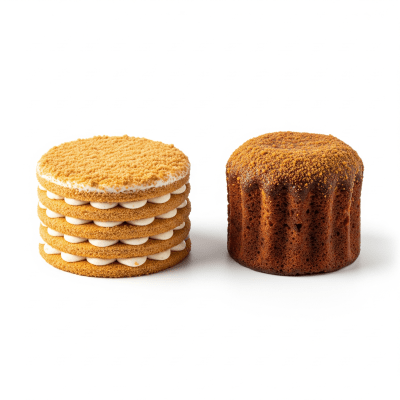
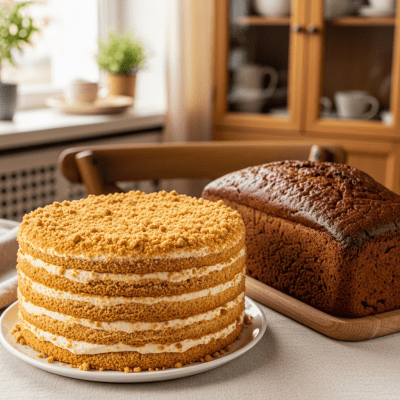
Honey cake presents in various forms including loaf, sheet, or layered cakes. Its layering style is variable, ranging from single dense slabs to multi-layered constructions, especially notable in the Russian Medovik. Decoration is typically minimal, though some versions feature cream fillings or light frostings that complement the cake’s warm hues and inviting crumb.
Primarily enjoyed as a dessert or sweet snack, honey cake serves both everyday and ceremonial roles. It is often gifted or shared during festive occasions, particularly in Jewish Rosh Hashanah traditions where it symbolizes sweetness and hope. In Russia and Central Europe, it is a staple at holiday tables, embodying seasonal warmth and celebration.
Bring this kind into your world illustrated posters, mugs, and shirts.
Archival print, museum-grade paper
Buy Poster
Stoneware mug, dishwasher safe
Buy Mug
Soft cotton tee, unisex sizes
Buy ShirtHoney cake holds a special place in cultural rituals and celebrations. In Jewish culture, lekach is integral to Rosh Hashanah, representing wishes for a sweet year ahead. Russian Medovik is synonymous with festive gatherings, while Central European variants are closely tied to Christmas and winter festivities. Its presence in art and culinary tradition underscores a shared heritage of sweetness, warmth, and communal joy.
Key ingredients defining honey cake include:
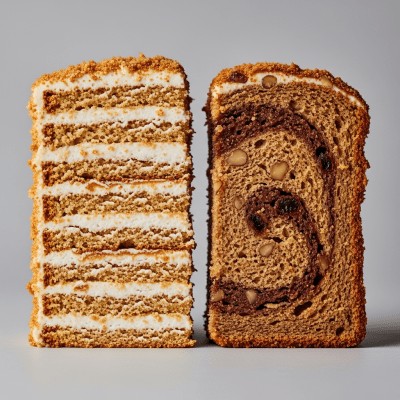

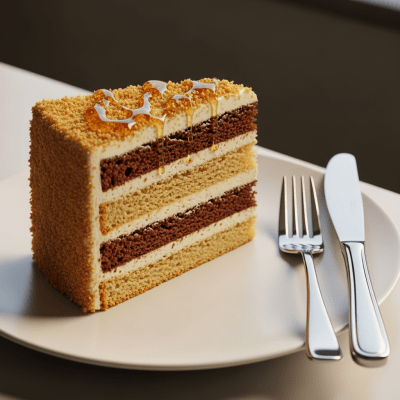
Honey cake is typically prepared by baking, though some regional versions may be steamed or chilled. The process often involves mixing the honey and spices into a batter with flour and eggs, followed by baking in loaf, sheet, or layered pans. Layered variants like Medovik require assembling multiple thin cake layers with cream fillings.
Honey cake features a moist, tender crumb that can range from dense to slightly chewy depending on the recipe. Its flavor is richly aromatic, blending the natural sweetness of honey with warm spices such as cinnamon, cloves, ginger, and nutmeg, creating a comforting and distinctive taste experience.
⚠️ Dietary and Allergen Information: Honey cake typically contains gluten, eggs, and sometimes dairy products. It is not vegan due to honey and egg content, though gluten-free and vegan adaptations exist. Common allergens include wheat and eggs, and some recipes may include nuts or soy derivatives depending on variations.
Notable regional variants of honey cake include:
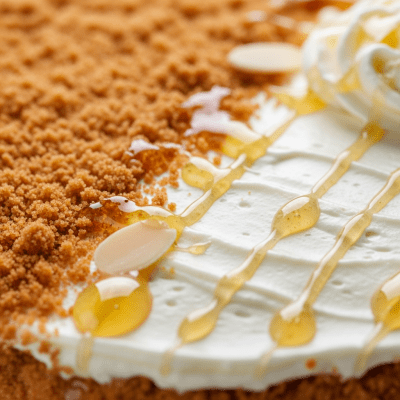
Honey cake is often presented simply, with minimal decoration to highlight its warm, golden hues. Some versions, particularly Medovik, feature layered cream fillings and light frostings that add elegance and richness. It is commonly served sliced, either plain or with a dusting of powdered sugar, emphasizing its rustic yet inviting appeal.