Fruitcake
Fruitcake is a dense, sweet cake rich in dried or candied fruits and nuts, often moistened with alcohol and traditionally enjoyed during festive occasions like Christmas and weddings.
Fruitcake is a dense, sweet cake rich in dried or candied fruits and nuts, often moistened with alcohol and traditionally enjoyed during festive occasions like Christmas and weddings.
Fruitcake traces its earliest roots to ancient Rome, where versions combined pomegranate seeds, pine nuts, and raisins in barley mash. The modern fruitcake evolved in medieval Europe, particularly England, as sugar and candied fruits became more accessible. Over centuries, it spread across Europe, developing regional forms such as the British Christmas cake, Italian panforte, and German Stollen, becoming closely tied to celebrations and long-term preservation.
Classified as a dense fruit cake, fruitcake belongs to the broader family of sweet, baked cakes distinguished by a high proportion of dried fruits and nuts. It stands apart from lighter sponge or butter cakes due to its richness, heaviness, and frequent use of alcohol for flavor and preservation.
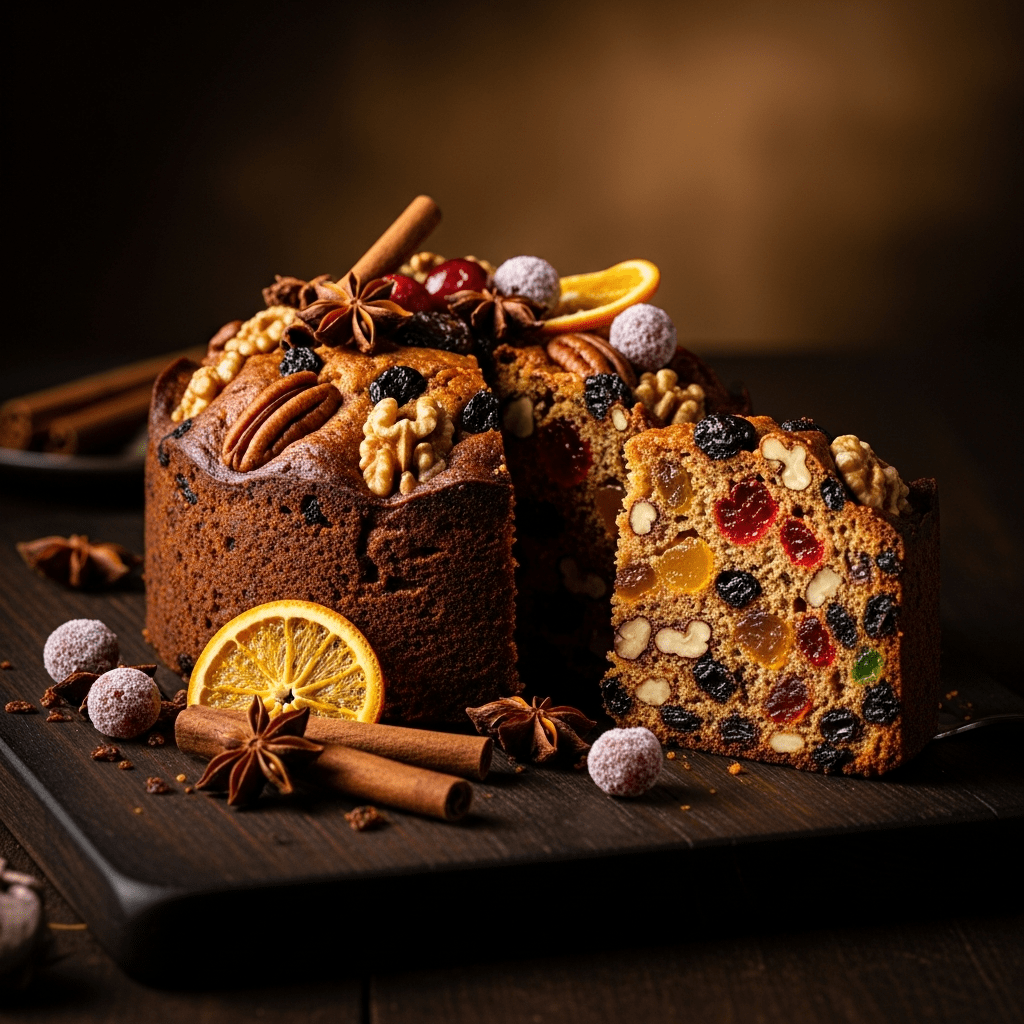
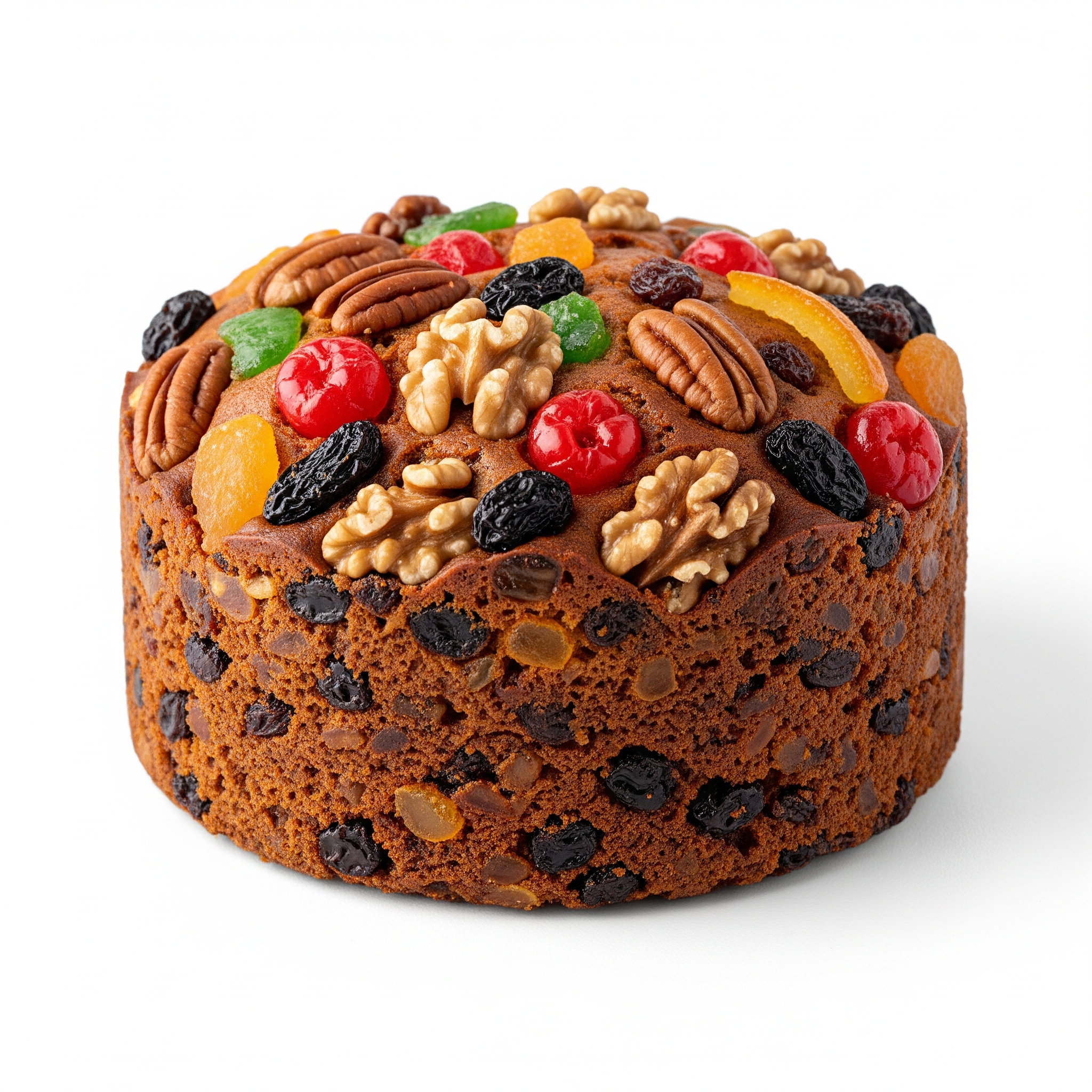
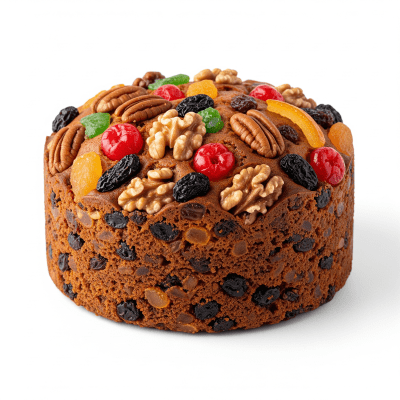
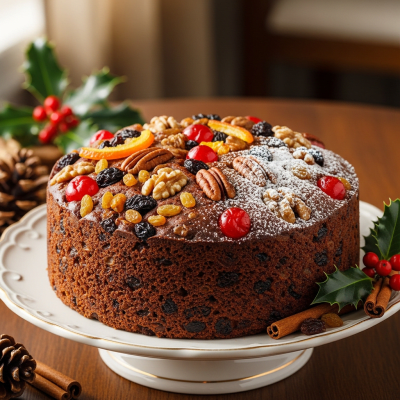
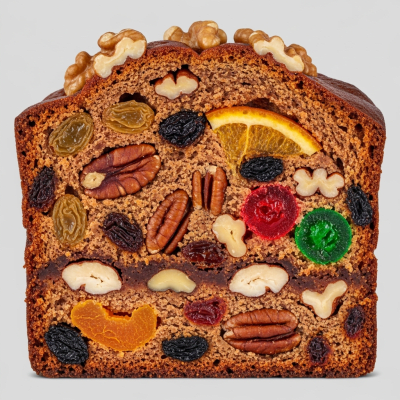
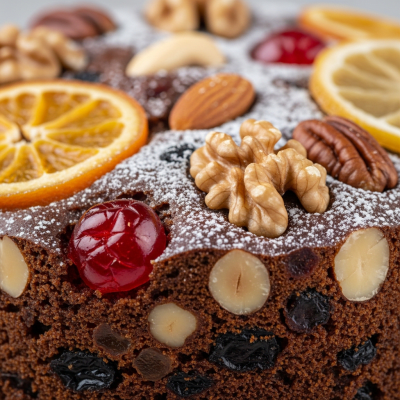
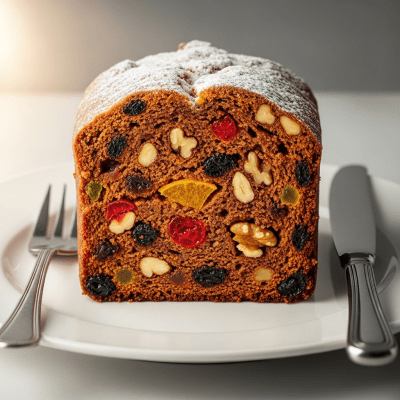
Fruitcake typically appears loaf-shaped or round, with a dense and heavy structure. Its surface may be adorned with additional nuts or glazed fruits, and layering varies widely depending on recipe and tradition.
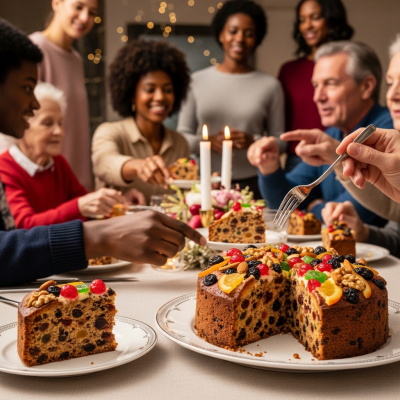
Fruitcake is traditionally served sliced as a dessert or gift during Christmas and wedding celebrations, prized for its longevity and rich flavor. It is often aged, sometimes wrapped in alcohol-soaked cloth, to deepen its taste and extend shelf life, making it a symbol of abundance and preservation.
Bring this kind into your world illustrated posters, mugs, and shirts.
Archival print, museum-grade paper
Buy Poster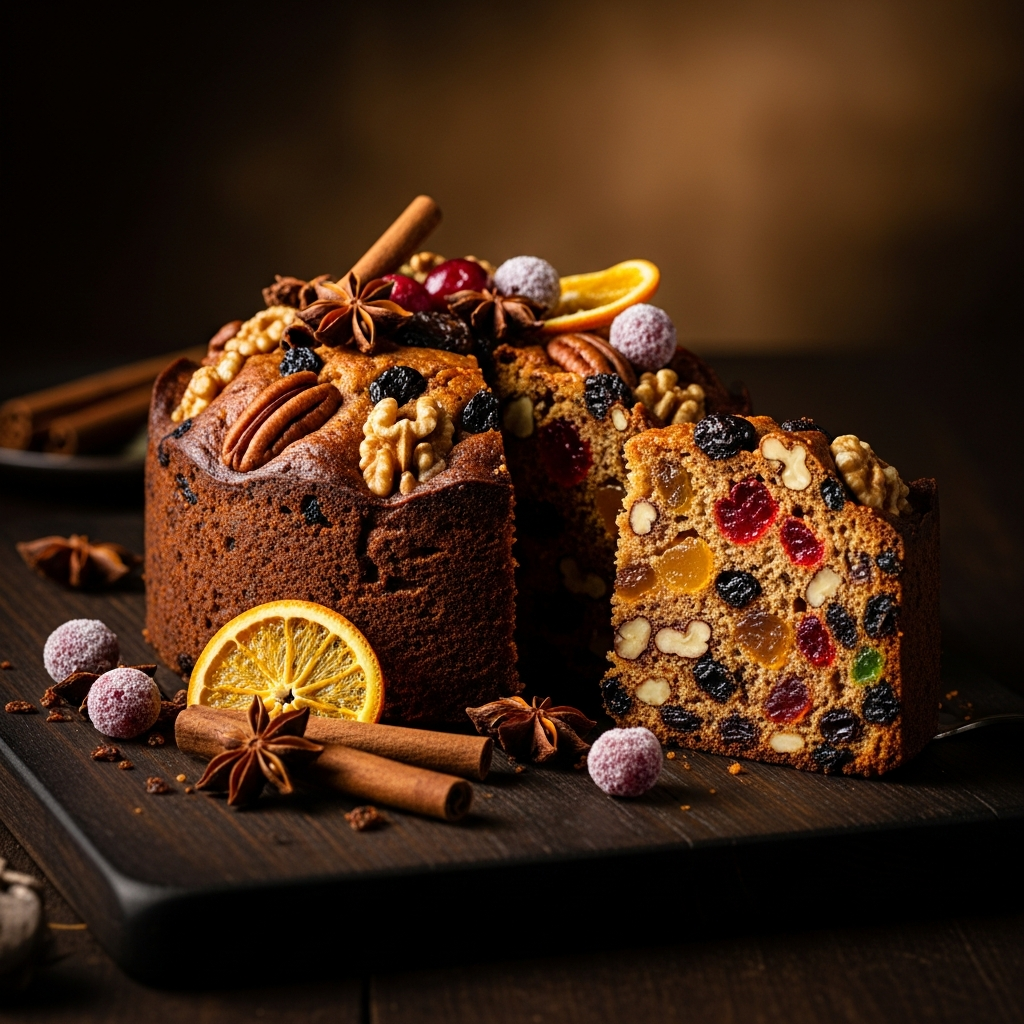
Stoneware mug, dishwasher safe
Buy Mug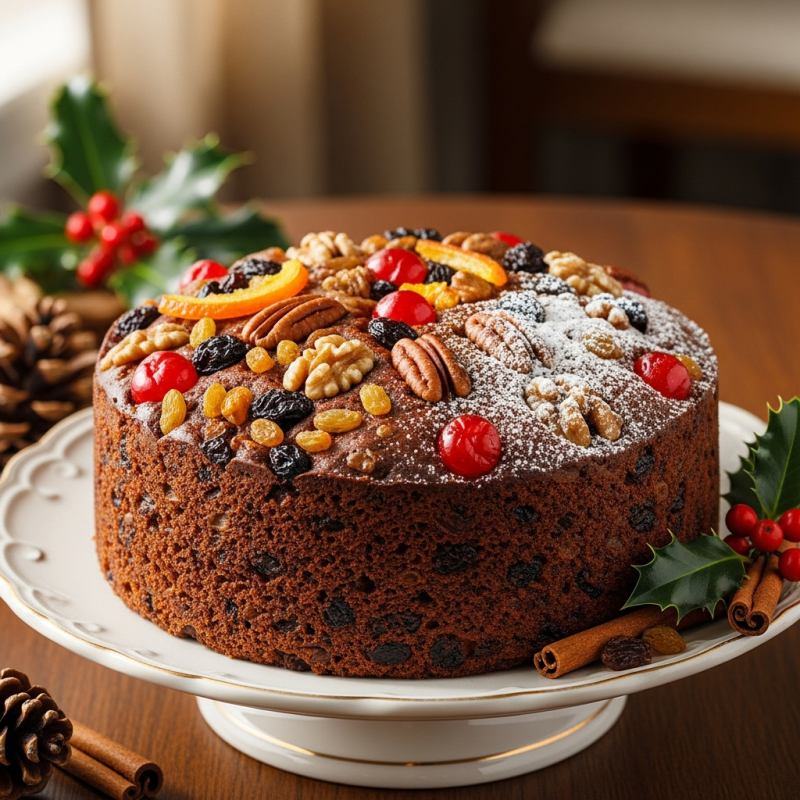
Soft cotton tee, unisex sizes
Buy ShirtFruitcake holds a prominent place in Western festive culture, especially at Christmas and weddings. In the UK, it forms the base of traditional wedding cakes covered with marzipan and royal icing. Its reputation for durability has inspired humorous references, while regional variants like Italy's panforte and Germany's Stollen reflect localized festive customs.
Key ingredients defining fruitcake include flour, eggs, butter or oil, sugar, a variety of dried fruits such as raisins, currants, sultanas, cherries, apricots, and dates, candied citrus peel, nuts like almonds, walnuts, and pecans, warming spices such as cinnamon, nutmeg, and cloves, and often alcohols like rum, brandy, or whisky.
Fruitcake is primarily prepared by baking a dense batter rich in fruits and nuts. Many recipes call for an optional aging process, where the cake is wrapped in cloth soaked with alcohol and stored for weeks or months to develop deeper flavors and preserve freshness.
Fruitcake is known for its dense and heavy texture, offering a rich, sweet, and spiced flavor profile. The combination of dried fruits, nuts, and spices is often enhanced by the warmth and depth imparted by alcohol soaking.
⚠️ Dietary considerations: Fruitcake typically contains gluten (from wheat flour), dairy (butter or oil), eggs, and tree nuts, which are common allergens. It generally does not contain soy. Variants without alcohol or with alternative ingredients exist but are less common.
Fruitcakes are commonly decorated with additional nuts or glazed fruits on top. In some traditions, especially in the UK, they are covered with marzipan and royal icing for wedding cakes. Presentation often emphasizes the cake’s richness and festive character, served sliced as a dessert or gift during celebrations.