Coffee Cake
Coffee cake is a sweet, often single-layer cake known for its tender crumb and characteristic streusel topping or filling, traditionally enjoyed alongside coffee as a breakfast or snack item.
Coffee cake is a sweet, often single-layer cake known for its tender crumb and characteristic streusel topping or filling, traditionally enjoyed alongside coffee as a breakfast or snack item.
Coffee cake traces its roots to 17th-century Central and Northern Europe, where cakes were crafted to accompany the rising popularity of coffee. Immigrants from Germany, Scandinavia, and other European regions brought these traditions to the United States, where the coffee cake evolved into a distinct quick cake variety featuring streusel toppings and tender textures. Rather than a single inventor, coffee cake is the result of centuries of culinary adaptation and cultural exchange.
Classified as a quick cake, coffee cake belongs to the broader family of sweet, baked cakes leavened with baking powder or baking soda rather than yeast. It is closely related to European streuselkuchen and Danish crumb cakes but stands apart as a popular American breakfast and snack cake.
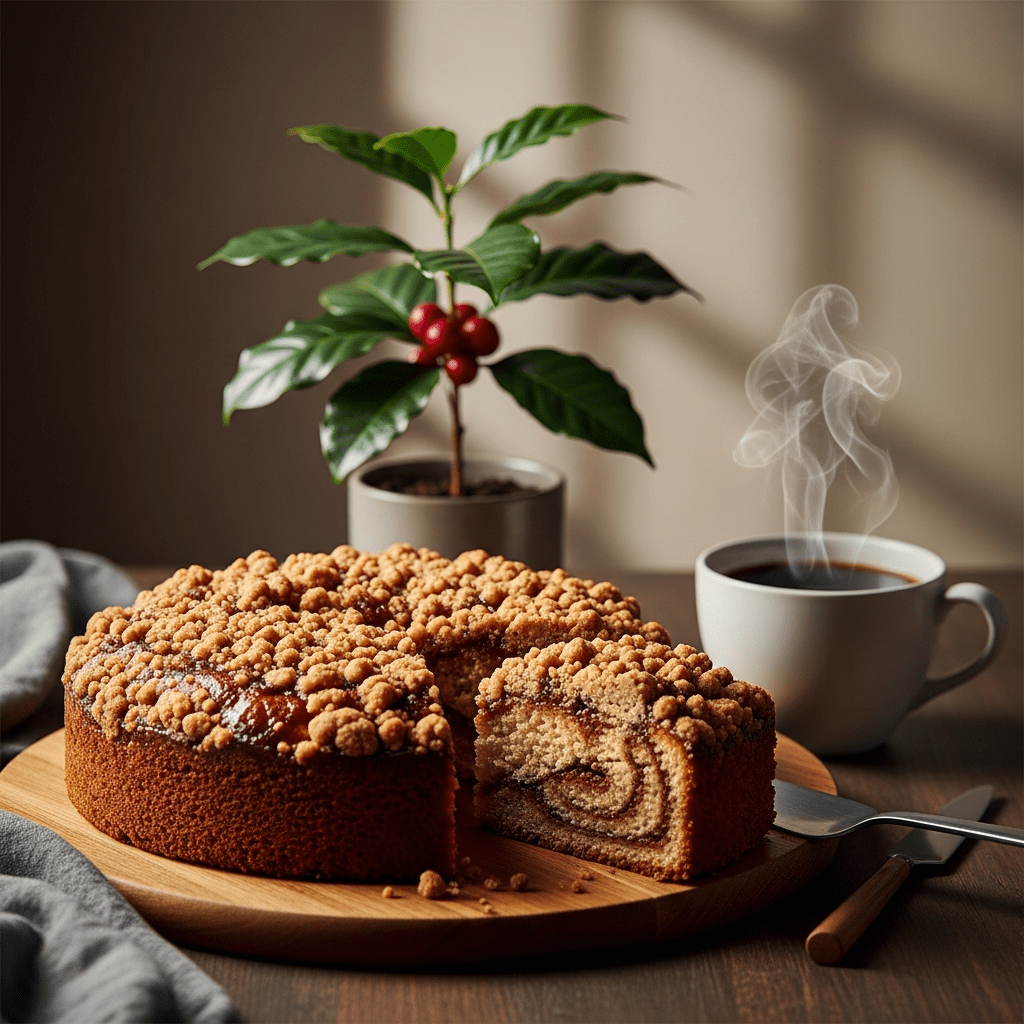
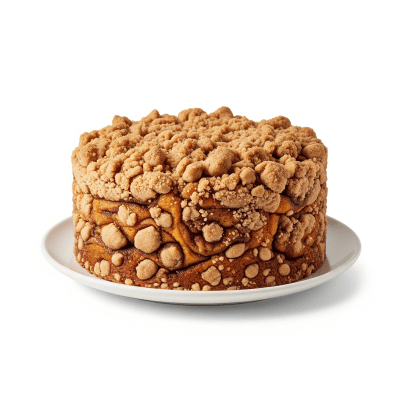
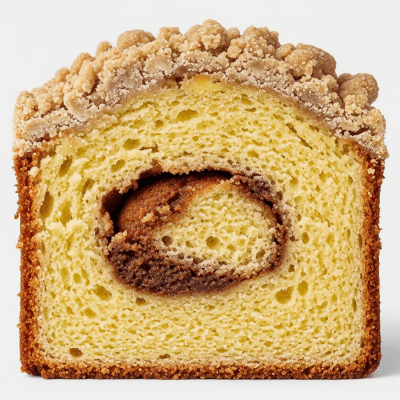
Coffee cakes are typically baked in round, square, or rectangular pans and may be single-layered or layered. Their defining visual feature is a crumbly streusel topping or filling made from flour, butter, sugar, and often cinnamon, nuts, or fruit. The cake’s surface is invitingly textured, with the streusel providing a golden, crunchy contrast to the soft crumb beneath.
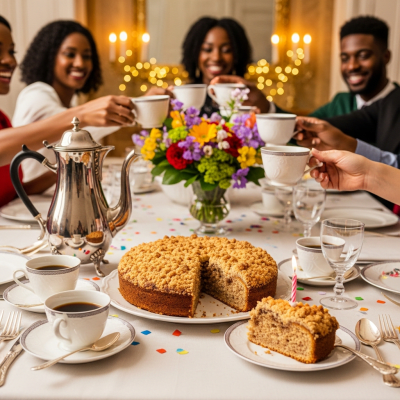
Primarily served as a breakfast treat, snack, or casual dessert, coffee cake is customarily enjoyed alongside coffee or tea. It is a staple in American bakeries, coffee shops, and home kitchens, and also appears in various European contexts. Coffee cake’s role is informal and comforting, often featured at brunches, holidays, and social gatherings rather than formal celebrations.
Bring this kind into your world illustrated posters, mugs, and shirts.
Archival print, museum-grade paper
Buy Poster
Stoneware mug, dishwasher safe
Buy Mug
Soft cotton tee, unisex sizes
Buy ShirtWhile not typically associated with ceremonial occasions, coffee cake holds a cherished place in everyday culinary culture, symbolizing hospitality and simple indulgence. Its presence in American and European coffee traditions reflects the social ritual of gathering over a warm beverage and a sweet accompaniment, embodying a cozy, communal spirit.
Key ingredients defining coffee cake include:
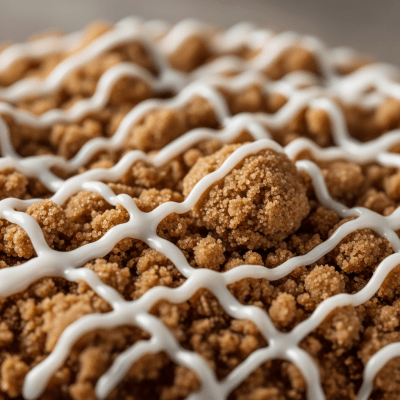
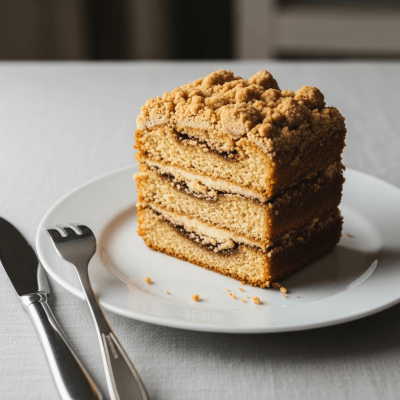
Coffee cake is typically prepared by mixing a batter leavened with baking powder or baking soda, often enriched with dairy like sour cream or buttermilk. The batter is poured into a pan—round, square, or rectangular—and topped or layered with streusel made from flour, butter, sugar, and spices. It is then baked in a conventional oven until golden and tender.
Coffee cake features a moist, tender crumb that is soft yet sturdy enough to hold fillings or toppings. Its flavor is sweet and warmly spiced, often enhanced by cinnamon and the nutty richness of streusel. The crumbly streusel topping adds a contrasting crunchy texture, creating a delightful balance in every bite.
Common allergens: Coffee cake typically contains gluten (wheat), dairy (milk, butter, sour cream), eggs, and often nuts. It is not naturally suitable for gluten-free, vegan, or nut-allergic diets without specific modifications.
Dietary variants: Adaptations exist for gluten-free, vegan, and nut-free versions, though these require ingredient substitutions to maintain texture and flavor.
Notable regional variants include:
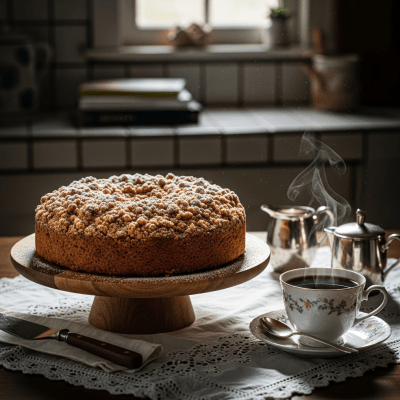
Coffee cake is commonly presented simply, with a rustic streusel topping that may include nuts and fruit pieces. It is usually served sliced, either warm or at room temperature, often alongside a cup of coffee or tea. Decoration emphasizes the crumbly streusel texture rather than elaborate frosting or icing, highlighting its homey and approachable character.