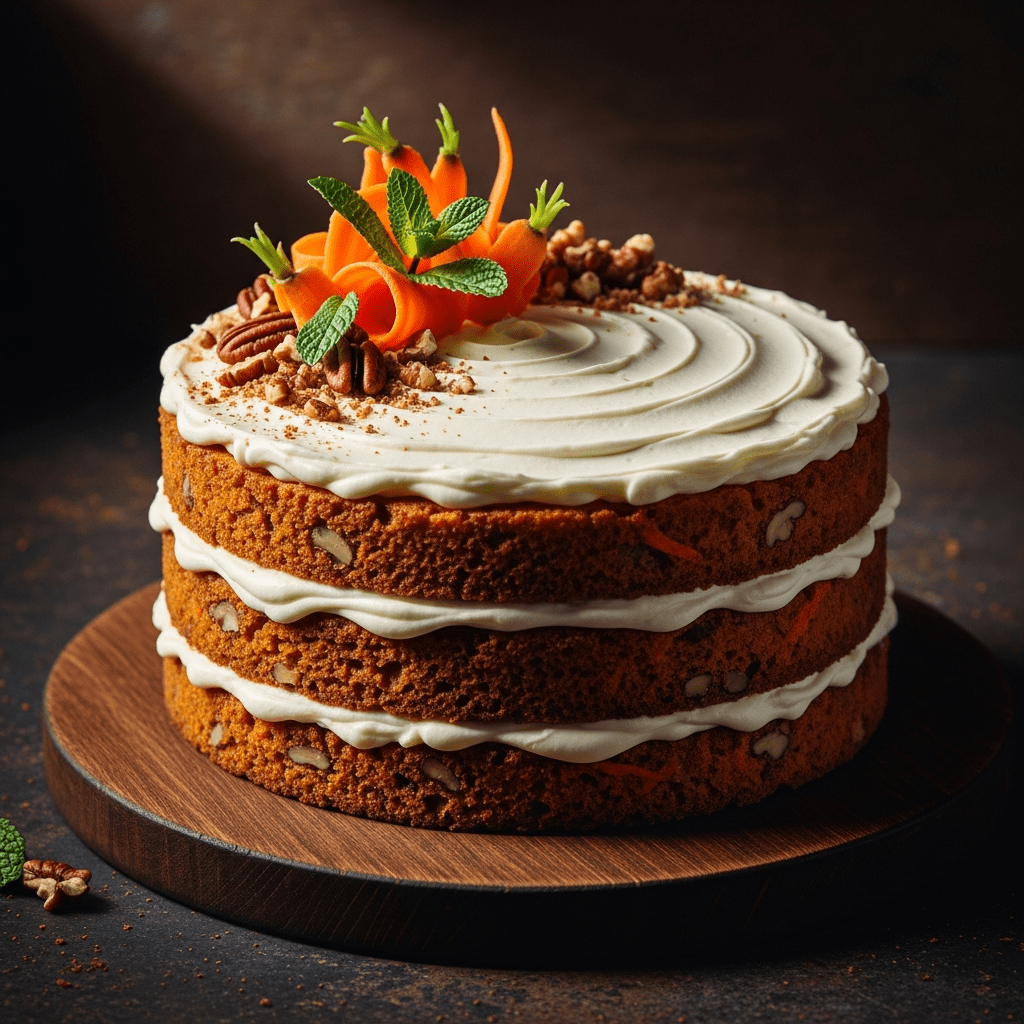
Carrot Cake
Carrot Cake is a moist, sweet cake uniquely characterized by grated carrots incorporated into its batter, often enhanced with warm spices and nuts, and traditionally finished with cream cheese frosting.
Carrot Cake is a moist, sweet cake uniquely characterized by grated carrots incorporated into its batter, often enhanced with warm spices and nuts, and traditionally finished with cream cheese frosting.
Carrot cake traces its origins to medieval Europe, where carrots were used as a natural sweetener in puddings during times when sugar was scarce or expensive. Its modern incarnation emerged in the 20th century, gaining prominence in the United Kingdom and the United States, particularly during World War II when sugar rationing made carrots a practical substitute. The cake's popularity further expanded in the 1960s and 1970s amid health food trends, evolving into a beloved dessert worldwide.
Classified as a vegetable cake, carrot cake belongs to the broader family of sweet, baked cakes that incorporate vegetables into their batter. It is recognized for its dense, moist crumb and spiced flavor profile, distinguishing it from typical sponge or butter cakes.
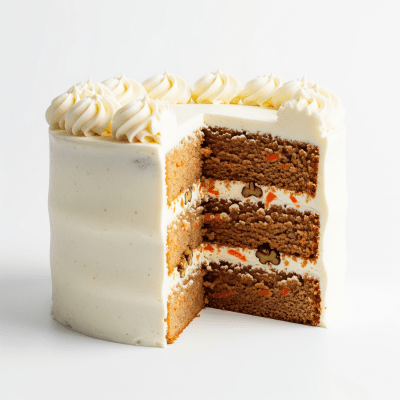
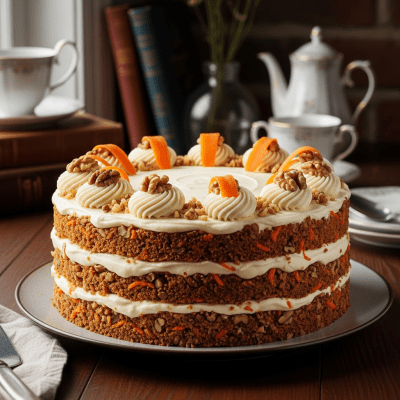
Carrot cake commonly appears as a round or rectangular multi-layered cake, though it is also prepared in loaf and cupcake forms. Its crumb is dense and moist, speckled visibly with grated carrot strands. The cake is often adorned with creamy frostings or glazes, and in some traditions, decorated with marzipan carrots for a charming finish.
Primarily served as a dessert, carrot cake is enjoyed alongside tea or coffee and features prominently at celebrations such as birthdays and Easter. It is widely available year-round in bakeries, cafes, and supermarkets, where it functions both as a comforting homemade treat and a commercial staple.
Bring this kind into your world illustrated posters, mugs, and shirts.
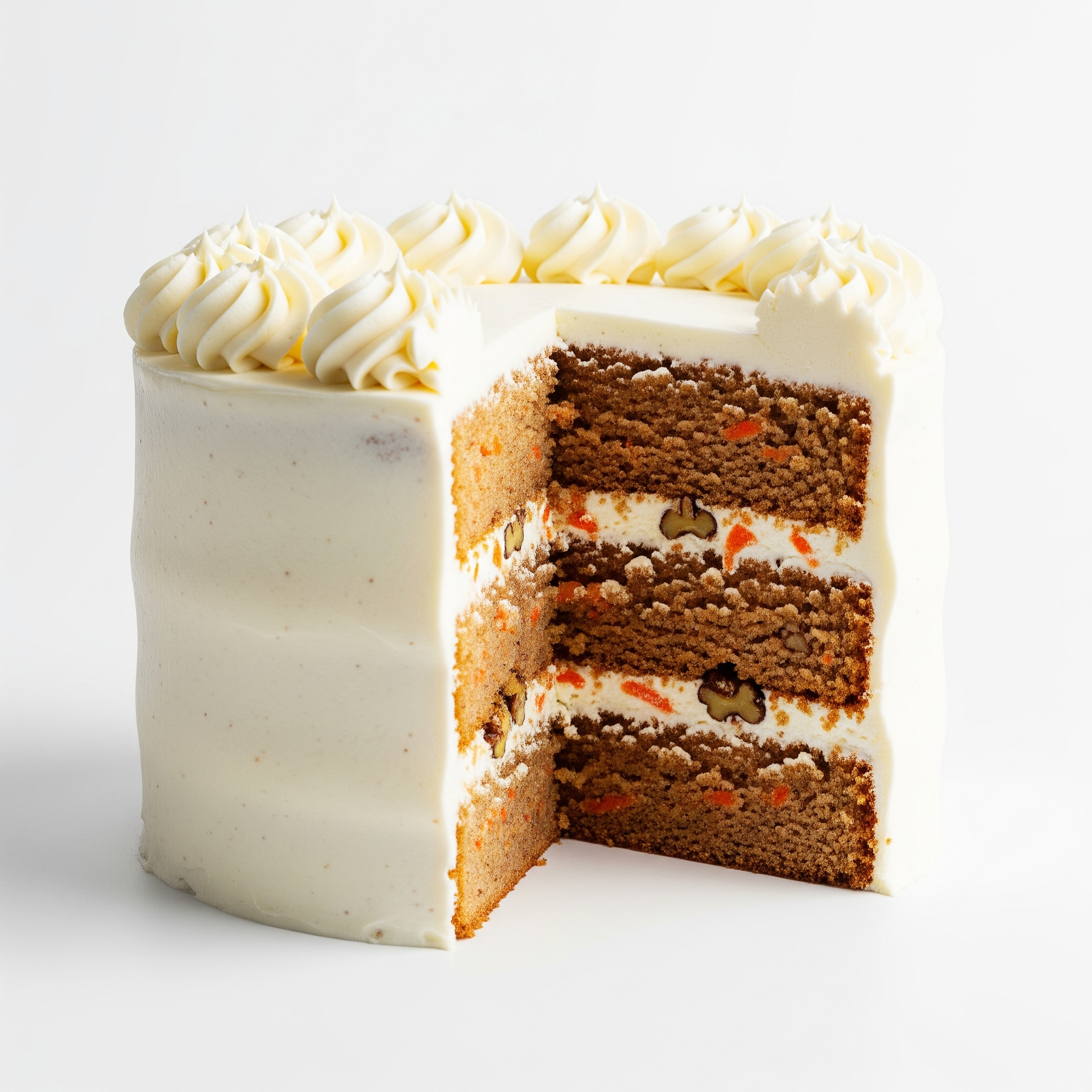
Archival print, museum-grade paper
Buy Poster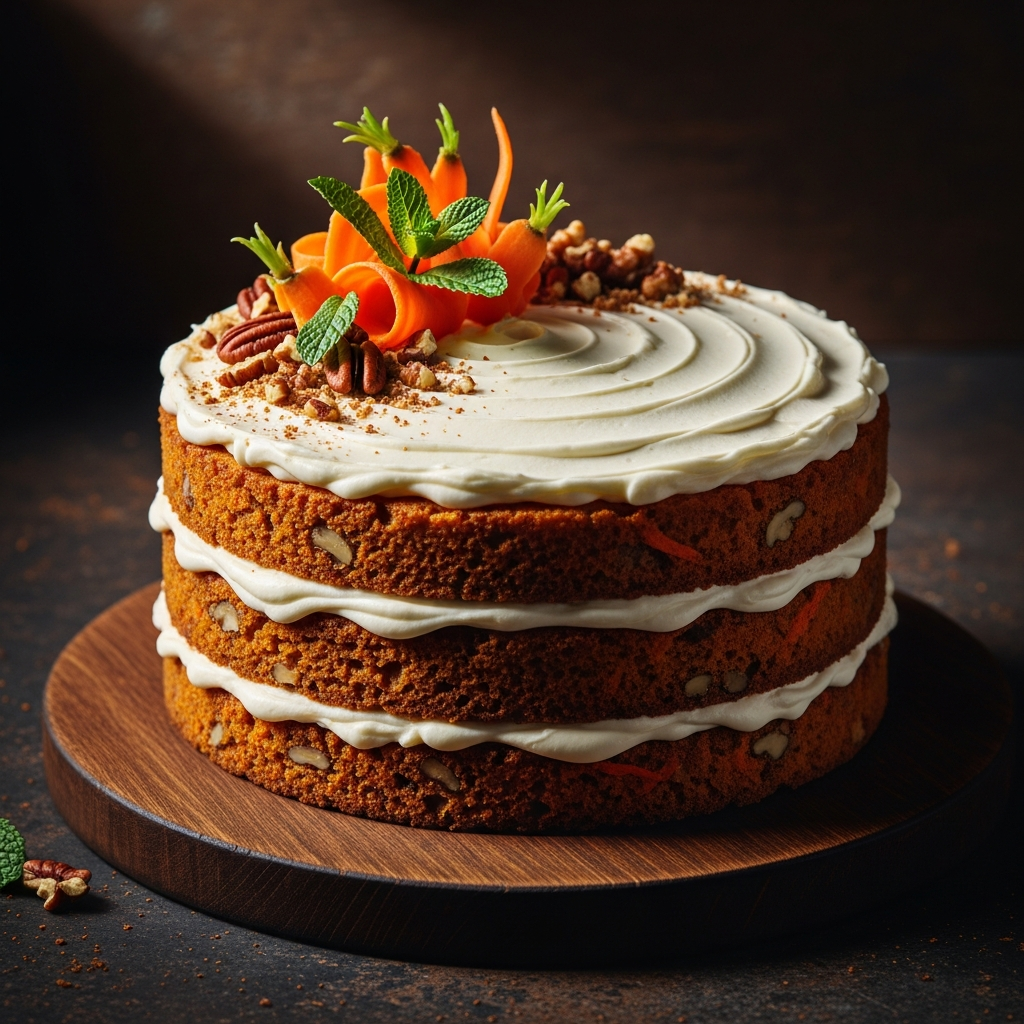
Stoneware mug, dishwasher safe
Buy Mug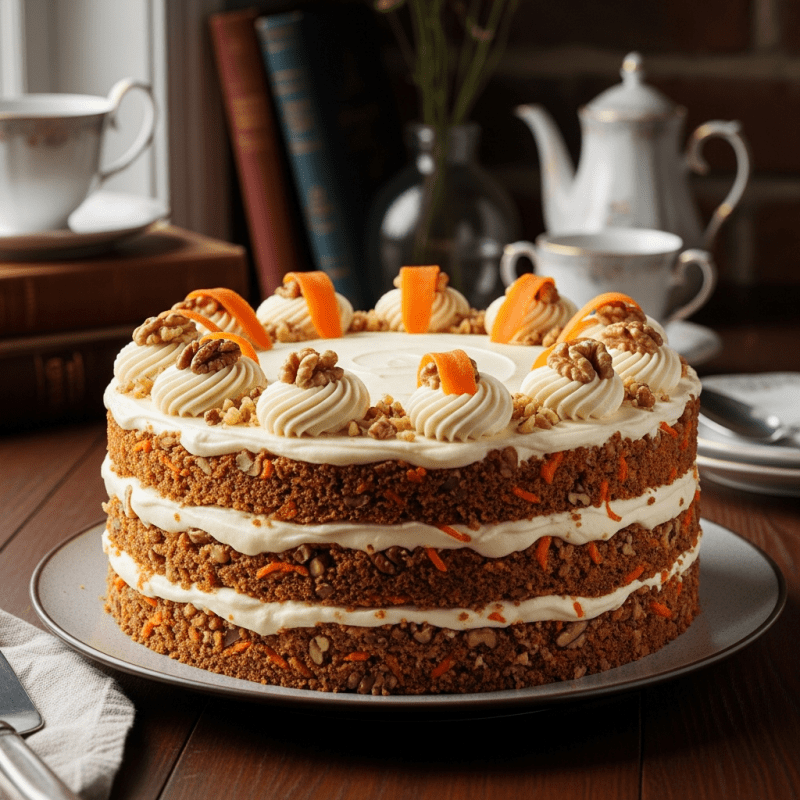
Soft cotton tee, unisex sizes
Buy ShirtCarrot cake holds a special place in culinary culture as a symbol of resourcefulness and wholesome indulgence, reflecting historical periods of scarcity and modern health-conscious trends. Its presence in celebrations and everyday life alike underscores its enduring appeal across English-speaking countries and beyond.
Key ingredients defining carrot cake include grated carrots, wheat flour, sugar, eggs, vegetable oil, baking powder, a blend of warm spices (such as cinnamon and nutmeg), and nuts—most commonly walnuts or pecans.



Preparation typically involves mixing wet and dry ingredients separately, then folding in grated carrots and optional additions like nuts or raisins. The batter is baked in an oven, cooled thoroughly, and finished with frosting or glaze before serving.
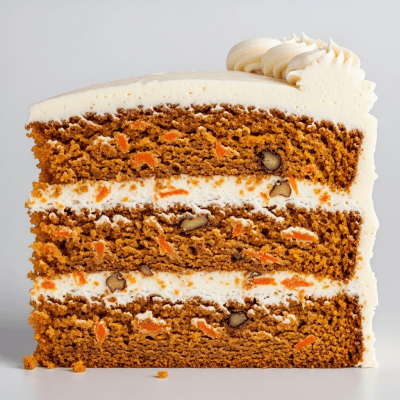
Carrot cake features a dense yet moist crumb, punctuated by tender strands of grated carrot. Its flavor is warmly spiced, often highlighting cinnamon and nutmeg, complemented by the richness of nuts and the tangy sweetness of cream cheese frosting.
Allergens: Carrot cake commonly contains gluten (from wheat flour), eggs, dairy (especially in frosting), and nuts. It typically does not contain soy. Dietary adaptations such as gluten-free and vegan versions exist but are not traditional.
Notable regional variants include:
Carrot cake is most commonly decorated with a thick layer of cream cheese frosting, lending a smooth, tangy finish. Alternative toppings include buttercream, simple glazes, or marzipan shaped like carrots for a playful touch. It is typically served sliced, showcasing its moist interior and layered form.