Battenberg Cake
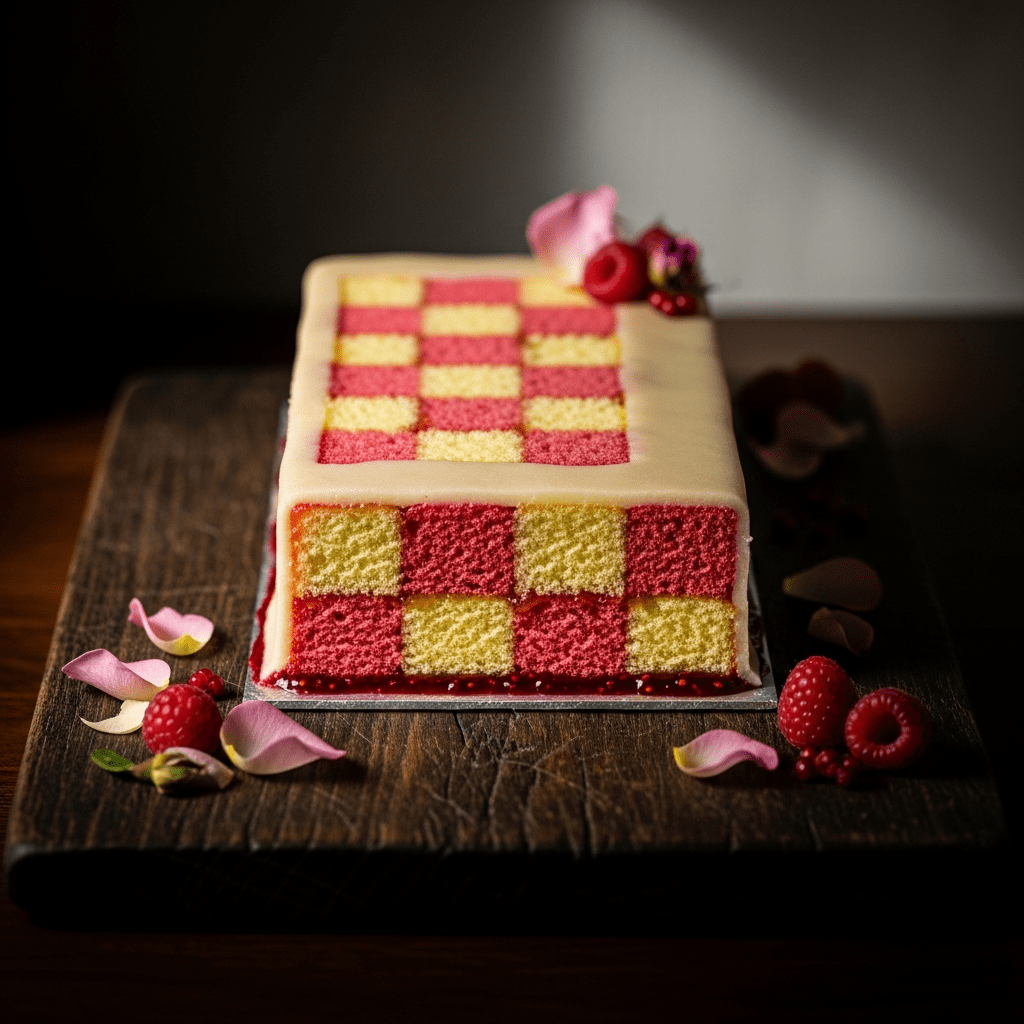
Battenberg cake is a distinctive British butter cake known for its iconic pink and yellow checkerboard sponge pattern, held together with apricot jam and wrapped in a thin layer of marzipan.
Battenberg cake is a distinctive British butter cake known for its iconic pink and yellow checkerboard sponge pattern, held together with apricot jam and wrapped in a thin layer of marzipan.
Originating in the United Kingdom in the late 19th century, Battenberg cake is believed to have been created to commemorate the 1884 marriage of Princess Victoria, granddaughter of Queen Victoria, to Prince Louis of Battenberg. Though the exact inventor remains unknown, the cake’s name honors the Battenberg family, a German noble lineage, and its association with British royal events has become a cherished part of culinary lore.
Classified as a butter cake, Battenberg belongs to the broader family of cakes characterized by a rich, buttery sponge. Its multi-layered construction and use of marzipan coating place it among traditional British teatime cakes, distinct for its visual pattern and almond flavor.
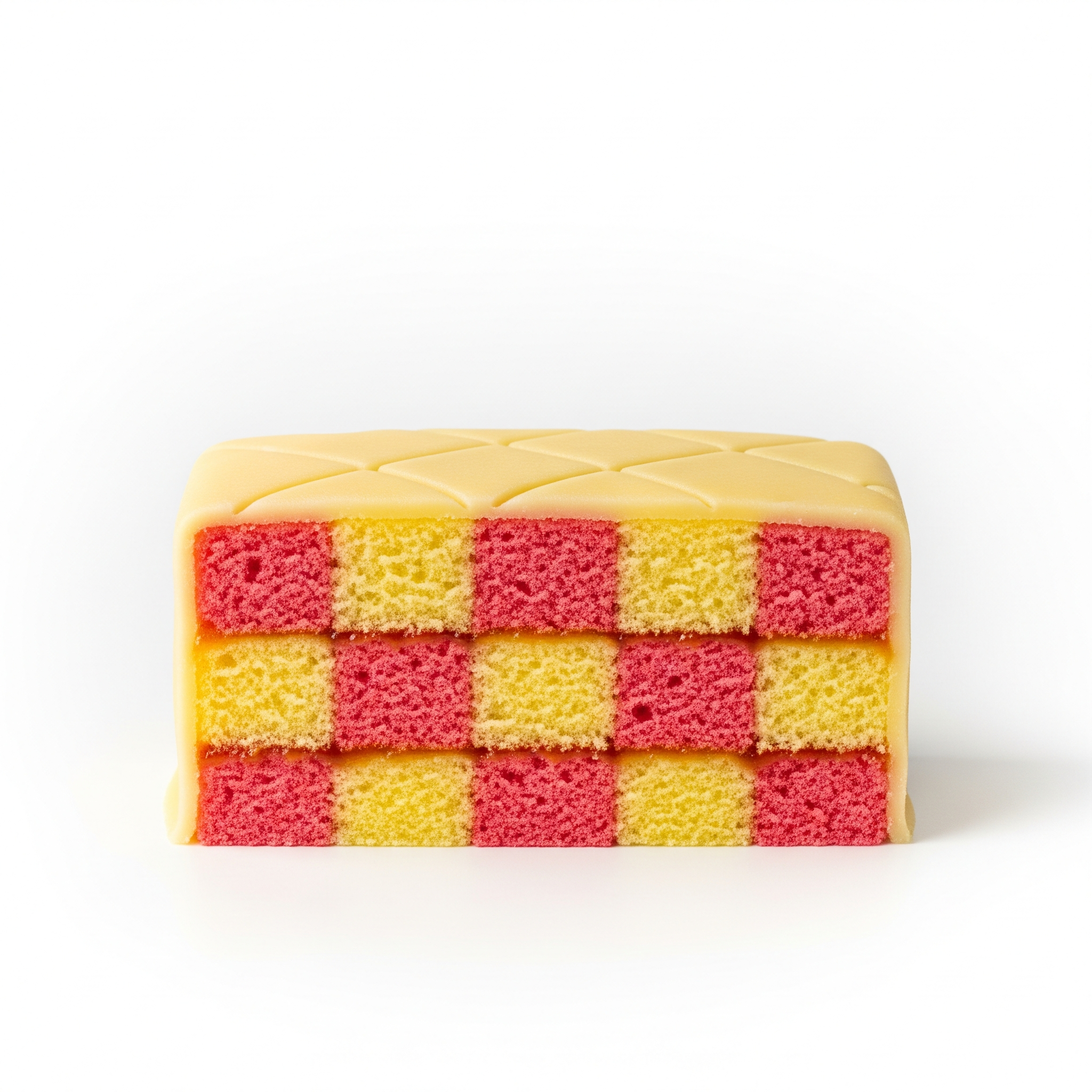
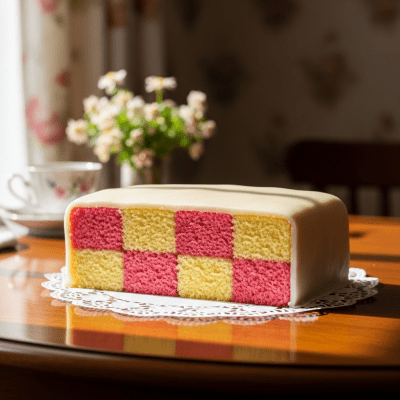
Battenberg cake is rectangular and features a striking internal checkerboard pattern formed by alternating pink and yellow sponge squares. The cake is assembled into layers held together with apricot jam and enveloped in a smooth, thin marzipan coating that adds a subtle almond sheen to its exterior.
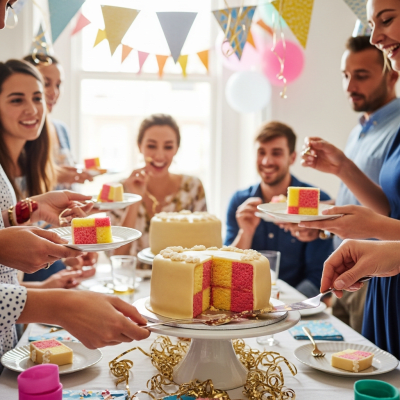
Primarily enjoyed as a teatime treat, Battenberg cake serves both everyday indulgence and special occasions. Its distinctive appearance makes it a popular choice for celebrations and a demonstration of skilled cake assembly, while its availability in bakeries and supermarkets ensures it remains a staple in British home baking and commercial production.
Bring this kind into your world illustrated posters, mugs, and shirts.
Archival print, museum-grade paper
Buy Poster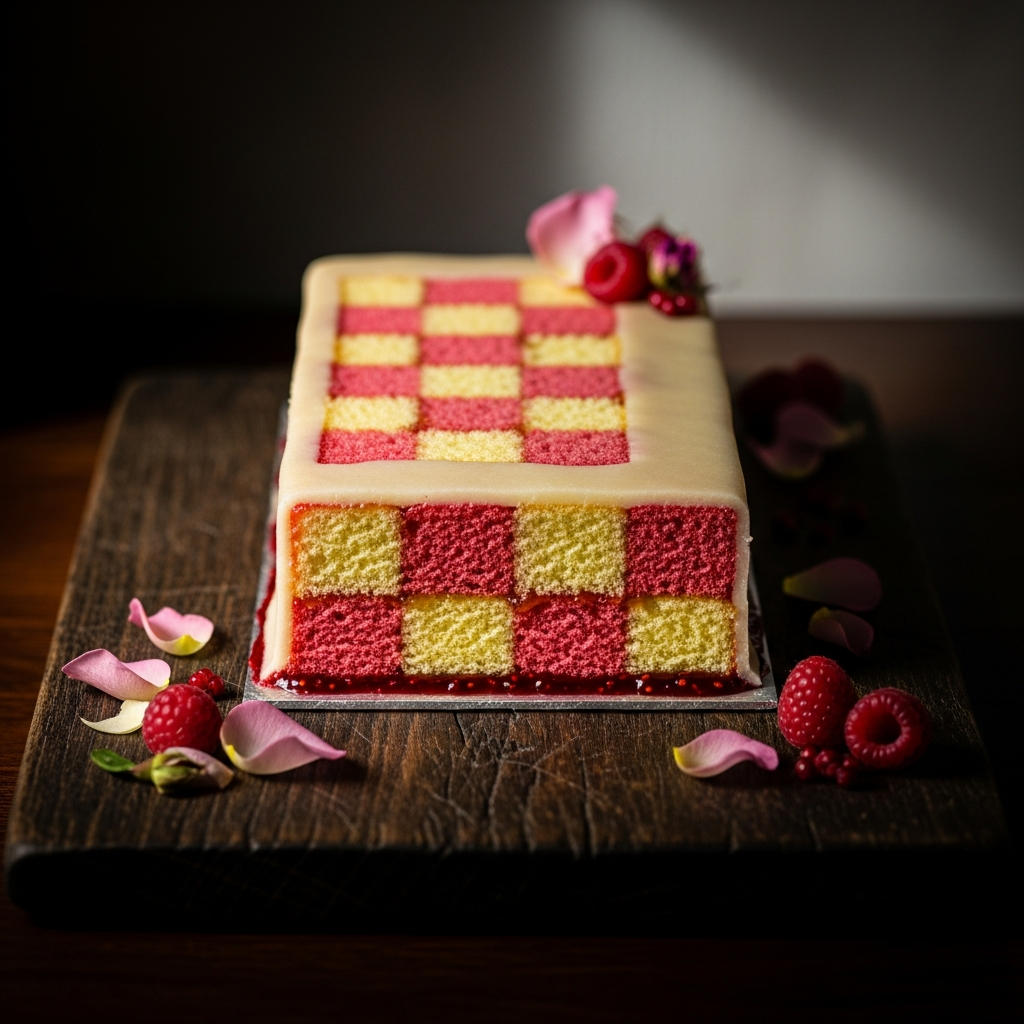
Stoneware mug, dishwasher safe
Buy Mug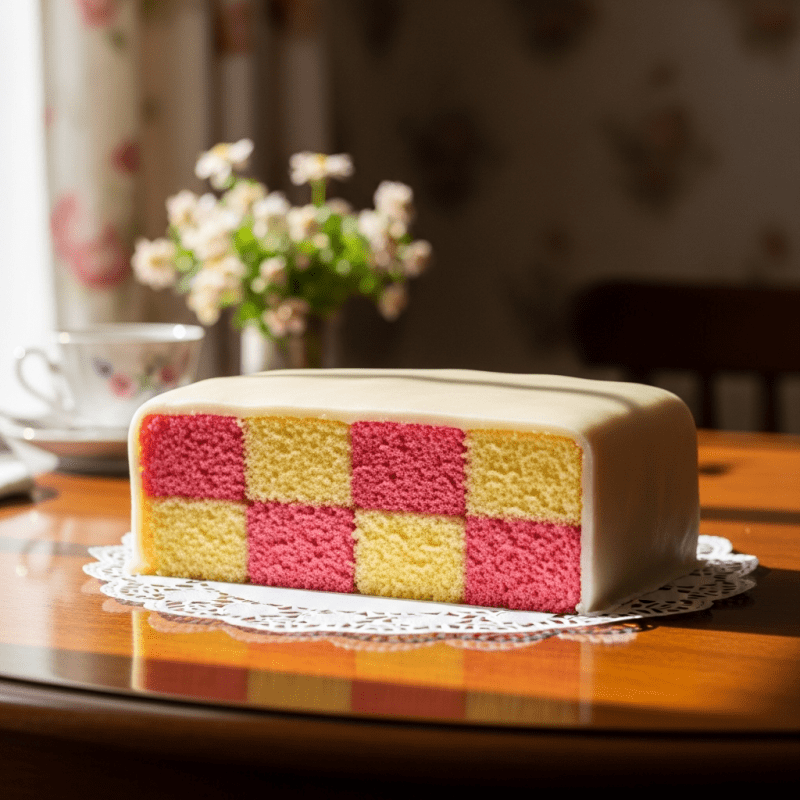
Soft cotton tee, unisex sizes
Buy ShirtAs a symbol of British baking tradition, Battenberg cake embodies the elegance of afternoon tea culture and royal heritage. Its checkerboard design has become iconic, representing both culinary craftsmanship and festive British identity, often featured in cultural references to classic British desserts.
Key ingredients defining Battenberg cake include flour, eggs, butter, sugar, apricot jam, marzipan, food coloring for the pink sponge, and almond flavoring derived primarily from the marzipan.
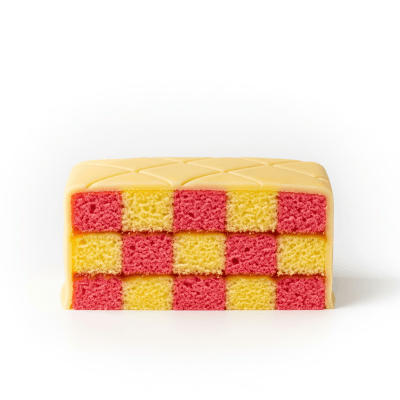
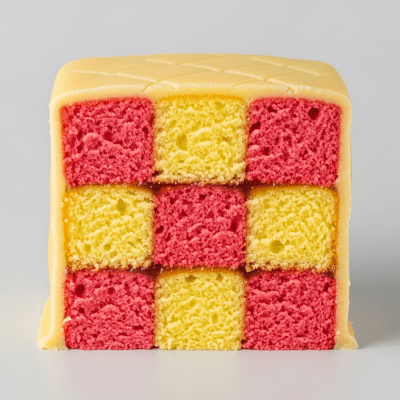


The cake is prepared by baking the pink and yellow sponges separately, then cooling and trimming them into squares. These are assembled into the checkerboard pattern using apricot jam as glue, after which the entire cake is wrapped in a thin layer of marzipan to complete its distinctive presentation.
Battenberg cake offers a light, tender butter sponge texture complemented by the sweet almond notes of marzipan and a subtle fruity tang from the apricot jam. Its checkerboard pattern not only pleases the eye but also balances delicate flavors in each bite.
Contains gluten, dairy, eggs, and nuts (from marzipan). It typically does not contain soy. Common dietary adaptations include substituting raspberry jam or altering sponge colorings, but traditional Battenberg is not gluten-free or vegan.
While Battenberg cake is primarily a British specialty with no widely recognized regional variants, some recipes vary by using raspberry jam instead of apricot or experimenting with different sponge colorings. There is no direct German equivalent despite the cake’s name.
Presentation centers on the cake’s marzipan coating, which is rolled smoothly around the assembled checkerboard sponge. The neat rectangular shape and clean edges showcase the distinctive pink and yellow pattern inside, making it visually striking when sliced and served, especially during afternoon tea.