
Roti
Roti is a simple, unleavened flatbread made primarily from whole wheat flour and water, widely consumed as a staple in South Asian cuisine.
Roti is a simple, unleavened flatbread made primarily from whole wheat flour and water, widely consumed as a staple in South Asian cuisine.
Roti traces its origins to ancient South Asia, emerging organically within agrarian societies that domesticated wheat and developed flatbreads. Historical references appear in Sanskrit texts and medieval Indian literature, reflecting its deep roots in the Indian subcontinent's culinary traditions.
Classified as an unleavened flatbread, roti belongs to the broader family of grain-based breads that are cooked on a griddle rather than baked. It is distinct from leavened breads by its lack of rising agents and thin, pliable form.
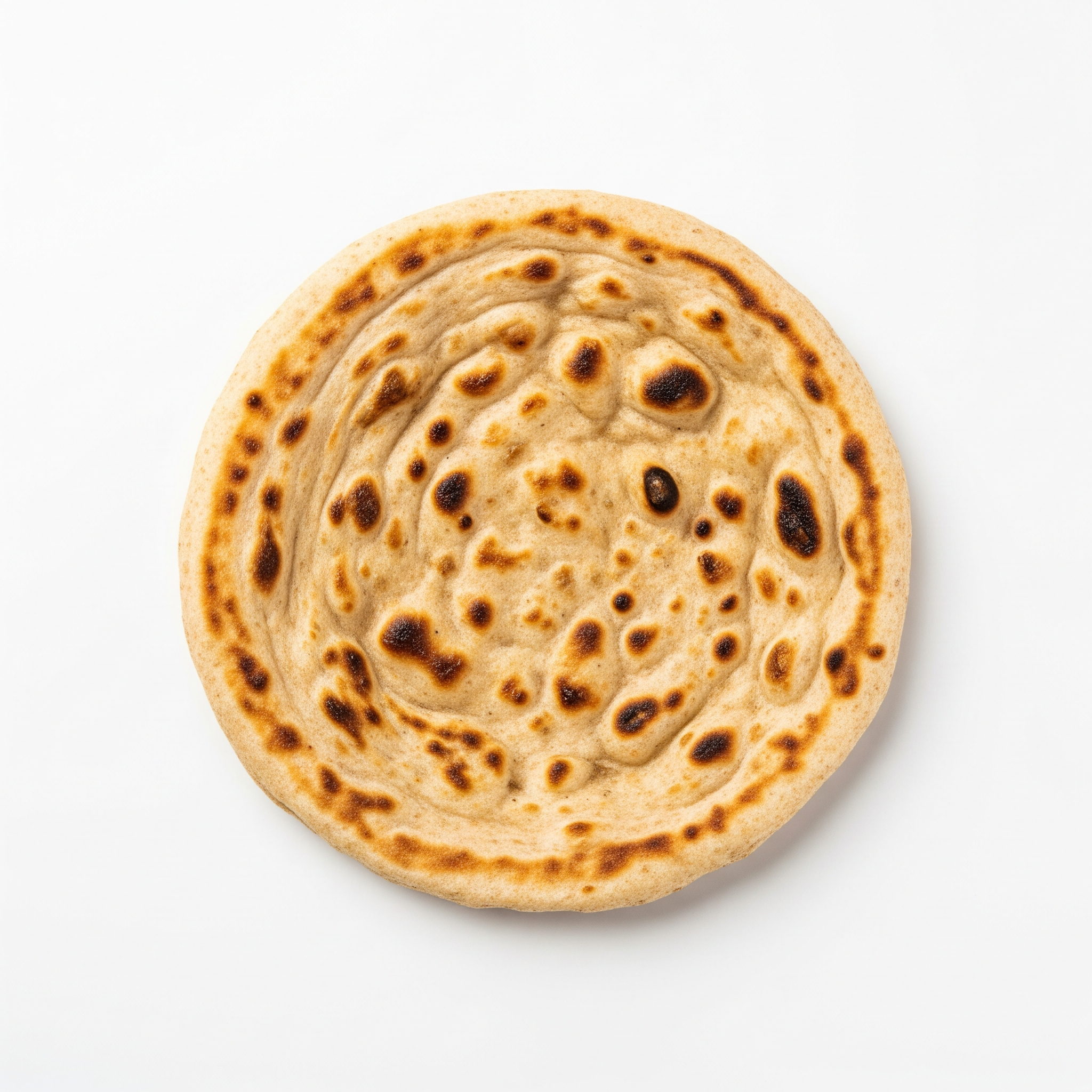
Roti is typically round and thin, measuring about 15–20 cm in diameter. It has a soft, pliable texture with a light brown color and a thin crust. The bread is rolled into discs before being cooked on a hot griddle, sometimes puffed over an open flame to create a light, airy interior.
Roti functions as a versatile staple bread, commonly used to scoop up curries, vegetables, and lentils in South Asian meals. It is usually prepared fresh in small batches and eaten immediately, emphasizing its role as a daily accompaniment rather than a preserved product.
Bring this kind into your world illustrated posters, mugs, and shirts.
Archival print, museum-grade paper
Buy Poster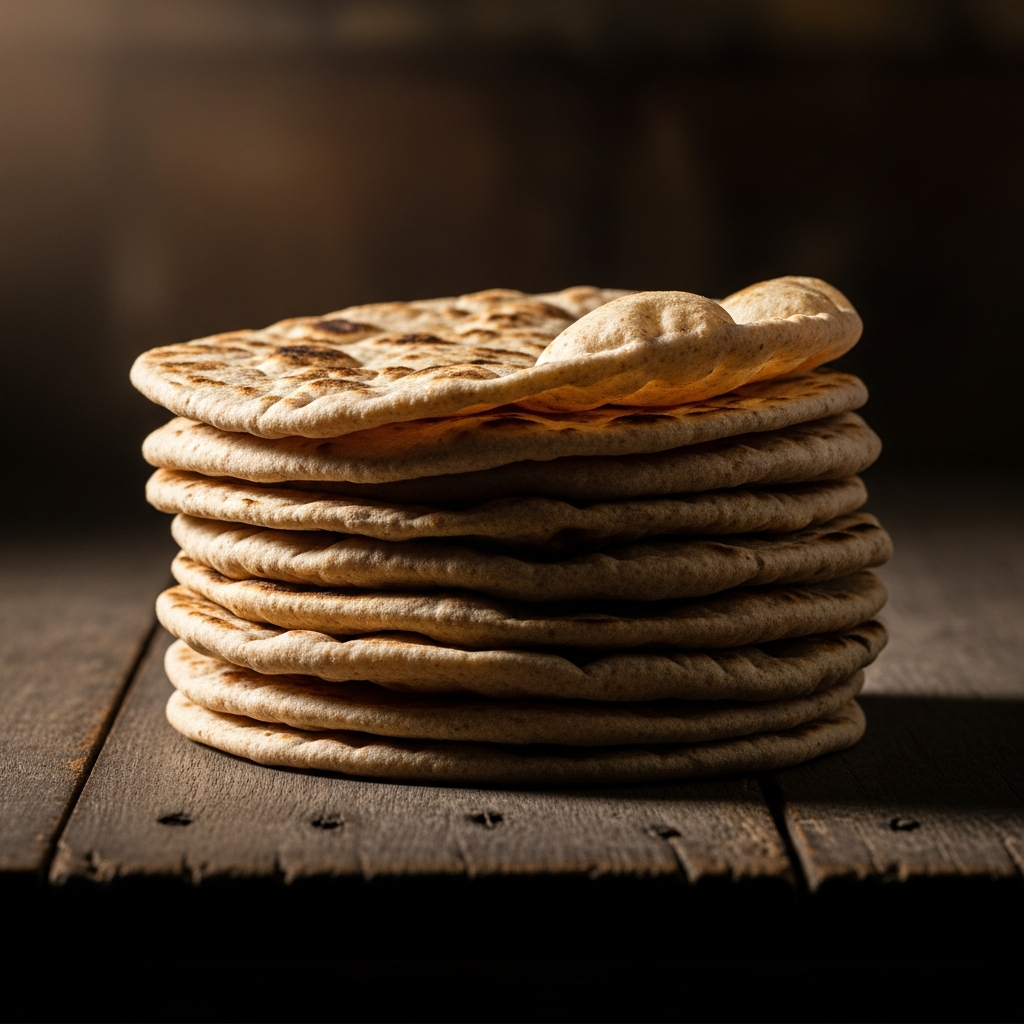
Stoneware mug, dishwasher safe
Buy Mug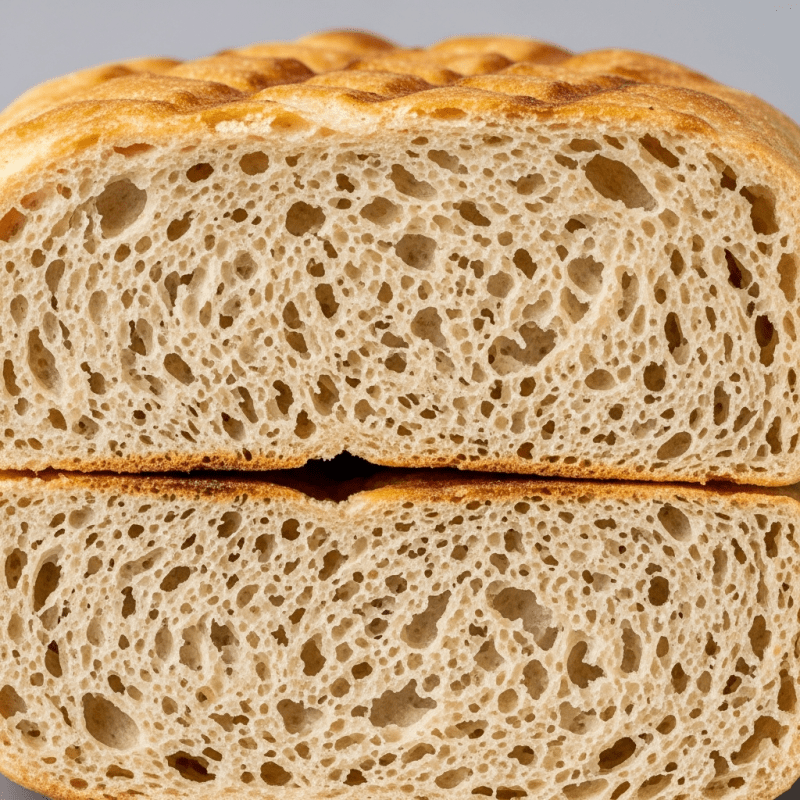
Soft cotton tee, unisex sizes
Buy ShirtIn South Asia, roti symbolizes sustenance and simplicity, deeply embedded in daily life and culinary culture. It appears in regional art and literature as a representation of home and nourishment, underscoring its importance beyond mere food.
Roti is made from a simple combination of whole wheat flour, water, salt, and sometimes a small amount of oil.

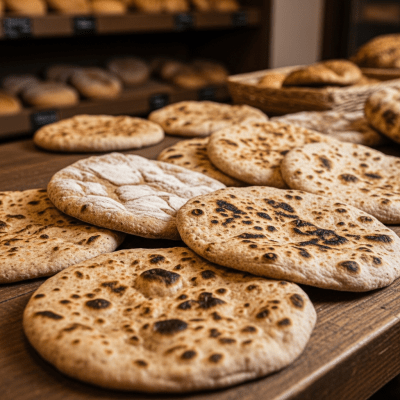

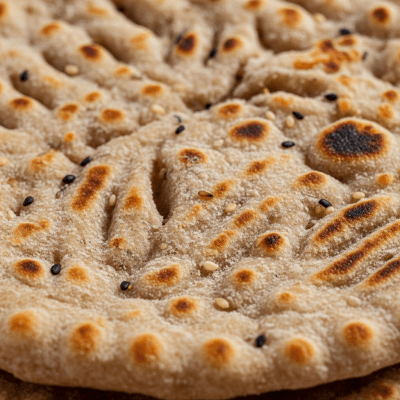
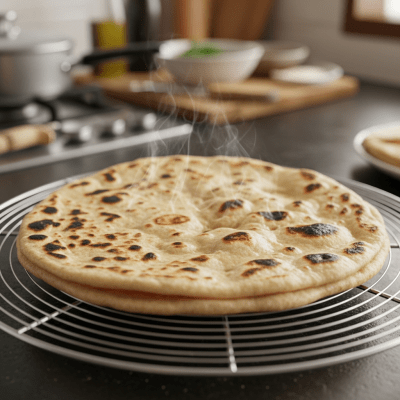
Roti is traditionally unleavened and does not undergo fermentation or leavening, relying solely on the dough's hydration and cooking to achieve its texture.
Due to its whole wheat flour base, roti is high in dietary fiber, contributing to digestive health. It provides complex carbohydrates and is a staple energy source in South Asian diets.
Roti is best consumed fresh, as it lacks preservatives and does not store well. It is typically prepared in small batches for immediate use, with no notable shelf life under normal conditions.
Roti serves as the primary bread in South Asian meals, used to scoop and accompany a variety of dishes including curries, vegetables, and lentils. It can also be served with pickles and yogurt for a simple meal.
Regional variants of roti include chapati and phulka, which differ slightly in thickness and cooking style. Other variants incorporate different grains such as jowar (sorghum) and bajra (pearl millet), adapting the bread to local agricultural conditions.
Roti is commonly prepared at home and in restaurants across South Asia. In urban markets, it is increasingly available in packaged forms, catering to convenience and export demands.