
Paratha
Paratha is a layered, unleavened or lightly leavened flatbread from the Indian subcontinent, known for its flaky texture and rich flavor achieved through repeated folding and frying.
Paratha is a layered, unleavened or lightly leavened flatbread from the Indian subcontinent, known for its flaky texture and rich flavor achieved through repeated folding and frying.
Originating in medieval North India, particularly Punjab and surrounding regions, paratha evolved over centuries as a traditional staple of South Asian cuisine. It descends from ancient wheat-based flatbreads of the region, developed through home cooking and street food culture rather than formal breeding or institutional creation.
Paratha belongs to the family of unleavened or lightly leavened flatbreads within the broader bread taxonomy. It is classified as a griddled flatbread characterized by its layered structure, placing it alongside other South Asian breads like roti but distinguished by its flaky, folded preparation.
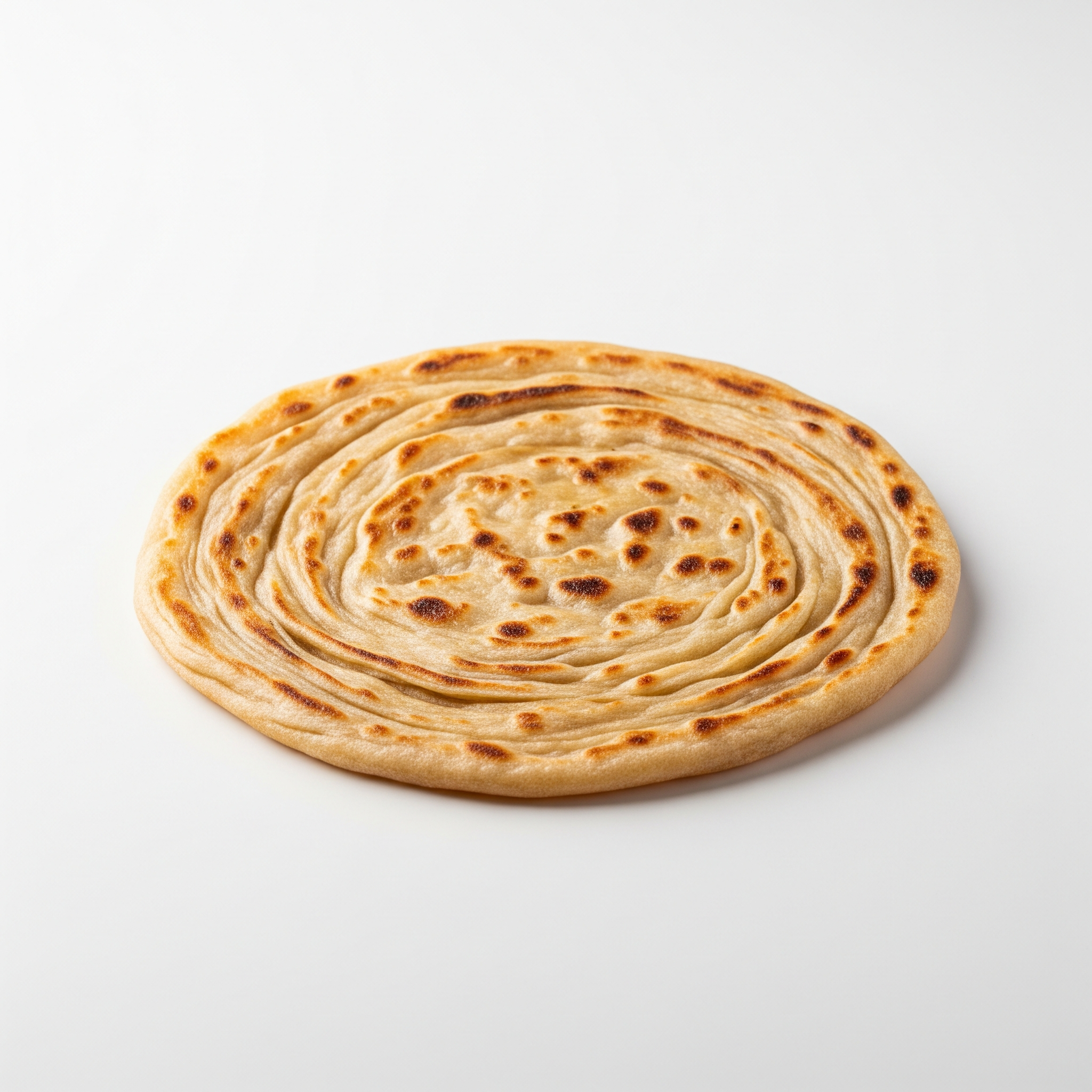
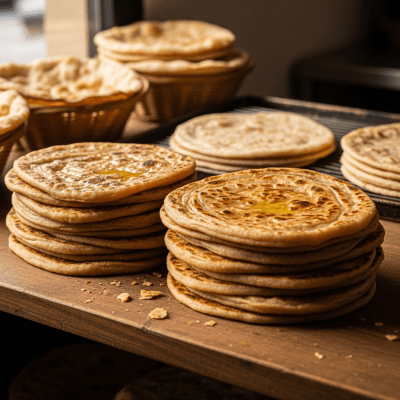
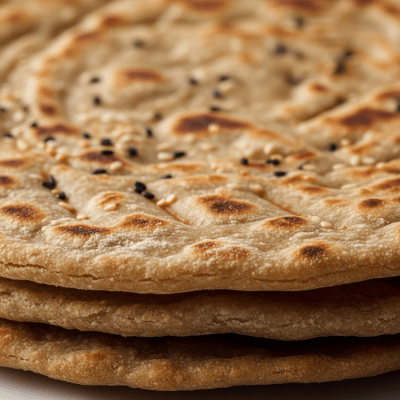
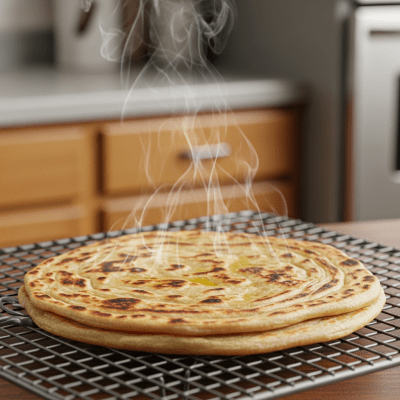
Typically round or triangular and measuring 15–25 cm in diameter, paratha features a golden-brown, crisp exterior with distinct flaky layers inside. The texture is achieved by repeatedly folding the dough with ghee or oil, resulting in a tender yet slightly crisp flatbread that is visually marked by its layered form.
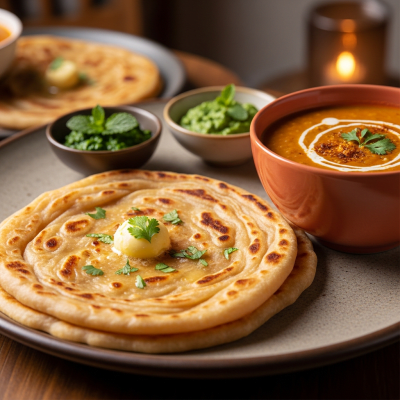
Paratha serves versatile culinary roles: it is eaten fresh as a hearty breakfast, a satisfying snack, or a complement to main dishes. It interacts with other foods through stuffing—such as vegetables, paneer, meat, or lentils—or by pairing with yogurt, pickles, and curries, enhancing meals with its rich texture and flavor.
Bring this kind into your world illustrated posters, mugs, and shirts.
Archival print, museum-grade paper
Buy Poster
Stoneware mug, dishwasher safe
Buy Mug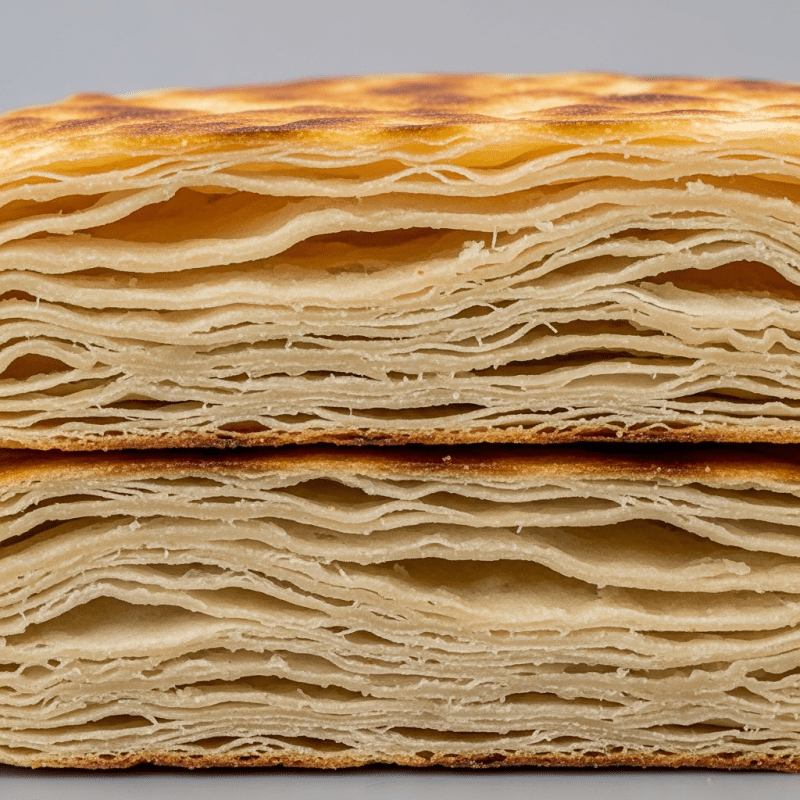
Soft cotton tee, unisex sizes
Buy ShirtAs a beloved staple across South Asia, paratha holds cultural importance in daily life and festive occasions. It appears in regional culinary traditions, street food culture, and family meals, symbolizing comfort and hospitality. Its variations and preparation methods reflect the diverse culinary heritage of India, Pakistan, Bangladesh, and Nepal.
Primary ingredients: wheat flour (atta), water, salt, sometimes oil or yogurt in the dough, and ghee or oil used during folding and cooking.
Paratha dough typically involves no fermentation or leavening agents. It is prepared unleavened, with no rising time, relying on mechanical layering and fat application to create its characteristic texture.
While specific nutritional data varies by recipe, paratha is a carbohydrate-rich bread with moderate fat content due to ghee or oil used in preparation. It provides energy and can be enriched with fillings to add protein and micronutrients.
Paratha is best consumed fresh for optimal texture and flavor. It has a short shelf life and can stale quickly. Leftovers are typically stored at room temperature briefly or refrigerated and reheated, though improper storage may lead to oil absorption and loss of crispness.
Paratha is enjoyed as a breakfast staple, snack, or side bread accompanying main courses. It can be served plain or stuffed, often paired with yogurt, pickles, chutneys, or curry dishes, enhancing a variety of South Asian meals.
Regional variants of paratha differ in layering techniques, fillings, and choice of fats. Notable forms include North Indian styles like lachha paratha with multiple thin layers, stuffed versions such as aloo paratha, and adaptations in Malaysia and Singapore known as roti paratha.
Paratha is widely available fresh in South Asian restaurants and street food vendors. Commercially, it is sold frozen and ready-to-eat in supermarkets worldwide, catering to diaspora communities and global consumers seeking authentic South Asian breads.