Injera
Injera is a sour, spongy flatbread central to Ethiopian and Eritrean cuisine, known for its distinctive porous texture and unique fermentation process.
Injera is a sour, spongy flatbread central to Ethiopian and Eritrean cuisine, known for its distinctive porous texture and unique fermentation process.
Originating in Ethiopia and Eritrea, injera has evolved over centuries as a traditional staple in the Horn of Africa. While its exact beginnings are undocumented, it holds a deep cultural pedigree rooted in household and communal foodways.
Injera belongs to the flatbread family within the broader bread taxonomy, specifically characterized as a sourdough-leavened, fermented flatbread made primarily from teff flour.
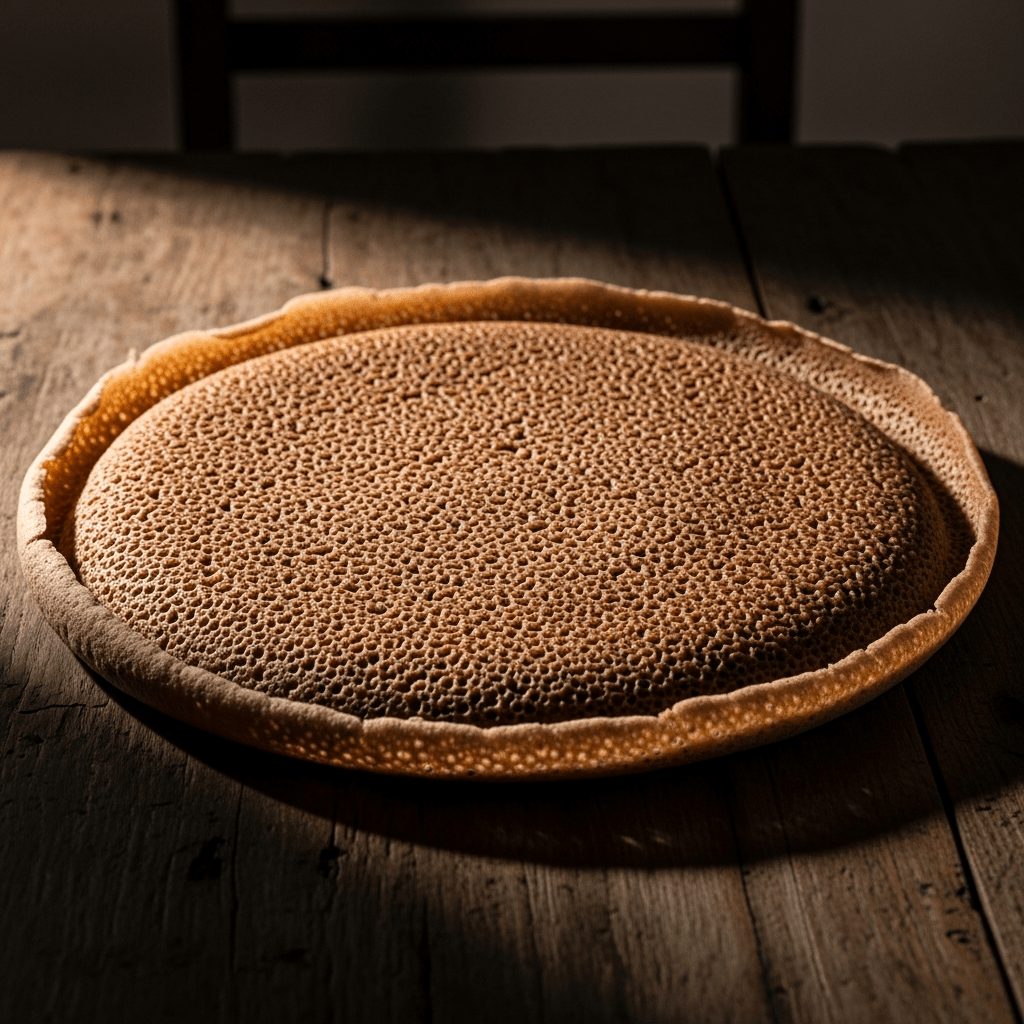
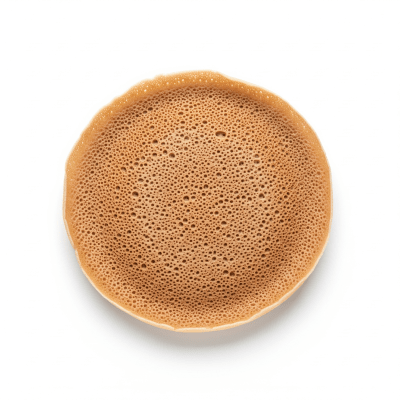
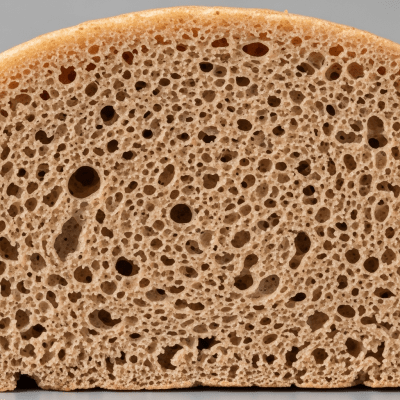
Typically round and large, measuring 30 to 50 centimeters in diameter, injera features a soft, pliable, and spongy crumb marked by numerous bubbles or "eyes." Its crust is similarly soft, with colors ranging from pale beige to brown depending on the teff variety used.
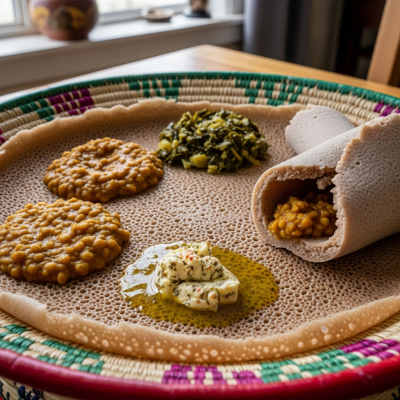
Injera functions both as a staple food and an edible utensil in Ethiopian and Eritrean meals. It is torn into pieces to scoop up stews, salads, and other dishes, integrating food and tableware into one harmonious experience.
Bring this kind into your world illustrated posters, mugs, and shirts.
Archival print, museum-grade paper
Buy Poster
Stoneware mug, dishwasher safe
Buy Mug
Soft cotton tee, unisex sizes
Buy ShirtMore than just bread, injera symbolizes hospitality and communal dining in Ethiopian and Eritrean cultures. It is central to social gatherings and traditional meals, embodying shared heritage and connection.
Primary ingredients: teff flour, water.


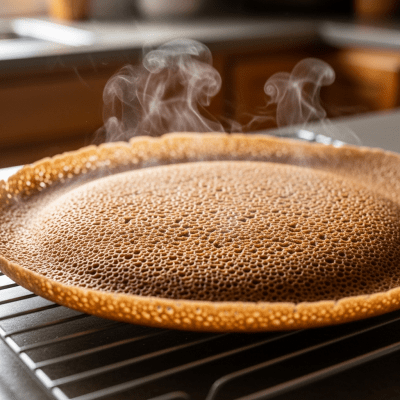
Injera undergoes a sourdough fermentation process lasting between one and three days. This natural leavening develops its signature sour taste and porous texture, relying on wild yeasts and bacteria present in the starter culture.
While specific nutritional details vary, injera made from teff flour is valued for its fiber content and nutrient density. Its fermentation may also aid digestibility, contributing to its healthful reputation.
Injera is best consumed fresh due to its high moisture content. It dries and hardens quickly, making it susceptible to spoilage if not stored properly. Typically, it has a short shelf life and is kept at room temperature for immediate use.
Injera serves as the foundational bread in Ethiopian and Eritrean cuisine, used to accompany and scoop flavorful stews (wat), salads, and other dishes. Its spongy texture soaks up sauces, enhancing the dining experience.
Outside Ethiopia, injera recipes often incorporate blends of teff with barley, wheat, or sorghum flours. Eritrean variants show minor differences in fermentation times and flour combinations, reflecting local tastes and ingredient availability.
Injera is commercially produced in bakeries serving diaspora communities and is increasingly found in international markets, making this traditional bread accessible beyond its native region.