Ciabatta
Ciabatta is an Italian white bread known for its rustic, elongated shape and open, airy crumb that delivers a chewy texture prized in sandwiches and table bread.
Ciabatta is an Italian white bread known for its rustic, elongated shape and open, airy crumb that delivers a chewy texture prized in sandwiches and table bread.
Ciabatta was created in 1982 by Arnaldo Cavallari, a baker from Adria in Italy's Veneto region. It emerged as a modern response to the French baguette's popularity, blending traditional Italian baking roots with a new, distinctive style.
Classified as a leavened, artisan-style white bread, ciabatta belongs to the family of Italian breads characterized by high hydration doughs and open crumb structures, distinct from denser or enriched bread types.
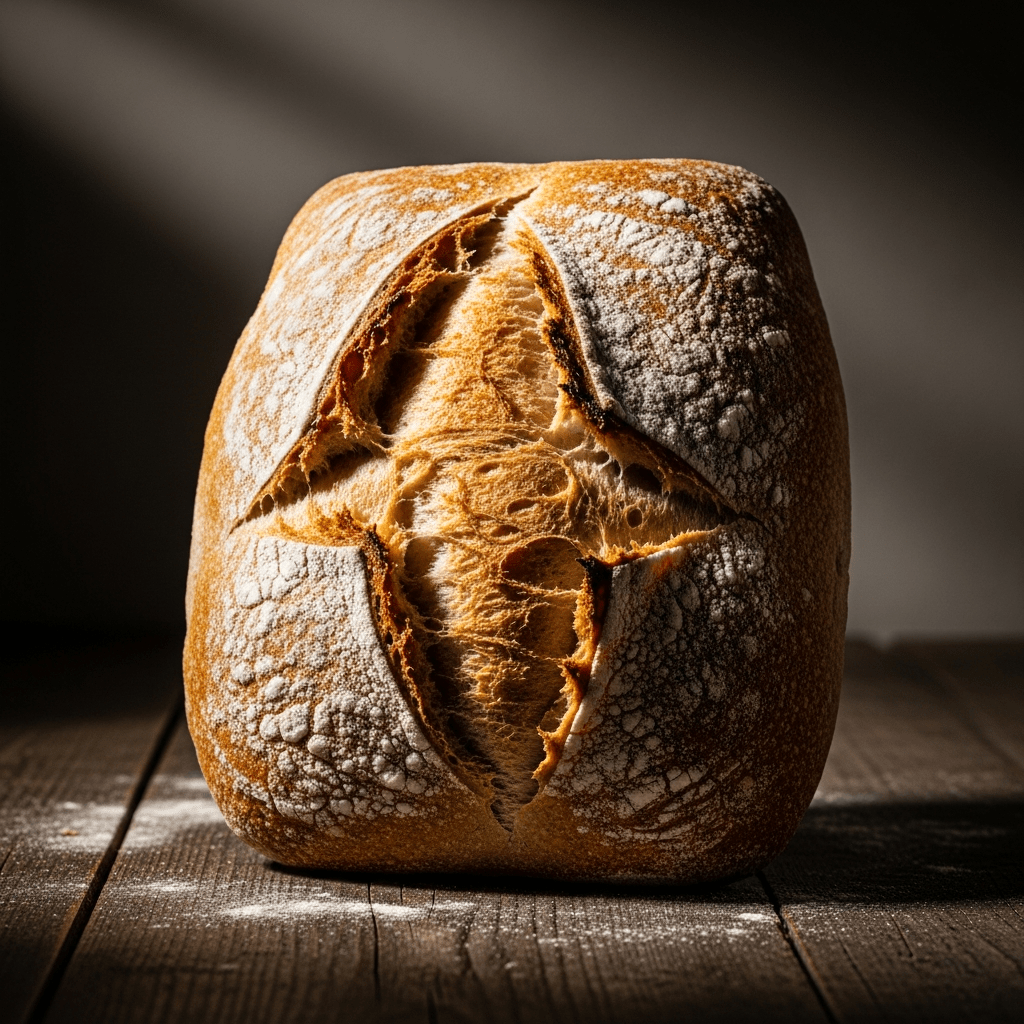
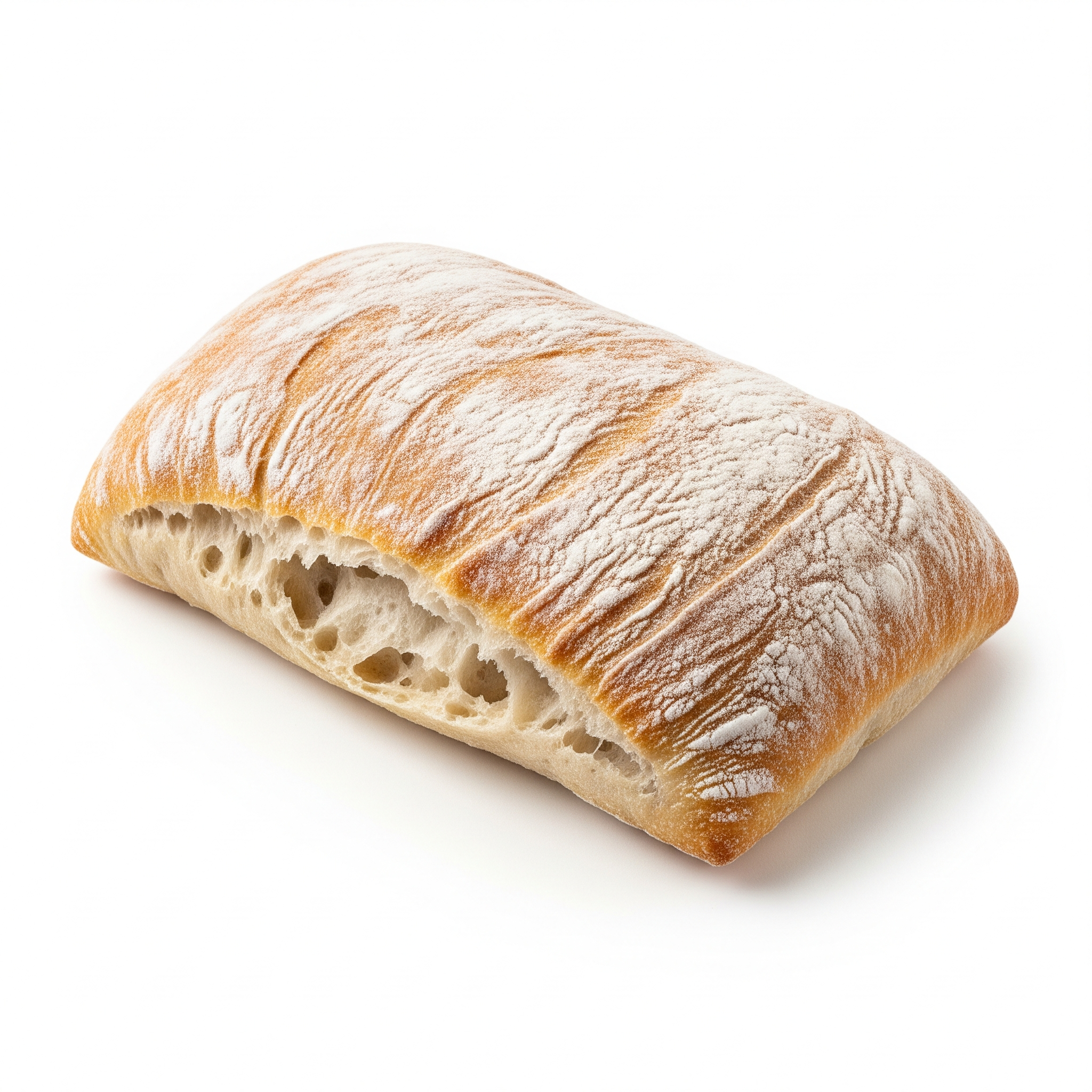
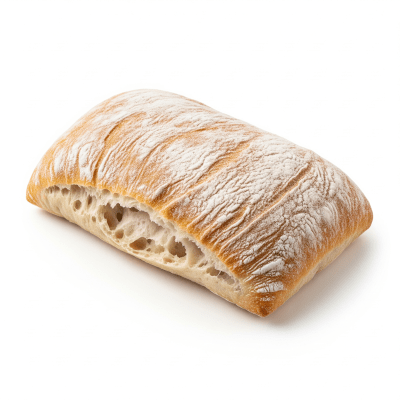
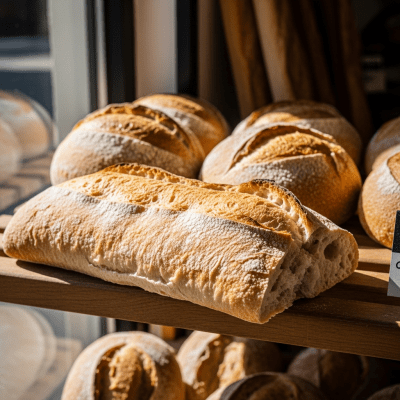
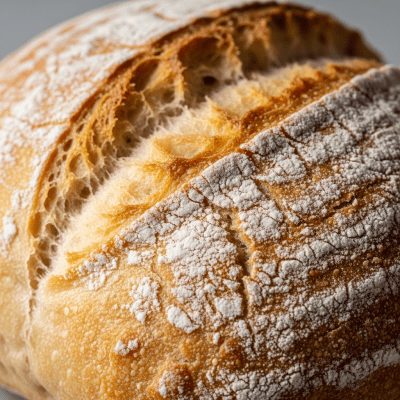
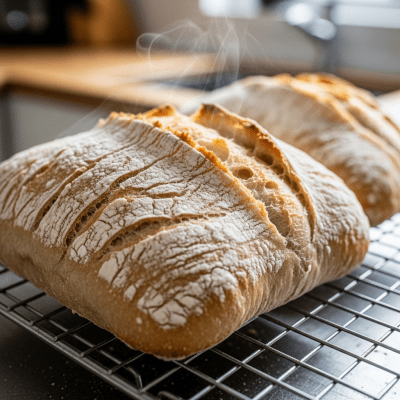
Ciabatta loaves are typically elongated and flat, resembling a slipper—reflected in its Italian name. The crust is crisp and dusted with flour, while the interior features large, irregular holes that create a light, open texture. The bread's color is the classic pale hue of white wheat bread, with loaves ranging from 30 to 50 centimeters in length.
With its chewy crumb and crisp crust, ciabatta excels as sandwich bread, especially for panini, as well as a table accompaniment. Its porous interior readily absorbs oils and sauces, making it ideal for bruschetta and antipasti. The dough’s high hydration requires gentle handling and minimal shaping during production.
Bring this kind into your world illustrated posters, mugs, and shirts.
Archival print, museum-grade paper
Buy Poster
Stoneware mug, dishwasher safe
Buy Mug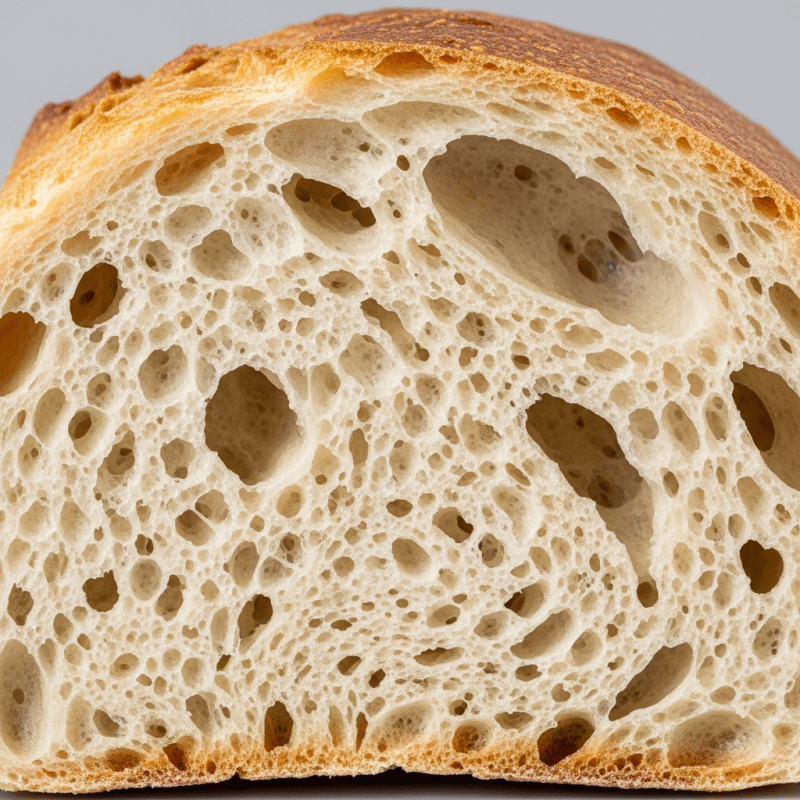
Soft cotton tee, unisex sizes
Buy ShirtThough a relatively recent invention, ciabatta has become emblematic of modern Italian baking innovation. It reflects a cultural dialogue between traditional Italian breadmaking and international influences, symbolizing Italy’s adaptability and culinary creativity in the late 20th century.
Primary ingredients: wheat flour (usually white, high-gluten), water, salt, commercial yeast, and sometimes olive oil.


Ciabatta is typically leavened with commercial yeast. The dough undergoes fermentation that results in a sticky, slack consistency, requiring gentle handling to preserve its open crumb. Fermentation times vary by bakery but focus on developing flavor and texture without sourdough starters.
Ciabatta offers the nutritional profile typical of white wheat breads, providing carbohydrates and some protein. Specific fiber content and micronutrients vary by recipe, with whole wheat variants offering higher dietary fiber.
Ciabatta has a moderate shelf life and is best enjoyed fresh. To maintain quality, store at room temperature in a paper bag to preserve crust crispness. If stale, it can be refreshed by toasting, which restores texture and flavor.
Ciabatta is widely used for sandwiches, especially panini, and as a versatile table bread. Its absorbent crumb makes it ideal for bruschetta toppings and dipping in olive oil or sauces, complementing antipasti and Mediterranean dishes.
Notable variants include ciabatta integrale, made with whole wheat flour, and ciabatta al latte, which incorporates milk for a softer crumb. These adaptations reflect regional preferences and evolving recipes beyond the classic white loaf.
Ciabatta is produced both artisanally and industrially, widely available in bakeries and supermarkets throughout Europe, North America, and beyond. Its popularity has led to numerous commercial versions, maintaining its presence as a staple bread worldwide.