Brioche
Brioche is a classic French enriched bread known for its tender, airy crumb and rich flavor, achieved through a high content of butter and eggs.
Brioche is a classic French enriched bread known for its tender, airy crumb and rich flavor, achieved through a high content of butter and eggs.
Originating in France during the 15th century, brioche evolved through regional baking traditions, particularly in Normandy, a region famed for its abundant butter. While no single creator is credited, this bread reflects centuries of artisanal refinement within French culinary heritage.
Brioche belongs to the family of enriched breads, distinguished by the addition of fats and eggs that set it apart from leaner bread types. It is a leavened bread, specifically using commercial yeast, and is categorized within French traditional breads known for their luxurious texture and flavor.
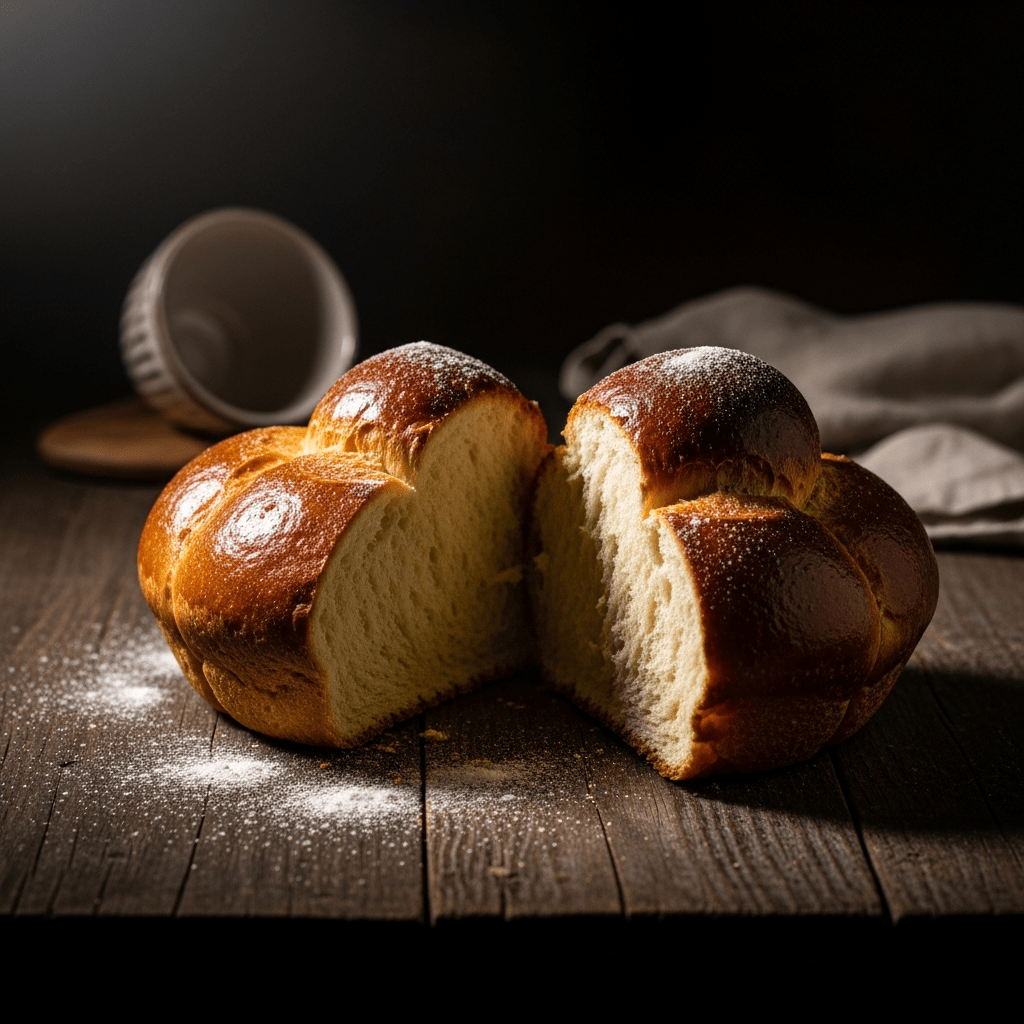
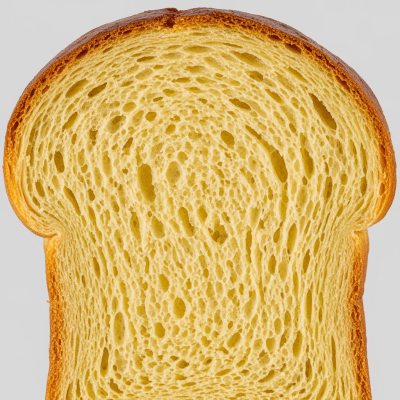
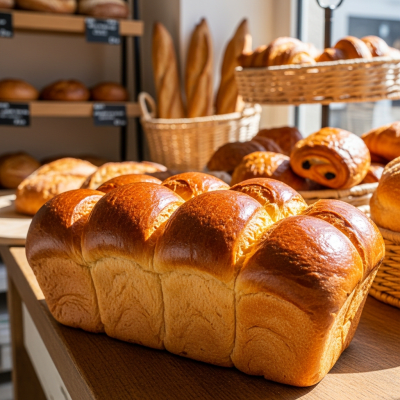
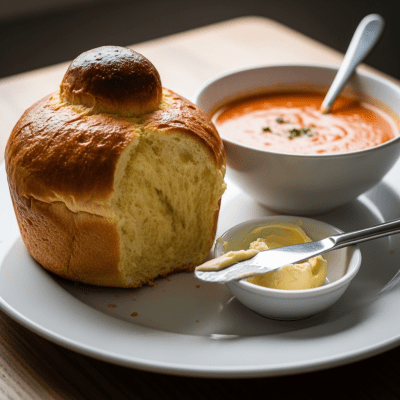
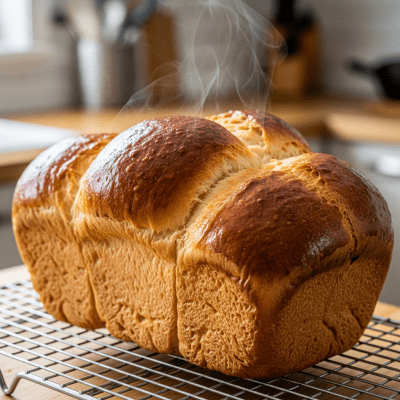
Brioche typically appears as round buns, braided loaves, or sandwich-style loaves. It features a golden-brown, glossy crust often achieved by an egg wash, with a soft, pale yellow crumb that is tender and airy to the touch.
Renowned for its versatility, brioche serves both sweet and savory purposes. Its rich texture makes it ideal for breakfast pastries, hamburger buns, and as a base for French toast. The dough’s richness slows fermentation, requiring careful handling to achieve its signature lightness.
Bring this kind into your world illustrated posters, mugs, and shirts.
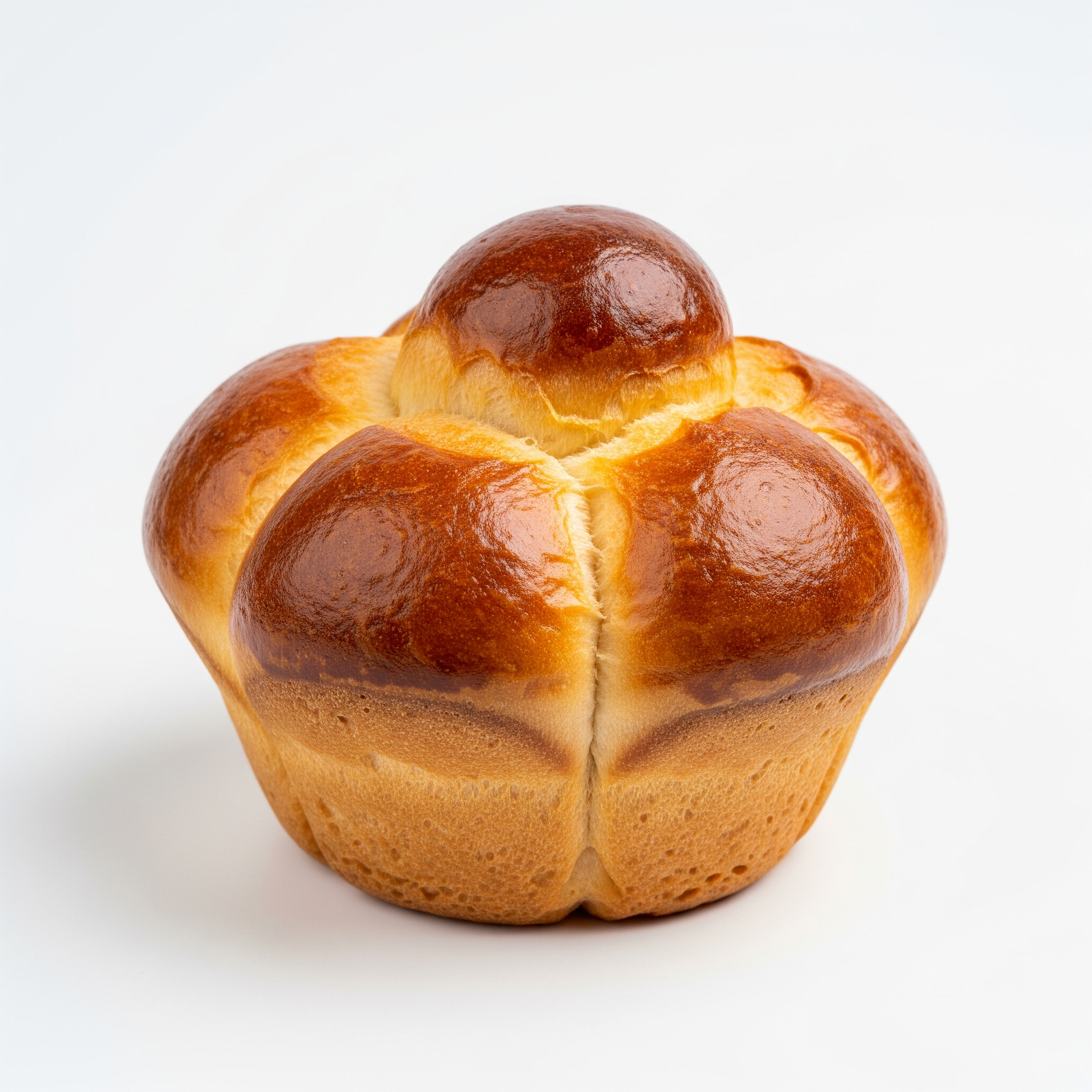
Archival print, museum-grade paper
Buy Poster
Stoneware mug, dishwasher safe
Buy Mug
Soft cotton tee, unisex sizes
Buy ShirtBrioche holds a cherished place in French culture, symbolizing indulgence and artisanal baking. It features prominently in festive occasions such as Easter and Christmas, and its elegant forms and rich flavor have inspired culinary traditions worldwide.
Primary ingredients in brioche include wheat flour, butter, eggs, water, and commercial yeast.

Brioche is leavened using commercial yeast. Due to its richness, the dough ferments slowly and requires careful proofing to develop its characteristic light and airy texture.
Brioche’s enriched nature results in a higher fat and calorie content compared to lean breads. While specific fiber and micronutrient levels vary, its richness offers a satisfying energy source but should be enjoyed in moderation.
Brioche is best consumed fresh or toasted, as it is prone to staling. Proper storage involves keeping it at room temperature in a sealed container to maintain softness, though it has a relatively short shelf life compared to lean breads.
Brioche is widely used in both sweet and savory dishes, including breakfast pastries, gourmet hamburger buns, French toast (pain perdu), and festive breads served during holidays.
Notable French variants include the "brioche de Vendée," known for its rich flavor, and the "brioche Nanterre," a rectangular loaf form. These regional styles highlight subtle differences in shape and texture within the brioche family.
Brioche is widely available in artisanal bakeries, supermarkets, and as packaged products, reflecting its popularity both in France and internationally.