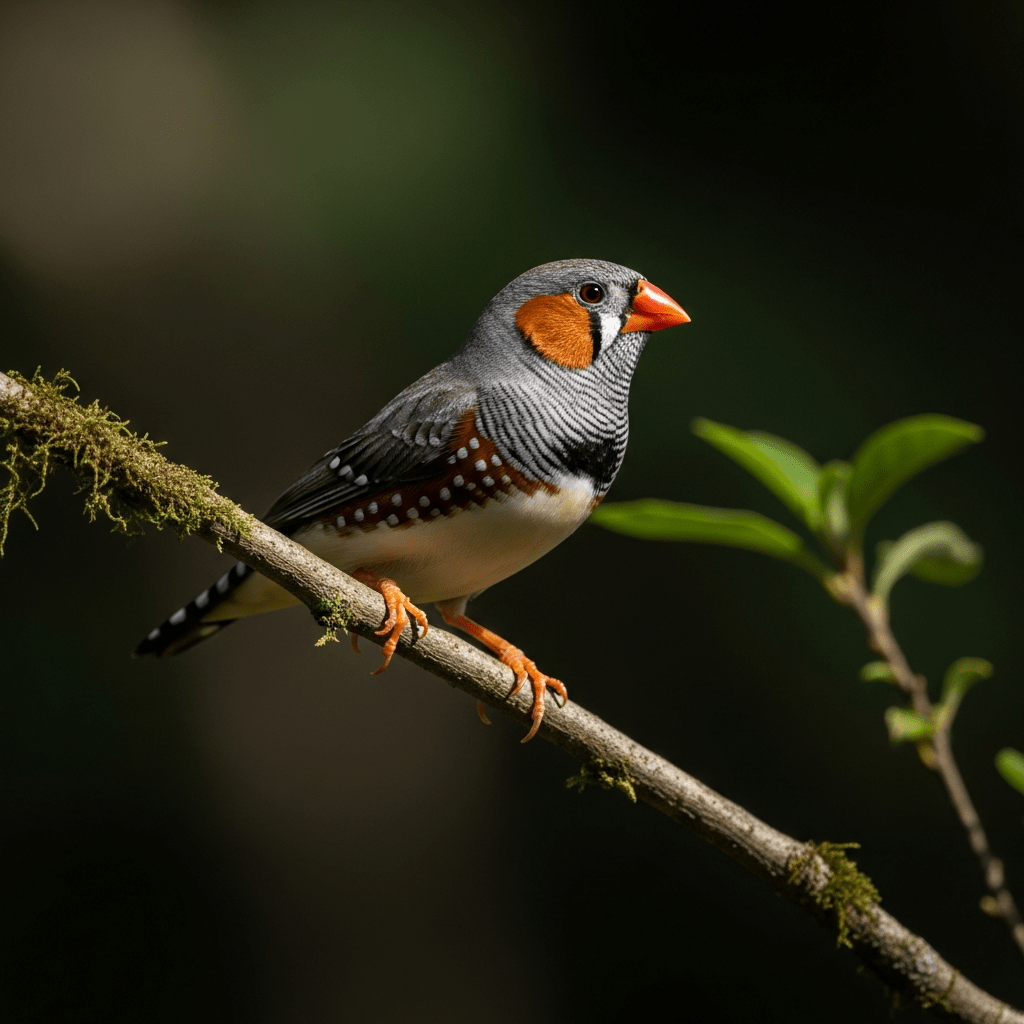
Zebra Finch
The Zebra Finch (Taeniopygia guttata) is a small, sociable songbird native to Australia and Indonesia, celebrated for its striking plumage, lively behavior, and importance in scientific research and aviculture.
The Zebra Finch (Taeniopygia guttata) is a small, sociable songbird native to Australia and Indonesia, celebrated for its striking plumage, lively behavior, and importance in scientific research and aviculture.
First described by Johann Friedrich Gmelin in 1789, the Zebra Finch traces its origins to the arid and semi-arid landscapes of Australia, with a distinct subspecies inhabiting the Lesser Sunda Islands of Indonesia. Its journey from wild flocks to global prominence began in the 19th century, when aviculturists in Europe and North America began breeding and domesticating the species. Today, the Zebra Finch is found both in its native habitats and in aviaries worldwide, a testament to its adaptability and appeal.
The Zebra Finch belongs to the class Aves, order Passeriformes (perching birds), and family Estrildidae (estrildid finches). Its scientific name is Taeniopygia guttata. Two recognized subspecies exist: T. g. guttata (Australia) and T. g. castanotis (Lesser Sundas). The species is part of a diverse group of small, seed-eating birds known for their social nature and vocalizations.
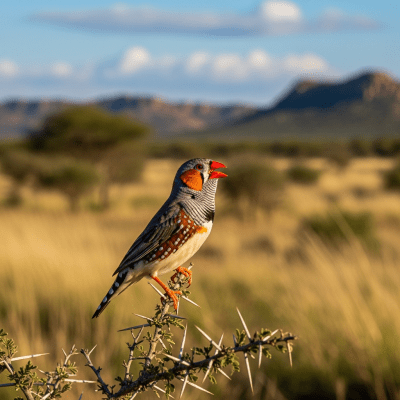
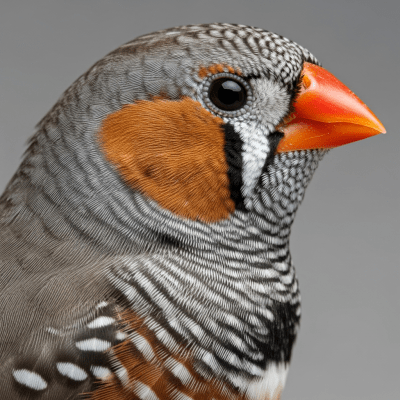
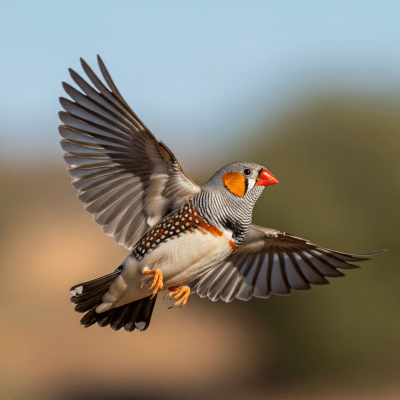
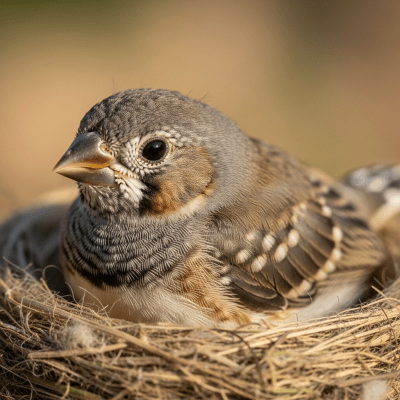
Zebra Finches are petite, measuring around 10–12 cm in length and weighing 12–16 grams. Males are instantly recognizable by their bold black-and-white barring across the throat and chest, vivid orange cheek patches, and a bright red or orange bill. Females display a subtler palette, lacking the cheek patches and sporting a paler bill. Both sexes have a fine, sleek plumage with a grayish back and white underparts, complemented by a lively, upright posture and energetic movements.
Highly gregarious, Zebra Finches thrive in flocks and exhibit constant social interaction. In the wild, they form large groups and communicate through a repertoire of chirps and songs. Their rapid reproductive cycle and year-round breeding capacity make them prolific in captivity. Zebra Finches are renowned as model organisms in scientific research, especially in studies of vocal learning, neurobiology, and behavior. As pets, they are cherished for their hardiness, ease of care, and engaging personalities.
Bring this kind into your world illustrated posters, mugs, and shirts.
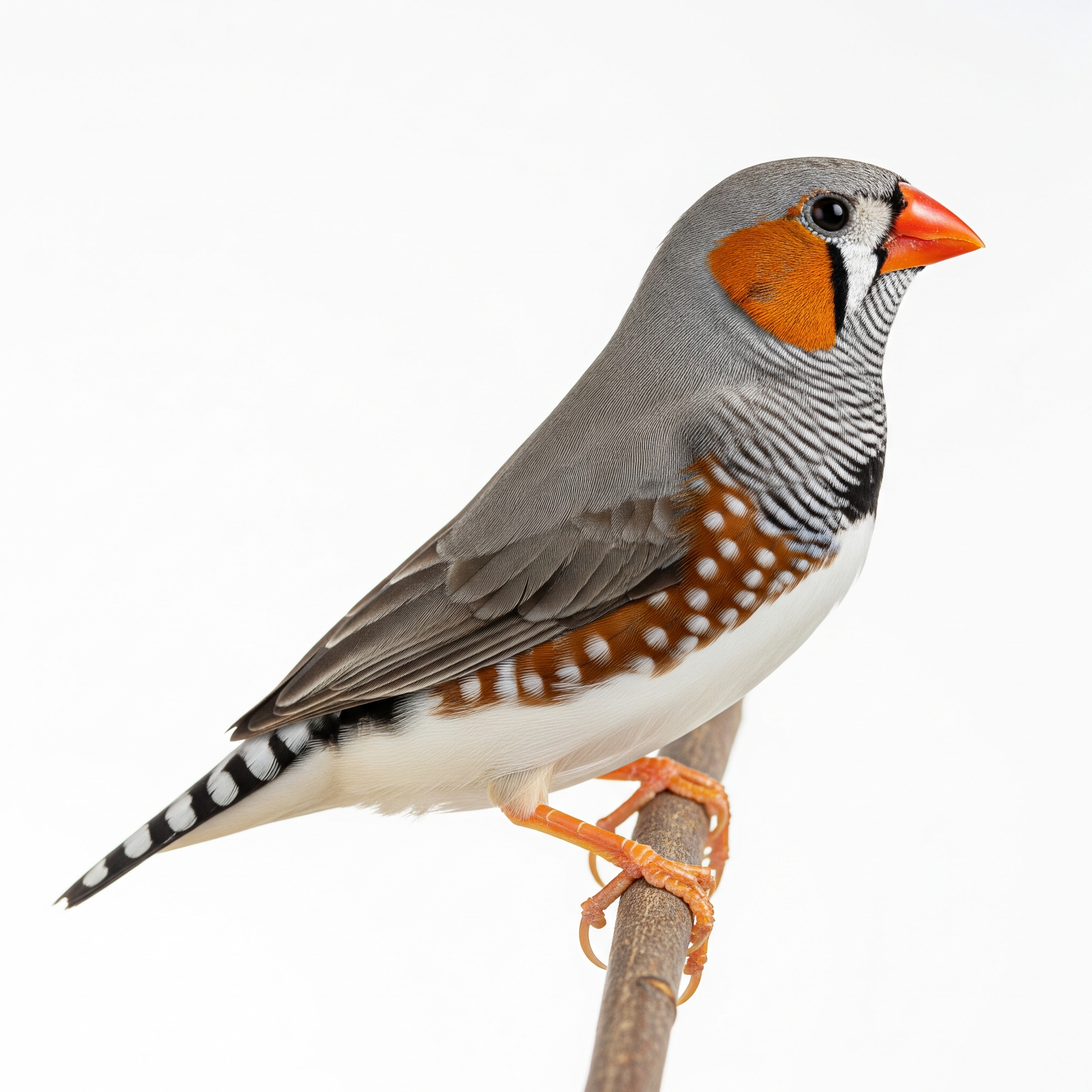
Archival print, museum-grade paper
Buy Poster
Stoneware mug, dishwasher safe
Buy Mug
Soft cotton tee, unisex sizes
Buy ShirtThe Zebra Finch holds a special place in modern science, serving as a cornerstone species for research into the mechanisms of vocal learning—a trait shared with humans. Its song and social behaviors have inspired countless studies and educational programs. In aviculture, the bird is a symbol of resilience and companionship, often featured in exhibitions and pet care literature. While not prominent in myth or folklore, its influence in contemporary culture is profound, especially within the scientific and pet-owning communities.
Zebra Finches inhabit arid and semi-arid regions across mainland Australia, favoring grasslands, open woodlands, and areas near water sources. A separate subspecies is found in the Lesser Sunda Islands of Indonesia. Their adaptability has allowed them to establish feral populations in other regions, and they are now common in aviaries and homes globally.
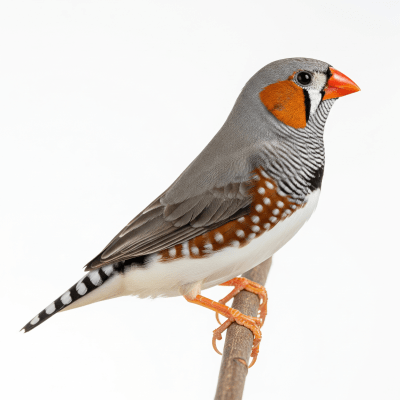
The diet of Zebra Finches consists primarily of grass seeds, which they forage from the ground. They also consume small insects and green vegetation, especially during breeding or when feeding young. In captivity, a balanced diet includes millet, mixed seeds, and occasional fresh greens to support their health and vitality.
Zebra Finches are prolific breeders, often nesting year-round in captivity. A typical clutch contains 4–6 eggs, which hatch after about two weeks. Both parents share in incubating the eggs and feeding the chicks. The young fledge quickly, usually within three weeks, and reach maturity in a few months. Their average lifespan ranges from 5 to 8 years, with some individuals living longer under optimal care.
Zebra Finches are listed as a species of Least Concern by the IUCN, reflecting their stable and widespread populations. They face few significant threats in the wild, thanks to their adaptability and robust reproductive capacity. Habitat loss and climate variability may impact local populations, but overall, the species remains secure.
Economically, Zebra Finches are valuable in the pet trade and as research animals, supporting aviculture and scientific advancement. Ecologically, they play a role in seed dispersal and serve as prey for native predators, contributing to the balance of their habitats. Their presence in research has advanced understanding of vocal learning, genetics, and animal behavior, with broad implications for science and education.
Domestication of the Zebra Finch began in the 19th century, leading to the development of various color morphs and strains in captivity. Avicultural breeding has produced birds with unique plumage patterns and colors, though all are derived from the wild Australian and Indonesian subspecies. Today, domesticated Zebra Finches are bred for companionship, exhibition, and research, with established populations in aviaries worldwide.