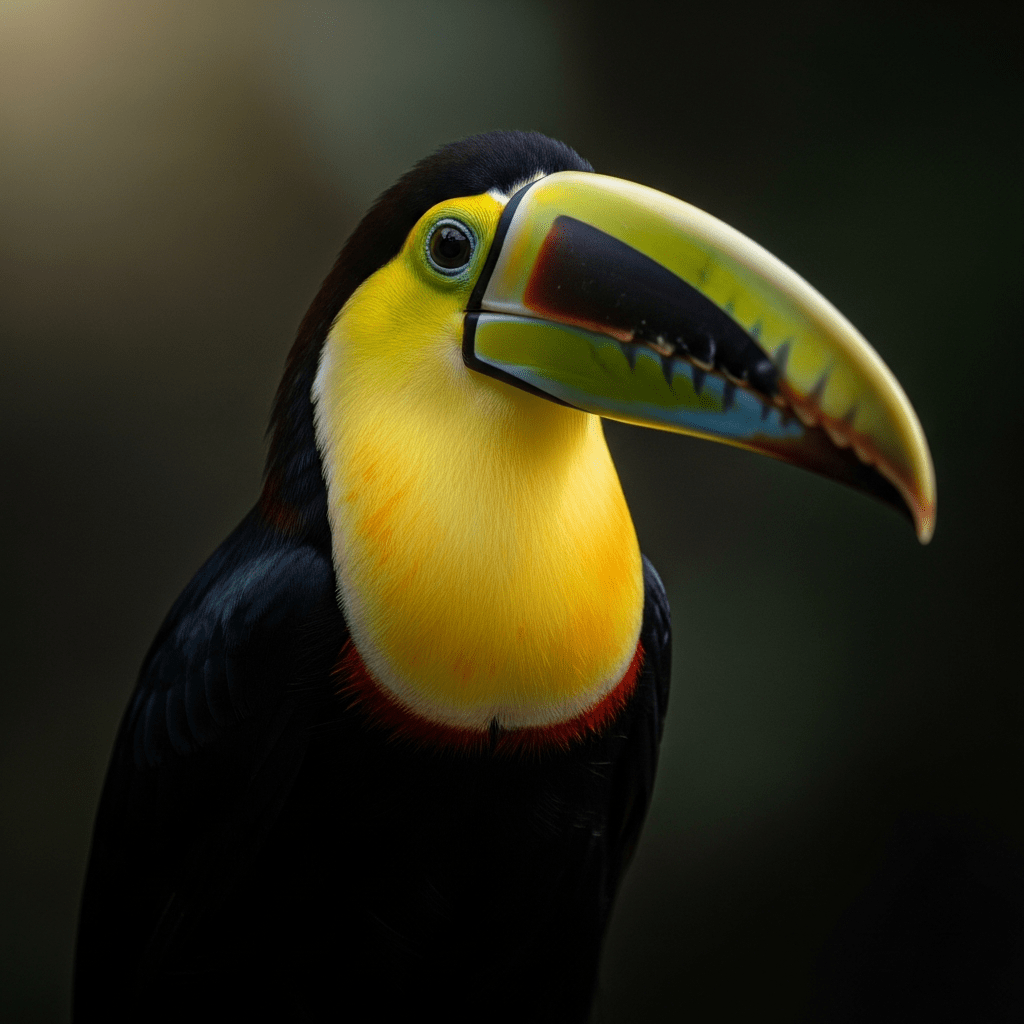
Toucan
The toucan is an iconic Neotropical bird famed for its oversized, colorful bill and vibrant plumage, native to the rainforests of Central and South America.
The toucan is an iconic Neotropical bird famed for its oversized, colorful bill and vibrant plumage, native to the rainforests of Central and South America.
Toucans trace their origins to the lush forests of South America, with fossil and molecular evidence pointing to a deep Neotropical ancestry. The family Ramphastidae was first formally described in 1815 by Constantine Samuel Rafinesque, though toucans have been recognized by indigenous peoples for centuries. Their evolutionary journey is rooted in the complex canopies of the Americas, where they have flourished as distinctive members of the avian world.
Toucans belong to the family Ramphastidae within the order Piciformes, class Aves. This places them among a diverse group of birds known for specialized bills and arboreal habits. The family encompasses several genera, including Ramphastos (true toucans), Selenidera (toucanets), and Pteroglossus (aracaris), each contributing to the group’s remarkable diversity. Their classification highlights evolutionary adaptations for life in forest canopies and a close relationship to other Neotropical bird families.
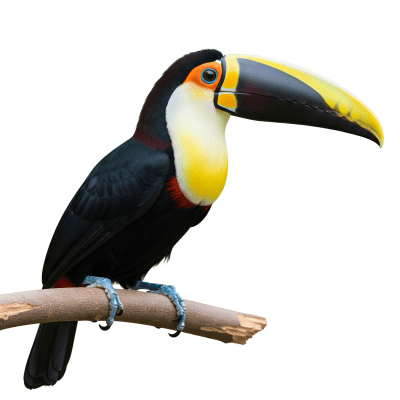
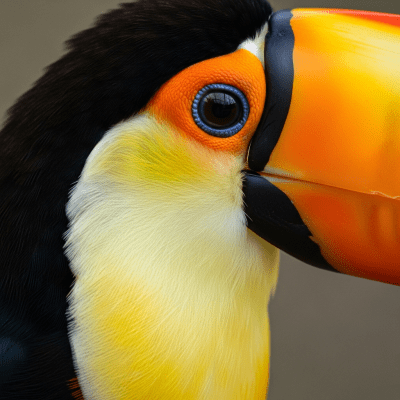
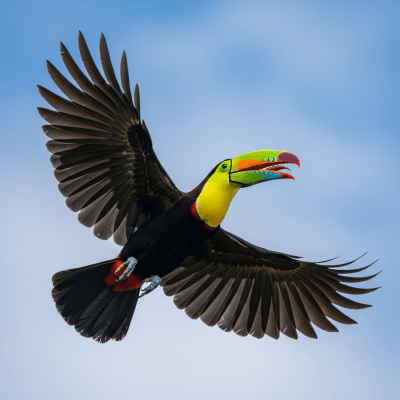
Toucans are medium to large birds, measuring between 29 and 63 centimeters in length depending on species. Their most striking feature is the enormous, lightweight bill—often vividly colored and sometimes reaching half the bird’s body length. The bill’s honeycomb structure keeps it surprisingly light. Plumage is typically black, accented with bold patches of white, yellow, orange, red, or blue, making toucans stand out in their leafy habitats. Their eyes are bright and expressive, and their overall form is both elegant and unmistakable.
Toucans are highly social, often seen in small flocks navigating the upper forest canopy. Their arboreal lifestyle is complemented by playful interactions and vocalizations. They nest in tree cavities and are primarily frugivorous, though they opportunistically eat insects, small vertebrates, and eggs. While not used for food, toucans are sometimes kept as exotic pets (a practice discouraged due to conservation concerns) and are celebrated in branding, advertising, and ecotourism for their charismatic image.
Bring this kind into your world illustrated posters, mugs, and shirts.
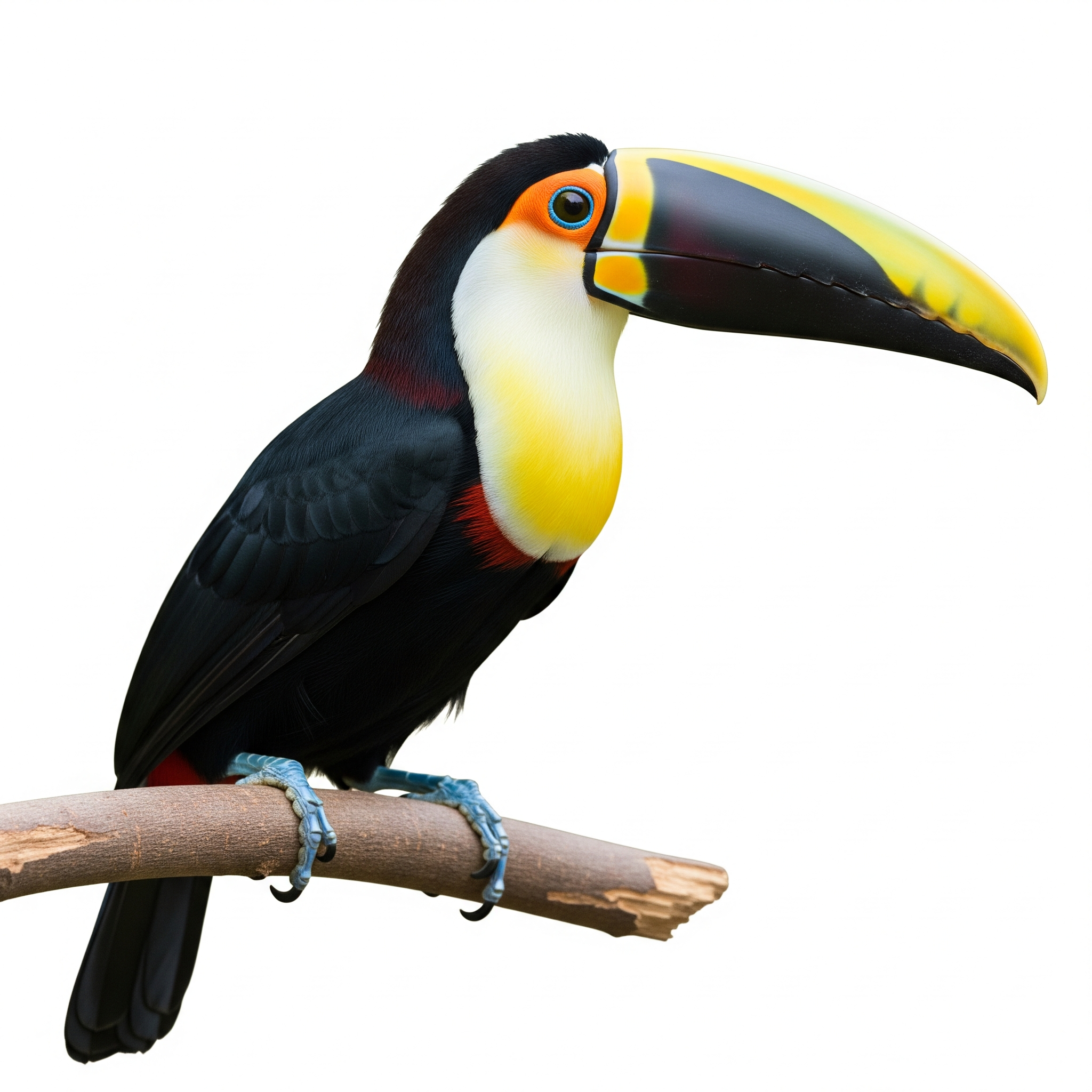
Archival print, museum-grade paper
Buy Poster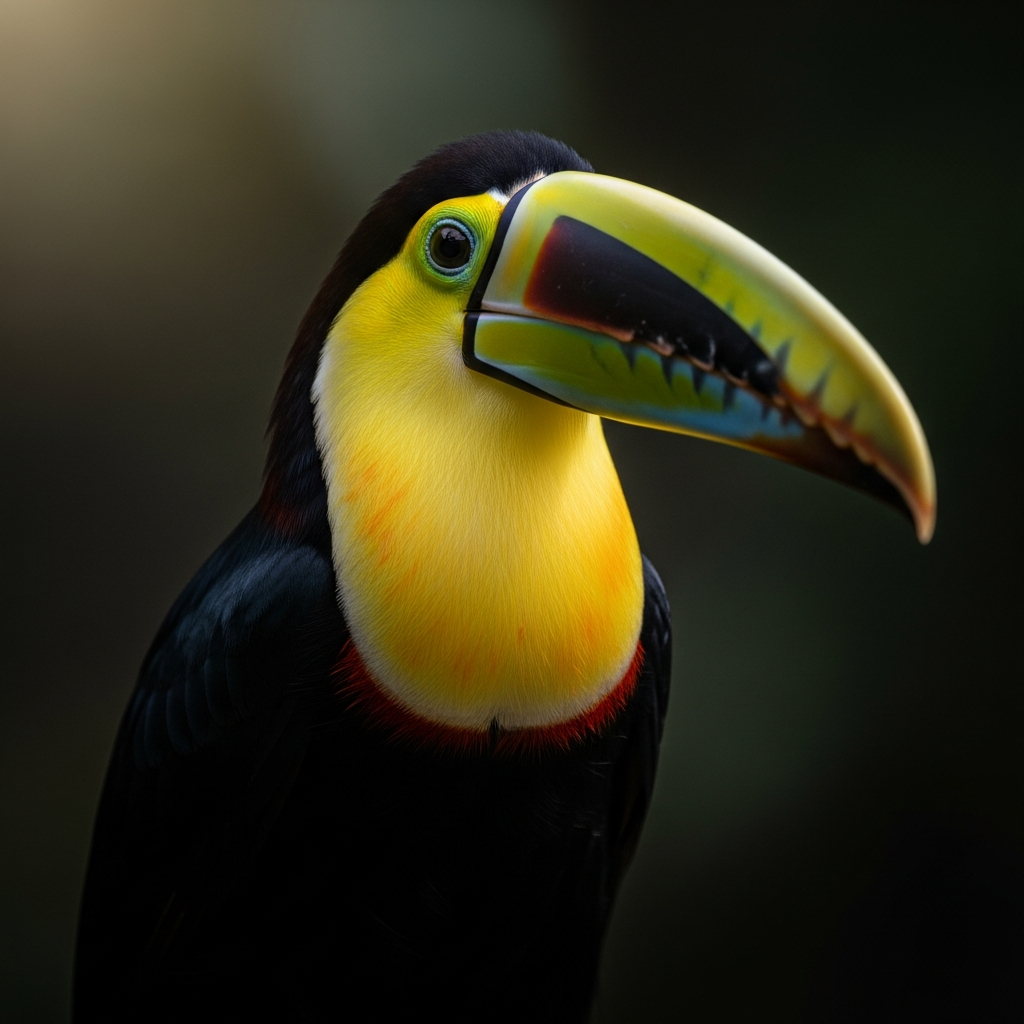
Stoneware mug, dishwasher safe
Buy Mug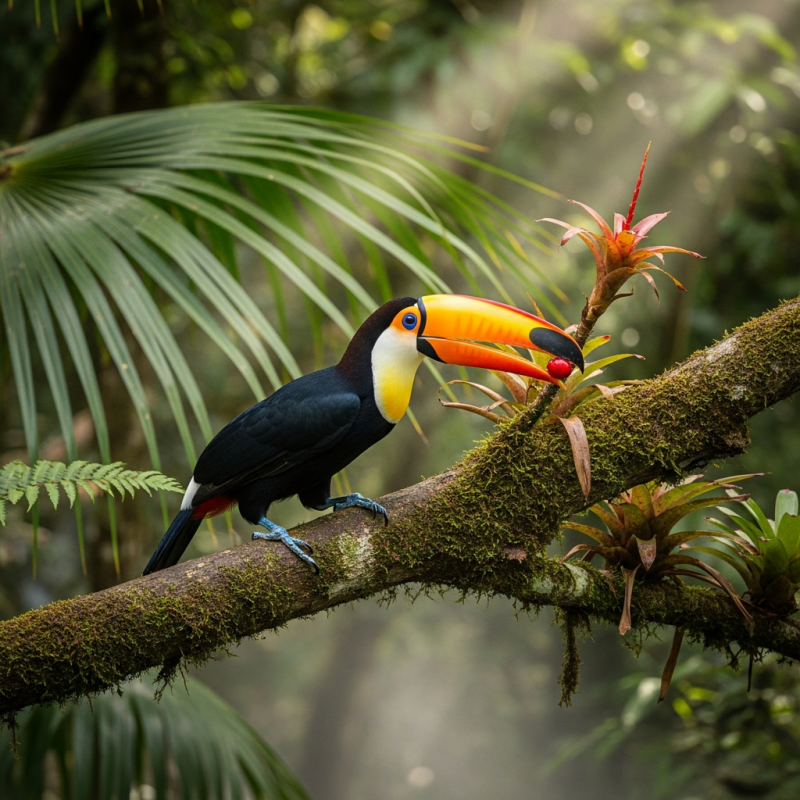
Soft cotton tee, unisex sizes
Buy ShirtToucans hold deep symbolic value across Central and South America, appearing in indigenous folklore, art, and mythology. Their vivid appearance has made them popular icons in modern culture, frequently featured in advertising, logos, and children’s media. The toucan’s image evokes tropical abundance and biodiversity, making it a favored emblem for ecotourism and conservation campaigns. Their presence in stories and visual arts reflects both reverence and fascination with their unique beauty.
Toucans inhabit the dense forest canopies of Central and South American rainforests, thriving in humid, tropical environments. Their range extends from southern Mexico through much of South America, with the greatest diversity found in the Amazon basin. They are strictly arboreal, rarely venturing far from the trees that provide both food and shelter.

Toucans are primarily frugivores, feeding on a wide variety of fruits found in the forest canopy. Their dexterous bills allow them to pluck, peel, and toss fruit with ease. In addition to fruit, toucans will eat insects, small vertebrates, and eggs, especially when fruit is scarce. Their feeding habits make them important agents of seed dispersal within their ecosystems.
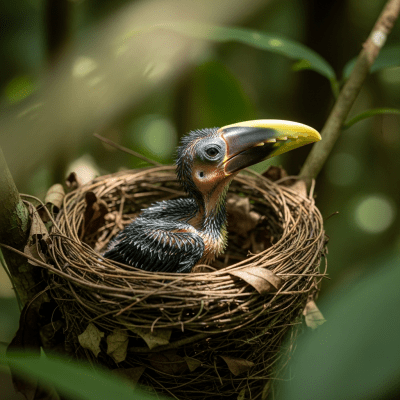
Toucans nest in tree cavities, often reusing abandoned woodpecker holes. Both parents typically share incubation and chick-rearing duties. While clutch size and breeding season can vary by species, toucans generally lay several eggs per clutch and raise their young in the safety of the forest canopy. Their social nature extends to cooperative care and flocking behaviors throughout their lives.
Many toucan species face threats from habitat loss due to deforestation and the illegal pet trade. While some species remain common, others are listed as vulnerable or threatened on the IUCN Red List. Conservation efforts focus on protecting rainforest habitats and regulating trade, with legal protections varying by country. Their ecological importance as seed dispersers underscores the need for continued conservation action.
Toucans play a crucial ecological role as seed dispersers, supporting the regeneration and diversity of tropical forests. Economically, their striking image is leveraged in branding, advertising, and ecotourism, attracting visitors and raising awareness for rainforest conservation. While sometimes kept as pets, their true value lies in their contribution to healthy ecosystems and cultural heritage.
Toucans are wild birds with no history of formal domestication. The family Ramphastidae includes several genera—Ramphastos (true toucans), Selenidera (toucanets), and Pteroglossus (aracaris)—reflecting notable diversity. Regional variation in species recognition exists, with some local checklists splitting or combining species differently. Toucans remain best appreciated in their natural habitats rather than as domestic companions.