Ostrich
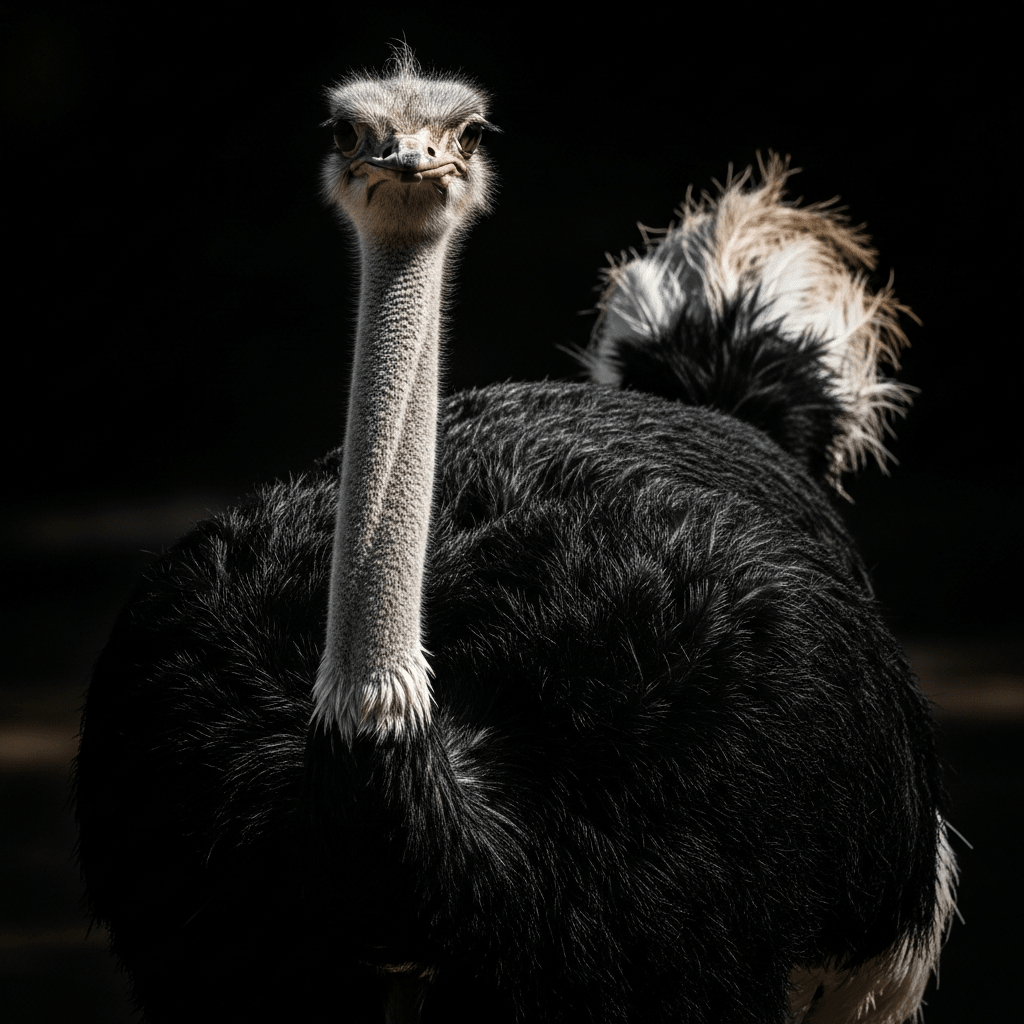
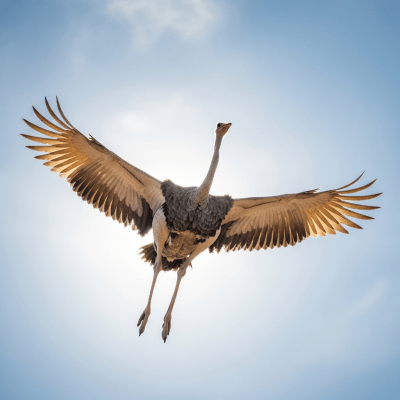
The ostrich (Struthio camelus) is the largest living bird, famed for its flightlessness, extraordinary running speed, and distinctive long neck and legs.
The ostrich (Struthio camelus) is the largest living bird, famed for its flightlessness, extraordinary running speed, and distinctive long neck and legs.
Native to Africa, the ostrich was first formally described by Carl Linnaeus in 1758. Its lineage belongs to the genus Struthio, which once included several extinct relatives but today is represented solely by Struthio camelus. Ostrich domestication began in South Africa during the 19th century, driven by demand for meat, feathers, and leather. This bird's evolutionary history is deeply rooted in the continent's savannas and deserts, where it remains a keystone species.
The ostrich is a member of the class Aves, order Struthioniformes, and family Struthionidae. It is the only extant species in its genus, making it a unique representative of its evolutionary branch among birds. Its closest relatives are extinct, and its taxonomic placement highlights its distinctiveness as a large, flightless bird adapted to open, arid landscapes.
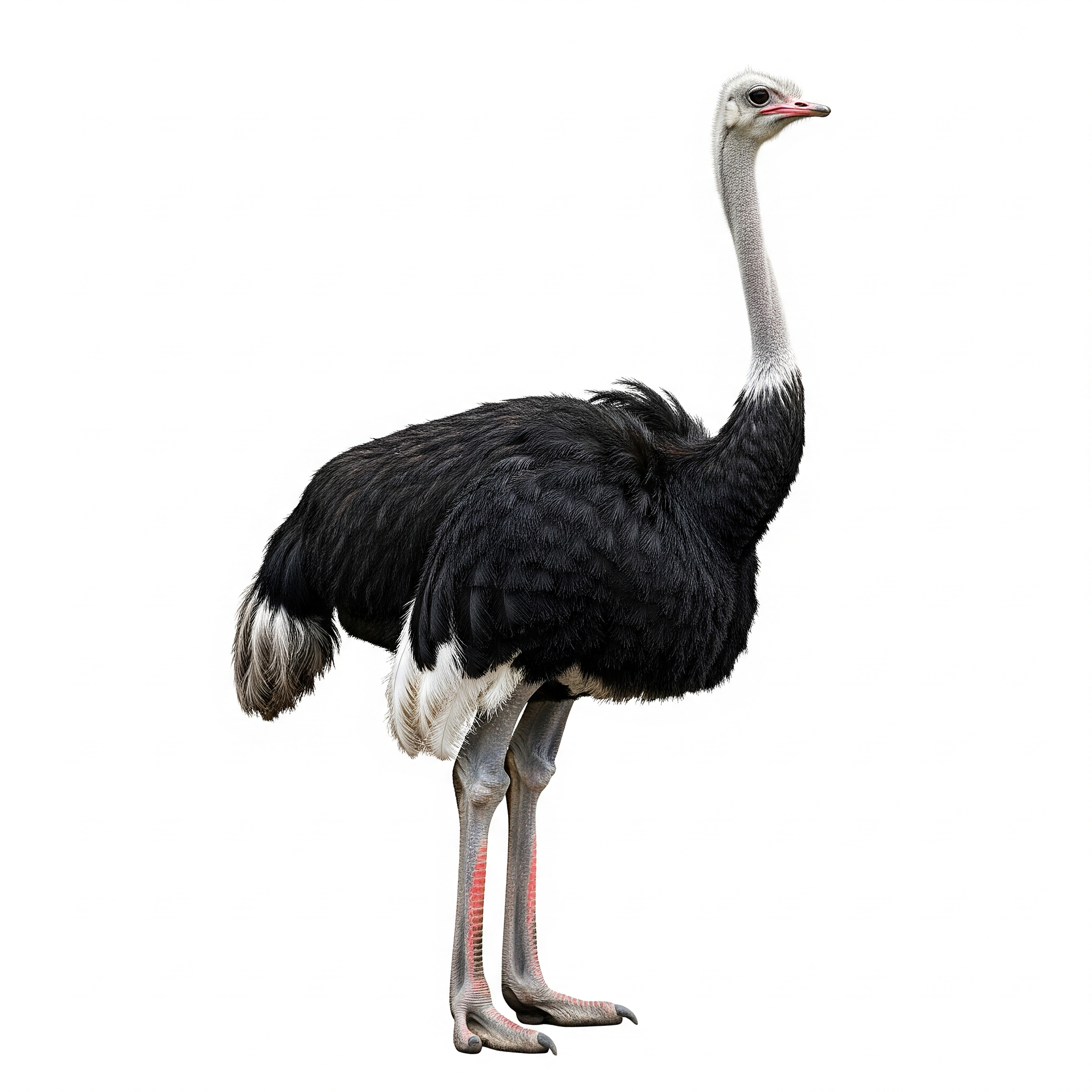
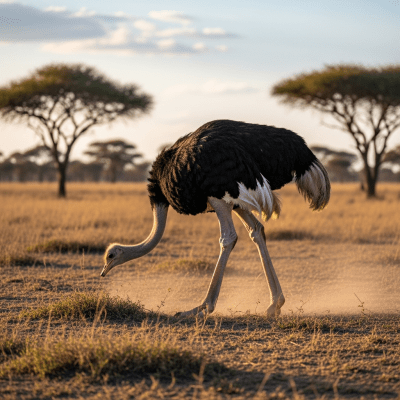
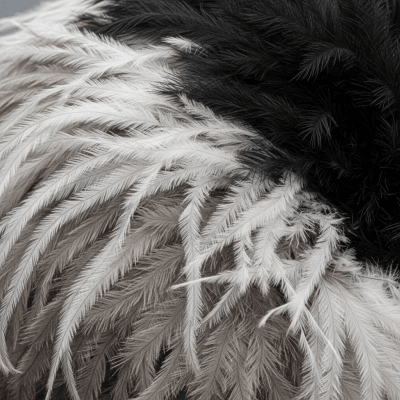
Ostriches are imposing birds, with adult males reaching up to 2.75 meters in height and weighing as much as 156 kilograms. Their long, muscular legs are built for speed, enabling them to sprint at up to 70 km/h. The neck is equally elongated, giving them a striking profile. Plumage is sexually dimorphic: males sport bold black and white feathers, while females and juveniles are cloaked in subtle grayish-brown tones. Ostriches lay the largest eggs of any living land animal, and their powerful legs are not only for running but also serve as formidable defense against predators.
Ostriches are flightless but compensate with remarkable running ability, making them the fastest birds on land. They thrive in arid environments, capable of surviving for long periods without water. Ostriches are social animals, often living and breeding in groups. Their economic utility is considerable: they are farmed worldwide for meat, leather, and feathers, and their eggs are used both for consumption and decoration.
Bring this kind into your world illustrated posters, mugs, and shirts.
Archival print, museum-grade paper
Buy Poster
Stoneware mug, dishwasher safe
Buy Mug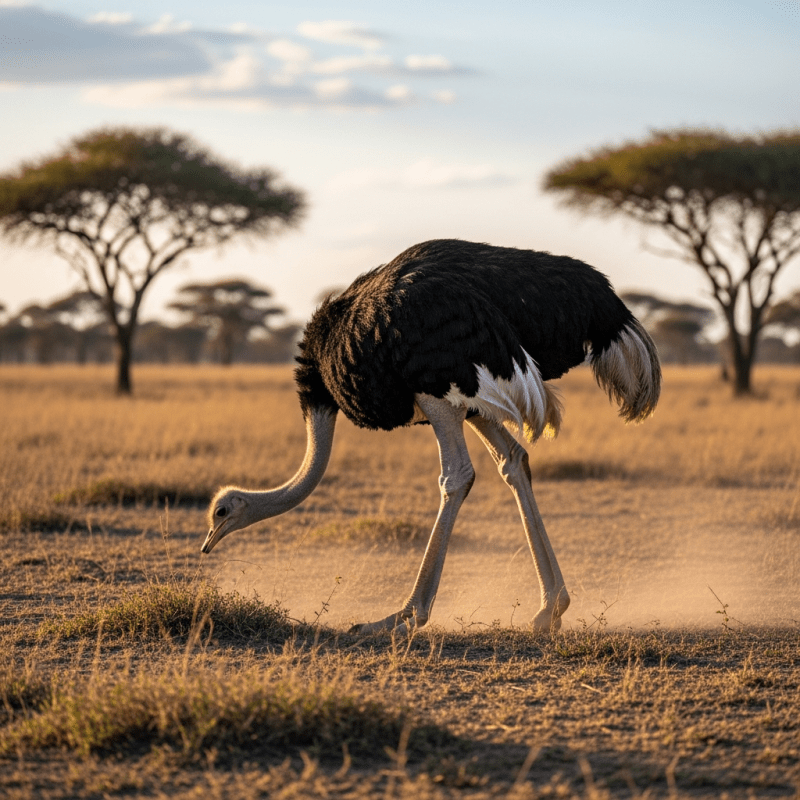
Soft cotton tee, unisex sizes
Buy ShirtThe ostrich has long held a place in human culture, symbolizing speed, vigilance, and sometimes folly. Its feathers have adorned ceremonial attire and fashion across centuries, while its image appears in African folklore, ancient art, and modern iconography. Ostrich products—meat, leather, and feathers—feature in luxury goods and traditional crafts, underscoring its enduring cultural and economic influence.
Ostriches are native to Africa, where they inhabit open savanna and desert ecosystems. Their range spans North, East, and Southern Africa, with recognized subspecies adapted to regional habitats. Historically, ostriches also occurred in the Middle East, but the subspecies there is now extinct. Their resilience allows them to thrive in arid, sparsely vegetated landscapes.
Ostriches are omnivorous, feeding on a variety of plant material, seeds, insects, and occasionally small vertebrates. Their diet is adapted to the availability of resources in arid environments, and they can extract sufficient moisture from food to survive without direct access to water for extended periods.
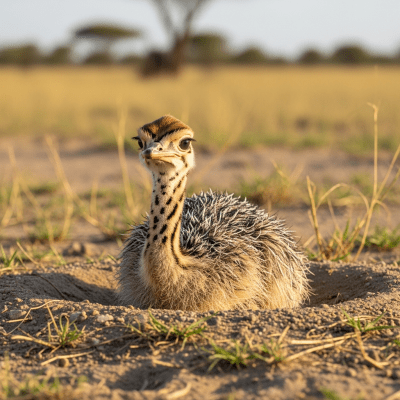
Ostriches lay the largest eggs of any living land animal. They breed in groups, with communal nests often containing eggs from several females. The dominant female incubates the clutch, and chicks are precocial, able to run soon after hatching. Ostriches are known for their robust reproductive strategy, which helps sustain populations in challenging environments.
Ostriches are not currently considered threatened, thanks in part to widespread farming and conservation efforts. However, habitat loss and hunting have impacted wild populations in some regions, and the Middle Eastern subspecies (S. c. syriacus) is extinct. Ongoing monitoring is essential to ensure the continued survival of wild ostrich populations.
Ostriches play a vital ecological role as keystone species in savanna and desert ecosystems, influencing plant communities and serving as prey for large predators. Economically, they are farmed globally for meat, leather, and feathers, which are used in gourmet cuisine, luxury goods, and ceremonial attire. Their products support livelihoods and industries in many countries.
Ostrich domestication began in South Africa in the 19th century, primarily for feathers and later for meat and leather. Today, ostriches are farmed worldwide. Recognized subspecies include S. c. camelus (North Africa), S. c. massaicus (East Africa), S. c. australis (Southern Africa), and the extinct S. c. syriacus (Middle East). These subspecies reflect regional adaptations and historical distribution.