Hornbill
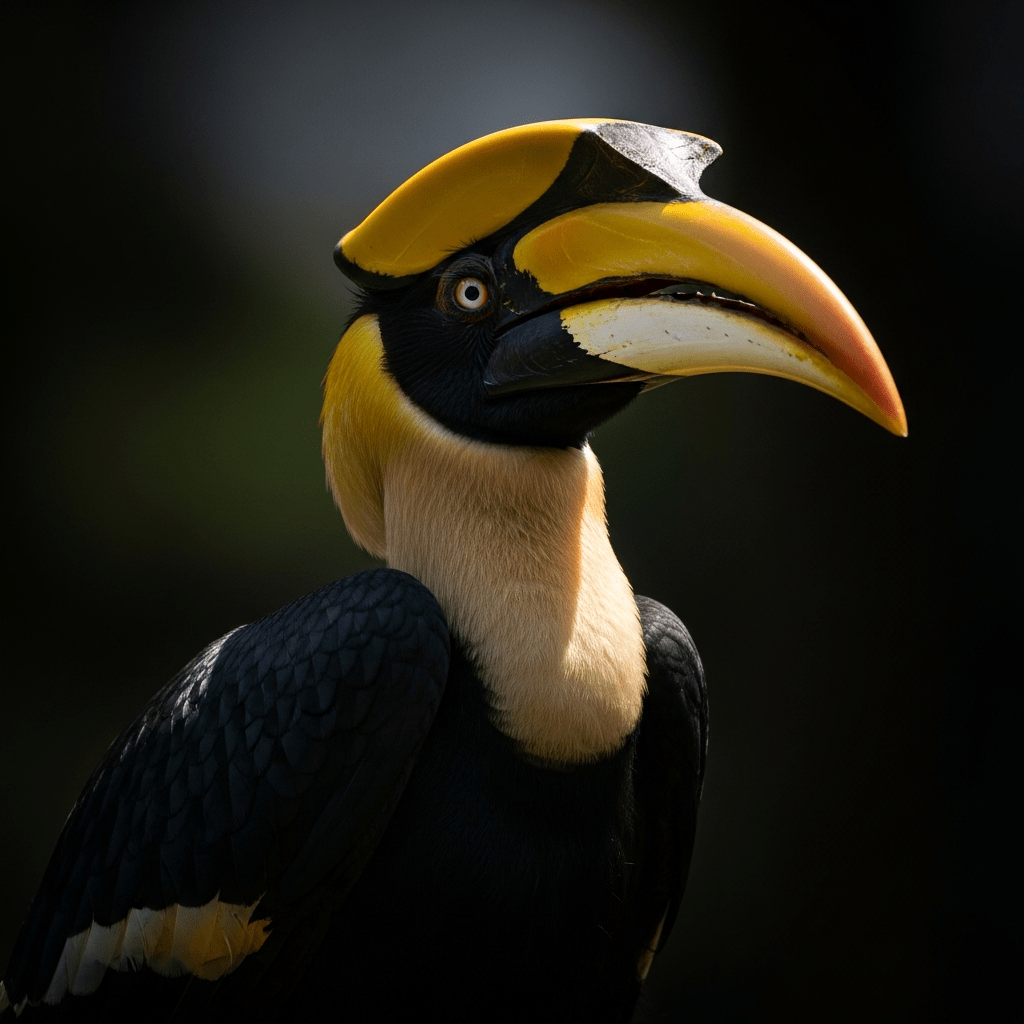
The hornbill is a striking bird family known for its large, curved bill and prominent casque, found throughout the tropical forests and savannas of Africa and Asia.
The hornbill is a striking bird family known for its large, curved bill and prominent casque, found throughout the tropical forests and savannas of Africa and Asia.
Hornbills originated in the Old World tropics, with fossil evidence tracing their lineage back to the Miocene epoch. Formally described by Constantine Samuel Rafinesque in 1815, hornbills have long been recognized by indigenous cultures and naturalists alike. Their evolutionary roots span multiple genera, all adapted to the lush forests and woodlands of Africa and Asia.
Hornbills belong to the family Bucerotidae within the order Bucerotiformes, class Aves. This family comprises several genera, such as Buceros, Tockus, Anthracoceros, and Rhinoplax. Taxonomic boundaries are actively revised, with authorities like the IOC World Bird List and Clements Checklist guiding species and genus assignments.
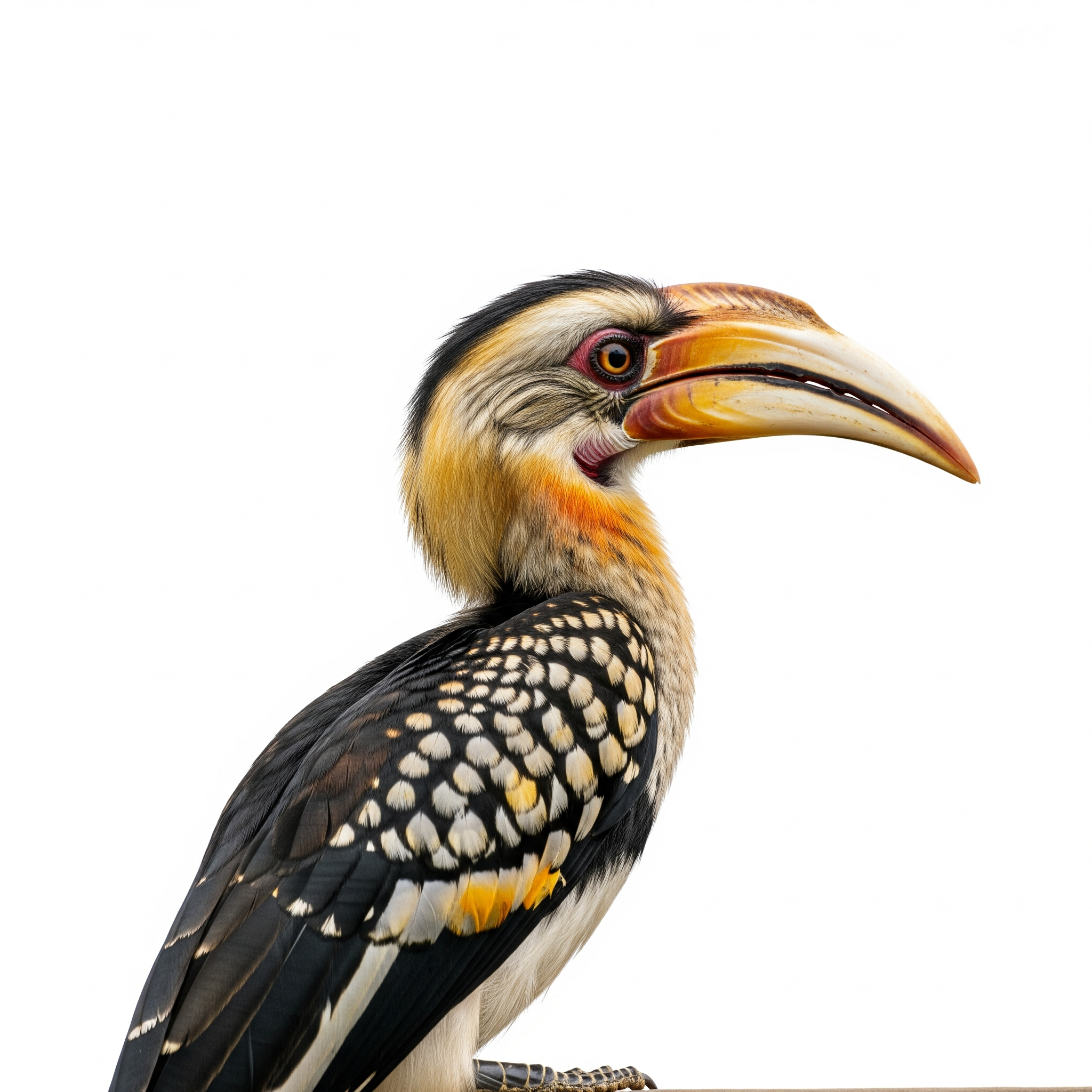
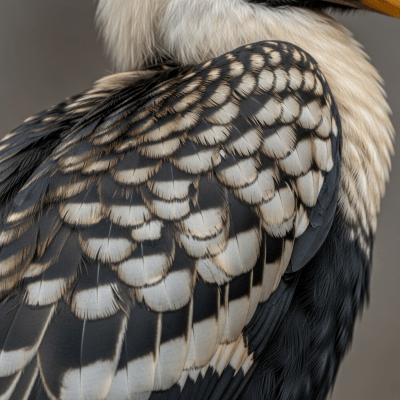
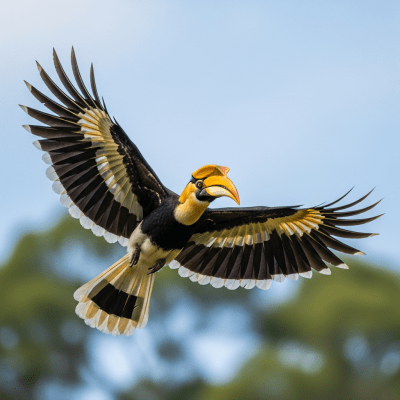
Hornbills are medium to large birds, ranging from about 30 cm to over 120 cm in length depending on species. Their most distinctive feature is the massive, often brightly colored bill, topped with a hollow casque. Plumage varies widely—some species display bold black, white, yellow, or red coloration. Their imposing silhouette and unique bill make them instantly recognizable among tropical birds.
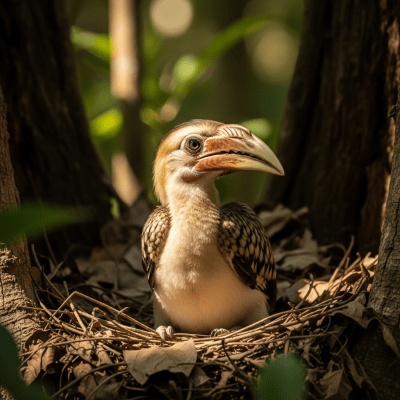
Hornbills are primarily arboreal, living in forests, woodlands, and savannas. They are renowned for their remarkable nesting behavior: females seal themselves inside tree cavities using mud and droppings during incubation, relying entirely on the male for food until the young are ready to emerge. As frugivores, hornbills play a vital role in dispersing seeds, shaping forest ecosystems. Their feathers and casques have also been used ornamentally in traditional attire and ceremonies.
Bring this kind into your world illustrated posters, mugs, and shirts.
Archival print, museum-grade paper
Buy Poster
Stoneware mug, dishwasher safe
Buy Mug
Soft cotton tee, unisex sizes
Buy ShirtHornbills hold deep cultural meaning in many societies. In Southeast Asia, the helmeted hornbill's casque has been used for carving and ceremonial ornamentation, while in the Philippines and Indonesia, hornbills feature in folklore and tribal symbolism. Their striking appearance and unique behaviors have made them symbols of fidelity, guardianship, and the wild in art and mythology.
Hornbills are native to tropical and subtropical regions of Africa and Asia, thriving in forests, woodlands, and savannas. Their range extends from dense rainforests to open woodlands, with different species adapted to specific habitats within these continents.

Hornbills are primarily frugivorous, feeding on a wide variety of fruits. They also consume insects, small animals, and carrion when available. Their strong bills allow them to pluck fruit and probe for prey, making them versatile feeders and essential contributors to seed dispersal in their habitats.
Hornbills exhibit unique breeding behavior: females seal themselves inside tree cavities using mud and droppings for the entire incubation period, relying on males to deliver food. This strategy protects eggs and chicks from predators. After hatching, the young remain in the cavity until they are ready to fledge, emerging alongside the female. Lifespan and clutch size vary by species, but this nesting method is a hallmark of the family.
Many hornbill species face significant threats from habitat loss, fragmentation, and illegal trade in casques and feathers. International regulations, such as CITES, restrict trade in hornbill parts to protect vulnerable populations. Conservation efforts focus on habitat preservation and enforcement of wildlife protection laws.
Hornbills are ecologically vital as seed dispersers, helping maintain forest diversity and regeneration. While not significant in agriculture or industry, their ornamental casques and feathers have been used in traditional crafts and ceremonies. Due to their ecological importance and protected status, hornbills contribute more to ecosystem health than to direct economic activity.
Hornbills have never been domesticated. The family encompasses several genera, including Buceros, Tockus, Anthracoceros, and Rhinoplax, with ongoing taxonomic revisions regarding species and genus limits. All hornbills remain wild birds, deeply adapted to their native environments.