
Great Tit
The Great Tit (Parus major) is a vibrant, adaptable songbird recognized for its striking plumage and lively presence across Europe, Asia, and North Africa.
The Great Tit (Parus major) is a vibrant, adaptable songbird recognized for its striking plumage and lively presence across Europe, Asia, and North Africa.
First described by Carl Linnaeus in 1758, the Great Tit traces its lineage deep into the Palearctic region, with fossil records affirming its longstanding presence. Unlike domesticated birds, its origin is rooted in wild woodlands and forests, evolving within the Paridae family and diversifying into numerous subspecies as it spread across continents.
The Great Tit belongs to the class Aves, order Passeriformes (perching birds), and family Paridae (tits and chickadees). Its scientific name is Parus major, and it stands as one of the most widely distributed and studied members of its family, with several recognized subspecies reflecting regional variation.
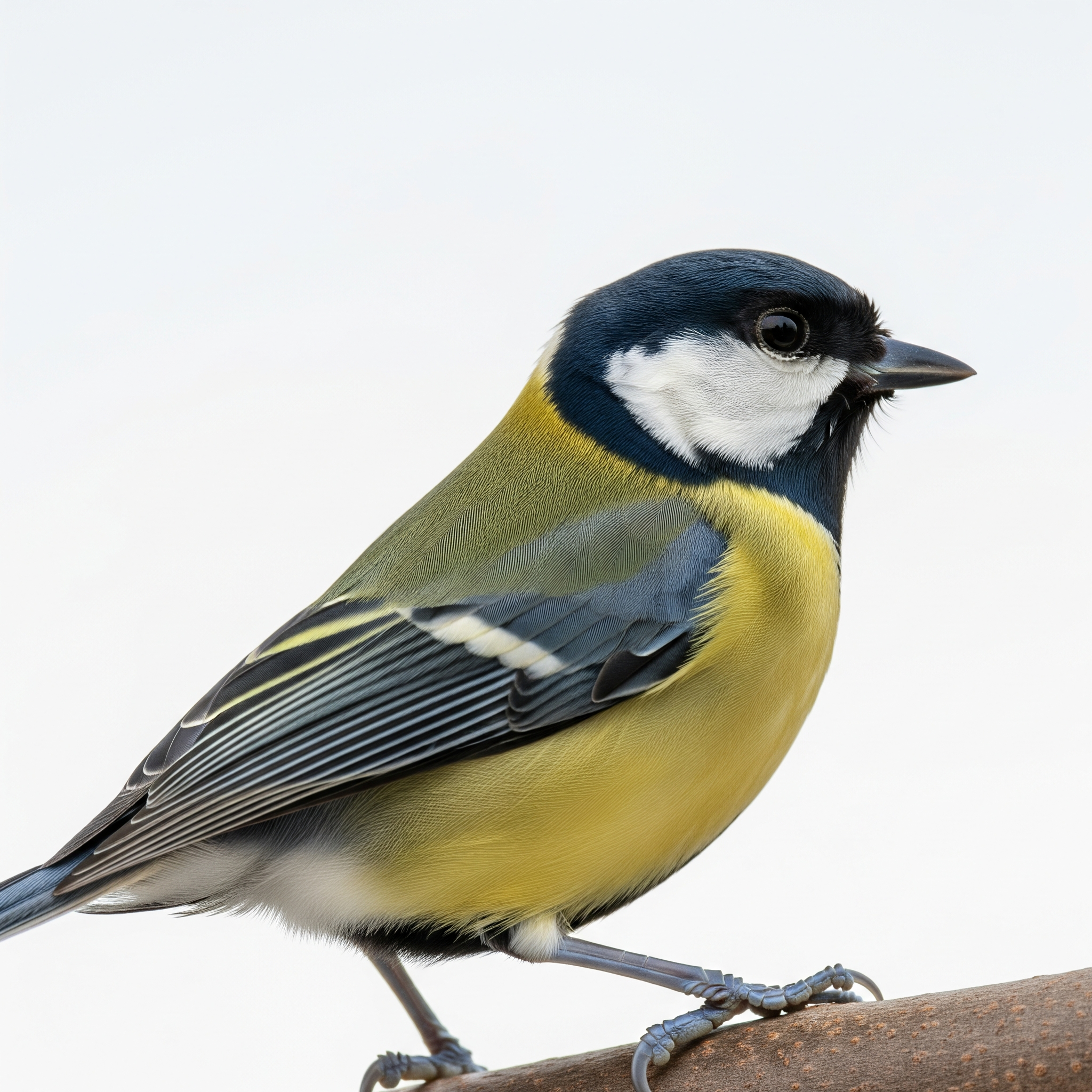
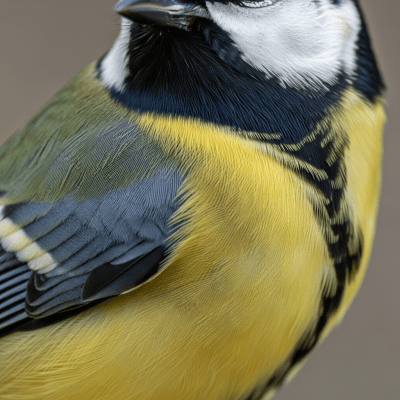
Medium-sized and bold, the Great Tit measures 12.5–14 cm in length with a wingspan of 22–25 cm. Its most distinctive features include a glossy black head and neck, crisp white cheek patches, olive-green upperparts, and brilliant yellow underparts marked by a central black stripe. Males typically sport a broader stripe than females. The bird’s short, stout bill is perfectly suited for its varied diet, while its lively movements and vivid colors make it unmistakable in gardens and woodlands.
The Great Tit is celebrated for its intelligence, adaptability, and complex social behaviors. It thrives in diverse habitats, from dense forests to city parks and gardens, and is known for its problem-solving skills—capable of opening milk bottles or accessing feeders. Its song repertoire is remarkably varied, with individuals able to mimic other birds and adjust calls to local environments. The species plays a vital ecological role by controlling insect populations and is a favorite subject in behavioral and ecological research.
Bring this kind into your world illustrated posters, mugs, and shirts.
Archival print, museum-grade paper
Buy Poster
Stoneware mug, dishwasher safe
Buy Mug
Soft cotton tee, unisex sizes
Buy ShirtAs a familiar garden visitor, the Great Tit features prominently in European folklore, children’s literature, and nature art. Its cheerful calls and bold personality have made it a symbol of resilience and adaptability in urban wildlife campaigns. In scientific circles, it is a flagship species for studies on learning, adaptation, and social behavior, often cited in ornithological research and environmental education programs.
The Great Tit is found across a vast range, spanning most of Europe, temperate Asia, and parts of North Africa. It flourishes in deciduous and mixed woodlands, but is equally at home in parks, gardens, and urban environments, making it one of the most widespread and familiar songbirds in its range.



Omnivorous and opportunistic, the Great Tit primarily consumes insects and spiders during the breeding season, switching to seeds and nuts in autumn and winter. Its robust bill allows it to crack open seeds and probe crevices for hidden prey, and it readily visits bird feeders in gardens.
Breeding in spring, the Great Tit typically raises 1–2 broods per year. Nests are constructed in tree holes or nest boxes, lined with moss, feathers, and soft materials. The female lays a clutch of 5–12 eggs, which hatch after about two weeks. Chicks fledge roughly three weeks later, and adults may live up to 3 years in the wild, though some survive longer.
The Great Tit is classified as Least Concern by conservation authorities, thanks to its wide distribution and stable populations. While habitat loss and urbanization pose local threats, the species’ adaptability has allowed it to thrive in both rural and urban landscapes.
Ecologically, the Great Tit is a key predator of insect pests, contributing to natural pest control in gardens and forests. Its presence supports biodiversity and healthy ecosystems. Economically, it holds value in birdwatching and environmental education, but has no direct commercial or agricultural use.
The Great Tit has not been domesticated and is not subject to breeding programs. However, up to 15 subspecies are recognized, reflecting regional adaptations and variations in plumage and vocalizations. Some eastern forms are debated as separate species, highlighting ongoing taxonomic research.