Flamingo
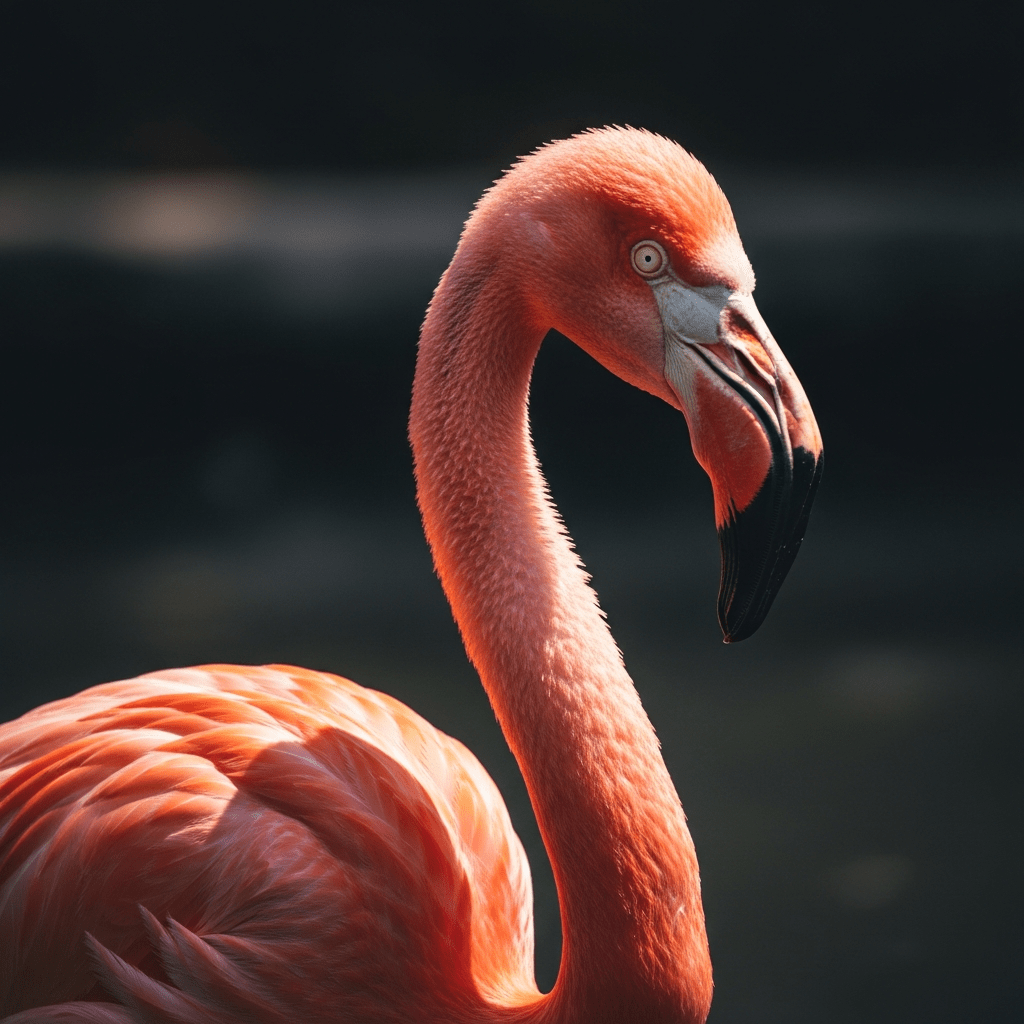
The flamingo is a large, striking wading bird renowned for its vivid pink plumage, elongated neck and legs, and distinctive downturned bill adapted for filter-feeding in shallow waters.
The flamingo is a large, striking wading bird renowned for its vivid pink plumage, elongated neck and legs, and distinctive downturned bill adapted for filter-feeding in shallow waters.
Flamingos trace their evolutionary lineage to the family Phoenicopteridae, first formally described by Charles Lucien Bonaparte in 1831. Fossil evidence places their ancestors in the Oligocene epoch, highlighting a long and distinct history within the order Phoenicopteriformes. Flamingos are wild birds, with no domestication history, and their natural range spans Africa, Europe, Asia, and the Americas. Today, six extant species are recognized, each adapted to specific regions and habitats.
Flamingos belong to the class Aves, order Phoenicopteriformes, and family Phoenicopteridae. This family is unique among birds, with flamingos distinguished by their specialized feeding and social behaviors. Within Phoenicopteridae, six species are recognized, including the Greater Flamingo (Phoenicopterus roseus) and American Flamingo (Phoenicopterus ruber). Taxonomic authorities such as the IOC World Bird List and BirdLife International maintain current species lists and nomenclature, though some disagreement exists regarding species splits and subspecies.
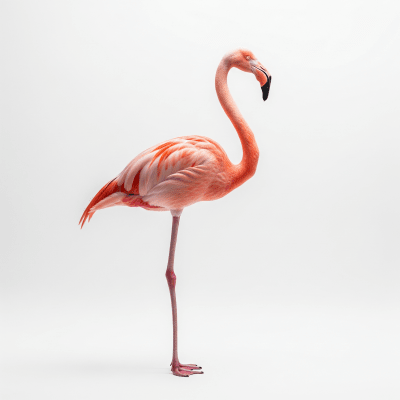
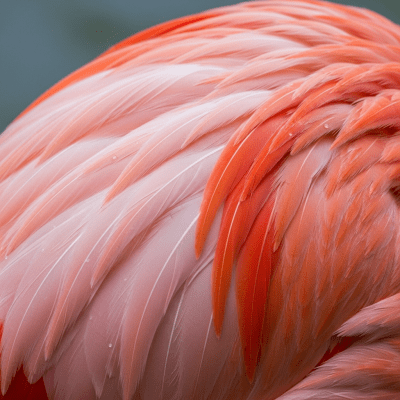
Flamingos are instantly recognizable for their tall, elegant stature—some species reaching up to 1.5 meters in height. Their plumage ranges from pale pink to deep coral, a coloration derived from carotenoid pigments in their diet. Long, slender legs and an equally elongated neck give them a graceful silhouette, while their specialized downturned bill is perfectly adapted for filter-feeding. Flamingos often stand on one leg, a behavior that adds to their iconic image in wetlands around the world.
Flamingos are highly social, forming dense colonies that can number in the thousands. Their communal nesting habits involve constructing mud mound nests in shallow lakes. Feeding is a distinctive behavior: flamingos sweep their bills upside-down through water, filtering out algae, small crustaceans, and diatoms. While not commonly used for food today, flamingos play vital roles in ecotourism, zoo exhibits, and as ornamental symbols in art and advertising, reflecting their strong connection to human culture and conservation efforts.
Bring this kind into your world illustrated posters, mugs, and shirts.
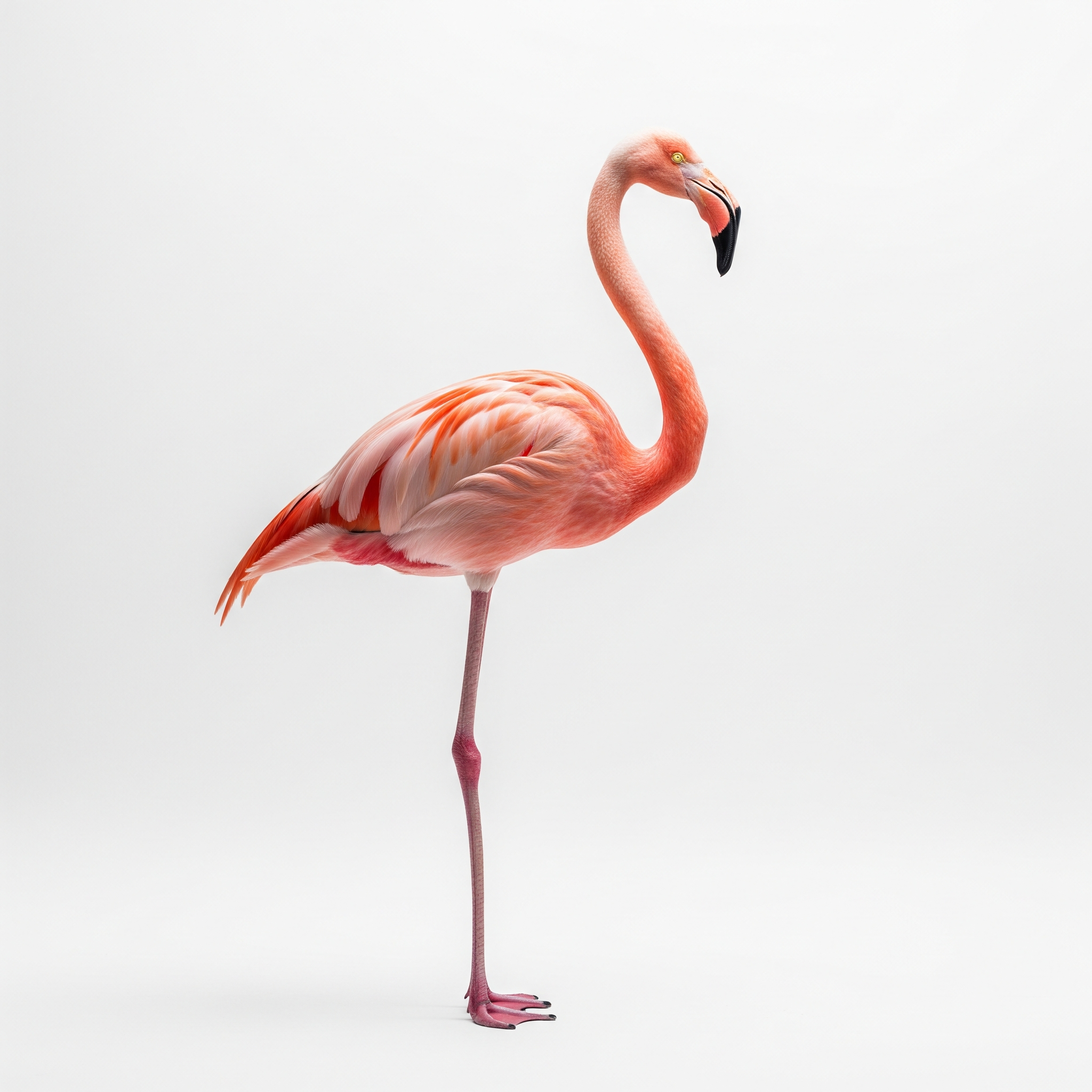
Archival print, museum-grade paper
Buy Poster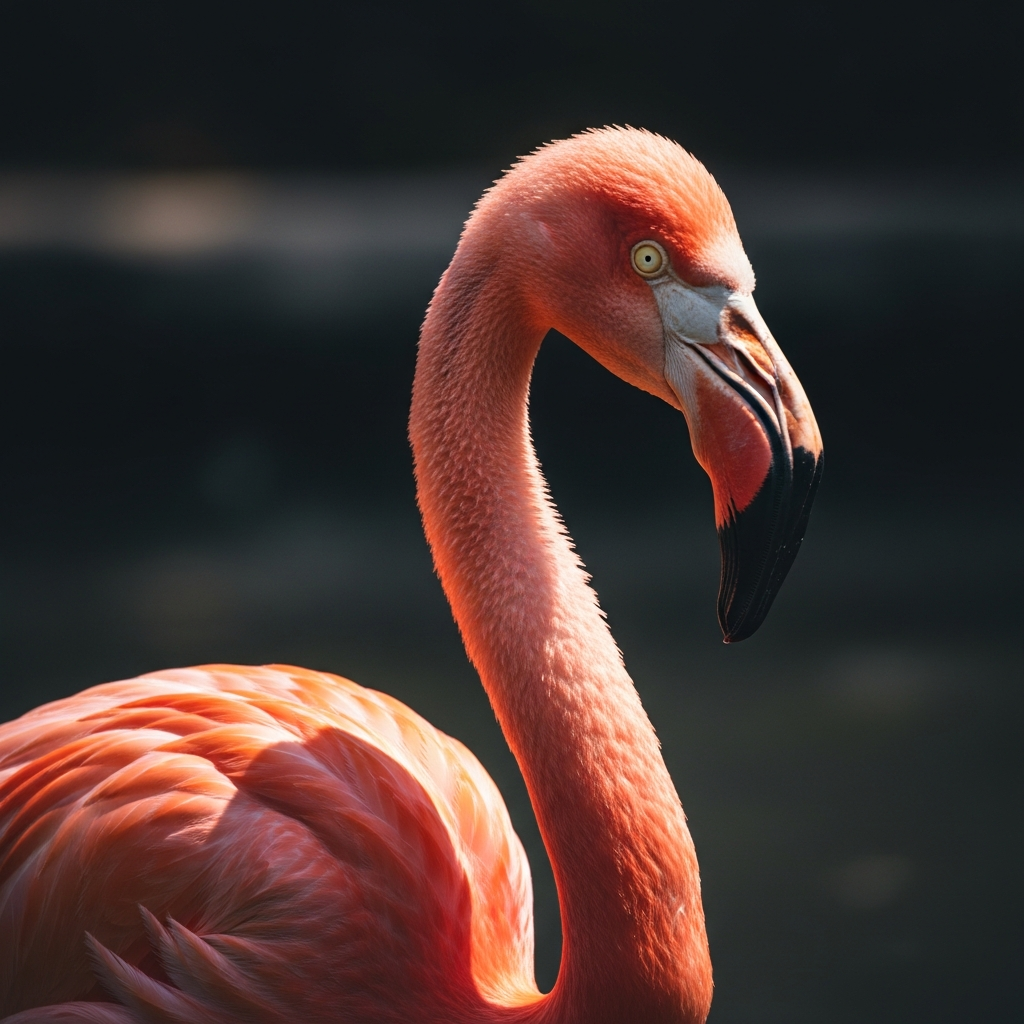
Stoneware mug, dishwasher safe
Buy Mug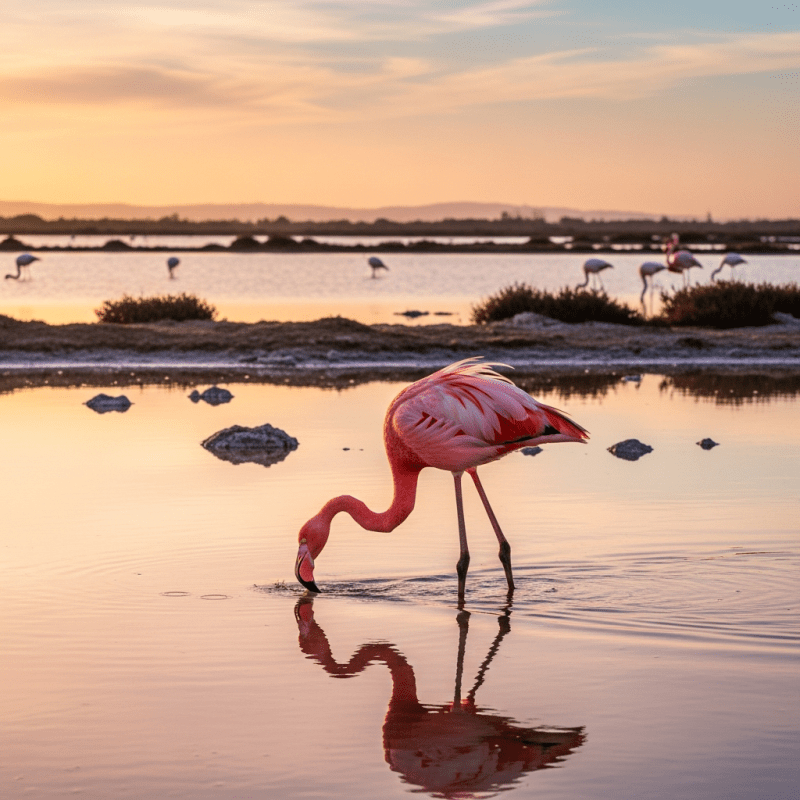
Soft cotton tee, unisex sizes
Buy ShirtFew birds have captured the human imagination quite like the flamingo. Their vibrant color and elegant form have made them enduring symbols of beauty, grace, and exoticism in art, literature, and popular culture. Flamingos feature prominently in advertising, fashion, and garden decor, often representing tropical or festive themes. In ancient cultures, flamingos were sometimes consumed, but today they are celebrated as flagship species for wetland conservation and ecotourism, embodying the delicate balance of nature.
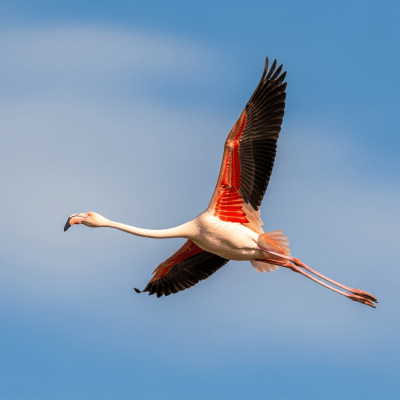
Flamingos are found in both the Old and New Worlds, with populations distributed across Africa, southern Europe, parts of Asia, and the Americas. Their preferred habitats are shallow saline or alkaline lakes and wetlands, where they can easily access food and nest in large colonies. Each species occupies distinct geographic regions, from the Greater Flamingo in Eurasia and Africa to the American Flamingo in the Caribbean and northern South America.
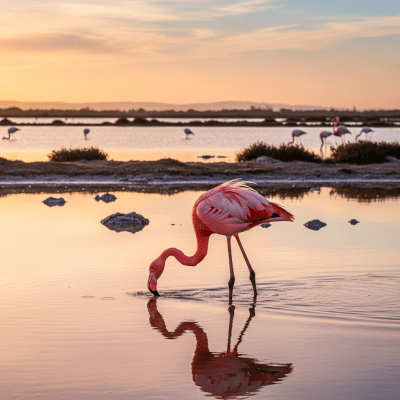
Flamingos are specialized filter-feeders, using their uniquely shaped bills to sift algae, diatoms, and small crustaceans from shallow water. Their feeding technique involves sweeping their heads upside down through the water, with lamellae in their bills trapping tiny food particles. The carotenoids found in their diet are responsible for their characteristic pink coloration, making their feeding habits essential to their iconic appearance.
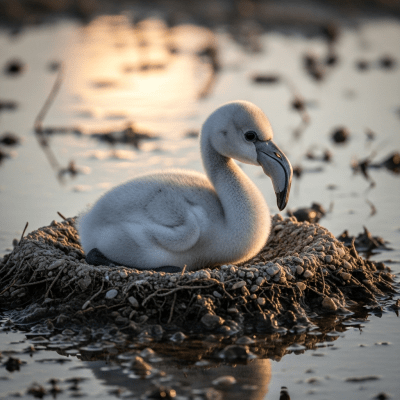
Flamingos breed in large colonies, constructing mud mound nests in shallow lakes. Each female typically lays a single egg per season. The chicks are born with gray or white down and gradually develop their pink coloration as they mature and consume carotenoid-rich food. Flamingos can live 20 to 30 years in the wild, with some individuals thriving even longer in captivity. Their reproductive success is closely tied to stable water levels and undisturbed habitats.
Most flamingo species are not currently endangered, but they are sensitive to habitat disturbance, water pollution, and changes in water quality. These factors can impact breeding success and population stability. Flamingos serve as flagship species for wetland conservation, drawing attention to the need for protecting these vital ecosystems.
Flamingos play a crucial ecological role in wetland environments, helping to control algae and small invertebrate populations through their filter-feeding. Economically, they are important for ecotourism, attracting visitors to reserves and parks worldwide. Their cultural symbolism and presence in zoos and aviaries further enhance their value, making them ambassadors for conservation and environmental awareness.
Flamingos are wild birds with no history of domestication. However, six extant species are recognized within the family Phoenicopteridae: Greater Flamingo (Phoenicopterus roseus), Lesser Flamingo (Phoeniconaias minor), Chilean Flamingo (Phoenicopterus chilensis), Andean Flamingo (Phoenicoparrus andinus), James's Flamingo (Phoenicoparrus jamesi), and American Flamingo (Phoenicopterus ruber). Each species exhibits unique adaptations and occupies distinct regions.