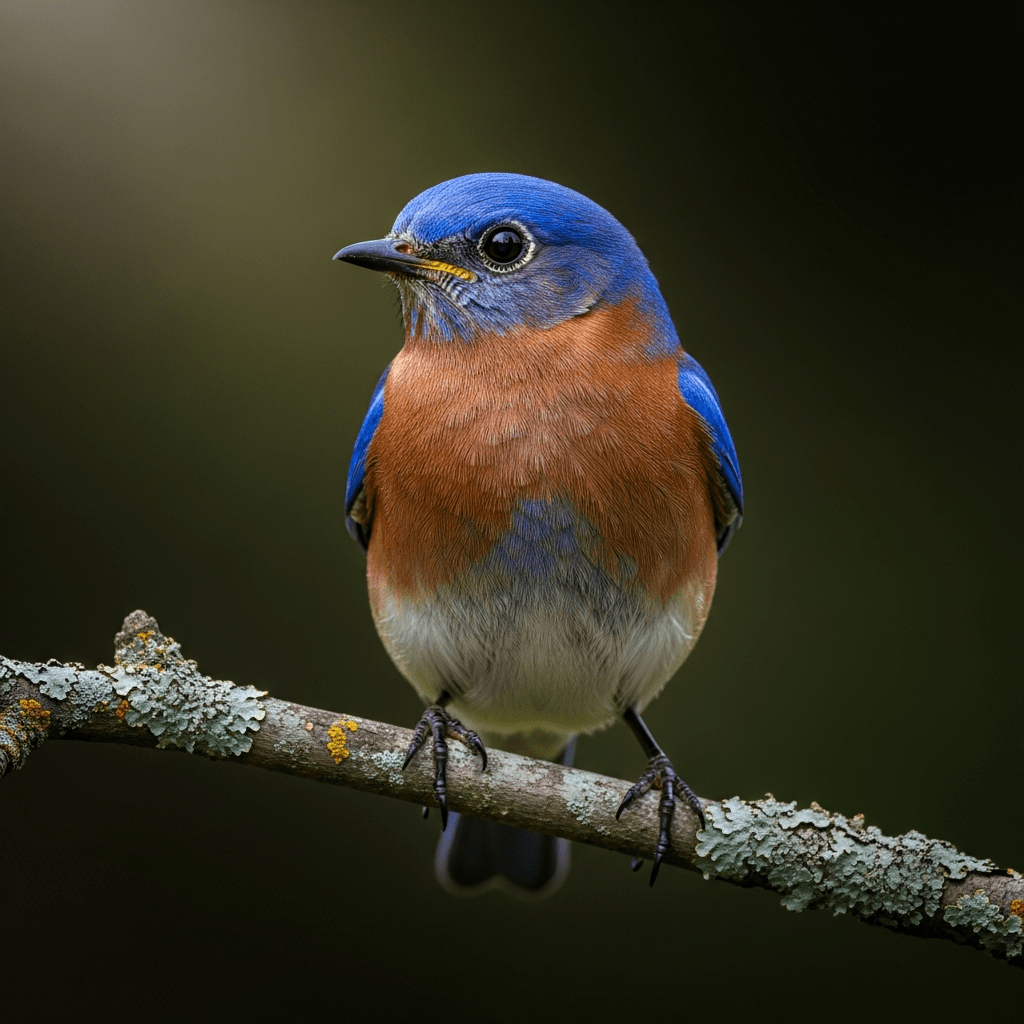
Eastern Bluebird
The Eastern Bluebird (Sialia sialis) is a small, vividly colored thrush native to North America, celebrated for its striking blue plumage and cheerful presence in open landscapes.
The Eastern Bluebird (Sialia sialis) is a small, vividly colored thrush native to North America, celebrated for its striking blue plumage and cheerful presence in open landscapes.
First described by Carl Linnaeus in 1758, the Eastern Bluebird’s origins span eastern North America, Bermuda, and parts of Central America. This species evolved naturally within the genus Sialia, adapting to a variety of open habitats. Its discovery is rooted in wild observation rather than domestication, with several subspecies emerging in response to regional environments.
The Eastern Bluebird belongs to the family Turdidae, which encompasses thrushes, and is classified within the genus Sialia. As a member of the class Aves, it shares core avian features like feathers and egg-laying, and is distinguished from other songbirds by its cavity-nesting habits and vibrant coloration. Its scientific name is Sialia sialis.
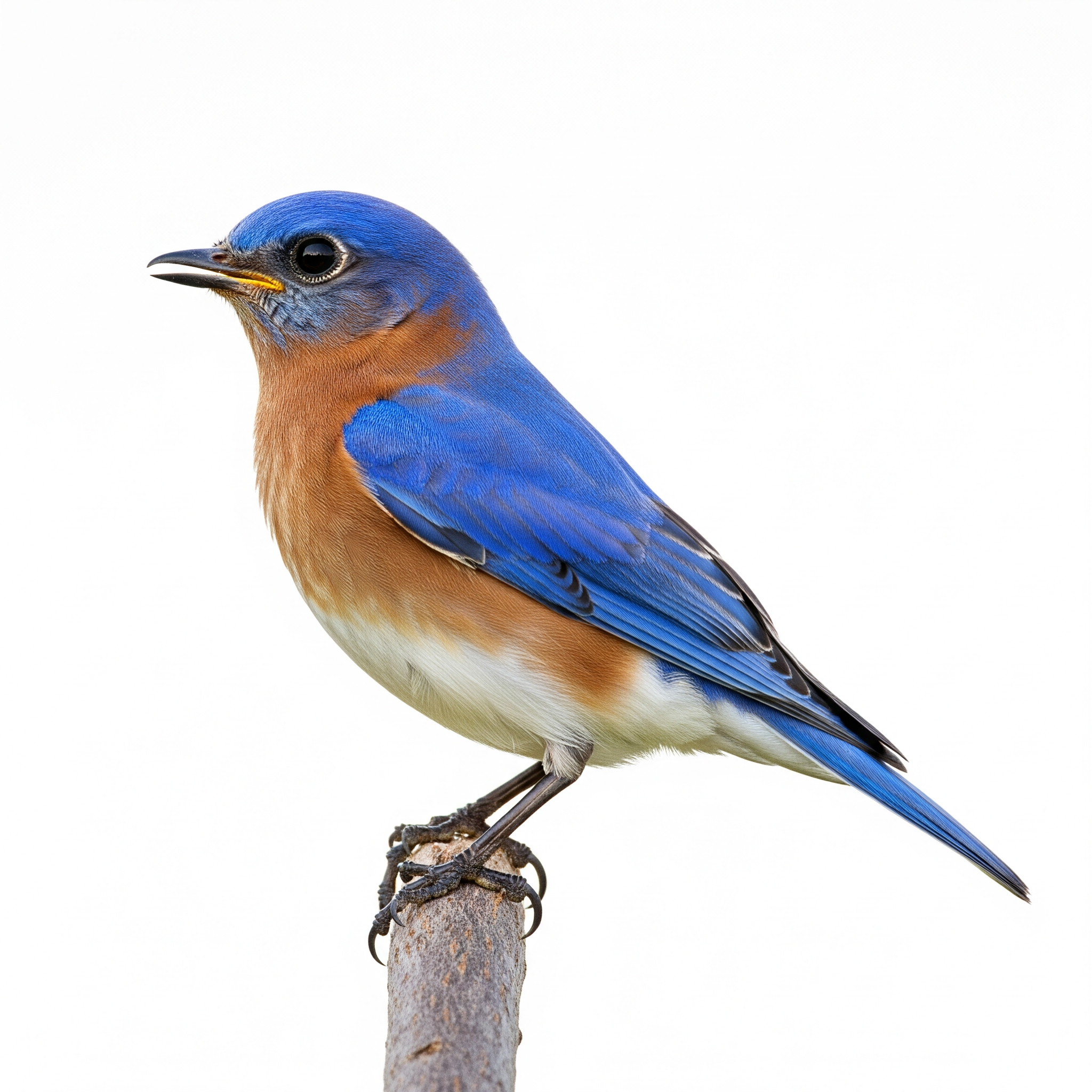
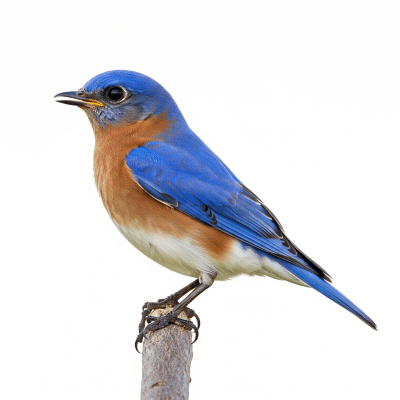
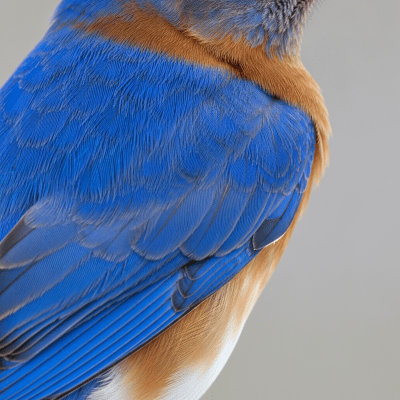
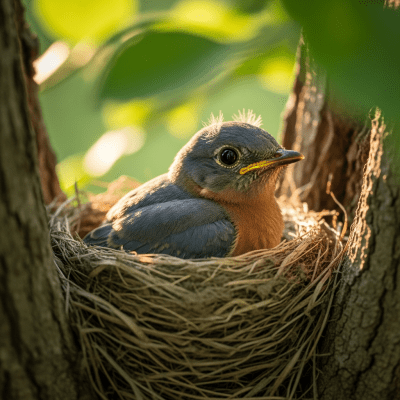
Eastern Bluebirds are small passerines, measuring about 16–21 cm in length with a wingspan of 25–32 cm. Males are instantly recognizable by their brilliant blue upperparts and rusty-red breast, while females display softer grayish-blue tones and paler underparts. Their compact size, rounded body, and sexual dimorphism in plumage make them both visually striking and easy to identify in the field.
Eastern Bluebirds are known for their cavity-nesting behavior, often utilizing old woodpecker holes or nest boxes. They are adaptable to human-altered landscapes, thriving in farmlands, suburban gardens, and open woodlands. Migratory in the north and resident in the south, these birds play a vital role as insect predators and are cherished by birdwatchers for their approachable nature and melodious songs.
Bring this kind into your world illustrated posters, mugs, and shirts.
Archival print, museum-grade paper
Buy Poster
Stoneware mug, dishwasher safe
Buy Mug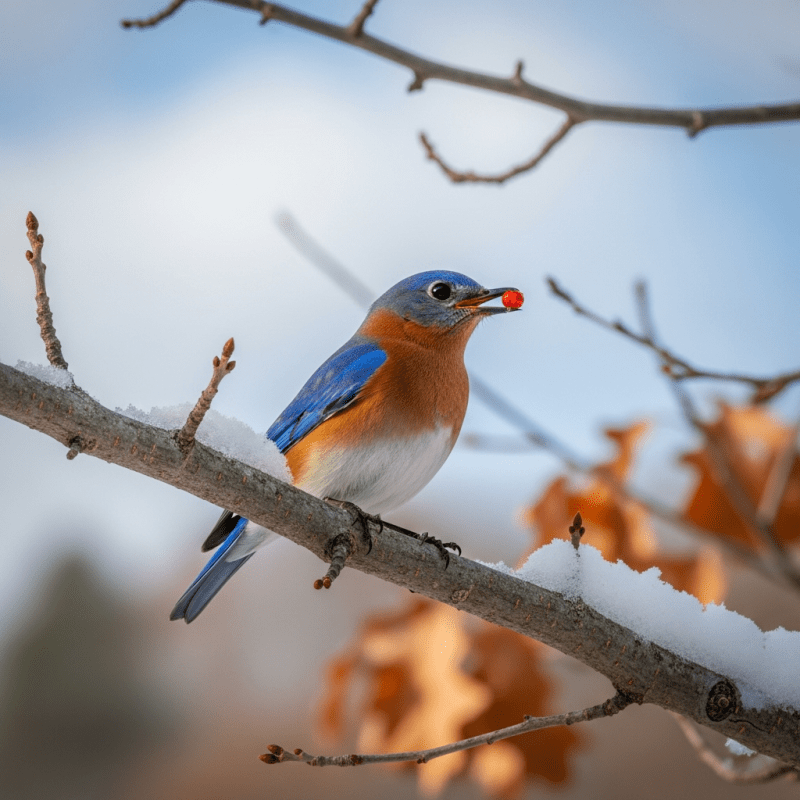
Soft cotton tee, unisex sizes
Buy ShirtIn American folklore, the Eastern Bluebird is a symbol of happiness, hope, and renewal. Its vivid colors and gentle demeanor have inspired countless works of art, poetry, and song. The species holds official status as the state bird of Missouri and New York, underscoring its deep cultural resonance and popularity in birdwatching communities.
Eastern Bluebirds inhabit open woodlands, farmlands, and suburban landscapes throughout eastern North America, with populations extending into Bermuda and Central America. They favor areas with scattered trees and meadows, relying on natural cavities or nest boxes for breeding. Their range reflects both migratory and resident populations, depending on latitude.
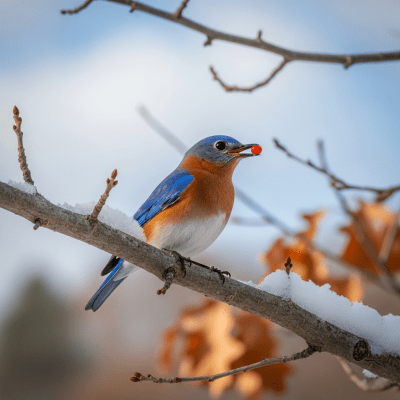
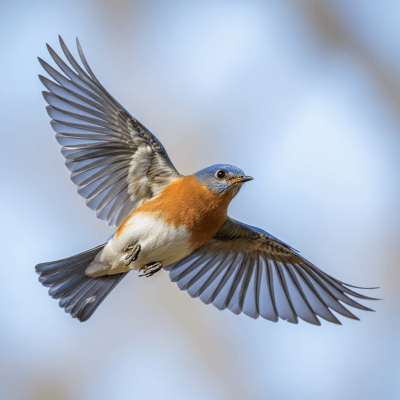
Primarily insectivorous, Eastern Bluebirds feed on beetles, caterpillars, grasshoppers, and other invertebrates. During colder months, their diet shifts to include fruits and berries, which provide essential nutrients when insects are scarce. They forage by perching and swooping to the ground, demonstrating agility and keen eyesight.
Eastern Bluebirds are cavity nesters, laying eggs in natural tree holes or nest boxes. Breeding typically occurs in spring and early summer, with pairs often raising multiple broods per season. The female incubates the eggs, while both parents feed the hatchlings. Lifespan varies, but many individuals survive several years in the wild, contributing to stable local populations.
Eastern Bluebirds are classified as a species of Least Concern, with stable populations across their range. Major threats include competition for nesting sites from invasive birds like European Starlings and House Sparrows. Conservation efforts, especially nest box programs, have been instrumental in maintaining and increasing their numbers.
Eastern Bluebirds play a vital ecological role as natural insect predators, helping control pest populations in agricultural and suburban settings. Their presence is an indicator of healthy environments, and they contribute significantly to birdwatching and ecotourism. While they have no direct economic value in trade, their ecological benefits and cultural appeal are substantial.
The Eastern Bluebird is a wild species with no history of domestication. However, several subspecies are recognized, reflecting geographic variation: Sialia sialis sialis (nominate), S. s. bermudensis (Bermuda Bluebird), S. s. grata, S. s. fulva, S. s. mexicana, S. s. nidificans, and S. s. caribaea. These subspecies adapt to local conditions but are not considered breeds in a domesticated sense.