
Common Swift
The Common Swift (Apus apus) is a highly aerial bird renowned for its extraordinary flight endurance, spending nearly its entire life on the wing across Eurasia and North Africa.
The Common Swift (Apus apus) is a highly aerial bird renowned for its extraordinary flight endurance, spending nearly its entire life on the wing across Eurasia and North Africa.
First described by Carl Linnaeus in 1758, the Common Swift traces its origins to the vast landscapes of Eurasia and North Africa. Its scientific name, drawn from ancient Greek, means "without feet," a nod to its tiny legs and almost exclusively airborne existence. Unlike domesticated birds, the Common Swift is a wild species shaped by natural selection and migratory habits, with no history of breeding or domestication.
The Common Swift belongs to the order Apodiformes and family Apodidae, a group distinguished by their mastery of flight. Within this family, the genus Apus encompasses swifts known for their streamlined bodies and aerial lifestyles. The species’ full scientific classification is Apodiformes; Apodidae; Apus; Apus apus, placing it among the most specialized flyers in the class Aves.
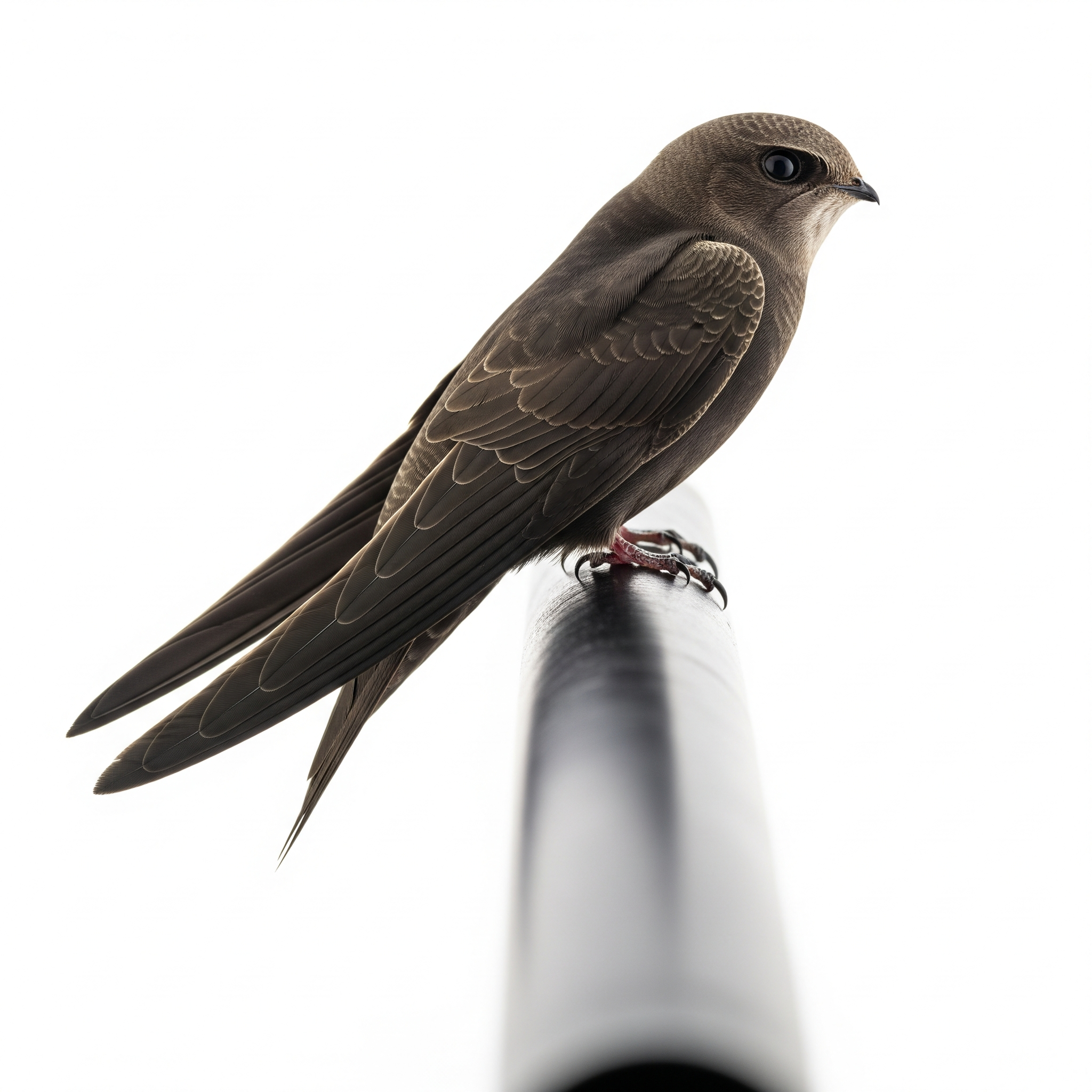
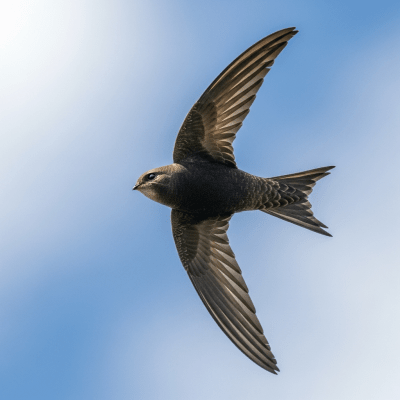
With a body length of about 16–17 cm and a wingspan stretching 38–40 cm, the Common Swift is instantly recognizable by its long, sickle-shaped wings and short, forked tail. Its plumage is uniformly dark brown, appearing nearly black as it darts across the sky, accented by a pale throat patch. The bird’s tiny legs are adapted solely for clinging to vertical surfaces, never for perching or walking, underscoring its commitment to life aloft.
Common Swifts are among the most aerial of all birds, spending months at a time in flight—feeding, sleeping, and even mating on the wing. These migratory birds breed throughout Europe and Asia, then undertake epic journeys to winter in sub-Saharan Africa. Their insectivorous diet is caught entirely in midair, making them vital predators of flying insects. While they have no direct human uses, their presence signals healthy ecosystems and they are a favorite subject for birdwatchers and researchers alike.
Bring this kind into your world illustrated posters, mugs, and shirts.
Archival print, museum-grade paper
Buy Poster
Stoneware mug, dishwasher safe
Buy Mug
Soft cotton tee, unisex sizes
Buy ShirtThe Common Swift is celebrated in many cultures as a symbol of speed, freedom, and the arrival of summer. Its annual migrations and sudden appearance in northern skies have inspired poetry and folklore, often marking the changing of seasons. While not featured in culinary traditions, its role as a harbinger of warm weather and its tireless flight have made it a recurring motif in art and literature.
The Common Swift breeds widely across Europe and Asia, nesting in both urban and rural environments—often in buildings, cliffs, or other vertical surfaces. After the breeding season, they migrate to sub-Saharan Africa, spending the winter months in warmer climates. Their global range covers much of Eurasia, North Africa, and migratory corridors between these regions.


Common Swifts are insectivores, feeding exclusively on airborne insects and spiders. Their entire diet is captured in flight, using their wide gape to scoop up prey as they soar and dart through the air. This feeding strategy makes them important natural controllers of insect populations.
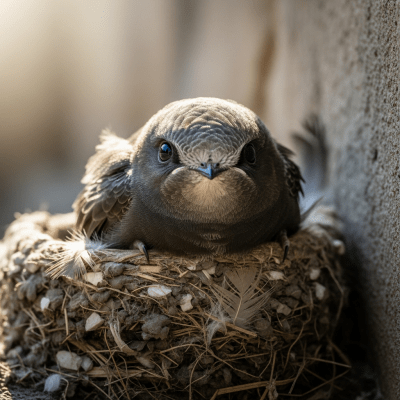
Breeding occurs in spring and summer, typically from May to July in Europe. Common Swifts nest in crevices, buildings, or cliffs, laying their eggs in sheltered sites. While specific clutch size varies, the species is known for its synchronized breeding and rapid development of chicks, which must quickly learn to fly and migrate. The swift’s lifecycle is closely tied to its migratory patterns, with young birds joining adults on their long journey to Africa soon after fledging.
The Common Swift is currently not considered threatened and is classified as Least Concern on the IUCN Red List. However, local populations may be affected by habitat loss, especially the reduction of suitable nesting sites due to modern building practices and urbanization.
While the Common Swift has no direct economic value, its ecological role is significant. As a voracious predator of flying insects, it helps regulate insect populations and serves as an indicator of environmental health. Its presence benefits agriculture by controlling pests and supports biodiversity in urban and rural ecosystems.
The Common Swift has never been domesticated and there are no recognized breeds or subspecies in commercial use. Its wild nature and specialized lifestyle make it unsuitable for captivity or farming, and its value lies in its ecological contributions and natural beauty.