Common Raven
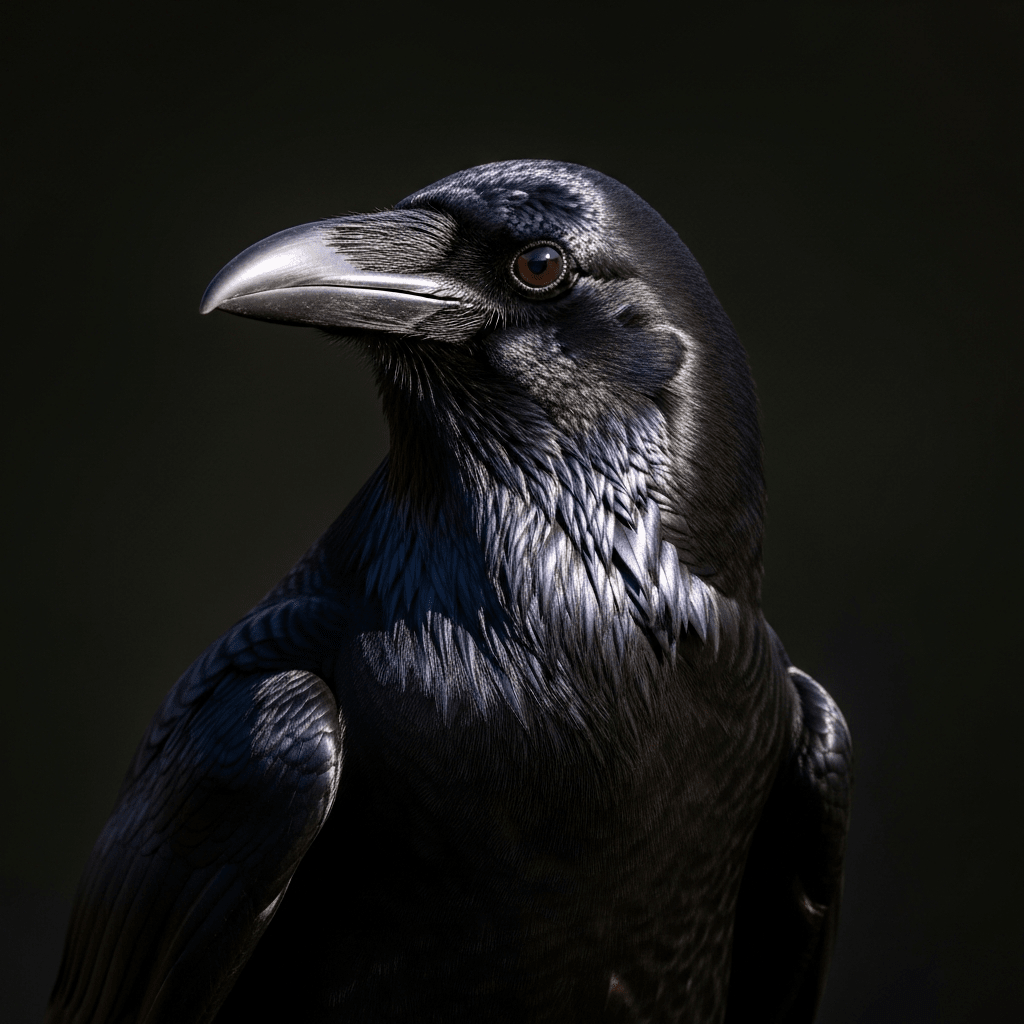
The Common Raven (Corvus corax) is the largest and most widespread raven species, renowned for its intelligence, adaptability, and striking all-black appearance across the Northern Hemisphere.
The Common Raven (Corvus corax) is the largest and most widespread raven species, renowned for its intelligence, adaptability, and striking all-black appearance across the Northern Hemisphere.
Formally described by Carl Linnaeus in 1758, the Common Raven traces its roots to the genus Corvus, which has existed since the Pleistocene. Naturally occurring across Eurasia and North America, this wild species has no history of domestication or human-directed breeding. Fossil records and centuries of observation confirm its enduring presence as a distinct and ancient bird.
The Common Raven belongs to the class Aves, order Passeriformes, family Corvidae, and genus Corvus. As a member of the corvids, it shares lineage with crows, magpies, and jays. Its binomial name, Corvus corax, reflects its place within one of the most intelligent and socially complex bird families, recognized by major ornithological authorities worldwide.
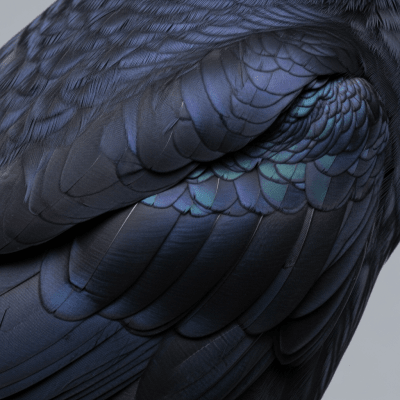
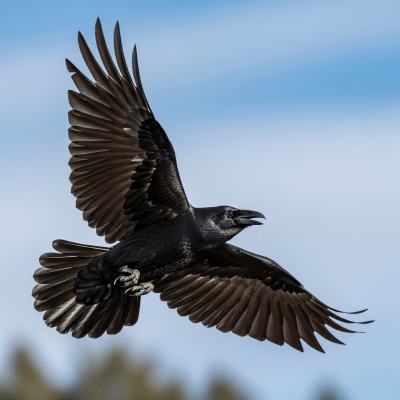
Striking in both size and presence, the Common Raven measures 54–67 cm in length with a wingspan of 115–150 cm and weighs between 0.69 and 2 kg. Its plumage is a deep, glossy black, often with a purplish sheen. Distinctive features include a thick neck, shaggy throat feathers, and a large, slightly curved bill. The raven's robust build and confident stance make it unmistakable among birds.
Common Ravens are celebrated for their remarkable intelligence, exhibiting problem-solving skills, tool use, and complex social interactions. They perform aerial acrobatics, mimic sounds, and adapt readily to diverse environments. While not domesticated or commercially utilized, their presence in urban and wild landscapes demonstrates a unique ability to thrive alongside humans and in remote habitats alike.
Bring this kind into your world illustrated posters, mugs, and shirts.
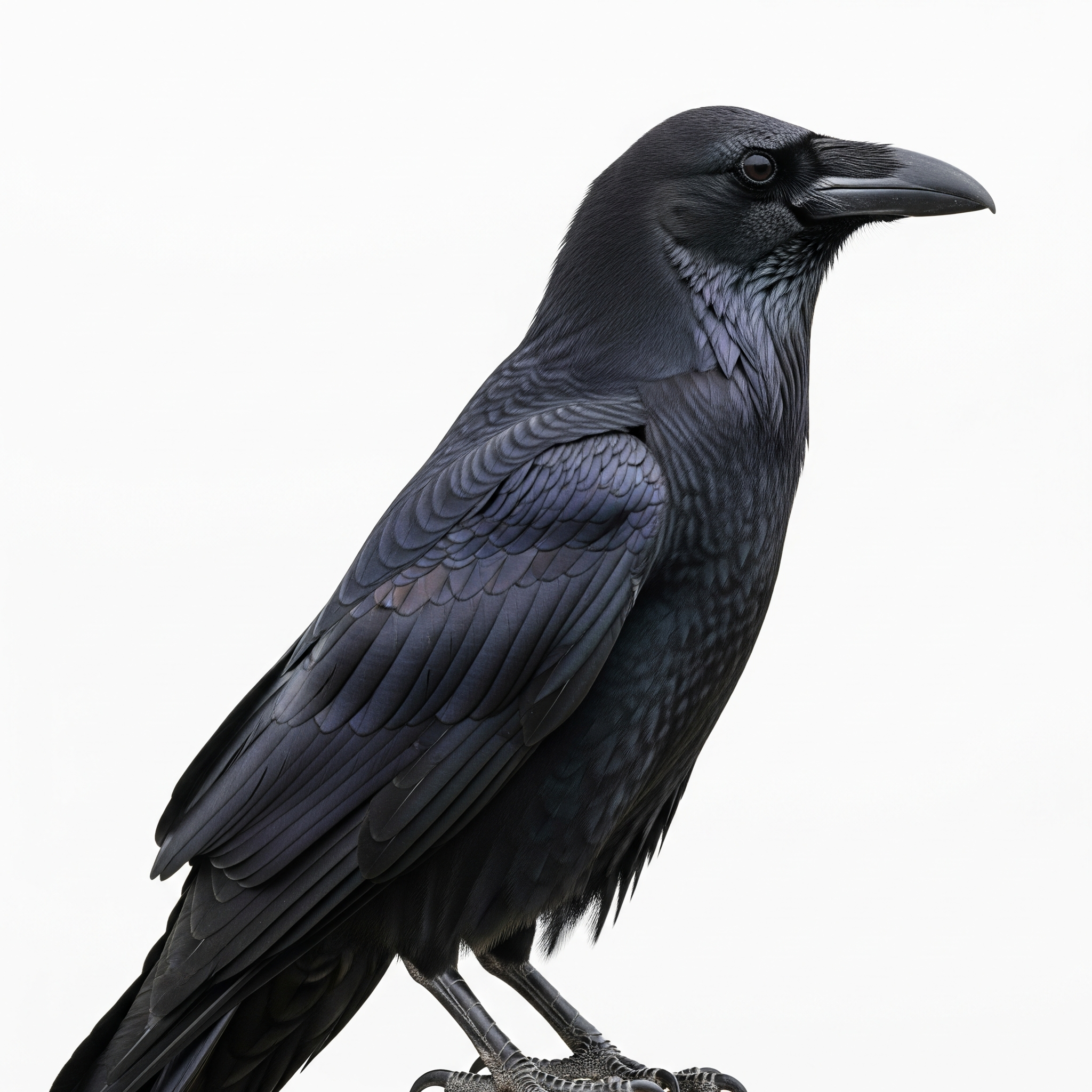
Archival print, museum-grade paper
Buy Poster
Stoneware mug, dishwasher safe
Buy Mug
Soft cotton tee, unisex sizes
Buy ShirtThroughout history, the Common Raven has held a prominent place in mythology, literature, and symbolism. Often depicted as a trickster, creator, or omen, ravens appear in indigenous folklore, Norse legend, and works by Edgar Allan Poe. Their mysterious calls and striking appearance have inspired reverence and superstition, making them cultural icons across continents.
Common Ravens inhabit an extraordinary range of environments, including tundra, deserts, forests, mountains, coastal regions, and urban areas throughout the Northern Hemisphere. Their distribution extends across Eurasia and North America, making them one of the most cosmopolitan birds in the world.
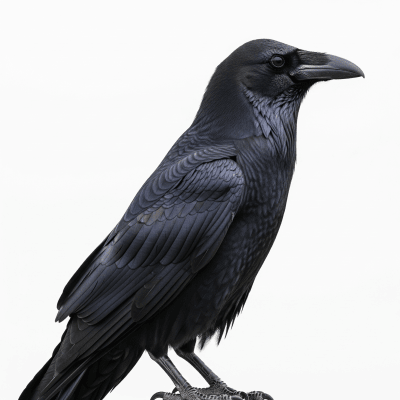

Omnivorous and opportunistic, Common Ravens feed on carrion, insects, seeds, fruit, and small animals. Their adaptable diet allows them to thrive in varied habitats, and their intelligence aids in locating and accessing diverse food sources.
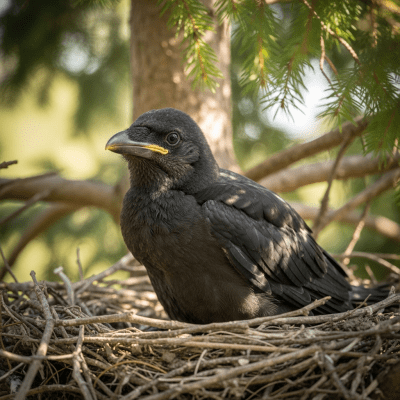
Common Ravens typically live 10–15 years in the wild, with some reaching over 20 years. They form monogamous pairs and build large, sturdy nests in trees, cliffs, or man-made structures. While clutch size and breeding season details vary regionally, ravens are attentive parents, raising their young with complex social care.
Currently, the Common Raven is not considered threatened and enjoys a stable global population. Legal protections in many countries help safeguard the species, though habitat loss and persecution in some areas may pose localized risks.
Ecologically, Common Ravens play a vital role as scavengers, helping to clean up carrion and control pest populations. Their adaptability and intelligence contribute to ecosystem balance. Economically, their direct impact is limited due to legal protections, but their cultural and ecological significance is profound.
The Common Raven remains a wild species with no history of domestication. However, up to eight subspecies are recognized, reflecting regional adaptations across its vast range, such as C. c. principalis in North America and C. c. corax in Eurasia.