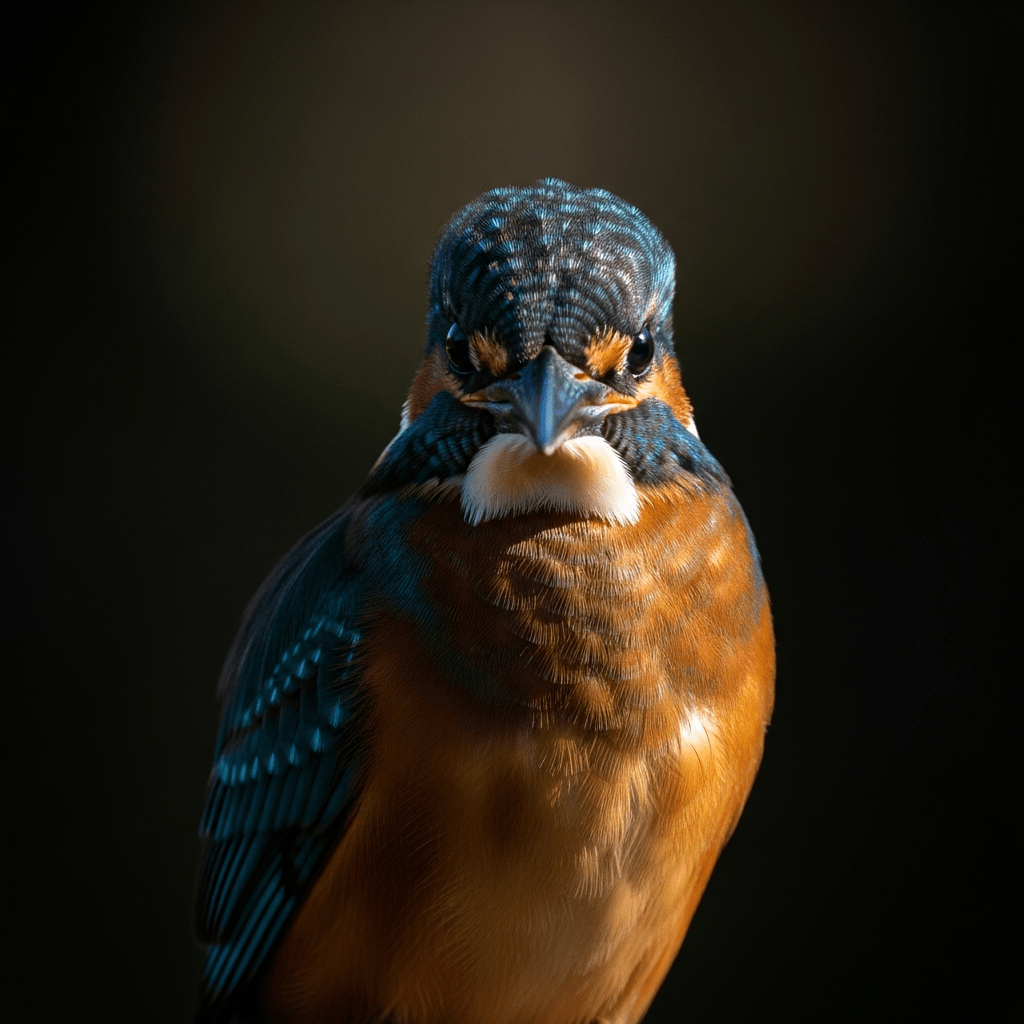
Common Kingfisher
The Common Kingfisher (Alcedo atthis) is a small, vividly colored bird famous for its dazzling blue and orange plumage and swift, darting flight along rivers and streams.
The Common Kingfisher (Alcedo atthis) is a small, vividly colored bird famous for its dazzling blue and orange plumage and swift, darting flight along rivers and streams.
First described by Carl Linnaeus in 1758, the Common Kingfisher is native to Eurasia and North Africa. Its natural history spans centuries, with no domestication or breeding history; it has always existed as a wild species thriving along clear waterways. The bird’s lineage belongs to the genus Alcedo within the family Alcedinidae, and its presence is deeply woven into the landscapes of its native regions.
Belonging to the class Aves, the Common Kingfisher is part of the order Coraciiformes and the family Alcedinidae, which includes all kingfishers. Its scientific name is Alcedo atthis. Within ornithological classification, it is grouped with other riverine kingfishers, recognized for specialized adaptations to aquatic hunting and burrow nesting. Regional subspecies are acknowledged, reflecting subtle variations across its broad range.
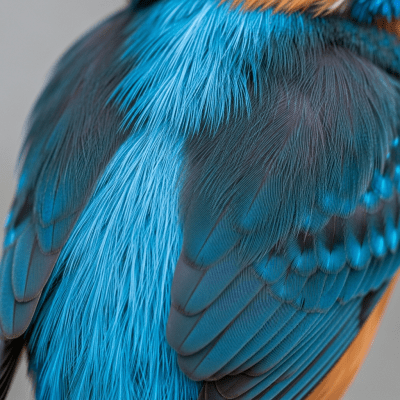
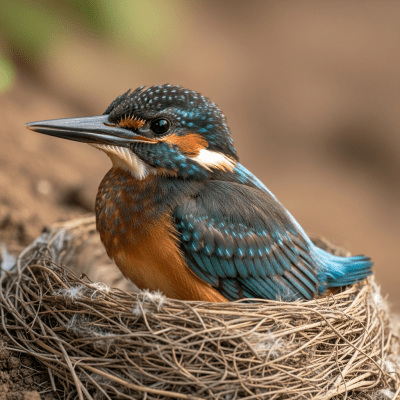
The Common Kingfisher is instantly recognizable by its iridescent blue-green crown and upperparts, contrasted with bright orange underparts. Measuring 16–17 cm in length with a wingspan of 24–26 cm, it is compact and streamlined. Its long, sharp black bill is ideal for catching fish; females can be distinguished by a reddish lower mandible, while males’ bills are entirely black. The bird’s rapid, direct flight, often skimming low over water, and its vivid colors make it a jewel among river birds.
Solitary and fiercely territorial, the Common Kingfisher spends much of its time perched quietly above water, scanning for prey. It hunts by diving swiftly from a perch to catch small fish and aquatic invertebrates. The species excavates burrows in riverbanks for nesting, and its presence is an indicator of healthy, unpolluted waterways. While not used commercially or culinarily, it plays a vital ecological role and is celebrated in art and folklore for its beauty and elusive nature.
Bring this kind into your world illustrated posters, mugs, and shirts.
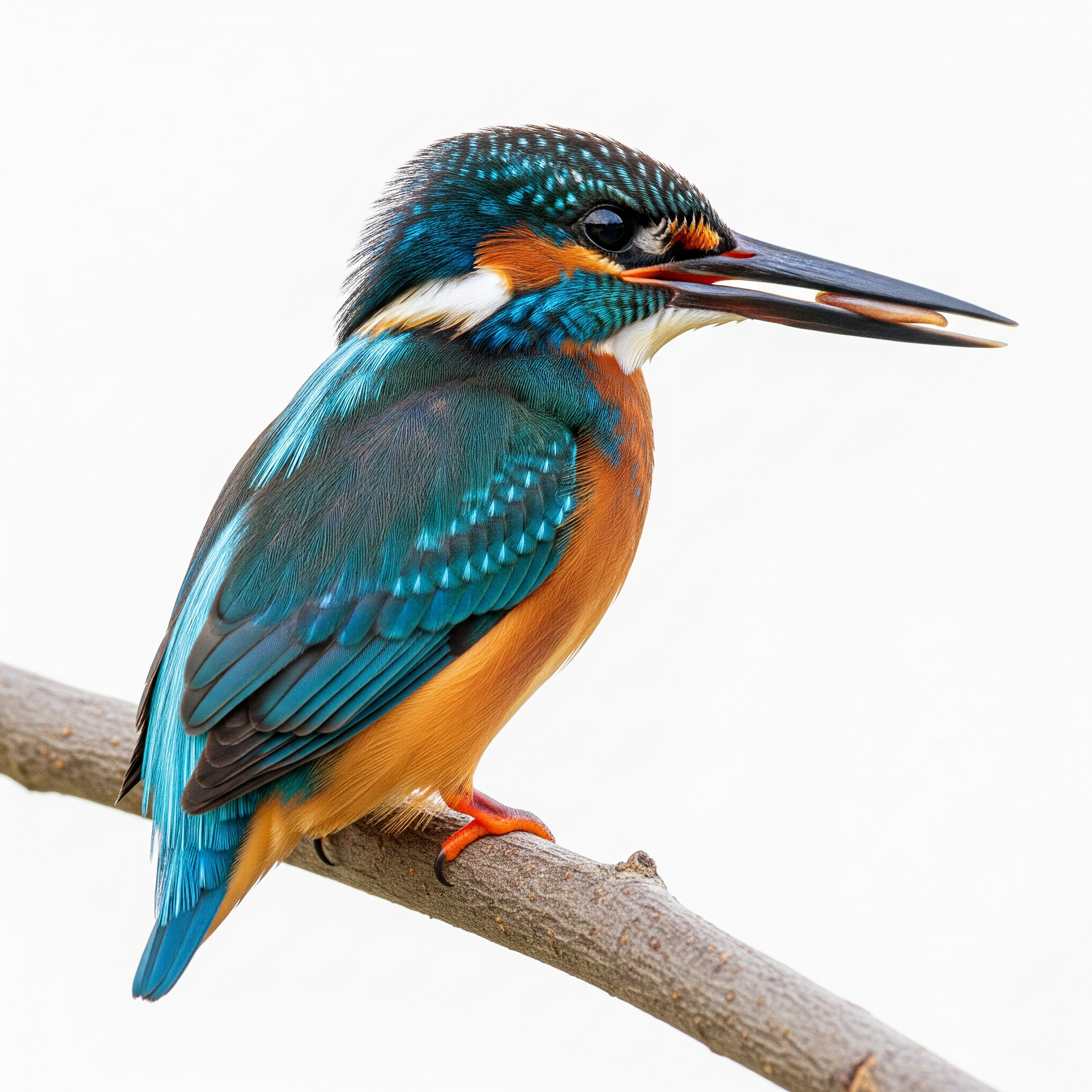
Archival print, museum-grade paper
Buy Poster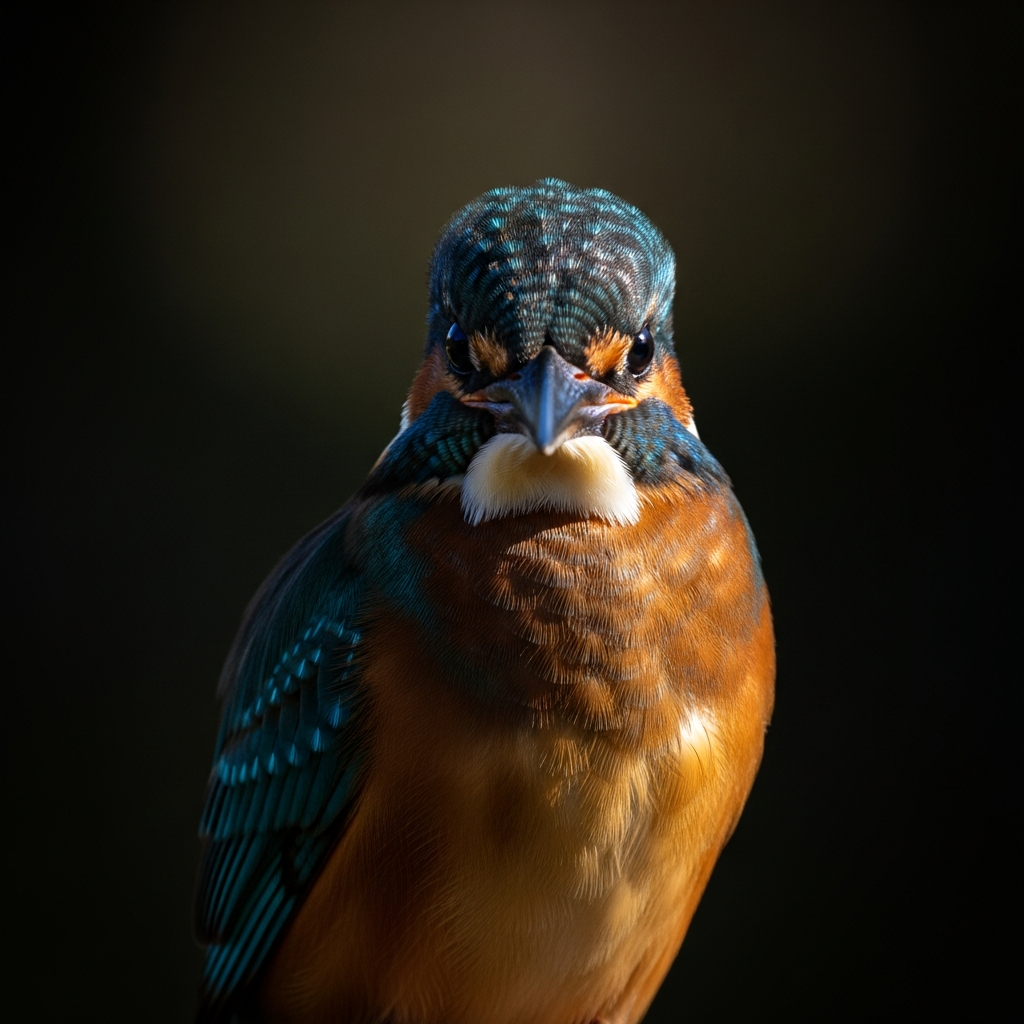
Stoneware mug, dishwasher safe
Buy Mug
Soft cotton tee, unisex sizes
Buy ShirtThe Common Kingfisher has long inspired artists, writers, and myth-makers. In various cultures, it symbolizes peace, prosperity, and good fortune. The ancient name "Halcyon" is linked to Greek myth, where the bird was believed to calm the seas. Its striking appearance and secretive habits have made it a favored subject in paintings, poetry, and nature literature across Europe and Asia.
The Common Kingfisher inhabits rivers, streams, and lakes with clear water, typically in regions across Eurasia and North Africa. Its distribution is extensive, stretching from western Europe through central Asia to Japan, and south into North Africa. The species favors lowland water bodies with abundant bankside vegetation and is absent from heavily polluted or fast-flowing waters.

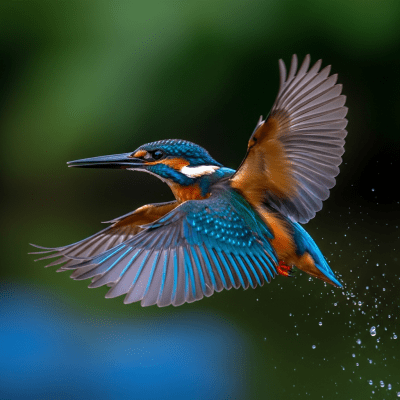
This kingfisher feeds primarily on small fish and aquatic invertebrates. It hunts by perching quietly above water, then diving swiftly to snatch prey with its sharp bill. Its specialized vision allows accurate targeting underwater, making it a highly efficient predator in its aquatic environment.
The Common Kingfisher breeds by excavating nesting burrows in riverbanks, where it lays eggs in a chamber at the tunnel’s end. Both parents share incubation and feeding duties. While specific clutch sizes and breeding seasons vary regionally, the species typically raises multiple broods during warmer months. Juveniles fledge rapidly, often dispersing to establish their own territories along suitable waterways.
The Common Kingfisher is not globally endangered, but its populations are sensitive to water pollution, habitat loss, and disturbance. Clean, unpolluted rivers and lakes are essential for its survival. Conservation efforts focus on protecting aquatic habitats and maintaining water quality to support healthy populations.
Ecologically, the Common Kingfisher serves as an indicator species for healthy freshwater ecosystems. Its predation on small fish helps maintain aquatic balance, and its presence signals clean water. Economically, it is not exploited, but its beauty and rarity make it a prized sight for birdwatchers and a symbol in local ecotourism. The species also enriches cultural heritage through its role in art and folklore.
The Common Kingfisher has never been domesticated and has no breeds; it remains a wild species throughout its range. However, several regional subspecies are recognized, such as A. a. atthis (nominate) and A. a. hispida (western Europe), reflecting adaptations to local environments.
The Common Kingfisher is also known as the "Eurasian Kingfisher," "River Kingfisher," and historically as "Halcyon." Scientific synonyms include Alcedo ispida (obsolete). Regional names and subspecies reflect its broad geographic spread and cultural significance.