Origin Story

First formally described by Carl Linnaeus in 1758, the Common Blackbird is a naturally occurring wild species native to Europe and Asia. Its presence has been documented for centuries, with no breeder or institution responsible for its origin. The species has thrived in diverse environments, adapting to both rural and urban landscapes, and has become a staple of European avifauna through natural dispersal and evolution.

Classification

The Common Blackbird belongs to the class Aves, order Passeriformes, and family Turdidae—the thrushes. Its scientific name is Turdus merula. As a member of the thrush family, it shares lineage with other familiar songbirds, and its classification is recognized by leading authorities such as the International Ornithologists’ Union and the IOC World Bird List. Regional authorities universally accept its binomial nomenclature, and several subspecies are acknowledged across its broad range.

Appearance or Form

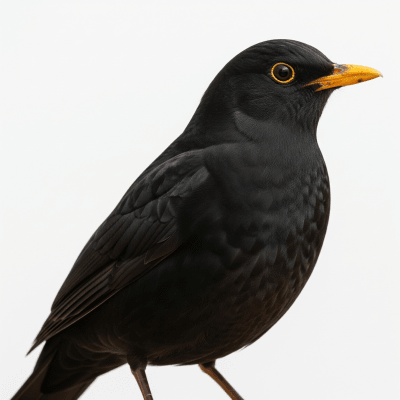
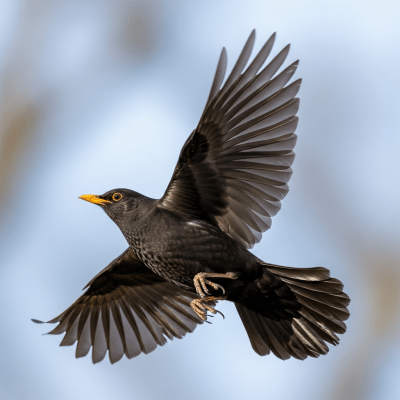
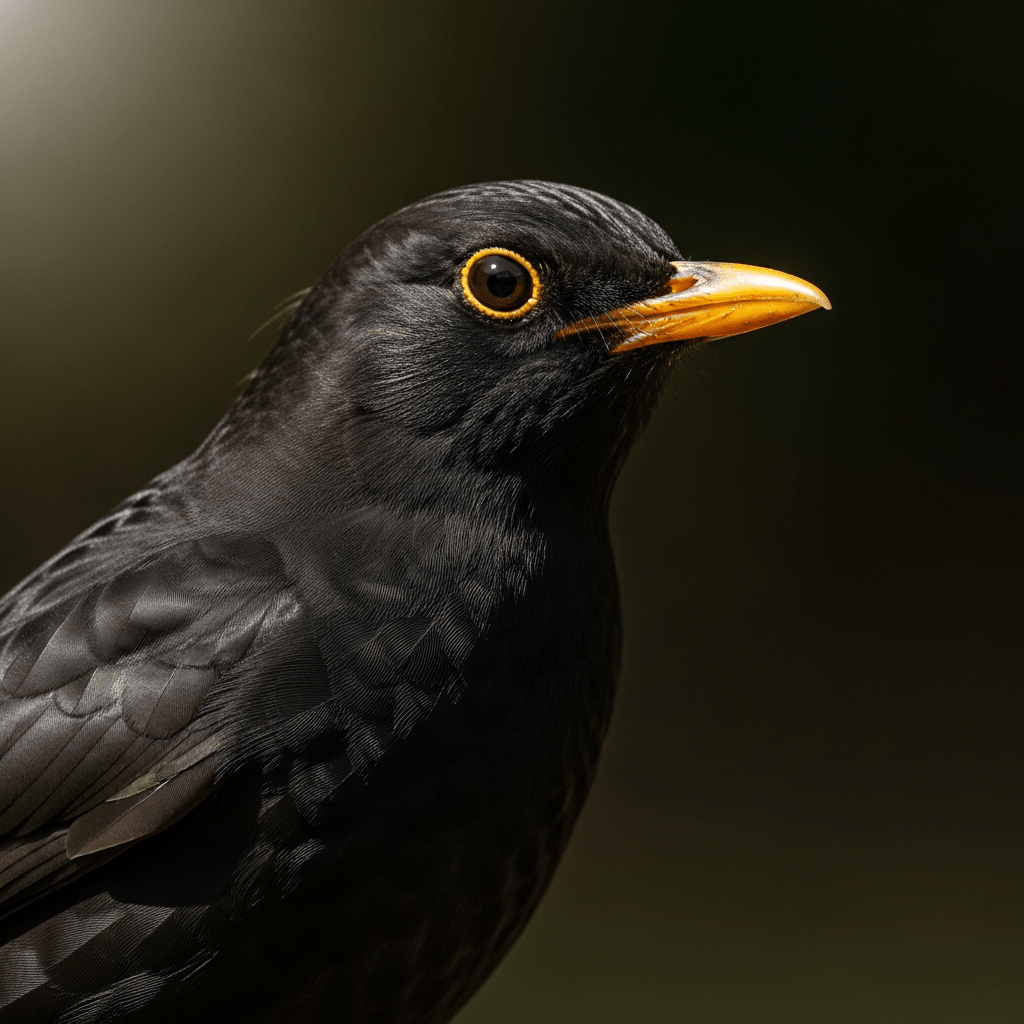
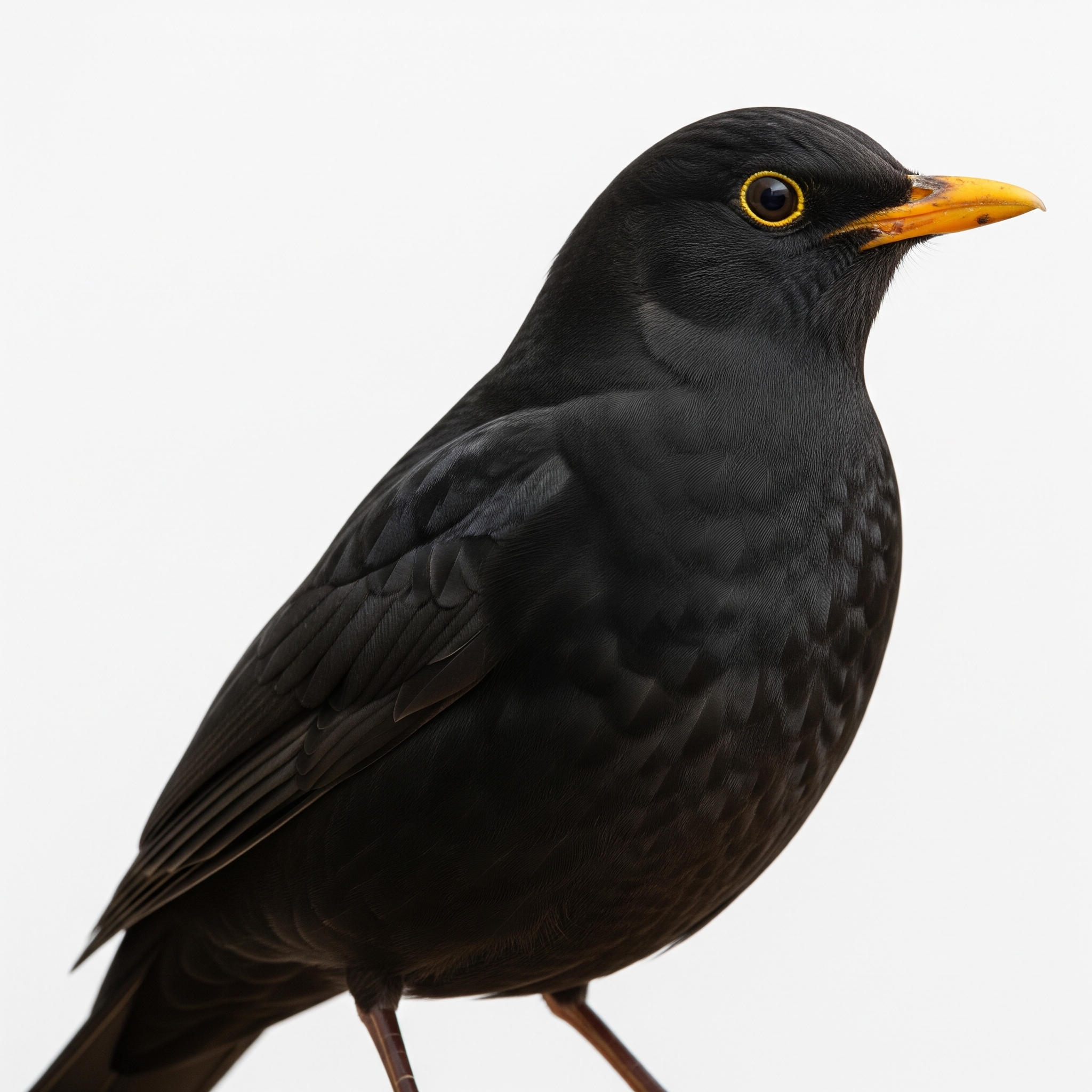
Adult male Common Blackbirds are striking, with deep black plumage offset by a vivid yellow-orange bill and eye-ring. Females display a more subdued palette: dark brown feathers with lighter throats and mottled underparts. Juveniles resemble females but are even more mottled. The species typically measures 23–29 cm in length, with a wingspan of 34–38 cm and a weight of 80–125 grams. Their posture is upright, and their movements on the ground are agile and purposeful, especially while foraging.

Behavior or Usage

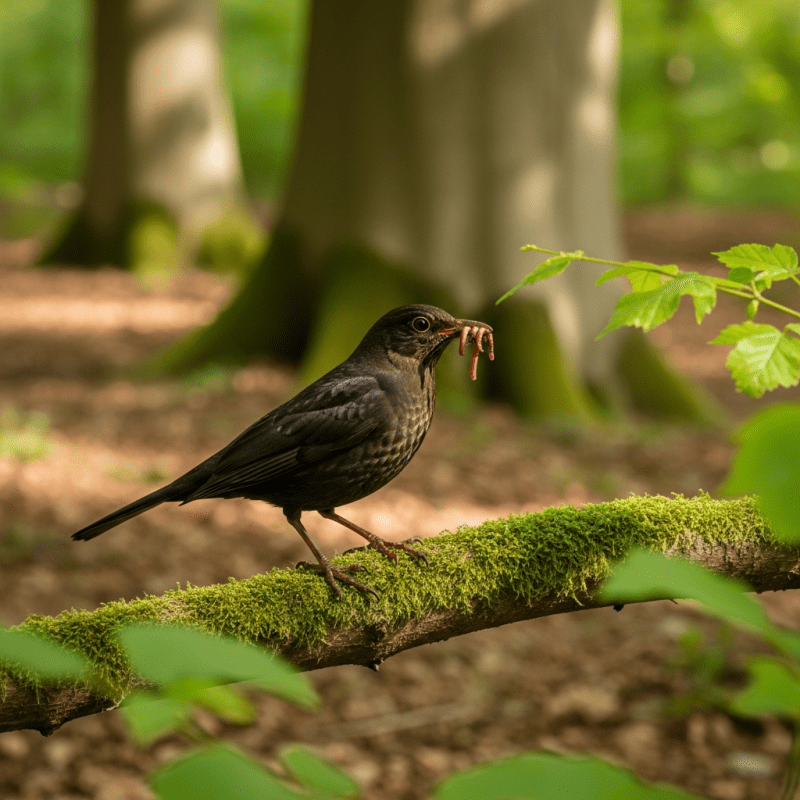
Common Blackbirds are ground foragers, searching for insects, earthworms, berries, and fruits among leaf litter and grass. They are territorial, especially during the breeding season, and known for their rich, melodious song that fills gardens and parks at dawn and dusk. Their adaptability allows them to thrive in urban, suburban, and rural habitats, making them a familiar sight to people across their range. While not commonly used by humans for food or industry today, their presence is cherished for both their beauty and song.
Merchandise & Prints

Bring this kind into your world � illustrated posters, mugs, and shirts.

Common Blackbird Common Blackbird Poster

Common Blackbird Poster

Archival print, museum-grade paper

Common Blackbird Common Blackbird Mug

Common Blackbird Mug

Stoneware mug, dishwasher safe

Common Blackbird Common Blackbird Shirt

Common Blackbird Shirt

Soft cotton tee, unisex sizes

Attributes & Insights

Taxon-Specific Insights

🌍Cultural Significance

The Common Blackbird holds a special place in European culture, celebrated in literature, folklore, and music. Its song has inspired poets and composers, and it is famously referenced in the nursery rhyme "Sing a Song of Sixpence." The bird’s image and voice evoke the changing seasons and are often associated with the tranquility of gardens and countryside. In art and myth, the blackbird symbolizes both mystery and joy, its appearance marking the arrival of spring and the renewal of nature.

📌Notable Facts

  • Male Common Blackbirds sing a rich, flute-like melody that is among the most recognizable bird songs in Europe.
  • The species is highly adaptable, thriving in both wild forests and densely populated urban areas.
  • Females and juveniles are not black, but brown and mottled, making them less conspicuous than males.
  • There are several recognized subspecies across its range, each with subtle differences in plumage and song dialect.
  • Historically, blackbirds were sometimes eaten in Europe, but today they are protected and valued for their cultural and ecological roles.

🌍Habitat And Distribution

The Common Blackbird is native to Europe and Asia, with its range extending from the British Isles and Scandinavia to North Africa, the Middle East, and parts of Central Asia. It inhabits a wide variety of environments, including forests, farmland, urban parks, and gardens. Its adaptability has allowed it to become one of the most widespread and abundant songbirds across its range, and it is a familiar sight in both rural and city landscapes.

Visual Variations

High quality studio photograph of a single Common Blackbird
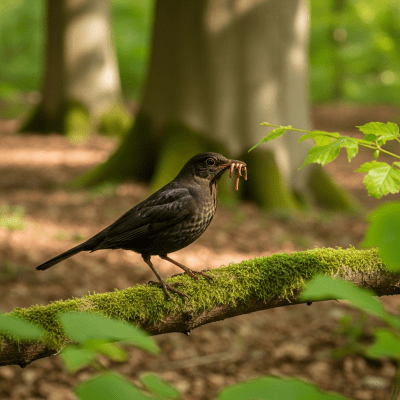
Photorealistic image of a Common Blackbird (birds) in its typical natural environment
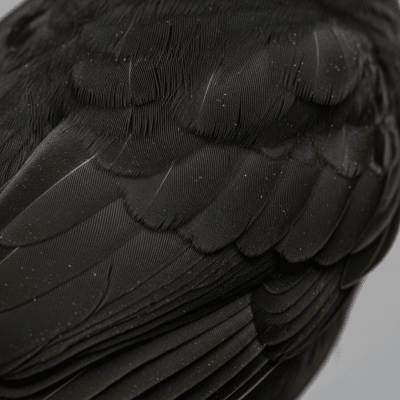
Close-up macro photograph of the feathers or distinctive markings of a Common Blackbird
Action shot of a Common Blackbird (birds) in flight
Image of a juvenile or chick stage of the Common Blackbird, within the taxonomy birds

Composition & Context

Taxon-Specific Insights

🍽️Diet And Feeding

Common Blackbirds are omnivorous ground foragers. Their diet consists primarily of insects, earthworms, berries, and various fruits. They use their sharp bills to probe soil and leaf litter, especially after rain when earthworms are plentiful. In autumn and winter, they rely more on berries and fallen fruit, making them important dispersers of seeds in their ecosystems.

🐣Reproduction And Lifecycle

Breeding occurs from March to July, with pairs often raising 2–3 broods per season. Nests are cup-shaped and built low in shrubs or trees, constructed from grass, twigs, and mud. Females typically lay 3–5 eggs per clutch, incubating them for around two weeks. Chicks fledge about two weeks after hatching. The average lifespan of a Common Blackbird is several years, though many succumb to predation or environmental hazards before reaching maturity.

🛡️Conservation Status

The Common Blackbird is classified as "Least Concern" by the IUCN Red List, reflecting its large, stable population and broad distribution. No major threats currently endanger the species, though local populations may be affected by habitat loss, urbanization, or predation. Conservation measures focus on maintaining healthy habitats and monitoring population trends.

Economic And Ecological Roles

Ecologically, the Common Blackbird plays a vital role as both predator and seed disperser. By consuming insects and earthworms, it helps control pest populations, while its appetite for berries and fruits aids in the dispersal of seeds, supporting plant regeneration. Economically, the species holds little direct value, but its presence enhances the aesthetic and recreational appeal of parks and gardens, contributing to human well-being and biodiversity.

Domestication And Breeds

The Common Blackbird has not been domesticated and is not kept as a breed for agricultural or ornamental purposes. However, several subspecies are recognized across its range, reflecting regional variation in plumage and song. These subspecies have evolved naturally and are not the result of human selection or breeding.

Common Names And Synonyms

  • Common Blackbird (English)
  • Eurasian Blackbird
  • European Blackbird
  • Old World Blackbird
  • Merle noir (French)
  • Amsel (German)
  • Mirlo común (Spanish)
  • Turdus merula (scientific)

Faq

  • Q: What does the Common Blackbird eat?
    A: It feeds on insects, earthworms, berries, and fruits, foraging mostly on the ground.
  • Q: Where can I find Common Blackbirds?
    A: They are found throughout Europe and Asia, commonly seen in gardens, parks, woodlands, and urban areas.
  • Q: Do male and female Common Blackbirds look different?
    A: Yes, males are glossy black with a yellow-orange bill, while females are dark brown with mottled underparts.